Bustos Cesar, Aguinaga Aitziber, Carmona-Torre Francisco, Del Pozo Jose Luis
Department of Clinical Microbiology, Clinica Universidad de Navarra, Pamplona, Spain.
Department of Internal Medicine, Clinica Universidad de Navarra, Pamplona, Spain.
Infect Drug Resist. 2014 Feb 18;7:25-35. doi: 10.2147/IDR.S37773. eCollection 2014.
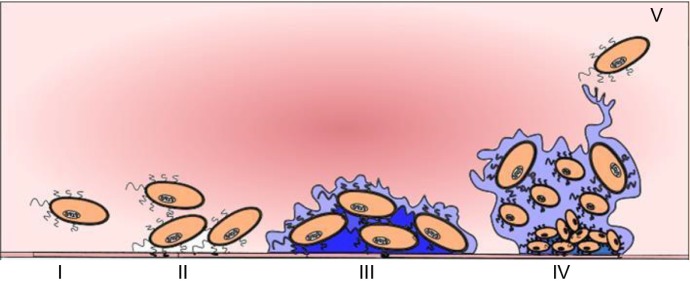
Since the first description in 1982, totally implanted venous access ports have progressively improved patients' quality of life and medical assistance when a medical condition requires the use of long-term venous access. Currently, they are part of the standard medical care for oncohematologic patients. However, apart from mechanical and thrombotic complications, there are also complications associated with biofilm development inside the catheters. These biofilms increase the cost of medical assistance and extend hospitalization. The most frequently involved micro-organisms in these infections are gram-positive cocci. Many efforts have been made to understand biofilm formation within the lumen catheters, and to resolve catheter-related infection once it has been established. Apart from systemic antibiotic treatment, the use of local catheter treatment (ie, antibiotic lock technique) is widely employed. Many different antimicrobial options have been tested, with different outcomes, in clinical and in in vitro assays. The stability of antibiotic concentration in the lock solution once instilled inside the catheter lumen remains unresolved. To prevent infection, it is mandatory to perform hand hygiene before catheter insertion and manipulation, and to disinfect catheter hubs, connectors, and injection ports before accessing the catheter. At present, there are still unresolved questions regarding the best antimicrobial agent for catheter-related bloodstream infection treatment and the duration of concentration stability of the antibiotic solution within the lumen of the port.
自1982年首次被描述以来,全植入式静脉通路端口在医疗状况需要长期静脉通路时,逐步改善了患者的生活质量和医疗救助情况。目前,它们是血液肿瘤患者标准医疗护理的一部分。然而,除了机械性和血栓性并发症外,导管内部生物膜形成也会引发并发症。这些生物膜增加了医疗救助成本并延长了住院时间。这些感染中最常涉及的微生物是革兰氏阳性球菌。人们已做出诸多努力来了解管腔内生物膜的形成,并在导管相关感染一旦发生时将其解决。除了全身抗生素治疗外,局部导管治疗(即抗生素封管技术)也被广泛应用。在临床和体外试验中,许多不同的抗菌方案都经过了测试,结果各异。抗生素溶液注入导管腔后封管液中抗生素浓度的稳定性仍未得到解决。为预防感染,在插入和操作导管前必须进行手部卫生清洁,并在接入导管前对导管接头、连接器和注射端口进行消毒。目前,关于治疗导管相关血流感染的最佳抗菌药物以及端口腔内抗生素溶液浓度稳定的持续时间,仍存在未解决的问题。