Department of Morphology and Cell Biology, Universidad de Oviedo , Oviedo , Spain.
Department of Functional Biology, Universidad de Oviedo , Oviedo , Spain.
Front Oncol. 2014 Feb 7;4:15. doi: 10.3389/fonc.2014.00015. eCollection 2014.
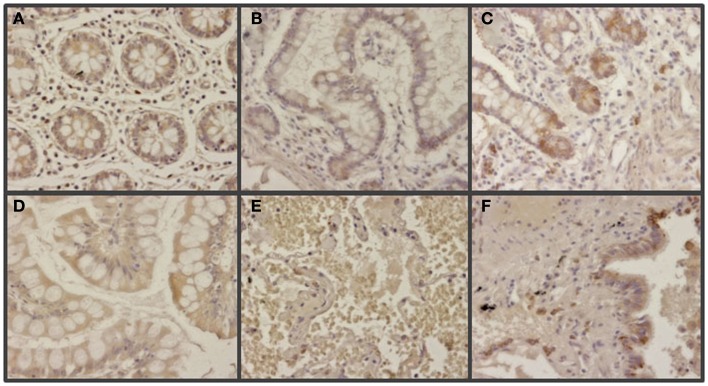
Neuroendocrine tumors (NETs) are found throughout the body and are important as they give rise to distinct clinical syndromes. Glycosaminoglycans, in proteoglycan (PG) form or as free chains, play vital roles in every step of tumor progression. Analyzing tumor samples with different degrees of histological differentiation we determined the existence of important alterations in chondroitin sulfate (CS) chains. Analysis of the transcription of the genes responsible for the production of CS showed a decline in the expression of some genes in poorly differentiated compared to well-differentiated tumors. Using anti-CS antibodies, normal stroma was always negative whereas tumoral stroma always showed a positive staining, more intense in the highest grade carcinomas, while tumor cells were negative. Moreover, certain specific cell surface PGs experienced a drastic decrease in expression depending on tumor differentiation. Syndecan 2 levels were very low or undetectable in healthy tissues, increasing significantly in well-differentiated tumors, and decreasing in poorly differentiated NETs, and its expression levels showed a positive correlation with patient survival. Glypican 5 appeared overexpressed in high-grade tumors with epithelial differentiation, and not in those that displayed a neuroendocrine phenotype. In contrast, normal neuroendocrine cells were positive for glypican 1, displaying intense staining in cytoplasm and membrane. Low-grade NETs had increased expression of this PG, but this reduced as tumor grade increased, its expression correlating positively with patient survival. Whilst elevated glypican 1 expression has been documented in different tumors, the downregulation in high-grade tumors observed in this work suggests that this proteoglycan could be involved in cancer development in a more complex and context-dependent manner than previously thought.
神经内分泌肿瘤 (NETs) 遍布全身,具有重要意义,因为它们会引发不同的临床综合征。糖胺聚糖 (glycosaminoglycan) 以蛋白聚糖 (proteoglycan, PG) 或游离链的形式存在,在肿瘤进展的每一个步骤中都发挥着至关重要的作用。我们分析了具有不同组织学分化程度的肿瘤样本,确定了硫酸软骨素 (chondroitin sulfate, CS) 链存在重要的改变。对负责 CS 产生的基因转录的分析显示,与分化良好的肿瘤相比,分化较差的肿瘤中某些基因的表达下降。使用抗 CS 抗体,正常基质总是阴性,而肿瘤基质总是呈阳性染色,在最高等级的癌中更强烈,而肿瘤细胞则呈阴性。此外,某些特定的细胞表面 PG 根据肿瘤分化程度经历了急剧的表达下降。在健康组织中,连接蛋白 2 (syndecan 2) 的水平非常低或无法检测到,在分化良好的肿瘤中显著增加,在分化较差的 NETs 中减少,其表达水平与患者的生存呈正相关。糖蛋白 5 (glypican 5) 在具有上皮分化的高级别肿瘤中过度表达,而在具有神经内分泌表型的肿瘤中不表达。相比之下,正常的神经内分泌细胞对糖蛋白 1 呈阳性,细胞质和细胞膜呈强烈染色。低度 NETs 中这种 PG 的表达增加,但随着肿瘤分级的增加而减少,其表达与患者的生存呈正相关。虽然已经记录了不同肿瘤中升高的糖蛋白 1 表达,但在这项工作中观察到高级别肿瘤中的下调表明,这种蛋白聚糖可能以比以前认为的更复杂和依赖于上下文的方式参与癌症的发展。