Bonura Clara, Frontino Giulio, Rigamonti Andrea, Battaglino Roseila, Favalli Valeria, Ferro Giusy, Rubino Chiara, Del Barba Paolo, Pesapane Filippo, Nazzaro Gianluca, Gianotti Raffaele, Bonfanti Riccardo, Meschi Franco, Chiumello Giuseppe
Ospedale San Raffaele Scientific Institute; Department of Pediatrics; Milano, Italy.
Università degli Studi di Milano; Fondazione IRCCS Ca' Granda Osp. Maggiore Policlinico; Department of Pathophysiology and Transplantation; Milano, Italy.
Dermatoendocrinol. 2014 Jan 1;6(1):e27790. doi: 10.4161/derm.27790. Epub 2014 Jan 17.
Necrobiosis lipoidica (NL) is a rare chronic granulomatous dermatitis that usually appears in the lower extremities. It affects about 0.3-1.2% of diabetic patients, the majority of whom have type 1 diabetes. The etiology and pathogenesis of this disorder are still unclear. NL is characterized by skin rash that usually affects the shins. The average onset is 30 years, with females being affected more commonly. There are very few reported cases of necrobiosis lipoidica in children.
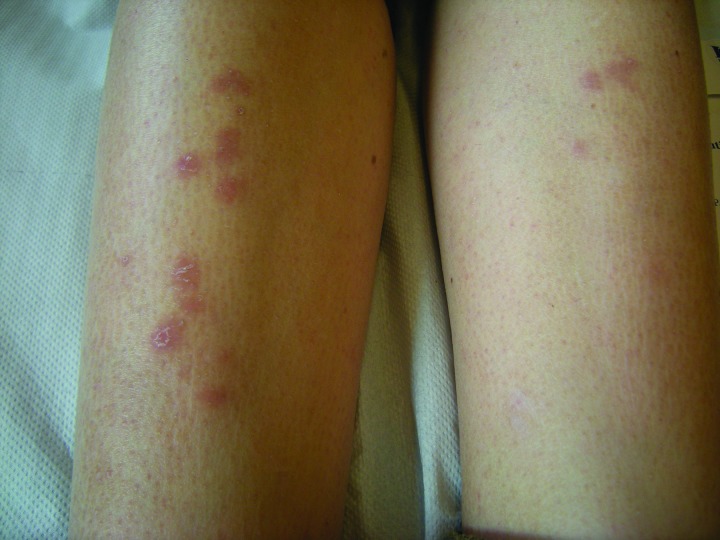
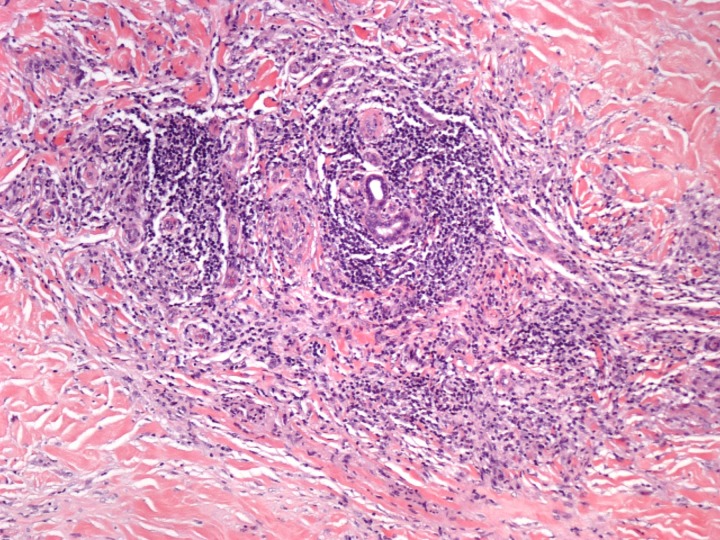
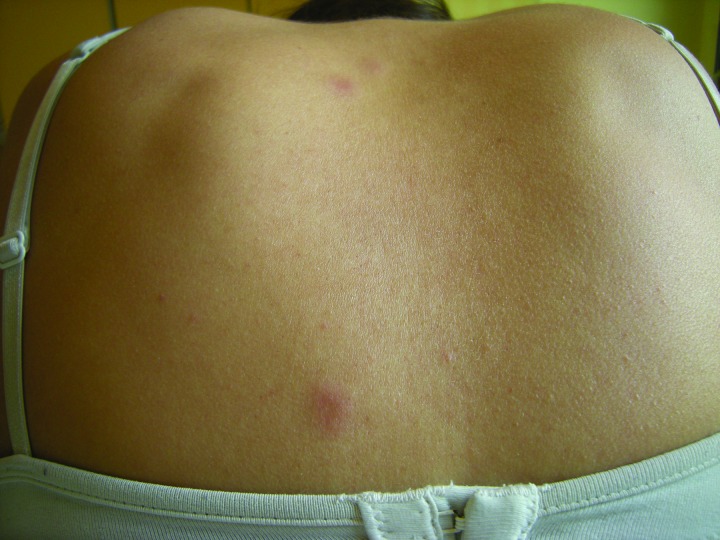
We report a case of a 16 year old girl affected by type 1 diabetes mellitus (15 years disease duration) who developed an erythematous nodular rash on the lower extremities and interscapular area. In the suspect of necrobiosis lipoidica, a skin biopsy was performed (lower extremities and interscapular area). The microscopic evaluation of the pretibial lesions was suggestive of necrobiosis lipoidica. The smaller lesions in the interscapular area showed signs of perivascular dermatitis which could be consistent with early stages of necrobiosis lipoidica. Local treatment with tacrolimus determined a progressive improvement of the lesions.
In patients with T1DM, diagnosis of NL of the lower legs is usually unequivocal. However, diagnosis may be more challenging in the presence of lesions with recent onset and/or atypical clinical presentation and unusual site. In these cases, NL must always be taken in consideration in order to avoid misdiagnosis, wrong/late treatment decisions and progression to ulceration.
类脂质渐进性坏死(NL)是一种罕见的慢性肉芽肿性皮炎,通常出现在下肢。它影响约0.3%-1.2%的糖尿病患者,其中大多数为1型糖尿病患者。这种疾病的病因和发病机制仍不清楚。NL的特征是皮疹,通常累及小腿。平均发病年龄为30岁,女性更易受累。儿童类脂质渐进性坏死的报道病例非常少。
我们报告一例16岁1型糖尿病女孩(病程15年),其下肢和肩胛间区域出现红斑结节性皮疹。怀疑为类脂质渐进性坏死时,进行了皮肤活检(下肢和肩胛间区域)。胫前病变的显微镜评估提示类脂质渐进性坏死。肩胛间区域较小的病变显示血管周围性皮炎迹象,这可能与类脂质渐进性坏死的早期阶段一致。他克莫司局部治疗使病变逐渐改善。
在1型糖尿病患者中,小腿NL的诊断通常明确。然而,在存在近期发病的病变和/或非典型临床表现及不寻常部位时,诊断可能更具挑战性。在这些情况下,必须始终考虑NL,以避免误诊、错误/延迟的治疗决策以及进展为溃疡。