Department of Medicine, University of California San Francisco, San Francisco, California, United States of America.
Department of Medicine, University of California San Francisco, San Francisco, California, United States of America ; Department of Orofacial Sciences, University of California San Francisco, San Francisco, California, United States of America.
PLoS One. 2014 Feb 21;9(2):e88803. doi: 10.1371/journal.pone.0088803. eCollection 2014.
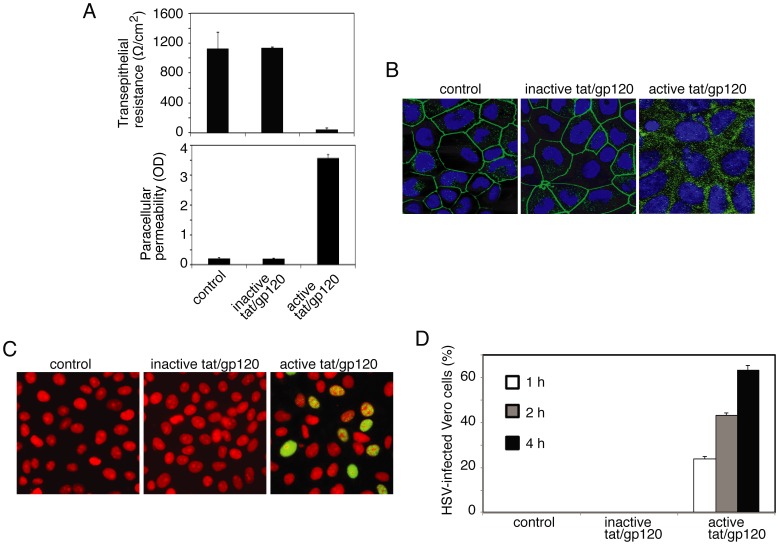
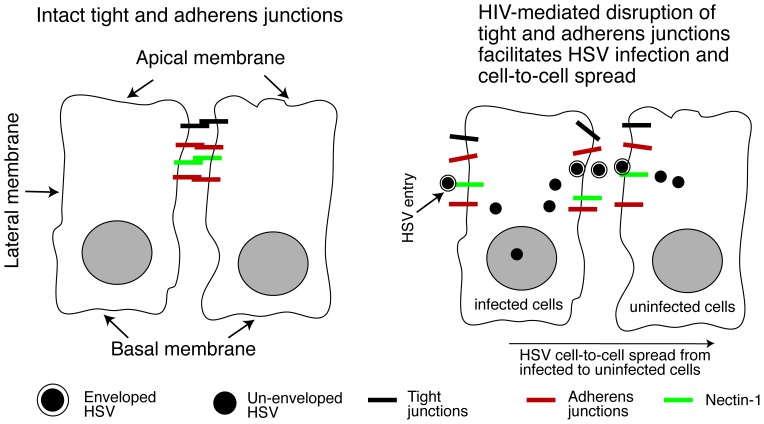
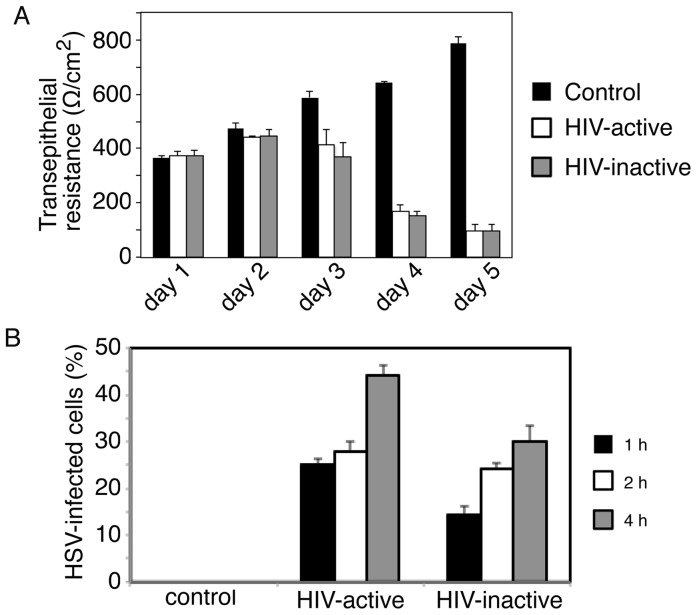
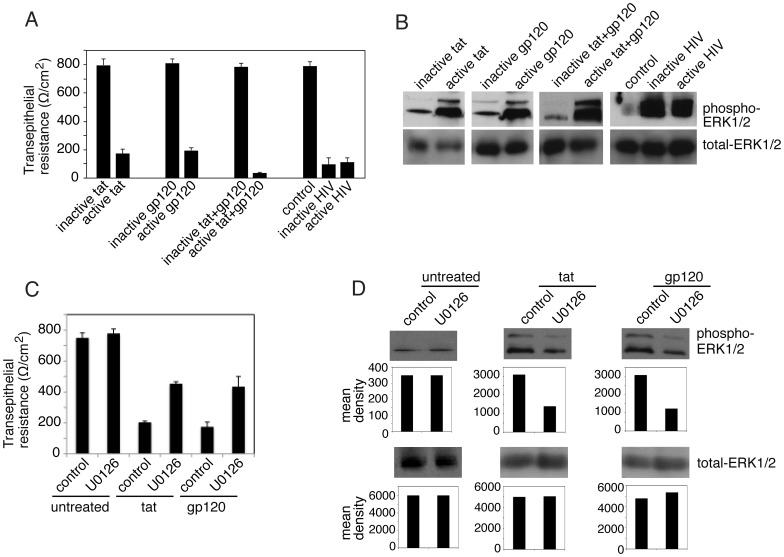
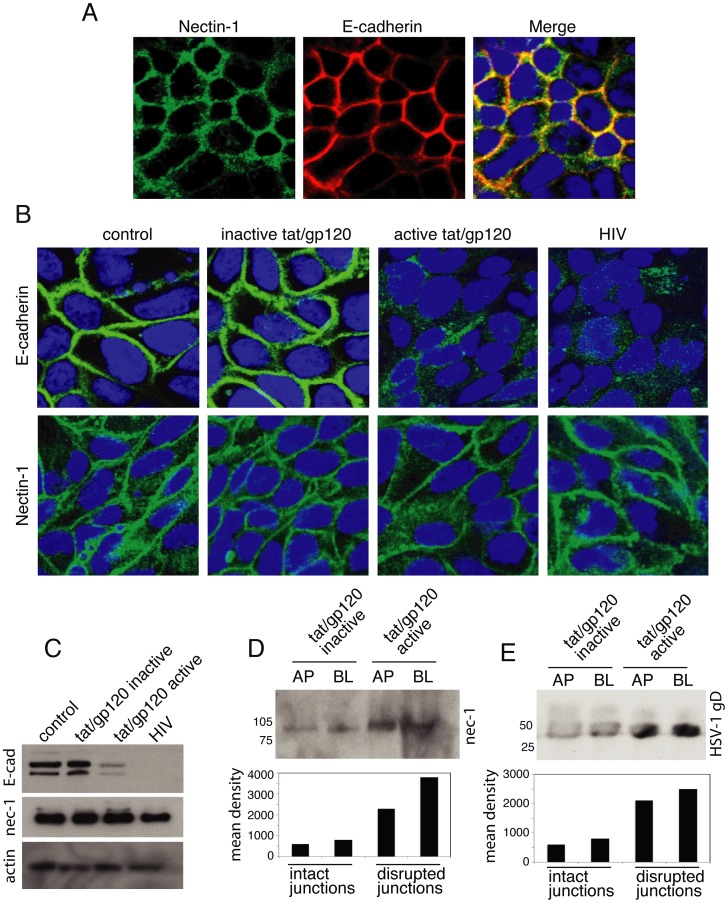
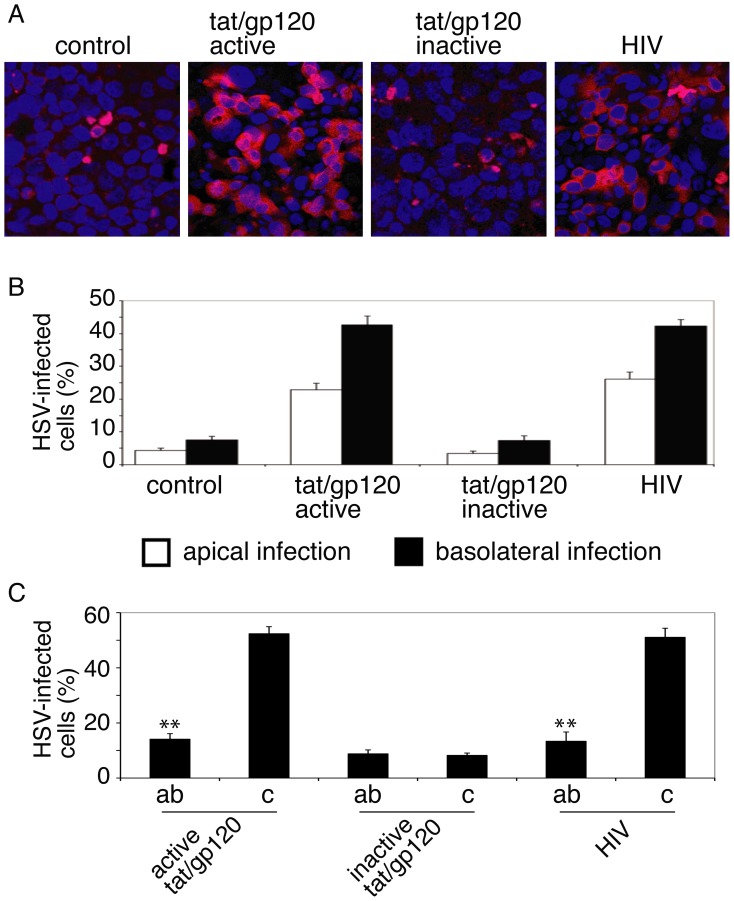
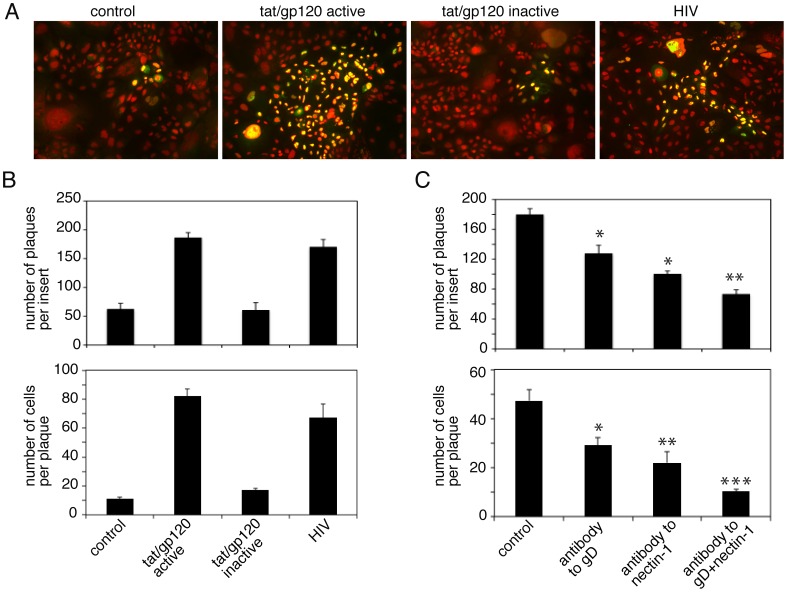
Herpes simplex virus (HSV) types 1 and 2 are the most common opportunistic infections in HIV/AIDS. In these immunocompromised individuals, HSV-1 reactivates and replicates in oral epithelium, leading to oral disorders such as ulcers, gingivitis, and necrotic lesions. Although the increased risk of HSV infection may be mediated in part by HIV-induced immune dysfunction, direct or indirect interactions of HIV and HSV at the molecular level may also play a role. In this report we show that prolonged interaction of the HIV proteins tat and gp120 and cell-free HIV virions with polarized oral epithelial cells leads to disruption of tight and adherens junctions of epithelial cells through the mitogen-activated protein kinase signaling pathway. HIV-induced disruption of oral epithelial junctions facilitates HSV-1 paracellular spread between the epithelial cells. Furthermore, HIV-associated disruption of adherens junctions exposes sequestered nectin-1, an adhesion protein and critical receptor for HSV envelope glycoprotein D (gD). Exposure of nectin-1 facilitates binding of HSV-1 gD, which substantially increases HSV-1 infection of epithelial cells with disrupted junctions over that of cells with intact junctions. Exposed nectin-1 from disrupted adherens junctions also increases the cell-to-cell spread of HSV-1 from infected to uninfected oral epithelial cells. Antibodies to nectin-1 and HSV-1 gD substantially reduce HSV-1 infection and cell-to-cell spread, indicating that HIV-promoted HSV infection and spread are mediated by the interaction of HSV gD with HIV-exposed nectin-1. Our data suggest that HIV-associated disruption of oral epithelial junctions may potentiate HSV-1 infection and its paracellular and cell-to-cell spread within the oral mucosal epithelium. This could be one of the possible mechanisms of rapid development of HSV-associated oral lesions in HIV-infected individuals.
单纯疱疹病毒(HSV)1 型和 2 型是 HIV/AIDS 中最常见的机会性感染。在这些免疫功能低下的个体中,HSV-1 在口腔上皮细胞中重新激活和复制,导致口腔疾病,如溃疡、牙龈炎和坏死性病变。尽管 HSV 感染的风险增加可能部分是由 HIV 诱导的免疫功能障碍介导的,但 HIV 和 HSV 在分子水平上的直接或间接相互作用也可能起作用。在本报告中,我们表明,HIV 蛋白 tat 和 gp120 与无细胞 HIV 病毒颗粒与极化口腔上皮细胞的长时间相互作用通过丝裂原活化蛋白激酶信号通路导致上皮细胞紧密连接和黏附连接的破坏。HIV 诱导的口腔上皮连接破坏促进 HSV-1 在相邻上皮细胞之间的旁细胞扩散。此外,HIV 相关的黏附连接破坏暴露了隔离的 nectin-1,一种粘附蛋白和 HSV 包膜糖蛋白 D(gD)的关键受体。nectin-1 的暴露促进了 HSV-1 gD 的结合,这大大增加了具有破坏连接的上皮细胞的 HSV-1 感染,而不是具有完整连接的细胞。从破坏的黏附连接暴露的 nectin-1 也增加了从感染到未感染的口腔上皮细胞的 HSV-1 的细胞间传播。抗 nectin-1 和 HSV-1 gD 的抗体大大减少了 HSV-1 的感染和细胞间传播,表明 HIV 促进的 HSV 感染和传播是由 HSV gD 与 HIV 暴露的 nectin-1 相互作用介导的。我们的数据表明,HIV 相关的口腔上皮连接破坏可能增强 HSV-1 感染及其在口腔黏膜上皮中的旁细胞和细胞间传播。这可能是 HIV 感染个体中 HSV 相关口腔病变快速发展的可能机制之一。