Sanchez-Lockhart Mariano, Rojas Ana V, Fettis Margaret M, Bauserman Richard, Higa Trissha R, Miao Hongyu, Waugh Richard E, Miller Jim
David H Smith Center for Vaccine Biology and Immunology and Department of Microbiology and Immunology, University of Rochester, Rochester, New York, United States of America.
Department of Biostatistics and Computational Biology, University of Rochester, Rochester, New York, United States of America.
PLoS One. 2014 Feb 24;9(2):e89263. doi: 10.1371/journal.pone.0089263. eCollection 2014.
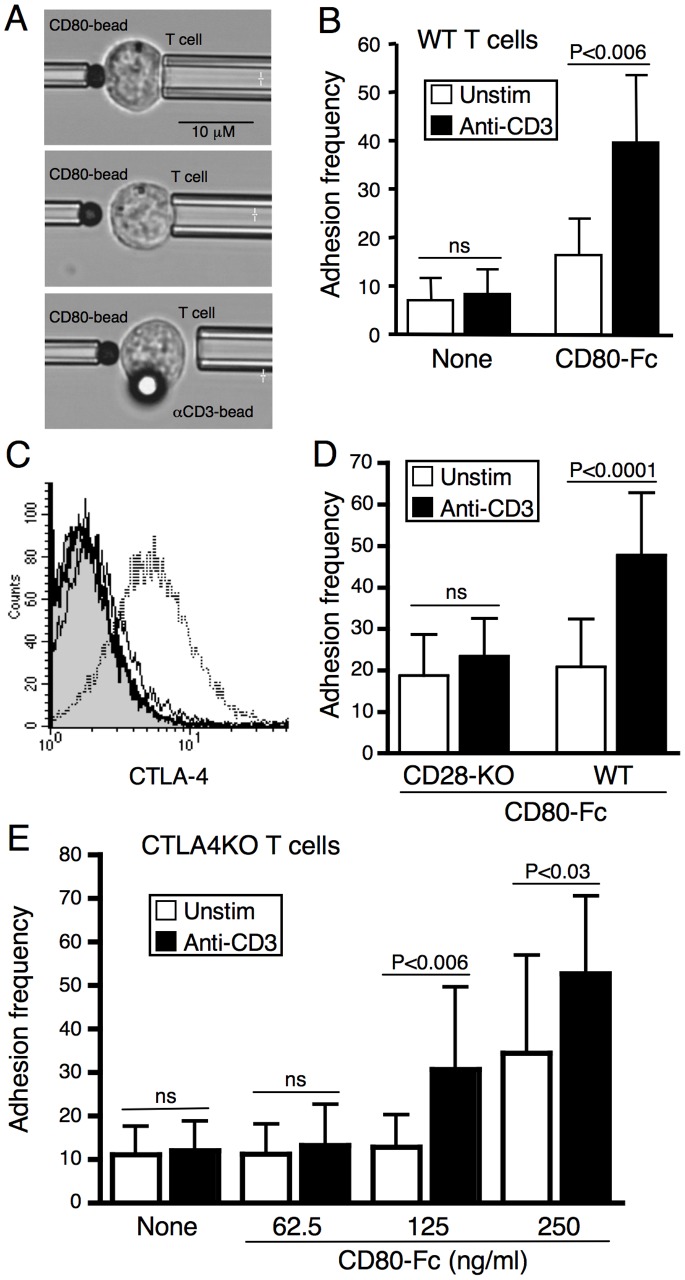
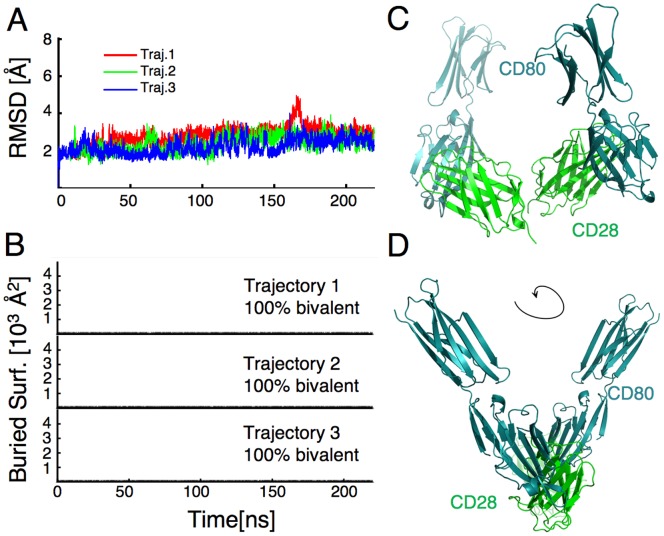
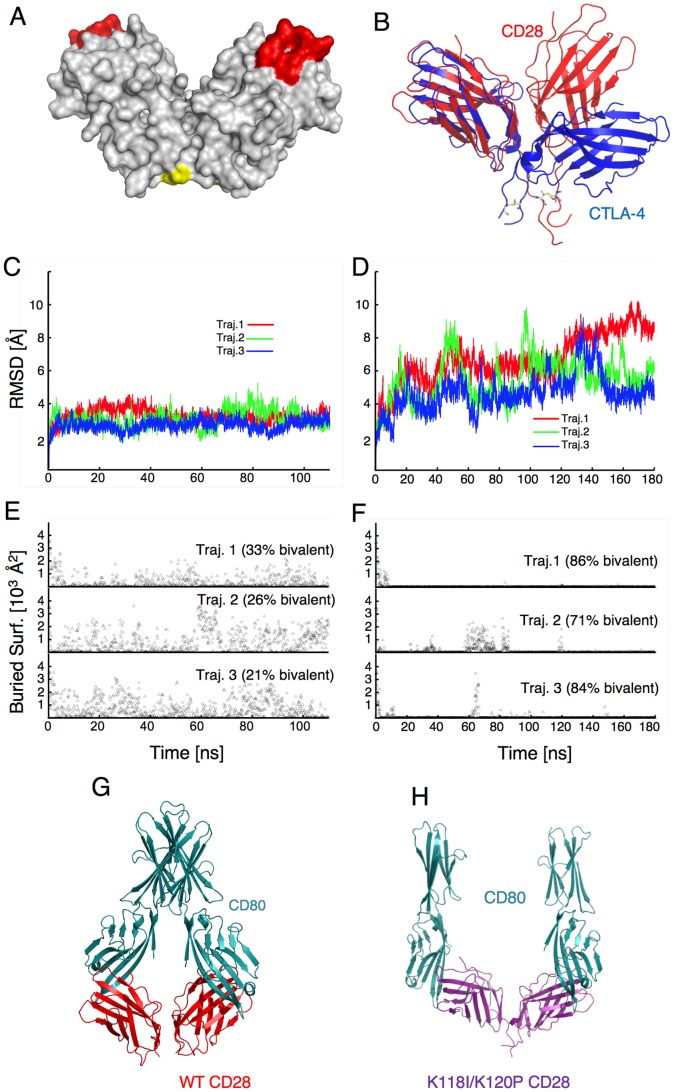
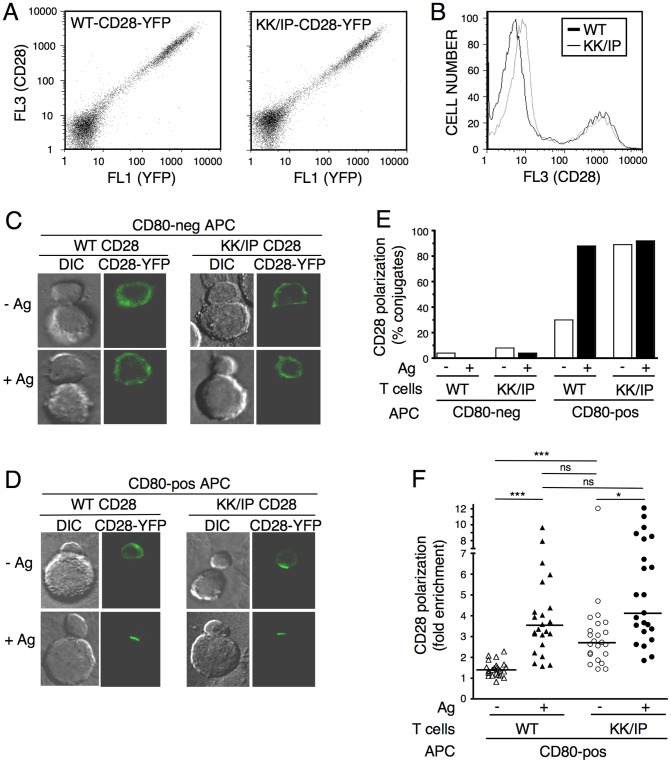
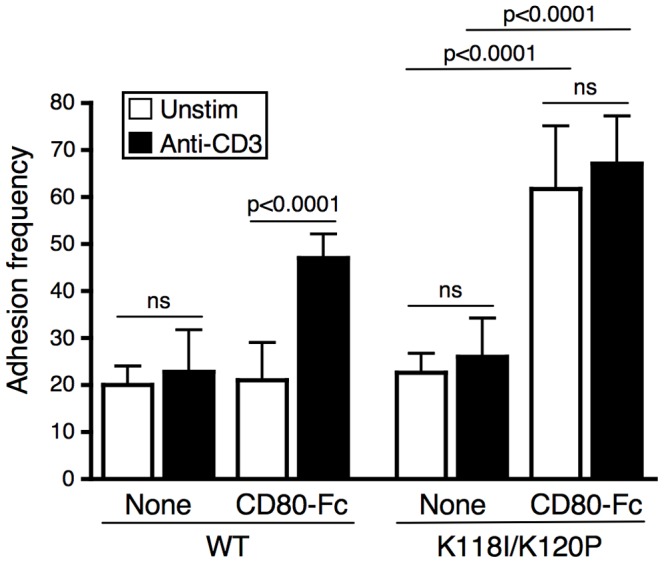
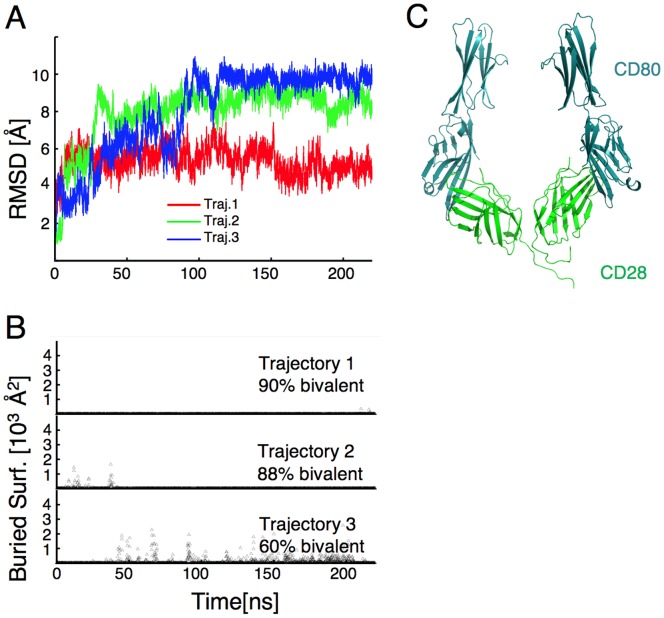
T cell activation takes place in the context of a spatial and kinetic reorganization of cell surface proteins and signaling molecules at the contact site with an antigen presenting cell, termed the immunological synapse. Coordination of the activation, recruitment, and signaling from T cell receptor (TCR) in conjunction with adhesion and costimulatory receptors regulates both the initiation and duration of signaling that is required for T cell activation. The costimulatory receptor, CD28, is an essential signaling molecule that determines the quality and quantity of T cell immune responses. Although the functional consequences of CD28 engagement are well described, the molecular mechanisms that regulate CD28 function are largely unknown. Using a micropipet adhesion frequency assay, we show that TCR signaling enhances the direct binding between CD28 and its ligand, CD80. Although CD28 is expressed as a homodimer, soluble recombinant CD28 can only bind ligand monovalently. Our data suggest that the increase in CD28-CD28 binding is mediated through a change in CD28 valency. Molecular dynamic simulations and in vitro mutagenesis indicate that mutations at the base of the CD28 homodimer interface, distal to the ligand-binding site, can induce a change in the orientation of the dimer that allows for bivalent ligand binding. When expressed in T cells, this mutation allows for high avidity CD28-CD80 interactions without TCR signaling. Molecular dynamic simulations also suggest that wild type CD28 can stably adopt a bivalent conformation. These results support a model whereby inside-out signaling from the TCR can enhance CD28 ligand interactions by inducing a change in the CD28 dimer interface to allow for bivalent ligand binding and ultimately the transduction of CD28 costimulatory signals that are required for T cell activation.
T细胞活化发生在与抗原呈递细胞接触部位的细胞表面蛋白和信号分子进行空间和动力学重组的背景下,该接触部位称为免疫突触。T细胞受体(TCR)的活化、募集和信号传导与粘附受体和共刺激受体协同作用,调节T细胞活化所需信号传导的起始和持续时间。共刺激受体CD28是一种重要的信号分子,它决定了T细胞免疫反应的质量和数量。尽管CD28参与的功能后果已有充分描述,但调节CD28功能的分子机制在很大程度上仍不清楚。通过微量移液器粘附频率测定,我们发现TCR信号传导增强了CD28与其配体CD80之间的直接结合。尽管CD28以同源二聚体形式表达,但可溶性重组CD28只能单价结合配体。我们的数据表明,CD28-CD80结合的增加是通过CD28价态的变化介导的。分子动力学模拟和体外诱变表明,在CD28同源二聚体界面底部、远离配体结合位点的突变可诱导二聚体方向的改变,从而允许二价配体结合。当在T细胞中表达时,这种突变允许在没有TCR信号传导的情况下进行高亲和力的CD28-CD80相互作用。分子动力学模拟还表明,野生型CD28可以稳定地采用二价构象。这些结果支持了一个模型,即来自TCR的外向内信号传导可以通过诱导CD28二聚体界面的变化来增强CD28配体相互作用,从而允许二价配体结合,并最终转导T细胞活化所需的CD28共刺激信号。