Bhuyan Zaied Ahmed, Asanoma Michihito, Iwata Akiko, Ishifune Chieko, Maekawa Yoichi, Shimada Mitsuo, Yasutomo Koji
Department of Immunology & Parasitology, Institute of Health Biosciences, The University of Tokushima Graduate School, Tokushima, Japan.
Department of Immunology & Parasitology, Institute of Health Biosciences, The University of Tokushima Graduate School, Tokushima, Japan ; Digestive and Pediatric Surgery, Institute of Health Biosciences, The University of Tokushima Graduate School, Tokushima, Japan.
PLoS One. 2014 Feb 28;9(2):e89266. doi: 10.1371/journal.pone.0089266. eCollection 2014.
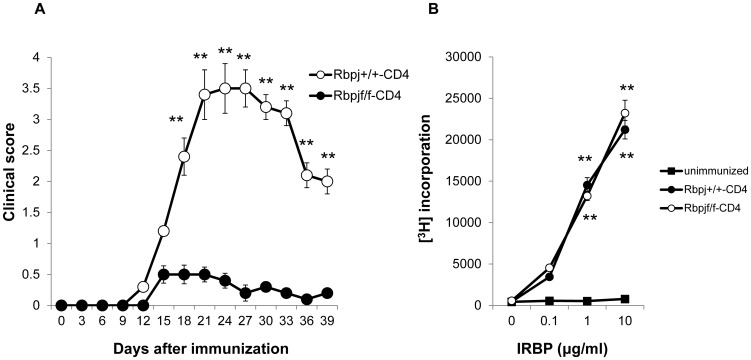
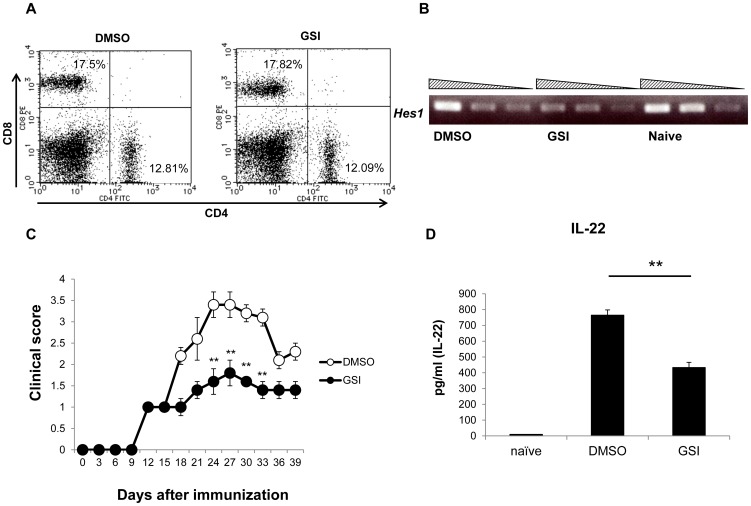
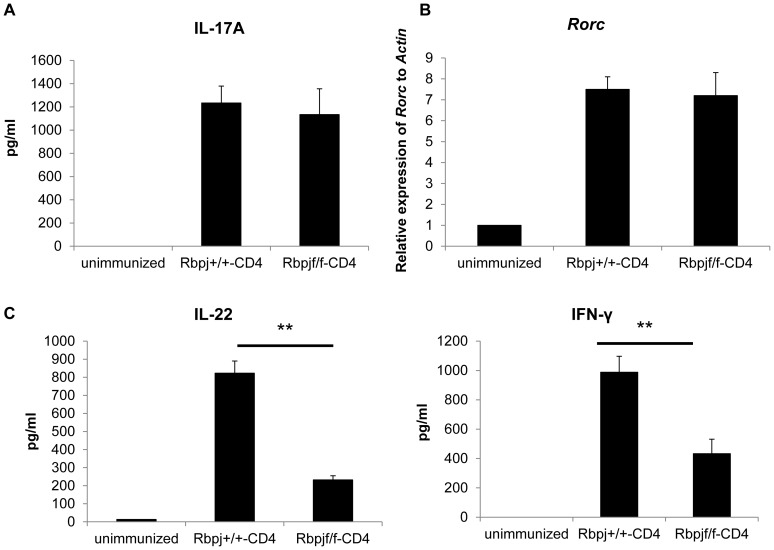
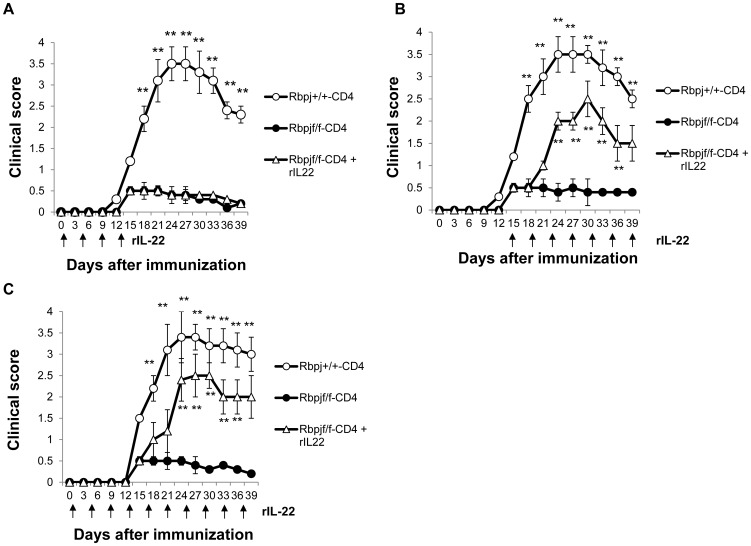
Experimental autoimmune uveoretinitis (EAU) is an organ-specific T cell-mediated disease induced by immunizing mice with interphotoreceptor retinoid binding protein (IRBP). Autoaggressive CD4(+) T cells are the major pathogenic population for EAU. We investigated the contribution of Notch signaling in T cells to EAU pathogenesis because Notch signaling regulates various aspects of CD4(+) T cell functions. Rbpj is required for Notch signaling, and Rbpj deficiency in T cells inhibited EAU disease severity. The amelioration of EAU in T cell-specific Rbpj-deficient mice correlated with low levels of IL-22 production from CD4(+) T cells, although IRBP-specific CD4(+) T cell proliferation and Th17 differentiation were unaffected. Administration of recombinant IL-22 during the late phase, but not the early phase, of EAU increased EAU clinical scores in T cell-specific Rbpj-deficient mice. Notch inhibition in mice immunized with IRBP with a γ-secretase inhibitor (GSI) suppressed EAU progression, even when GSI was administered as late as 13 days after IRBP immunization. Our data demonstrate that Rbpj/Notch-mediated IL-22 production in T cells has a key pathological role in the late phase of EAU, and suggest that Notch blockade might be a useful therapeutic approach for treating EAU.
实验性自身免疫性葡萄膜视网膜炎(EAU)是一种器官特异性的T细胞介导疾病,通过用视网膜色素上皮细胞间视黄醇结合蛋白(IRBP)免疫小鼠诱导产生。自身攻击性CD4(+) T细胞是EAU的主要致病群体。由于Notch信号传导调节CD4(+) T细胞功能的各个方面,我们研究了T细胞中Notch信号传导对EAU发病机制的作用。Notch信号传导需要Rbpj,T细胞中Rbpj的缺乏抑制了EAU疾病的严重程度。T细胞特异性Rbpj缺陷小鼠中EAU的改善与CD4(+) T细胞产生的IL-22水平较低相关,尽管IRBP特异性CD4(+) T细胞增殖和Th17分化未受影响。在EAU晚期而非早期给予重组IL-22会增加T细胞特异性Rbpj缺陷小鼠的EAU临床评分。用γ-分泌酶抑制剂(GSI)免疫IRBP的小鼠中Notch抑制可抑制EAU进展,即使在IRBP免疫后13天给予GSI也是如此。我们的数据表明,Rbpj/Notch介导的T细胞中IL-22的产生在EAU晚期具有关键的病理作用,并表明Notch阻断可能是治疗EAU的一种有用的治疗方法。