ZIEL Research Center for Nutrition and Food Sciences, Biochemistry Unit, Technische Universität München, Freising, Bavaria, Germany.
Center for Integrative Genomics, Université de Lausanne, Lausanne, Switzerland.
PLoS One. 2014 Feb 26;9(2):e89977. doi: 10.1371/journal.pone.0089977. eCollection 2014.
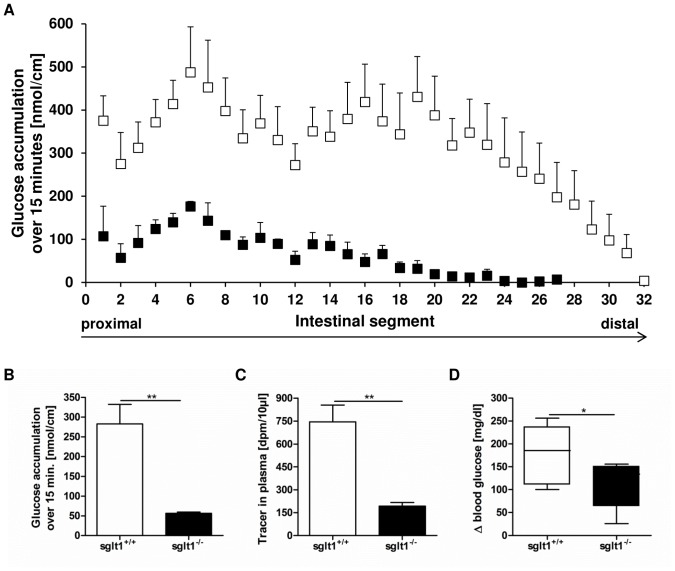
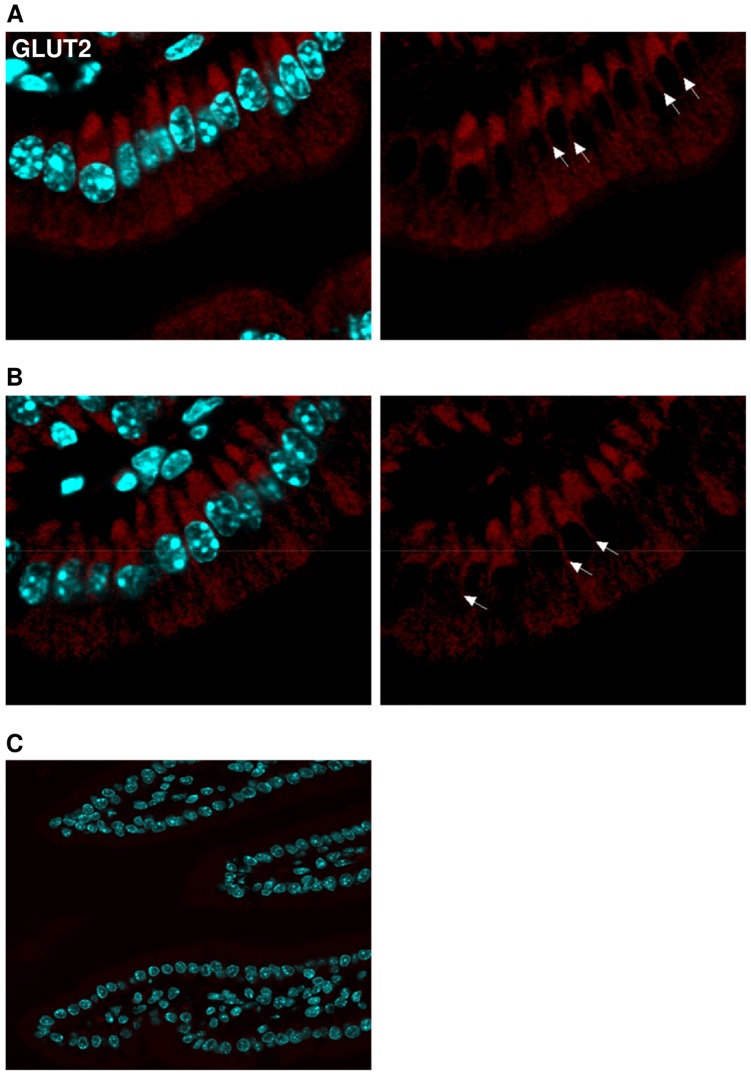
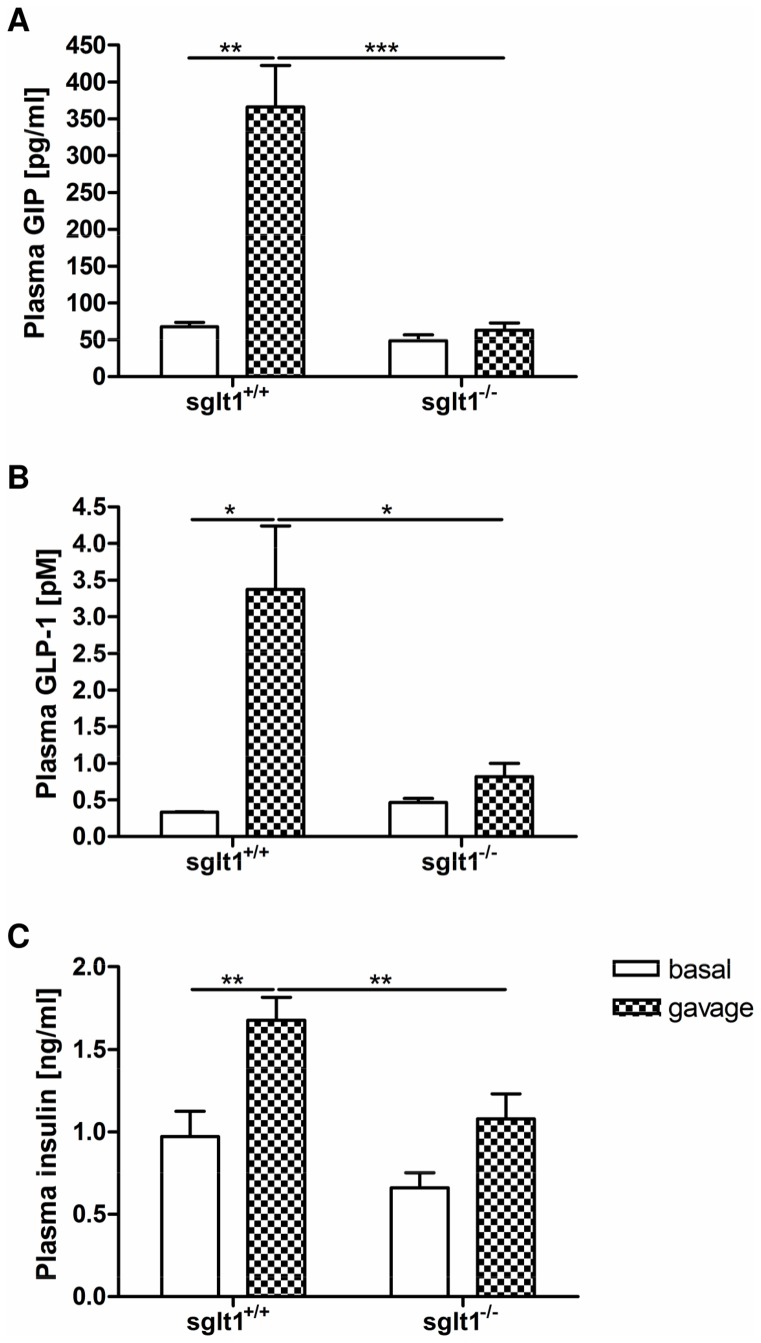
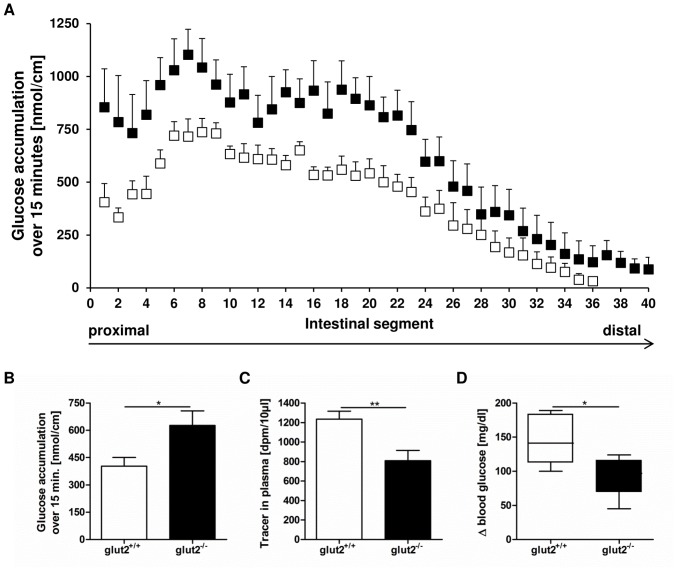
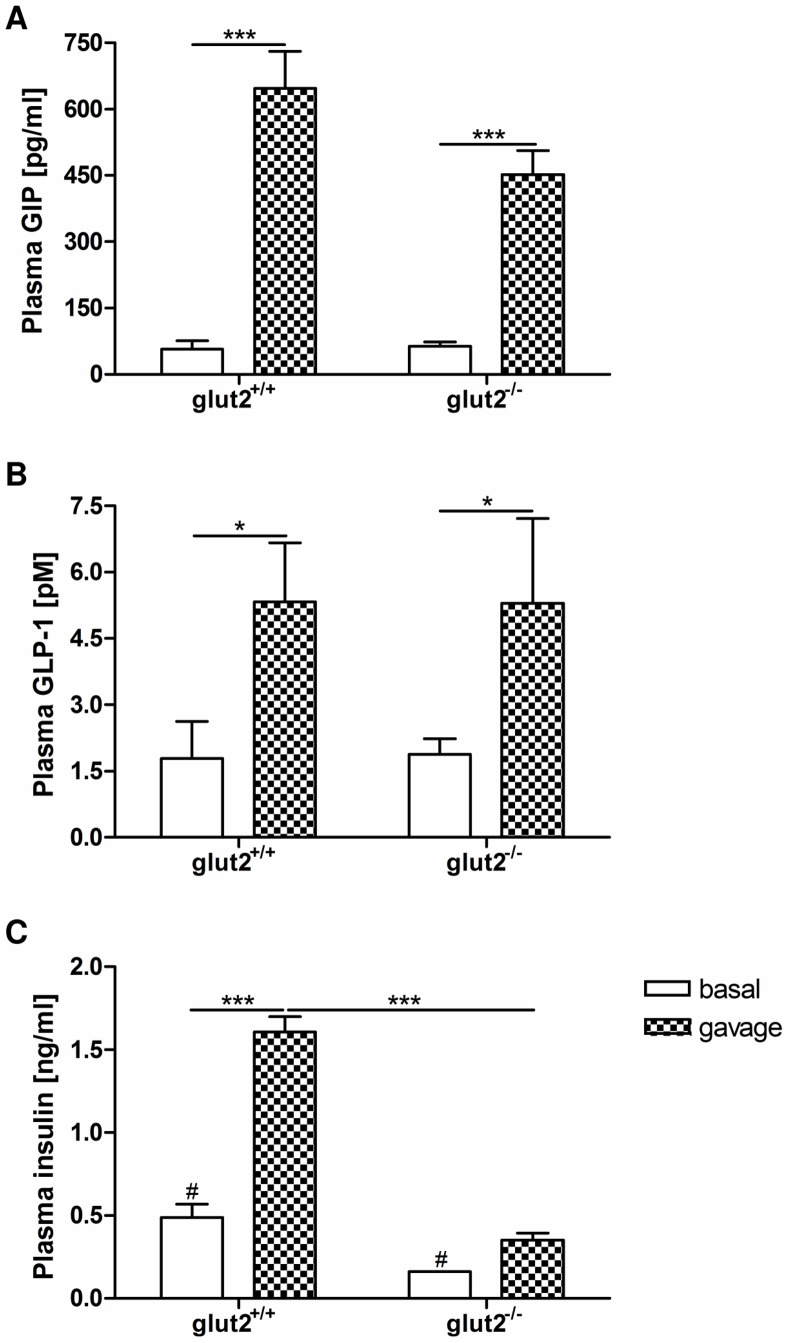
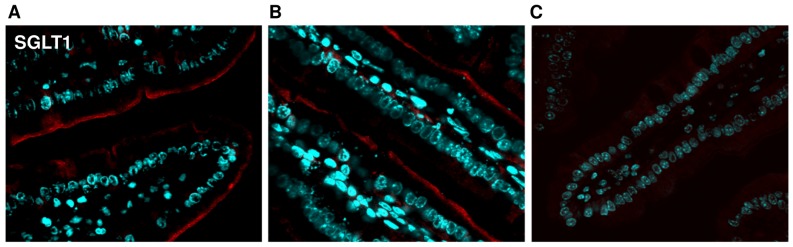
Intestinal glucose absorption is mediated by SGLT1 whereas GLUT2 is considered to provide basolateral exit. Recently, it was proposed that GLUT2 can be recruited into the apical membrane after a high luminal glucose bolus allowing bulk absorption of glucose by facilitated diffusion. Moreover, SGLT1 and GLUT2 are suggested to play an important role in intestinal glucose sensing and incretin secretion. In mice that lack either SGLT1 or GLUT2 we re-assessed the role of these transporters in intestinal glucose uptake after radiotracer glucose gavage and performed Western blot analysis for transporter abundance in apical membrane fractions in a comparative approach. Moreover, we examined the contribution of these transporters to glucose-induced changes in plasma GIP, GLP-1 and insulin levels. In mice lacking SGLT1, tissue retention of tracer glucose was drastically reduced throughout the entire small intestine whereas GLUT2-deficient animals exhibited higher tracer contents in tissue samples than wild type animals. Deletion of SGLT1 resulted also in reduced blood glucose elevations and abolished GIP and GLP-1 secretion in response to glucose. In mice lacking GLUT2, glucose-induced insulin but not incretin secretion was impaired. Western blot analysis revealed unchanged protein levels of SGLT1 after glucose gavage. GLUT2 detected in apical membrane fractions mainly resulted from contamination with basolateral membranes but did not change in density after glucose administration. SGLT1 is unequivocally the prime intestinal glucose transporter even at high luminal glucose concentrations. Moreover, SGLT1 mediates glucose-induced incretin secretion. Our studies do not provide evidence for GLUT2 playing any role in either apical glucose influx or incretin secretion.
肠内葡萄糖吸收由 SGLT1 介导,而 GLUT2 被认为提供基底外侧出口。最近,有人提出,在高腔葡萄糖脉冲后,GLUT2 可以被招募到顶膜中,从而允许葡萄糖通过易化扩散进行大量吸收。此外,SGLT1 和 GLUT2 被认为在肠内葡萄糖感应和肠促胰岛素分泌中发挥重要作用。在缺乏 SGLT1 或 GLUT2 的小鼠中,我们重新评估了这些转运体在放射性示踪葡萄糖灌胃后肠内葡萄糖摄取中的作用,并采用比较方法对顶膜部分的转运体丰度进行了 Western blot 分析。此外,我们还检查了这些转运体对葡萄糖诱导的血浆 GIP、GLP-1 和胰岛素水平变化的贡献。在缺乏 SGLT1 的小鼠中,整个小肠的示踪葡萄糖组织保留率明显降低,而 GLUT2 缺乏的动物的组织样本中示踪物含量高于野生型动物。SGLT1 的缺失还导致血糖升高减少,并消除了葡萄糖刺激的 GIP 和 GLP-1 分泌。在缺乏 GLUT2 的小鼠中,葡萄糖诱导的胰岛素但不是肠促胰岛素分泌受损。Western blot 分析显示,葡萄糖灌胃后 SGLT1 的蛋白水平不变。顶膜部分检测到的 GLUT2 主要来自基底外侧膜的污染,但葡萄糖给药后密度没有变化。即使在高腔葡萄糖浓度下,SGLT1 也是肠道葡萄糖转运体的主要形式。此外,SGLT1 介导葡萄糖诱导的肠促胰岛素分泌。我们的研究没有提供证据表明 GLUT2 在顶膜葡萄糖流入或肠促胰岛素分泌中发挥任何作用。