Di Martino Maria Teresa, Campani Virginia, Misso Gabriella, Gallo Cantafio Maria Eugenia, Gullà Annamaria, Foresta Umberto, Guzzi Pietro Hiram, Castellano Maria, Grimaldi Anna, Gigantino Vincenzo, Franco Renato, Lusa Sara, Cannataro Mario, Tagliaferri Pierosandro, De Rosa Giuseppe, Tassone Pierfrancesco, Caraglia Michele
Department of Experimental and Clinical Medicine, Magna Graecia University and Medical Oncology Unit, Catanzaro, Italy ; T. Campanella Cancer Center, "Salvatore Venuta" University Campus, Catanzaro, Italy.
Department of Pharmacy, Federico II University of Naples, Naples, Italy.
PLoS One. 2014 Feb 27;9(2):e90005. doi: 10.1371/journal.pone.0090005. eCollection 2014.
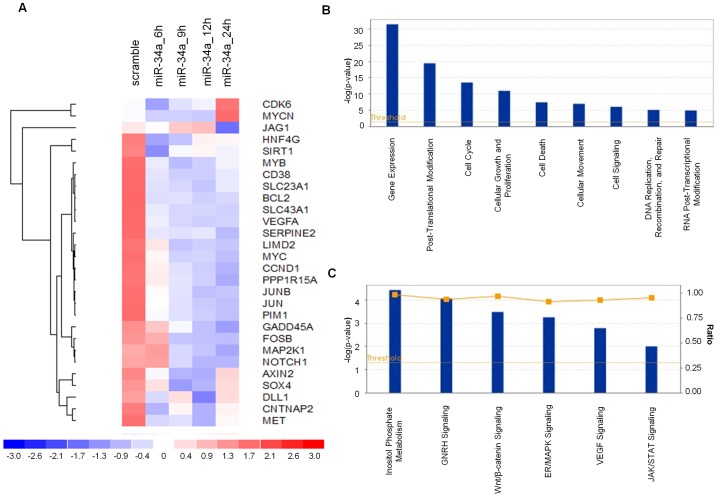
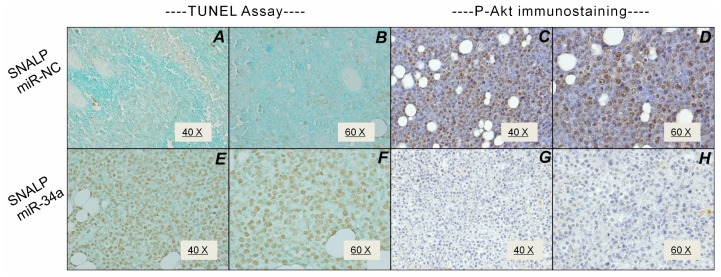
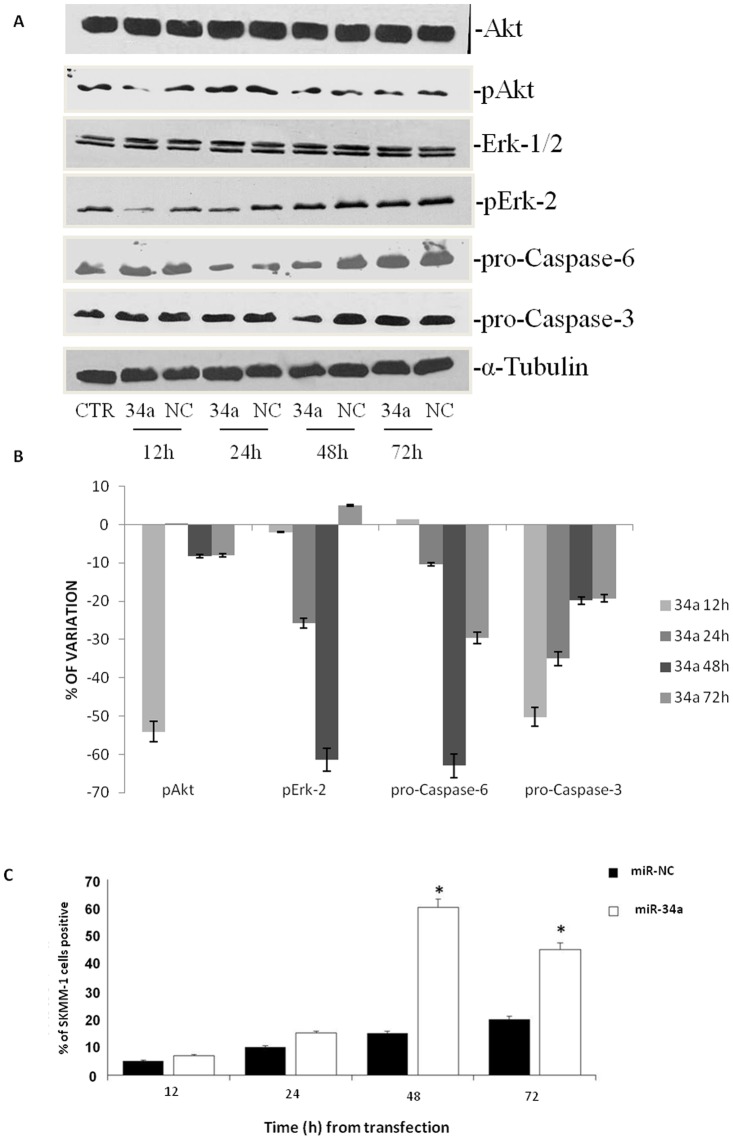
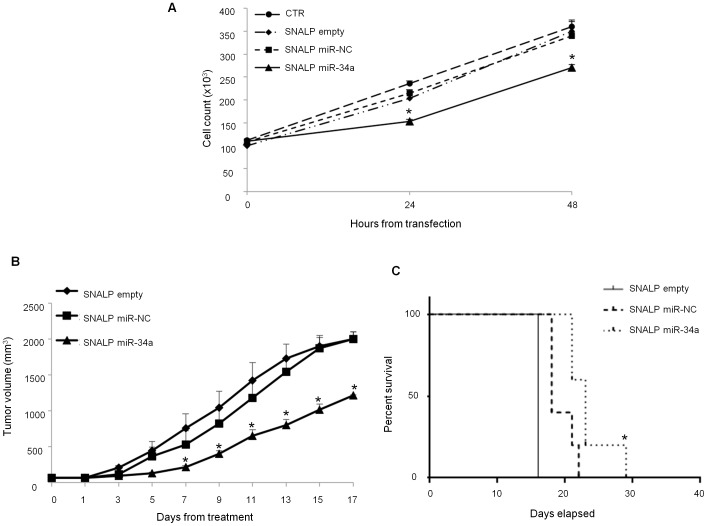
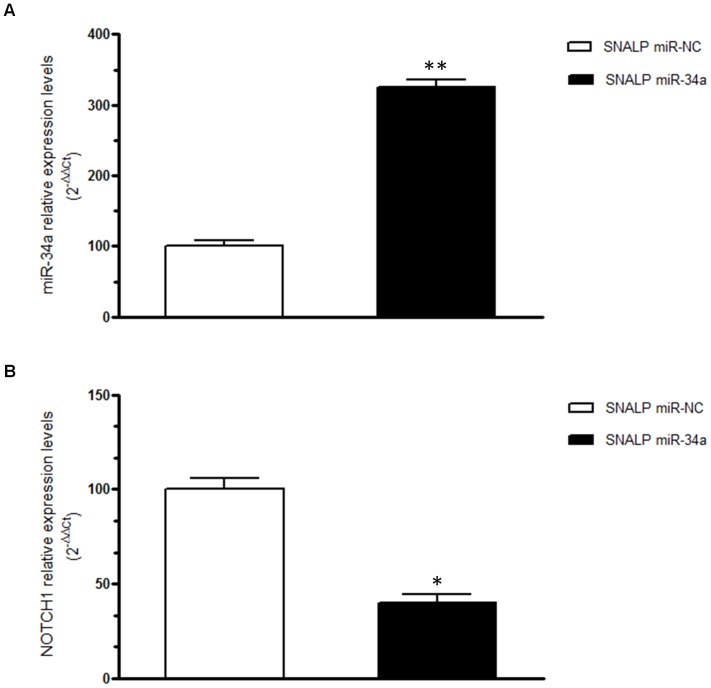
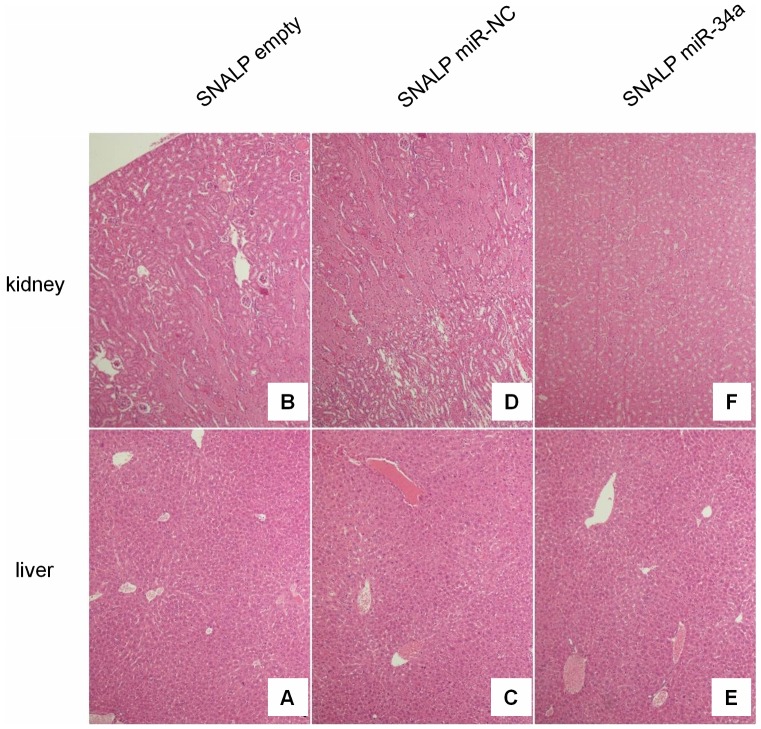
Multiple myeloma (MM) is a disease with an adverse outcome and new therapeutic strategies are urgently awaited. A rising body of evidence supports the notion that microRNAs (miRNAs), master regulators of eukaryotic gene expression, may exert anti-MM activity. Here, we evaluated the activity of synthetic miR-34a in MM cells. We found that transfection of miR-34a mimics in MM cells induces a significant change of gene expression with relevant effects on multiple signal transduction pathways. We detected early inactivation of pro-survival and proliferative kinases Erk-2 and Akt followed at later time points by caspase-6 and -3 activation and apoptosis induction. To improve the in vivo delivery, we encapsulated miR-34a mimics in stable nucleic acid lipid particles (SNALPs). We found that SNALPs miR-34a were highly efficient in vitro in inhibiting growth of MM cells. Then, we investigated the activity of the SNALPs miR-34a against MM xenografts in SCID mice. We observed significant tumor growth inhibition (p<0.05) which translated in mice survival benefits (p=0.0047). Analysis of miR-34a and NOTCH1 expression in tumor retrieved from animal demonstrated efficient delivery and gene modulation induced by SNALPs miR-34a in the absence of systemic toxicity. We here therefore provide evidence that SNALPs miR-34a may represent a promising tool for miRNA-therapeutics in MM.
多发性骨髓瘤(MM)是一种预后不良的疾病,迫切需要新的治疗策略。越来越多的证据支持这样一种观点,即作为真核基因表达主要调节因子的微小RNA(miRNA)可能具有抗MM活性。在此,我们评估了合成的miR-34a在MM细胞中的活性。我们发现,在MM细胞中转染miR-34a模拟物会诱导基因表达发生显著变化,对多个信号转导通路产生相关影响。我们检测到促生存和增殖激酶Erk-2和Akt早期失活,随后在较晚时间点出现半胱天冬酶-6和-3激活以及凋亡诱导。为了改善体内递送效果,我们将miR-34a模拟物封装在稳定核酸脂质颗粒(SNALP)中。我们发现,SNALP-miR-34a在体外对抑制MM细胞生长非常有效。然后,我们研究了SNALP-miR-34a对SCID小鼠体内MM异种移植瘤的活性。我们观察到显著的肿瘤生长抑制(p<0.05),这转化为小鼠的生存获益(p=0.0047)。对从动物体内取出的肿瘤中miR-34a和NOTCH1表达的分析表明,SNALP-miR-34a在没有全身毒性的情况下能够有效递送并诱导基因调节。因此,我们在此提供证据表明,SNALP-miR-34a可能是MM中miRNA治疗的一种有前景的工具。