Cronqvist Tina, Saljé Karen, Familari Mary, Guller Seth, Schneider Henning, Gardiner Chris, Sargent Ian L, Redman Christopher W, Mörgelin Matthias, Åkerström Bo, Gram Magnus, Hansson Stefan R
Division of Obstetrics and Gynecology, Department of Clinical Sciences, Lund University Hospital, Lund University, Lund, Sweden.
Department of Clinical Pharmacology, Ernst Moritz Arndt University of Greifswald, Greifswald, Germany.
PLoS One. 2014 Feb 27;9(2):e90020. doi: 10.1371/journal.pone.0090020. eCollection 2014.
Cell-free foetal haemoglobin (HbF) has been shown to play a role in the pathology of preeclampsia (PE). In the present study, we aimed to further characterize the harmful effects of extracellular free haemoglobin (Hb) on the placenta. In particular, we investigated whether cell-free Hb affects the release of placental syncytiotrophoblast vesicles (STBMs) and their micro-RNA content.
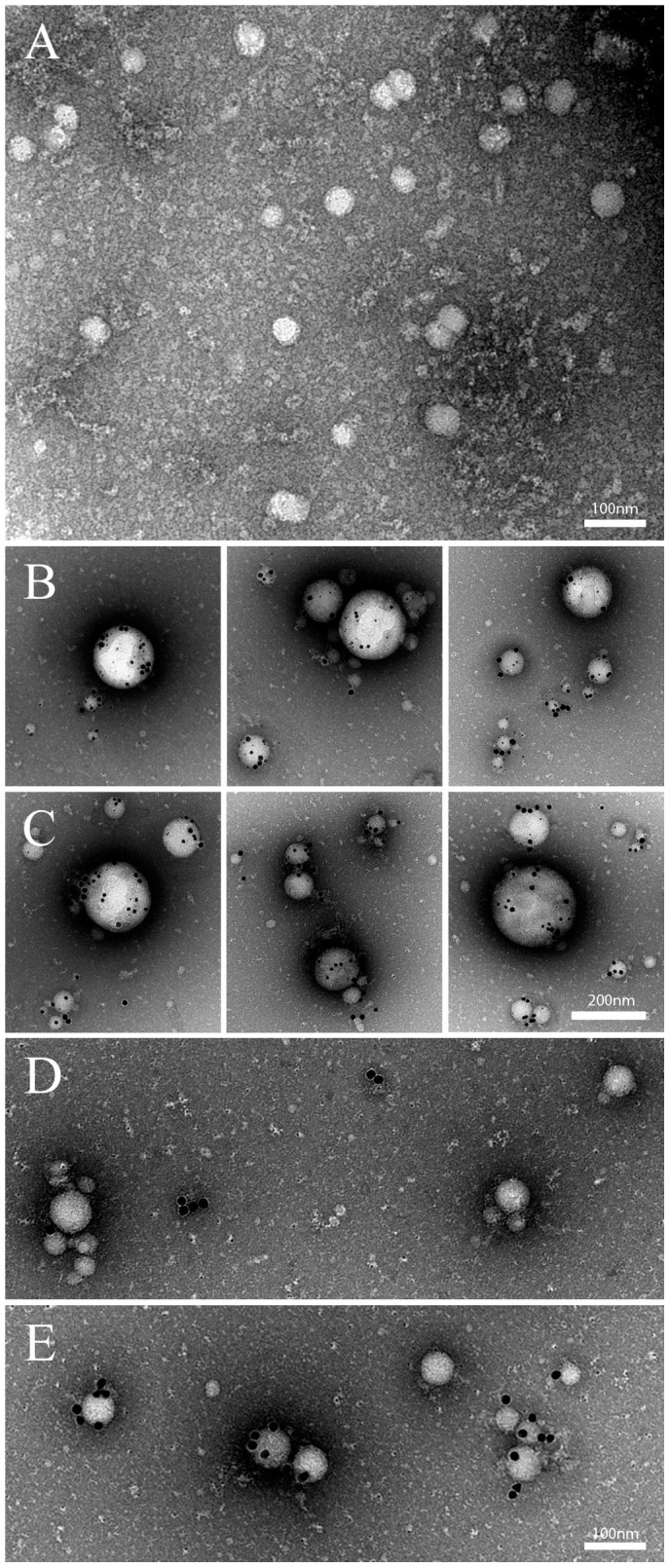
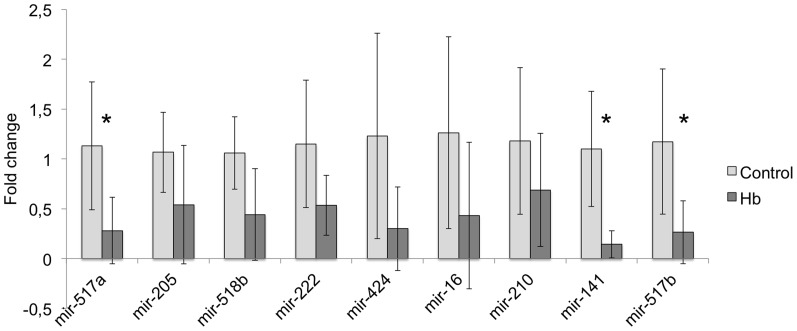
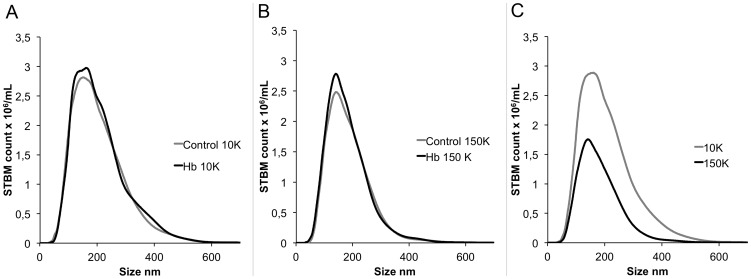
The dual ex-vivo perfusion system was used to perfuse isolated cotyledons from human placenta, with medium alone (control) or supplemented with cell-free Hb. Perfusion medium from the maternal side of the placenta was collected at the end of all perfusion phases. The STBMs were isolated using ultra-centrifugation, at 10,000×g and 150,000×g (referred to as 10K and 150K STBMs). The STBMs were characterized using the nanoparticle tracking analysis, identification of surface markers and transmission electron microscopy. RNA was extracted and nine different micro-RNAs, related to hypoxia, PE and Hb synthesis, were selected for analysis by quantitative PCR.
All micro-RNAs investigated were present in the STBMs. Mir-517a, mir-141 and mir-517b were down regulated after Hb perfusion in the 10K STBMs. Furthermore, Hb was shown to be carried by the STBMs.
This study showed that Hb perfusion can alter the micro-RNA content of released STBMs. Of particular interest is the alteration of two placenta specific micro-RNAs; mir-517a and mir-517b. We have also seen that STBMs may function as carriers of Hb into the maternal circulation.
无细胞胎儿血红蛋白(HbF)已被证明在子痫前期(PE)的病理过程中起作用。在本研究中,我们旨在进一步阐明细胞外游离血红蛋白(Hb)对胎盘的有害影响。特别是,我们研究了无细胞Hb是否会影响胎盘合体滋养层细胞微泡(STBMs)的释放及其微小RNA含量。
采用双离体灌注系统,用单独的培养基(对照)或添加无细胞Hb的培养基灌注人胎盘分离的叶状绒毛膜。在所有灌注阶段结束时,从胎盘母体侧收集灌注培养基。使用超速离心法在10,000×g和150,000×g下分离STBMs(分别称为10K和150K STBMs)。使用纳米颗粒跟踪分析、表面标志物鉴定和透射电子显微镜对STBMs进行表征。提取RNA,并选择9种与缺氧、PE和Hb合成相关的不同微小RNA,通过定量PCR进行分析。
所有研究的微小RNA均存在于STBMs中。在10K STBMs中,Hb灌注后mir-517a、mir-141和mir-517b表达下调。此外,STBMs可携带Hb。
本研究表明,Hb灌注可改变释放的STBMs的微小RNA含量。特别值得关注的是两种胎盘特异性微小RNA;mir-517a和mir-517b的改变。我们还发现,STBMs可能作为Hb进入母体循环的载体。