Barrios Bibiana, Baez Natalia S, Reynolds Della, Iribarren Pablo, Cejas Hugo, Young Howard A, Rodriguez-Galan Maria Cecilia
Inmunología, CIBICI-CONICET, Facultad de Ciencias Químicas, Universidad Nacional de Córdoba, Córdoba, Argentina.
Laboratory of Experimental Immunology, Cancer and Inflammation Program, Center for Cancer Research, National Cancer Institute, National Institutes of Health, Frederick, Maryland, United States of America.
PLoS One. 2014 Feb 28;9(2):e90116. doi: 10.1371/journal.pone.0090116. eCollection 2014.
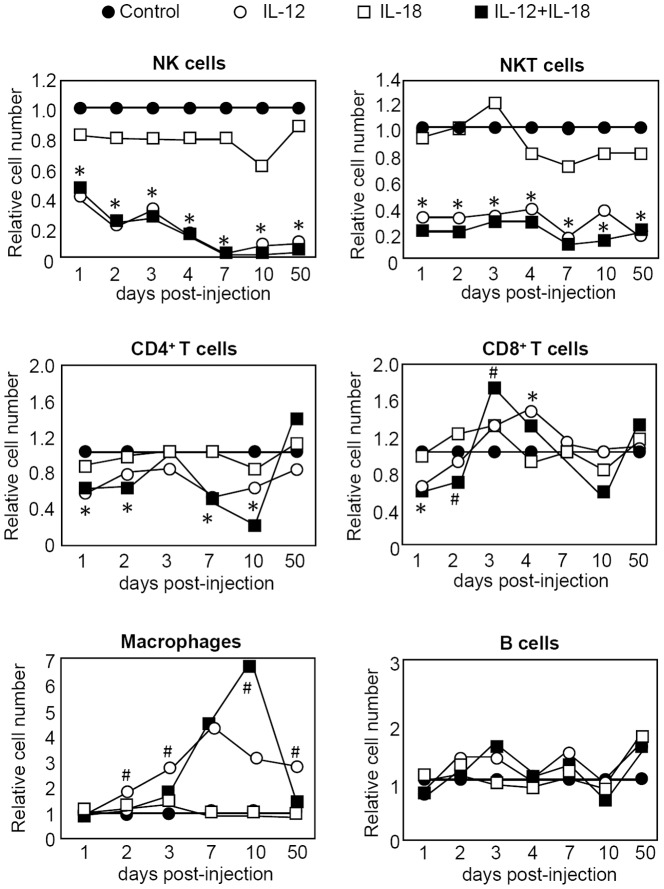
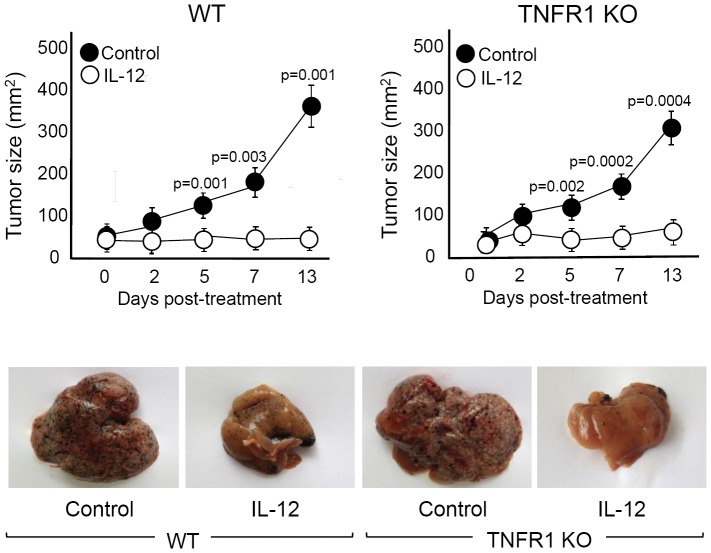
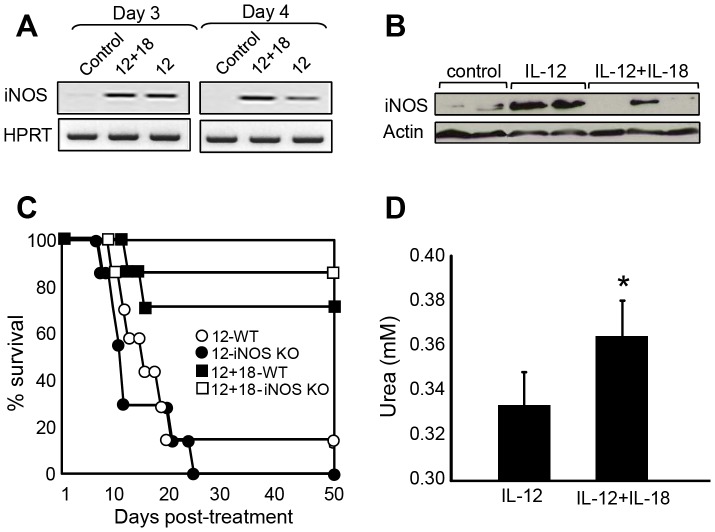
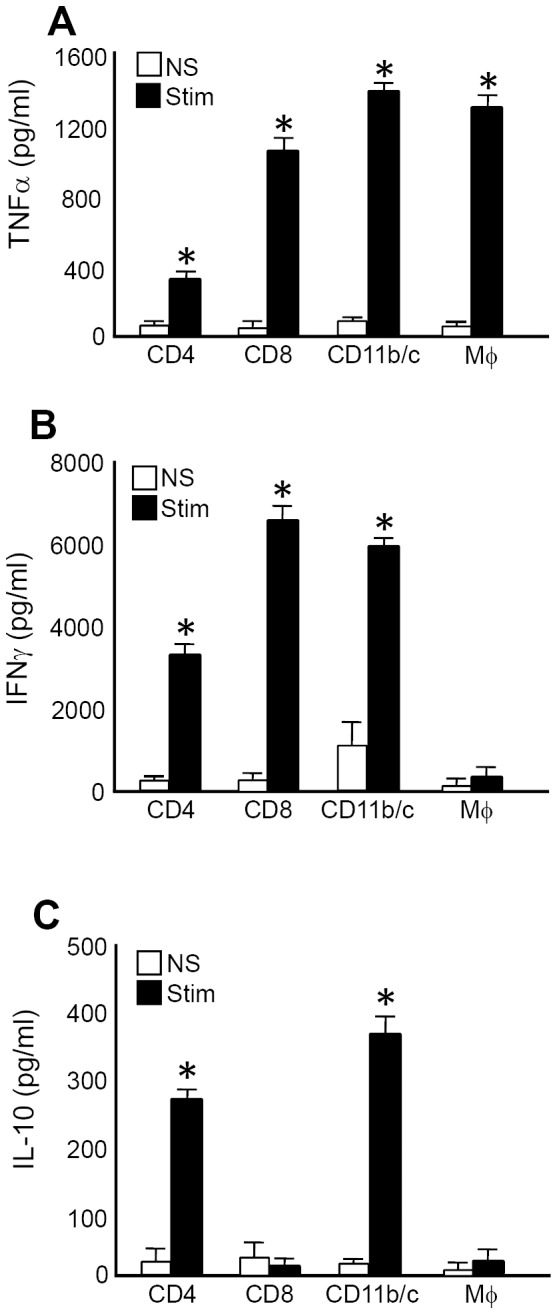
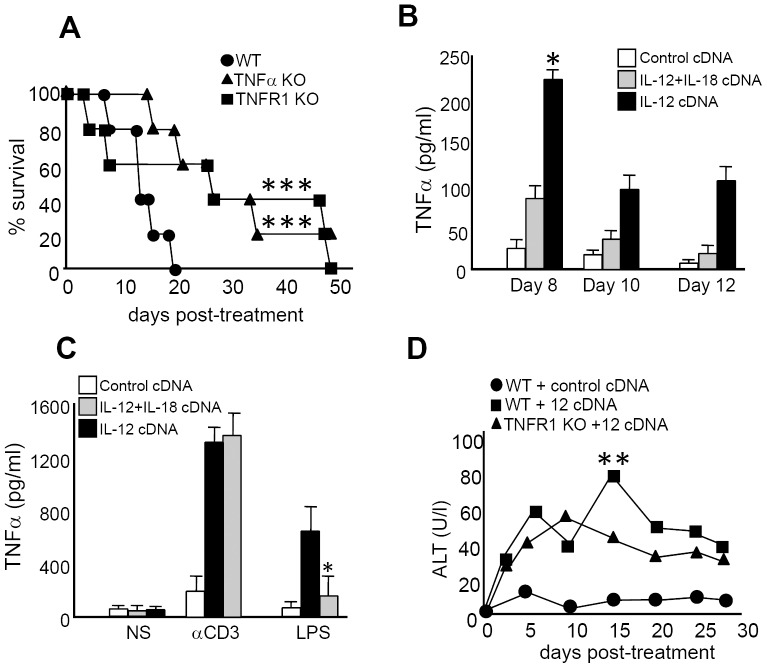
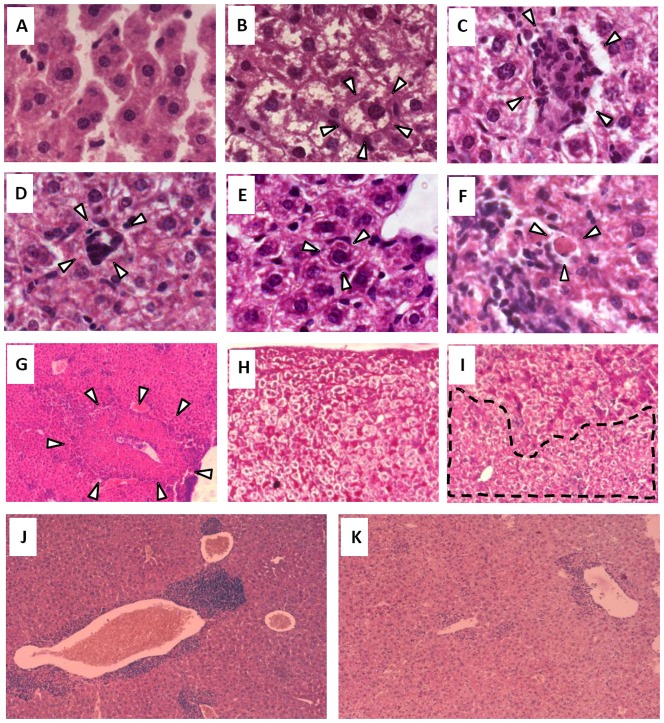
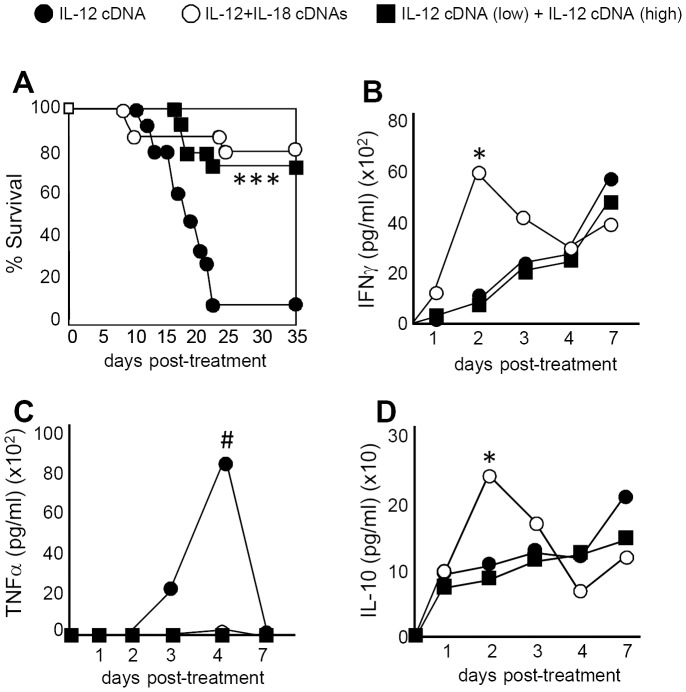
For more than a decade, the cytokine interleukin-12 (IL-12) has been utilized, either alone or in combination with other drugs, as a treatment for cancer. The numerous anti-tumor properties of IL-12 still generate interest in the clinical use of this cytokine, even though it has demonstrated toxicity when administrated systemically. As an approach to overcome this toxicity, numerous laboratories have attempted to induce IL-12 expression at the site of the tumor. However for tumors that are difficult to remove surgically or for the treatment of disseminated metastases, systemic expression of this cytokine still remains as the most efficient method of administration. Nevertheless, finding alternative approaches for the use of IL-12 in the treatment of cancer and unraveling the basis of IL-12-side effects remain a challenge. In the present work we demonstrate that systemic expression of IL-12 through hydrodynamic injection of IL-12 cDNA is able to induce different types of liver lesions associated with a toxic pathology. However we report here that hepatic toxicity is diminished and survival of mice enhanced in the absence of tumor necrosis factor alpha (TNFα). This observation is in contrast to several murine models and clinical trials that postulate interferon gamma (IFNγ) as the main cytokine responsible for IL-12 toxicity. Moreover, our work demonstrates that when IL-12 cDNA is co-injected with IL-18 cDNA or when mice are pre-treated with a low dose of IL-12 cDNA prior to receiving a high dose of IL-12 cDNA, systemic levels of TNFα are almost completely abrogated, resulting in improved survival and less hepatic damage. Importantly, abrogation of TNFα signaling does not affect the strong anti-tumor activity of IL-12. Thus, neutralizing TNFα with antagonists already approved for human use offers a promising approach to abrogate IL-12 side effects during the use of this cytokine for the treatment of cancer.
十多年来,细胞因子白细胞介素-12(IL-12)一直被单独或与其他药物联合用于癌症治疗。尽管IL-12全身给药时已显示出毒性,但其众多的抗肿瘤特性仍引发了人们对该细胞因子临床应用的兴趣。作为克服这种毒性的一种方法,许多实验室试图在肿瘤部位诱导IL-12表达。然而,对于难以手术切除的肿瘤或播散性转移瘤的治疗,这种细胞因子的全身表达仍然是最有效的给药方法。尽管如此,寻找IL-12在癌症治疗中的替代应用方法并阐明IL-12副作用的基础仍然是一项挑战。在本研究中,我们证明通过水动力注射IL-12 cDNA实现IL-12的全身表达能够诱导与毒性病理相关的不同类型的肝脏损伤。然而,我们在此报告,在没有肿瘤坏死因子α(TNFα)的情况下,肝毒性会降低,小鼠存活率会提高。这一观察结果与一些小鼠模型和临床试验相反,这些模型和试验假定干扰素γ(IFNγ)是导致IL-12毒性的主要细胞因子。此外,我们的研究表明,当IL-12 cDNA与IL-18 cDNA共同注射时,或者当小鼠在接受高剂量IL-12 cDNA之前先用低剂量IL-12 cDNA预处理时,TNFα的全身水平几乎完全消除,从而提高了存活率并减少了肝脏损伤。重要的是,TNFα信号传导的消除并不影响IL-12强大的抗肿瘤活性。因此,用已批准用于人类的拮抗剂中和TNFα为在使用该细胞因子治疗癌症期间消除IL-12副作用提供了一种有前景的方法。