Li Li, Zhang Zhenwei, Wang Chengyu, Miao Lei, Zhang Jianpeng, Wang Jiasen, Jiao Binghua, Zhao Shuwei
Department of Otolaryngology-Head and Neck Surgery, Changzheng Hospital, Second Military Medical University, Shanghai, China.
Department of Biochemistry and Molecular Biology, Second Military Medical University, Shanghai, China ; Key Laboratory of Liver Disease, Center of Infectious Diseases, Guangzhou 458 Hospital, Guangzhou, China.
PLoS One. 2014 Feb 27;9(2):e90181. doi: 10.1371/journal.pone.0090181. eCollection 2014.
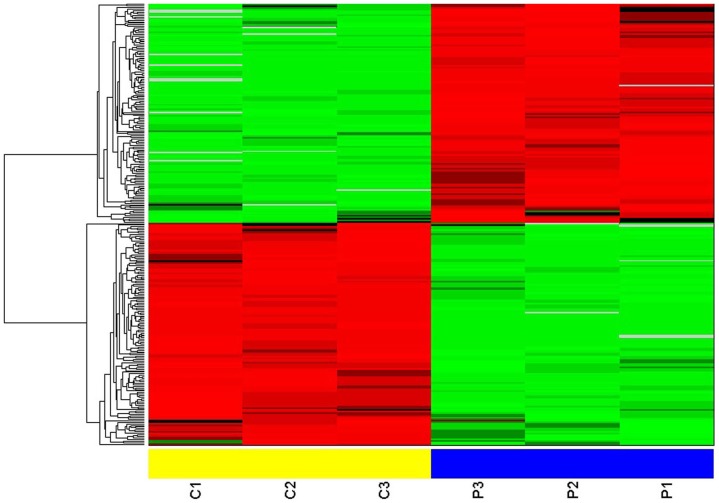
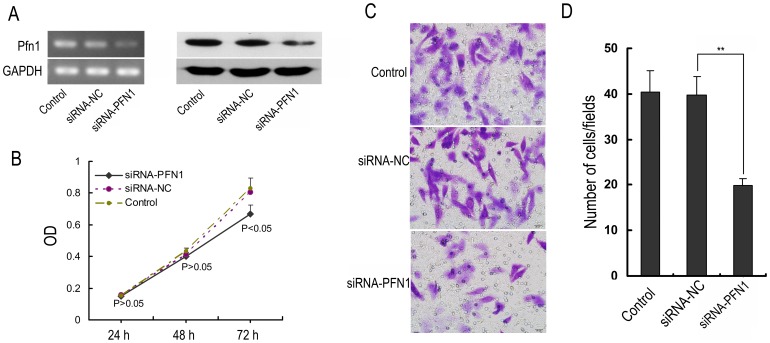
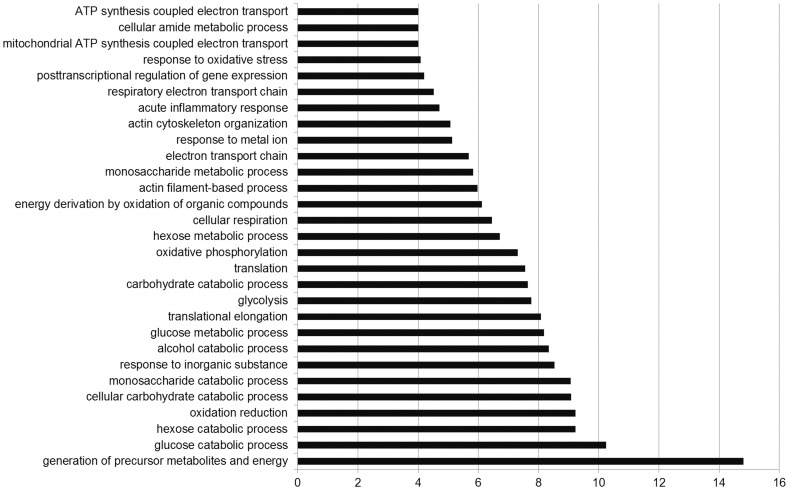
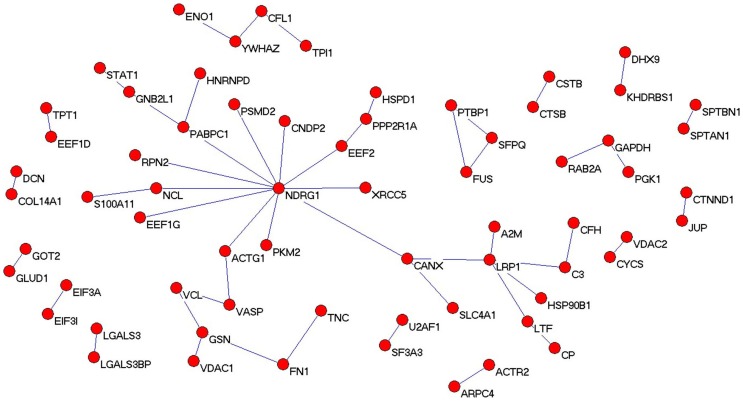
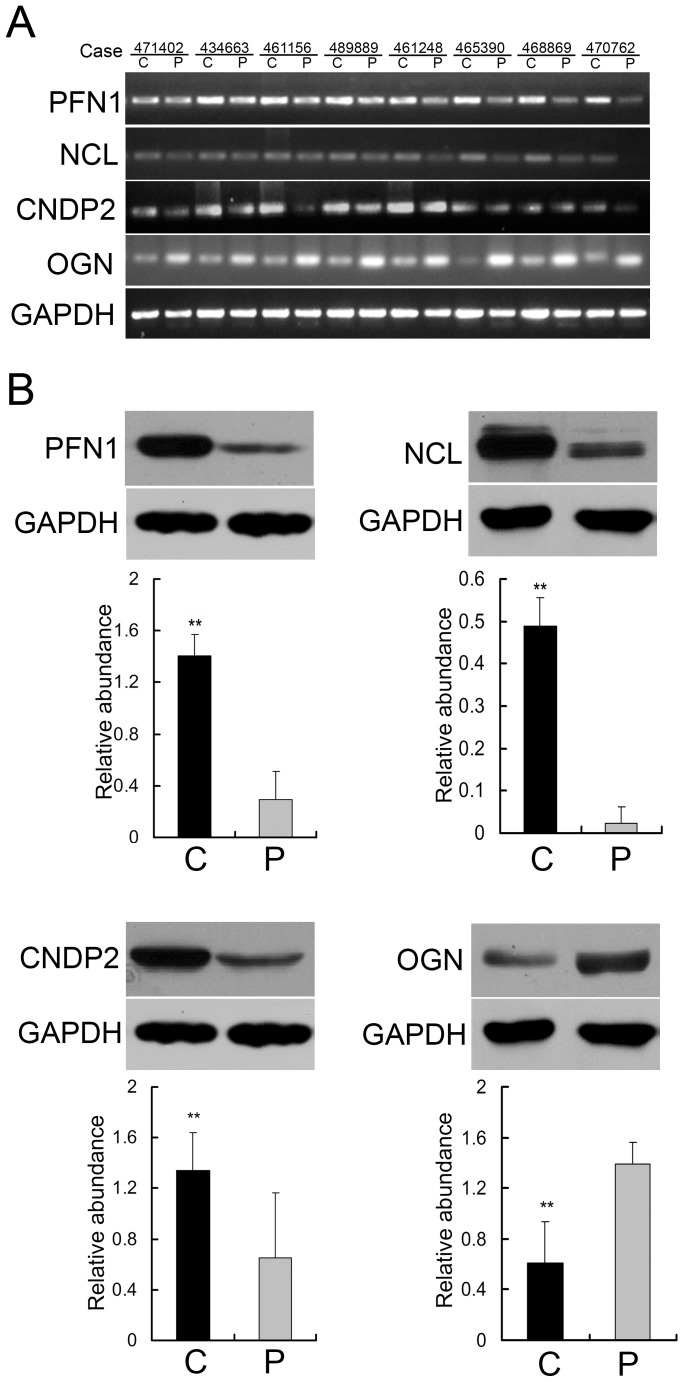
To discover candidate biomarkers for diagnosis and detection of human laryngeal carcinoma and explore possible mechanisms of this cancer carcinogenesis, two-dimensional strong cation-exchange/reversed-phase nano-scale liquid chromatography/mass spectrometry analysis was used to identify differentially expressed proteins between the laryngeal carcinoma tissue and the adjacent normal tissue. As a result, 281 proteins with significant difference in expression were identified, and four differential proteins, Profilin-1 (PFN1), Nucleolin (NCL), Cytosolic non-specific dipeptidase (CNDP2) and Mimecan (OGN) with different subcellular localization were selectively validated. Semiquantitative RT-PCR and Western blotting were performed to detect the expression of the four proteins employing a large collection of human laryngeal carcinoma tissues, and the results validated the differentially expressed proteins identified by the proteomics. Furthermore, we knocked down PFN1 in immortalized human laryngeal squamous cell line Hep-2 cells and then the proliferation and metastasis of these transfected cells were measured. The results showed that PFN1 silencing inhibited the proliferation and affected the migration ability of Hep-2 cells, providing some new insights into the pathogenesis of PFN1 in laryngeal carcinoma. Altogether, our present data first time show that PFN1, NCL, CNDP2 and OGN are novel potential biomarkers for diagnosis and therapeutic targets for laryngeal carcinoma, and PFN1 is involved in the metastasis of laryngeal carcinoma.
为发现用于人类喉癌诊断和检测的候选生物标志物,并探索该癌症致癌的可能机制,采用二维强阳离子交换/反相纳升级液相色谱/质谱分析法来鉴定喉癌组织与相邻正常组织之间差异表达的蛋白质。结果,鉴定出281种表达有显著差异的蛋白质,并选择性地验证了四种具有不同亚细胞定位的差异蛋白质,即丝切蛋白-1(PFN1)、核仁素(NCL)、胞质非特异性二肽酶(CNDP2)和 mimecan(OGN)。利用大量人类喉癌组织进行半定量逆转录-聚合酶链反应(RT-PCR)和蛋白质免疫印迹法检测这四种蛋白质的表达,结果验证了蛋白质组学鉴定出的差异表达蛋白质。此外,我们在永生化的人类喉鳞状细胞系Hep-2细胞中敲低PFN1,然后检测这些转染细胞的增殖和转移情况。结果表明,PFN1沉默抑制了Hep-2细胞的增殖并影响其迁移能力,为PFN1在喉癌发病机制中的作用提供了一些新见解。总之,我们目前的数据首次表明,PFN1、NCL、CNDP2和OGN是喉癌诊断的新型潜在生物标志物和治疗靶点,且PFN1参与喉癌转移。