Dai Lu, Trillo-Tinoco Jimena, Bai Lihua, Kang Baoli, Xu Zengguang, Wen Xiaofei, Del Valle Luis, Qin Zhiqiang
Research Center for Translational Medicine and Key Laboratory of Arrhythmias of the Ministry of Education of China, East Hospital, Tongji University School of Medicine, Shanghai, China ; Department of Medicine, Louisiana Cancer Research Center, Louisiana State University Health Sciences Center, New Orleans, Louisiana, United States of America.
Department of Pathology, Louisiana Cancer Research Center, Louisiana State University Health Sciences Center, New Orleans, Louisiana, United States of America.
PLoS One. 2014 Feb 28;9(2):e90349. doi: 10.1371/journal.pone.0090349. eCollection 2014.
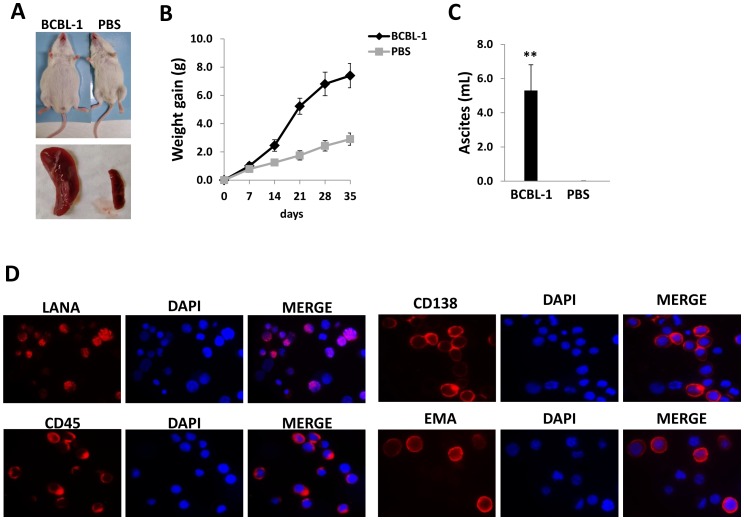
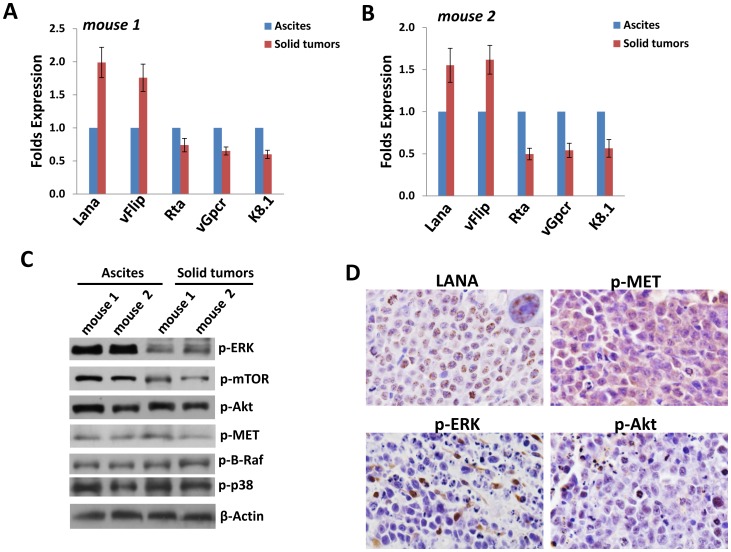
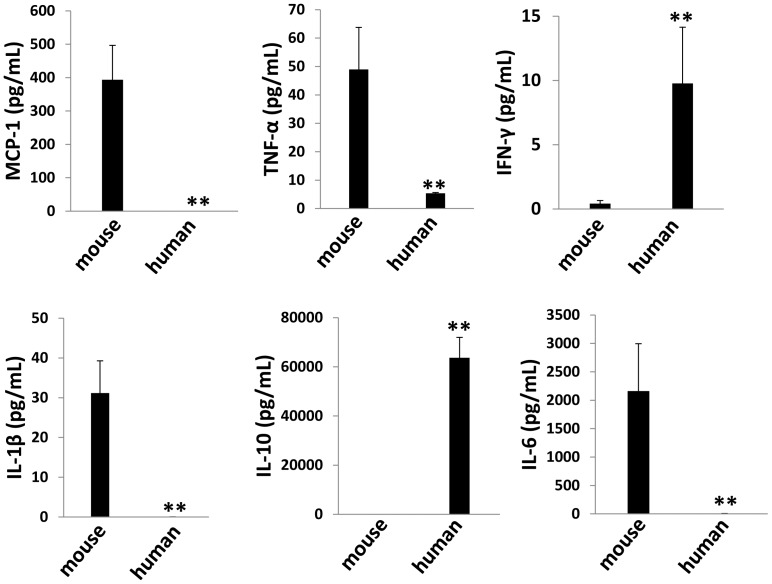
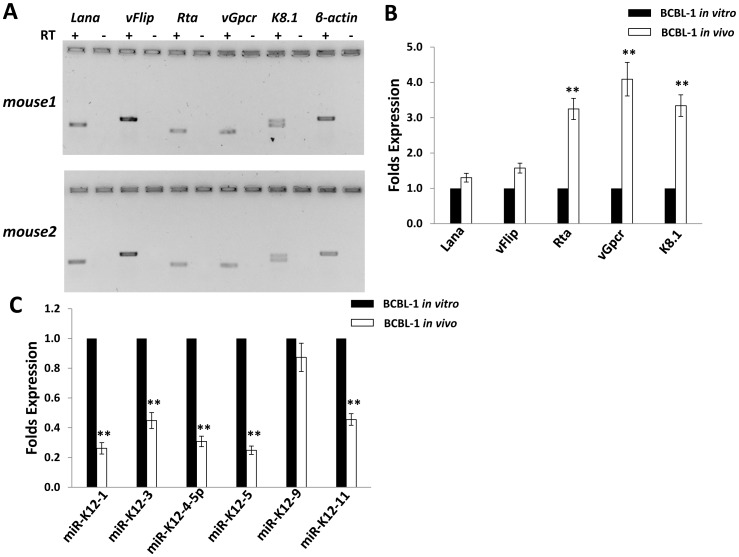
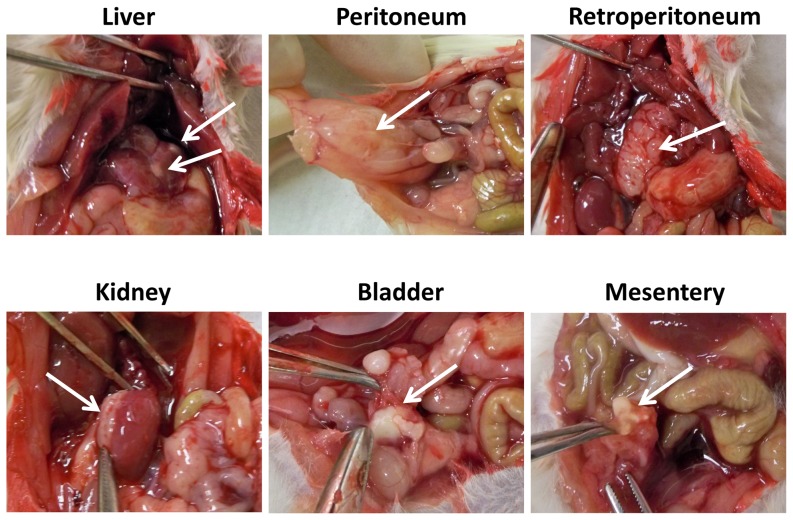
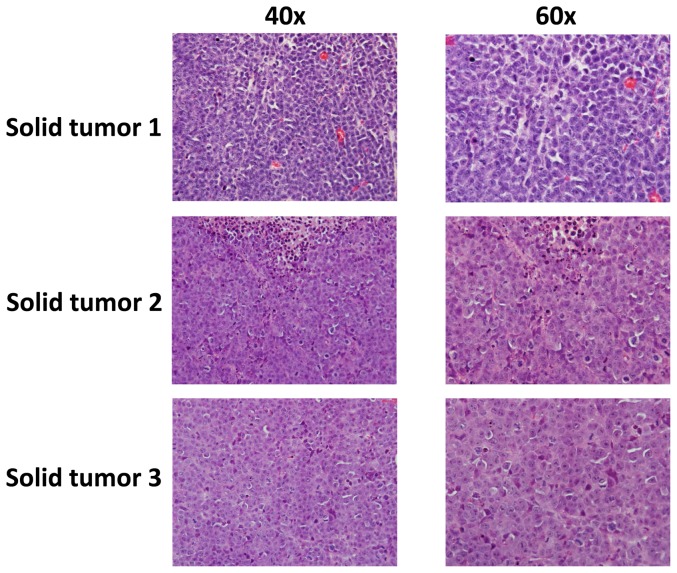
Kaposi's sarcoma-associated herpesvirus is the causative agent of primary effusion lymphoma (PEL), which arises preferentially in the setting of infection with human immunodeficiency virus (HIV). Even with standard cytotoxic chemotherapy, PEL continues to cause high mortality rates, requiring the development of novel therapeutic strategies. PEL xenograft models employing immunodeficient mice have been used to study the in vivo effects of a variety of therapeutic approaches. However, it remains unclear whether these xenograft models entirely reflect clinical presentations of KSHV(+) PEL, especially given the recent description of extracavitary solid tumor variants arising in patients. In addition, effusion and solid tumor cells propagated in vivo exhibit unique biology, differing from one another or from their parental cell lines propagated through in vitro culture. Therefore, we used a KSHV(+) PEL/BCBL-1 xenograft model involving non-obese diabetic/severe-combined immunodeficient (NOD/SCID) mice, and compared characteristics of effusion and solid tumors with their parent cell culture-derived counterparts. Our results indicate that although this xenograft model can be used for study of effusion and solid lymphoma observed in patients, tumor cells in vivo display unique features to those passed in vitro, including viral lytic gene expression profile, rate of solid tumor development, the host proteins and the complex of tumor microenvironment. These items should be carefully considered when the xenograft model is used for testing novel therapeutic strategies against KSHV-related lymphoma.
卡波西肉瘤相关疱疹病毒是原发性渗出性淋巴瘤(PEL)的病原体,原发性渗出性淋巴瘤优先发生于人类免疫缺陷病毒(HIV)感染的背景下。即使采用标准的细胞毒性化疗,PEL仍导致高死亡率,因此需要开发新的治疗策略。采用免疫缺陷小鼠的PEL异种移植模型已被用于研究多种治疗方法的体内效果。然而,这些异种移植模型是否完全反映了KSHV(+)PEL的临床表现仍不清楚,特别是考虑到最近对患者出现的腔外实体瘤变体的描述。此外,在体内增殖的渗出液和实体瘤细胞表现出独特的生物学特性,彼此不同或与通过体外培养增殖的亲本细胞系不同。因此,我们使用了一种涉及非肥胖糖尿病/严重联合免疫缺陷(NOD/SCID)小鼠的KSHV(+)PEL/BCBL-1异种移植模型,并将渗出液和实体瘤的特征与其亲本细胞培养衍生的对应物进行了比较。我们的结果表明,尽管这种异种移植模型可用于研究患者中观察到的渗出液和实体淋巴瘤,但体内肿瘤细胞与体外传代的肿瘤细胞表现出独特的特征,包括病毒裂解基因表达谱、实体瘤发展速率、宿主蛋白和肿瘤微环境复合物。当使用异种移植模型测试针对KSHV相关淋巴瘤的新治疗策略时,应仔细考虑这些因素。