Fu Cai-Yun, Xia Rui-Long, Zhang Teng-Fei, Lu Yan, Zhang Shi-Fu, Yu Zhi-Qiang, Jin Tao, Mou Xiao-Zhou
Lab of Proteomics and Molecular Enzymology, College of Life Sciences, Zhejiang Sci-Tech University, Hangzhou, China ; Institute for Cell-Based Drug Development of Zhejiang Province, Hangzhou, China.
Lab of Proteomics and Molecular Enzymology, College of Life Sciences, Zhejiang Sci-Tech University, Hangzhou, China.
PLoS One. 2014 Feb 28;9(2):e90446. doi: 10.1371/journal.pone.0090446. eCollection 2014.
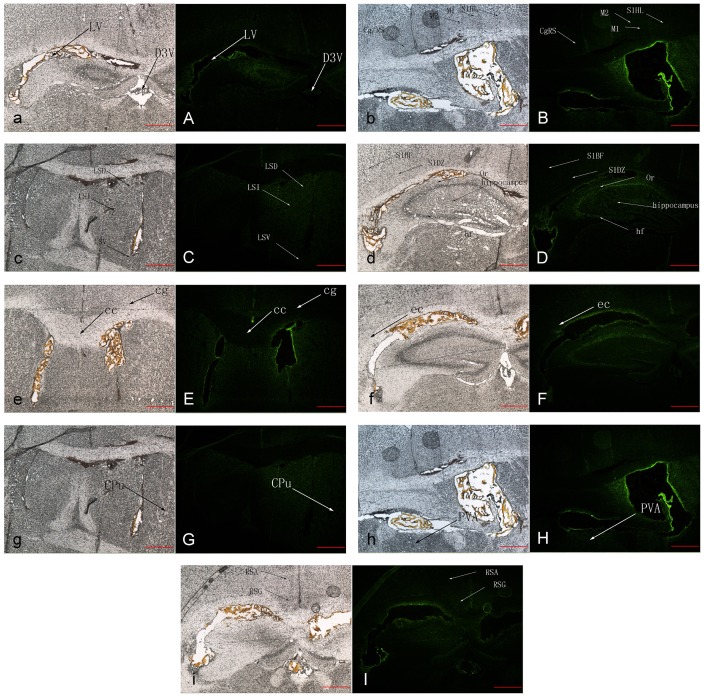
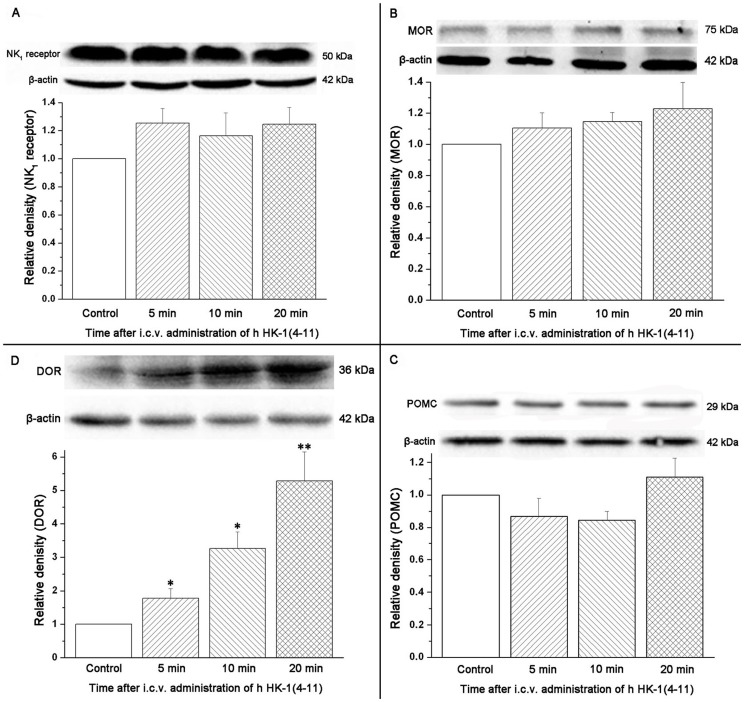
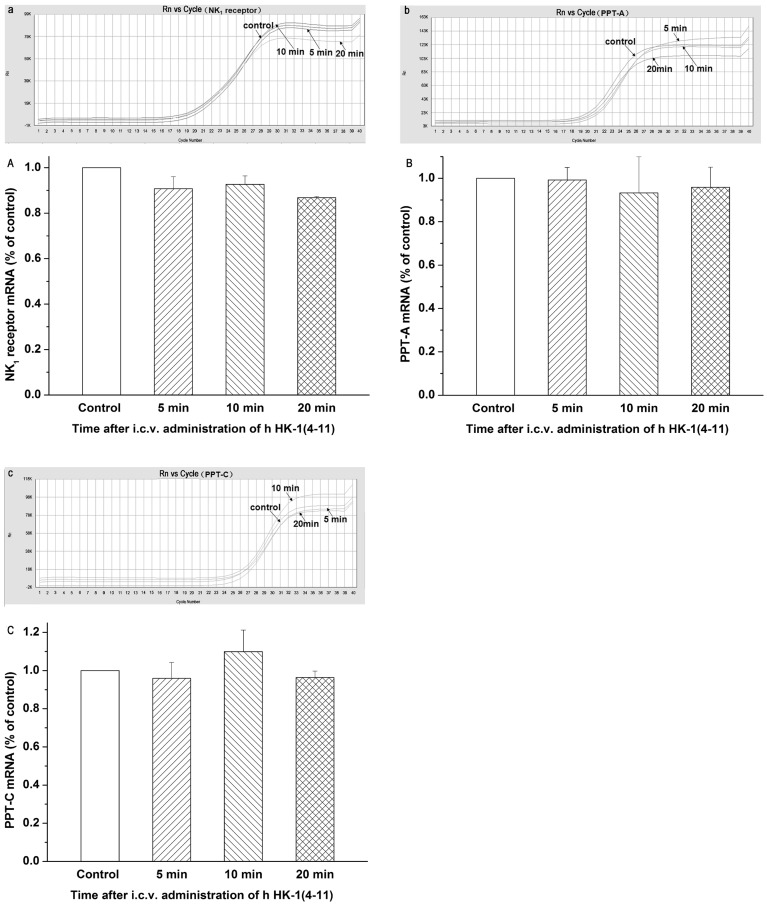
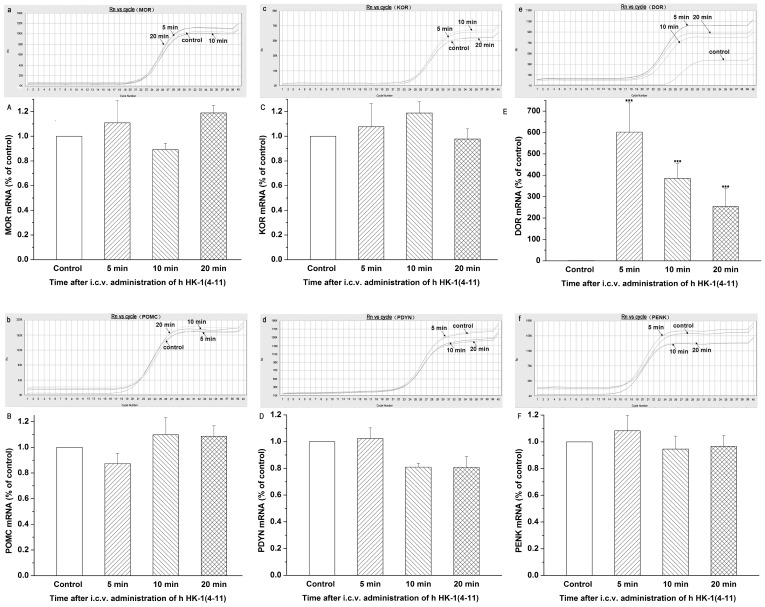
Our previous studies have shown that an active fragment of human tachykinins (hHK-1(4-11)) produced an opioid-independent analgesia after intracerebroventricular (i.c.v.) injection in mice, which has been markedly enhanced by a δ OR antagonist, naltrindole hydrochloride (NTI). In this study, we have further characterized the in vivo analgesia after i.c.v. injection of hHK-1(4-11) in mouse model. Our qRT-PCR results showed that the mRNA levels of several ligands and receptors (e.g. PPT-A, PPT-C, KOR, PDYN and PENK) have not changed significantly. Furthermore, neither transcription nor expression of NK1 receptor, MOR and POMC have changed noticeably. In contrast, both mRNA and protein levels of DOR have been up-regulated significantly, indicating that the enhanced expression of δ opioid receptor negatively modulates the analgesia induced by i.c.v. injection of hHK-1(4-11). Additionally, the combinatorial data from our previous and present experiments strongly suggest that the discriminable distribution sites in the central nervous system between hHK-1(4-11) and r/mHK-1 may be attributed to their discriminable analgesic effects. Altogether, our findings will not only contribute to the understanding of the complicated mechanisms regarding the nociceptive modulation of hemokinin-1 as well as its active fragments at supraspinal level, but may also lead to novel pharmacological interventions.
我们之前的研究表明,人速激肽的一个活性片段(hHK-1(4-11))在小鼠脑室内注射后产生了不依赖阿片类药物的镇痛作用,而δ阿片受体拮抗剂盐酸纳曲吲哚(NTI)显著增强了这种作用。在本研究中,我们进一步对小鼠模型脑室内注射hHK-1(4-11)后的体内镇痛作用进行了表征。我们的qRT-PCR结果显示,几种配体和受体(如PPT-A、PPT-C、KOR、PDYN和PENK)的mRNA水平没有显著变化。此外,NK1受体、MOR和POMC的转录和表达均未明显改变。相比之下,DOR的mRNA和蛋白水平均显著上调,表明δ阿片受体表达的增强对脑室内注射hHK-1(4-11)诱导的镇痛产生负性调节作用。此外,我们之前和现在实验的综合数据强烈表明,hHK-1(4-11)和r/mHK-1在中枢神经系统中可区分的分布位点可能归因于它们可区分的镇痛作用。总之,我们的研究结果不仅有助于理解血激肽-1及其活性片段在脊髓上水平的伤害性调制的复杂机制,还可能导致新的药理学干预措施。