Tian Ang, Qin Xiaofei, Wu Anhua, Zhang Hangzhou, Xu Quan, Xing Deguang, Yang He, Qiu Bo, Xue Xiangxin, Zhang Dongyong, Dong Chenbo
Liaoning Provincial Universities Key Laboratory of Boron Resource Ecological Utilization Technology and Boron Materials, Northeastern University, People's Republic of China.
Department of Neurosurgery, The First Affiliated Hospital of China Medical University, People's Republic of China.
Int J Nanomedicine. 2015 Mar 25;10:2423-39. doi: 10.2147/IJN.S71622. eCollection 2015.
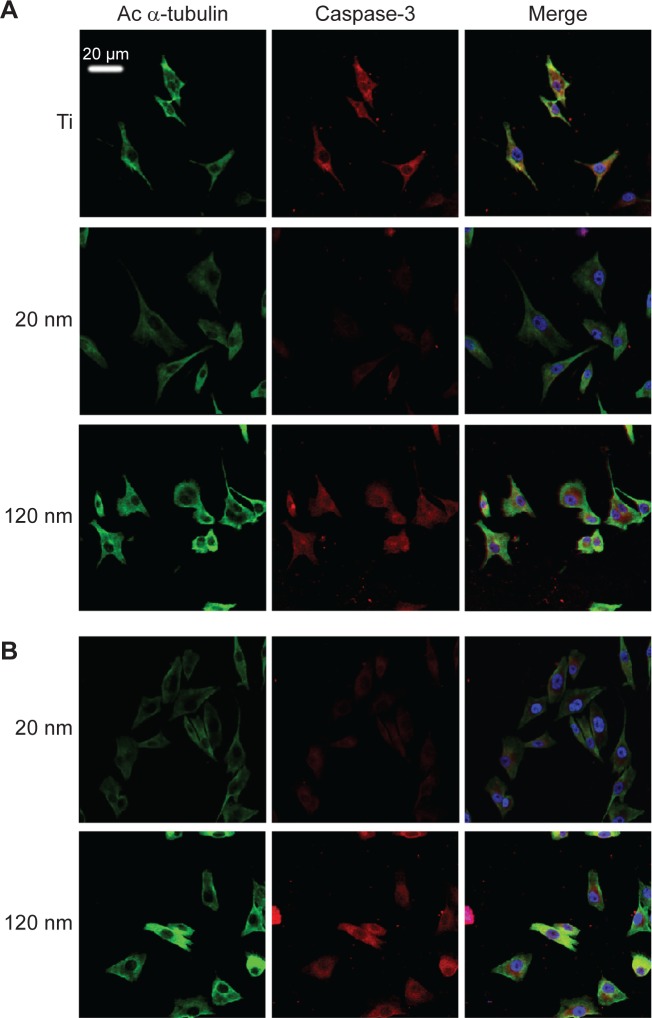
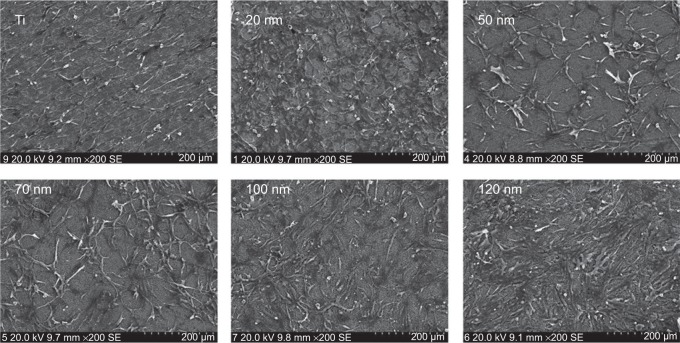
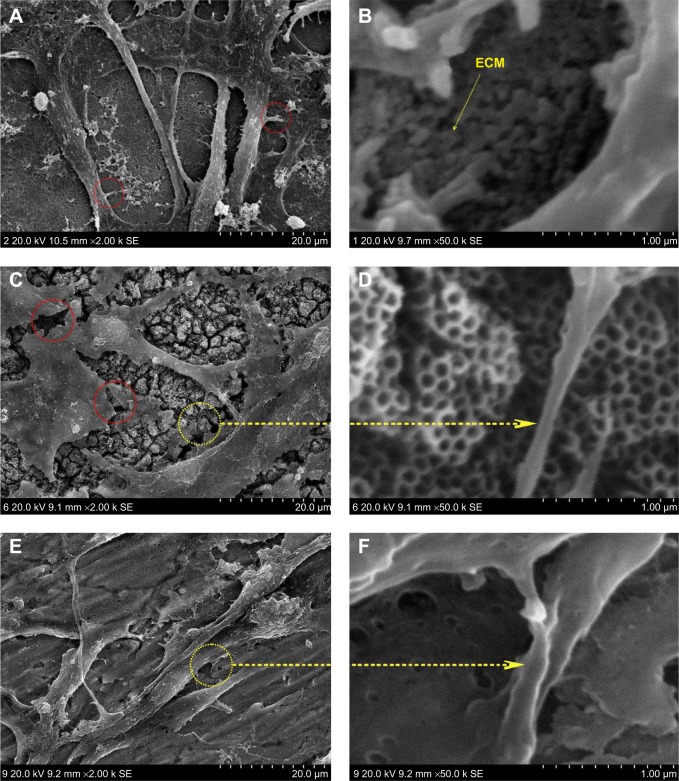
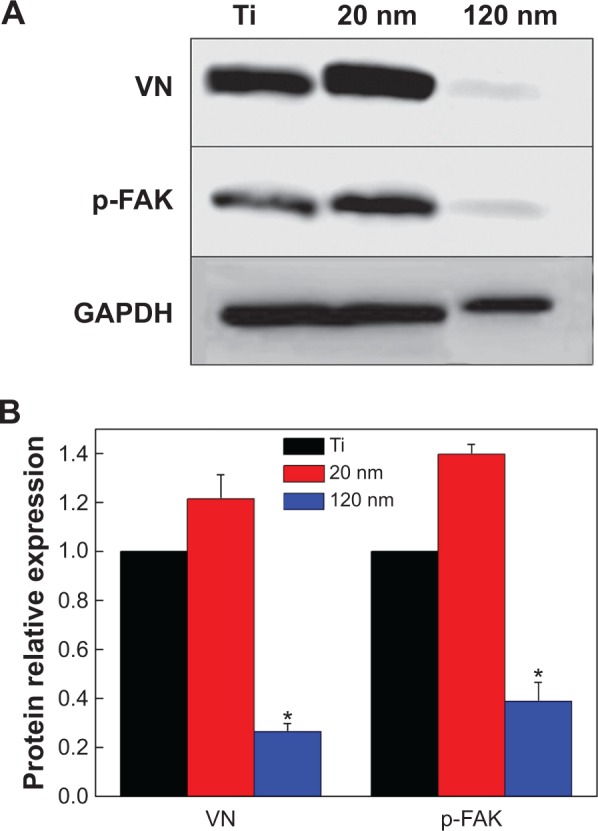
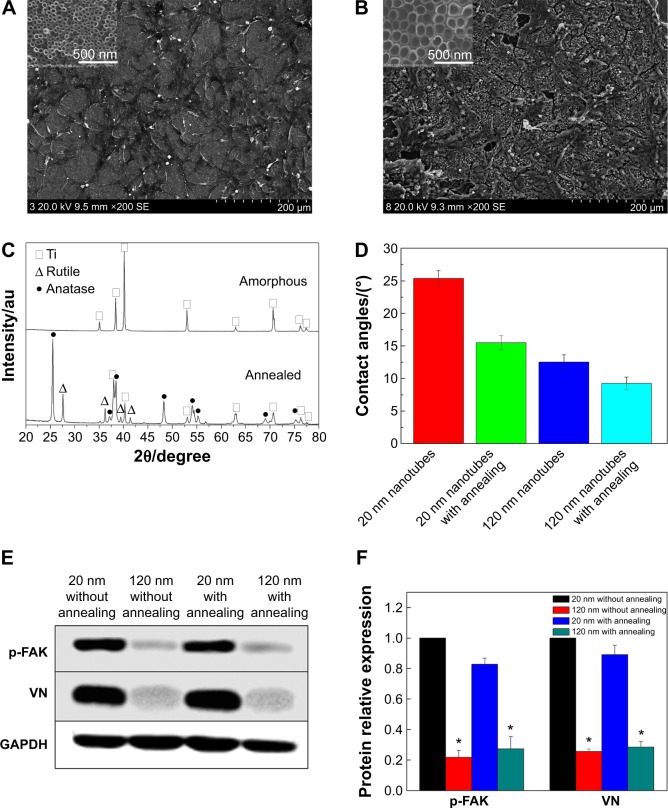
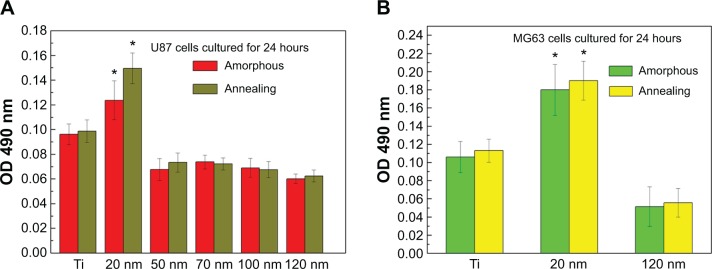
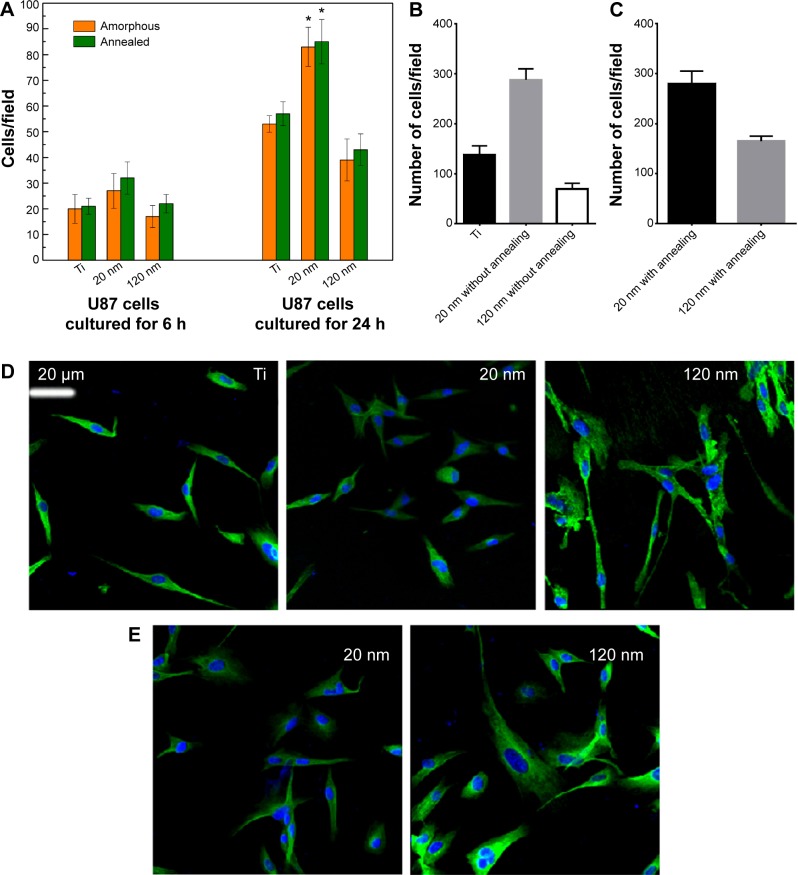
Cells respond to their surroundings through an interactive adhesion process that has direct effects on cell proliferation and migration. This research was designed to investigate the effects of TiO2 nanotubes with different topographies and structures on the biological behavior of cultured cells. The results demonstrated that the nanotube diameter, rather than the crystalline structure of the coatings, was a major factor for the biological behavior of the cultured cells. The optimal diameter of the nanotubes was 20 nm for cell adhesion, migration, and proliferation in both glioma and osteosarcoma cells. The expression levels of vitronectin and phosphor-focal adhesion kinase were affected by the nanotube diameter; therefore, it is proposed that the responses of vitronectin and phosphor-focal adhesion kinase to the nanotube could modulate cell fate. In addition, the geometry and size of the nanotube coating could regulate the degree of expression of acetylated α-tubulin, thus indirectly modulating cell migration behavior. Moreover, the expression levels of apoptosis-associated proteins were influenced by the topography. In conclusion, a nanotube diameter of 20 nm was the critical threshold that upregulated the expression level of Bcl-2 and obviously decreased the expression levels of Bax and caspase-3. This information will be useful for future biomedical and clinical applications.
细胞通过一种对细胞增殖和迁移有直接影响的交互式粘附过程对其周围环境做出反应。本研究旨在调查具有不同形貌和结构的二氧化钛纳米管对培养细胞生物学行为的影响。结果表明,纳米管直径而非涂层的晶体结构是培养细胞生物学行为的主要因素。纳米管的最佳直径为20nm,有利于胶质瘤细胞和骨肉瘤细胞的粘附、迁移和增殖。玻连蛋白和磷酸化粘着斑激酶的表达水平受纳米管直径的影响;因此,有人提出玻连蛋白和磷酸化粘着斑激酶对纳米管的反应可以调节细胞命运。此外,纳米管涂层的几何形状和尺寸可以调节乙酰化α-微管蛋白的表达程度,从而间接调节细胞迁移行为。而且,凋亡相关蛋白的表达水平受形貌影响。总之,20nm的纳米管直径是上调Bcl-2表达水平并明显降低Bax和caspase-3表达水平的临界阈值。这些信息将对未来的生物医学和临床应用有用。