MMWR Morb Mortal Wkly Rep. 2014 Mar 7;63(9):194-200.
Antibiotics are essential to effectively treat many hospitalized patients. However, when antibiotics are prescribed incorrectly, they offer little benefit to patients and potentially expose them to risks for complications, including Clostridium difficile infection (CDI) and antibiotic-resistant infections. Information is needed on the frequency of incorrect prescribing in hospitals and how improved prescribing will benefit patients.
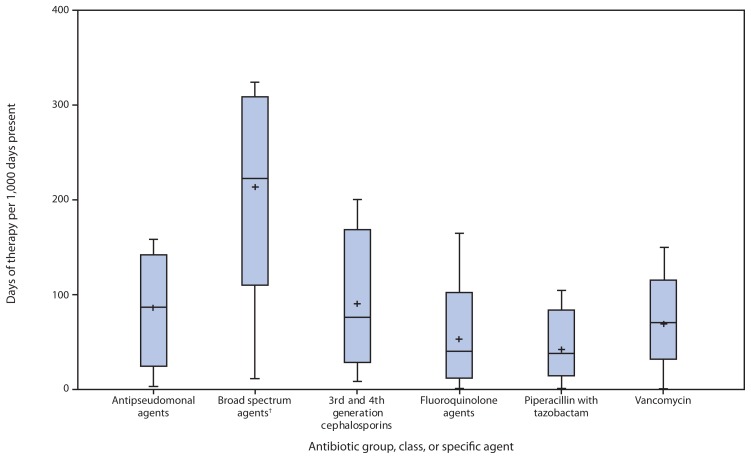
A national administrative database (MarketScan Hospital Drug Database) and CDC's Emerging Infections Program (EIP) data were analyzed to assess the potential for improvement of inpatient antibiotic prescribing. Variability in days of therapy for selected antibiotics reported to the National Healthcare Safety Network (NHSN) antimicrobial use option was computed. The impact of reducing inpatient antibiotic exposure on incidence of CDI was modeled using data from two U.S. hospitals.
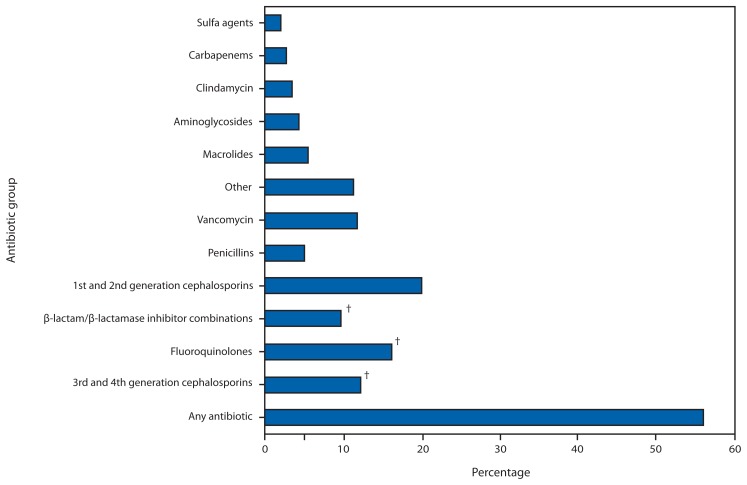
In 2010, 55.7% of patients discharged from 323 hospitals received antibiotics during their hospitalization. EIP reviewed patients' records from 183 hospitals to describe inpatient antibiotic use; antibiotic prescribing potentially could be improved in 37.2% of the most common prescription scenarios reviewed. There were threefold differences in usage rates among 26 medical/surgical wards reporting to NHSN. Models estimate that the total direct and indirect effects from a 30% reduction in use of broad-spectrum antibiotics will result in a 26% reduction in CDI.
Antibiotic prescribing for inpatients is common, and there is ample opportunity to improve use and patient safety by reducing incorrect antibiotic prescribing. Implications for Public Health: Hospital administrators and health-care providers can reduce potential harm and risk for antibiotic resistance by implementing formal programs to improve antibiotic prescribing in hospitals.
抗生素对于有效治疗许多住院患者至关重要。然而,当抗生素使用不当,不仅对患者益处有限,还可能使他们面临并发症风险,包括艰难梭菌感染(CDI)和抗生素耐药感染。我们需要了解医院中抗生素使用不当的频率,以及改进处方将如何使患者受益。
本研究分析了全国性的行政数据库(市场扫描医院药物数据库)和疾病预防控制中心的新兴感染项目(EIP)数据,以评估改善住院患者抗生素处方的潜力。计算了向国家医疗保健安全网络(NHSN)抗菌药物使用选项报告的选定抗生素治疗天数的变异性。使用来自美国两家医院的数据对减少住院患者抗生素暴露对 CDI 发病率的影响进行建模。
2010 年,323 家医院出院的 55.7%的患者在住院期间接受了抗生素治疗。EIP 审查了 183 家医院患者的病历,以描述住院患者的抗生素使用情况;审查的最常见处方场景中,有 37.2%的处方可能需要改进。向 NHSN 报告的 26 个内科/外科病房的使用率存在三倍差异。模型估计,减少广谱抗生素使用 30%将导致 CDI 减少 26%。
住院患者的抗生素使用非常普遍,通过减少不当抗生素处方,有充分的机会改善使用情况并提高患者安全性。对公共卫生的意义:医院管理人员和医疗保健提供者可以通过实施正式计划来改善医院的抗生素处方,从而减少抗生素耐药的潜在危害和风险。