Pons Clara, Martí Cristina, Forment Javier, Crisosto Carlos H, Dandekar Abhaya M, Granell Antonio
Plant Genomics and Biotechnology lab, Instituto de Biología Molecular y Celular de Plantas, Consejo Superior de Investigaciones Científicas, Universidad Politécnica de Valencia, Valencia, Spain.
Department of Plant Sciences, University of California Davis, Davis, California, United States of America.
PLoS One. 2014 Mar 5;9(3):e90706. doi: 10.1371/journal.pone.0090706. eCollection 2014.
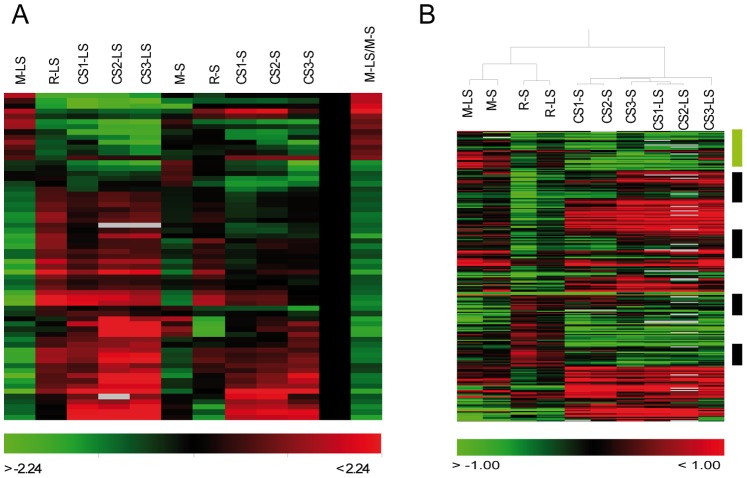
Peach fruits subjected for long periods of cold storage are primed to develop chilling injury once fruits are shelf ripened at room temperature. Very little is known about the molecular changes occurring in fruits during cold exposure. To get some insight into this process a transcript profiling analyses was performed on fruits from a PopDG population segregating for chilling injury CI responses. A bulked segregant gene expression analysis based on groups of fruits showing extreme CI responses indicated that the transcriptome of peach fruits was modified already during cold storage consistently with eventual CI development. Most peach cold-responsive genes have orthologs in Arabidopsis that participate in cold acclimation and other stresses responses, while some of them showed expression patterns that differs in fruits according to their susceptibility to develop mealiness. Members of ICE1, CBF1/3 and HOS9 regulons seem to have a prominent role in differential cold responses between low and high sensitive fruits. In high sensitive fruits, an alternative cold response program is detected. This program is probably associated with dehydration/osmotic stress and regulated by ABA, auxins and ethylene. In addition, the observation that tolerant siblings showed a series of genes encoding for stress protective activities with higher expression both at harvest and during cold treatment, suggests that preprogrammed mechanisms could shape fruit ability to tolerate postharvest cold-induced stress. A number of genes differentially expressed were validated and extended to individual genotypes by medium-throughput RT-qPCR. Analyses presented here provide a global view of the responses of peach fruits to cold storage and highlights new peach genes that probably play important roles in the tolerance/sensitivity to cold storage. Our results provide a roadmap for further experiments and would help to develop new postharvest protocols and gene directed breeding strategies to better cope with chilling injury.
长时间冷藏的桃果实一旦在室温下货架期成熟,就容易发生冷害。对于果实冷藏期间发生的分子变化知之甚少。为了深入了解这一过程,对一个PopDG群体中表现出冷害(CI)反应分离的果实进行了转录谱分析。基于表现出极端CI反应的果实组进行的混合分离群体基因表达分析表明,桃果实的转录组在冷藏期间就已发生改变,这与最终的CI发展一致。大多数桃的冷响应基因在拟南芥中有直系同源基因,这些基因参与冷驯化和其他胁迫反应,而其中一些基因根据果实产生粉质性的敏感性不同,在果实中的表达模式也有所不同。ICE1、CBF1/3和HOS9调控子的成员似乎在低敏感和高敏感果实的差异冷响应中起重要作用。在高敏感果实中,检测到一种替代的冷响应程序。该程序可能与脱水/渗透胁迫有关,并受脱落酸、生长素和乙烯调控。此外,耐受性果实的同胞在收获时和冷藏处理期间都表现出一系列编码应激保护活性的基因表达较高,这表明预先设定的机制可能影响果实耐受采后冷诱导胁迫的能力。通过中通量RT-qPCR对一些差异表达基因进行了验证,并扩展到个体基因型。本文的分析提供了桃果实对冷藏反应的全局视图,并突出了可能在冷藏耐受性/敏感性中起重要作用的新桃基因。我们的结果为进一步的实验提供了路线图,并将有助于制定新的采后方案和基因定向育种策略,以更好地应对冷害。