Miyagawa Maiko, Nishio Shin-Ya, Usami Shin-Ichi
Department of Otorhinolaryngology, Shinshu University School of Medicine, Matsumoto, Japan.
J Hum Genet. 2014 May;59(5):262-8. doi: 10.1038/jhg.2014.12. Epub 2014 Mar 6.
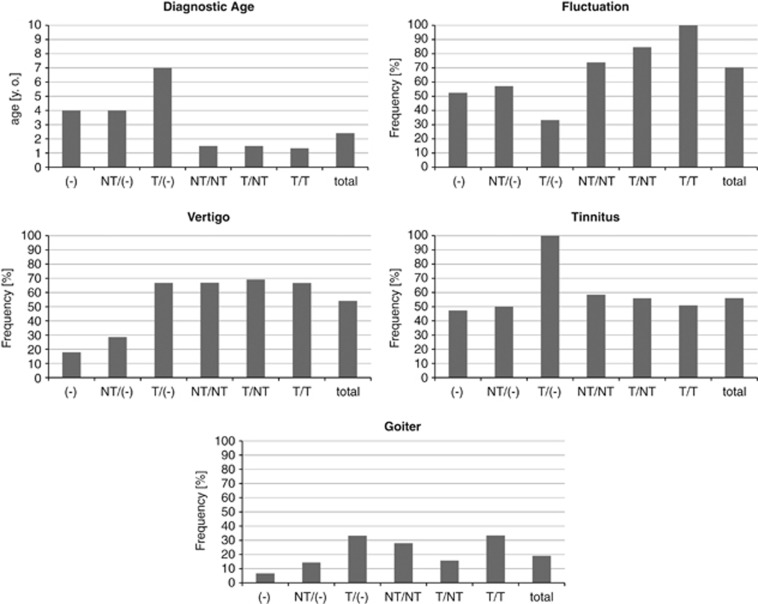
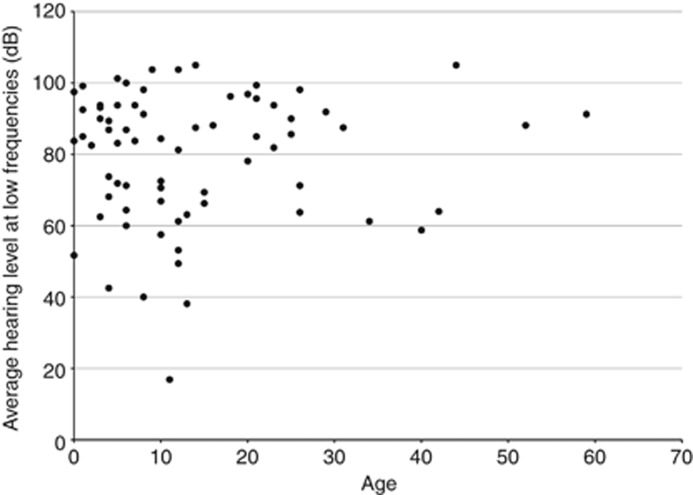
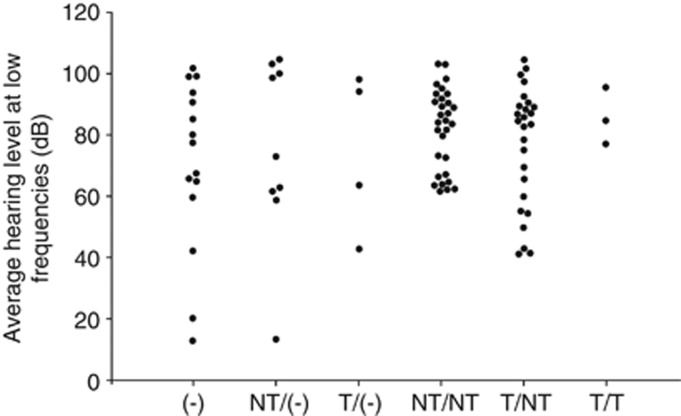
Mutations in SLC26A4 cause a broad phenotypic spectrum, from typical Pendred syndrome to nonsyndromic hearing loss associated with enlarged vestibular aqueduct. Identification of these mutations is important for accurate diagnosis, proper medical management and appropriate genetic counseling and requires updated information regarding spectrum, clinical characteristics and genotype-phenotype correlations, based on a large cohort. In 100 patients with bilateral enlarged vestibular aqueduct among 1511 Japanese hearing loss probands registered in our gene bank, goiter data were available for 79, of whom 15 had Pendred syndrome and 64 had nonsyndromic hearing loss. We clarified the mutation spectrum for the SLC26A4 mutations and also summarized hearing levels, progression, fluctuation and existence of genotype-phenotype correlation. SLC26A4 mutations were identified in 82 of the 100 patients (82.0%). Of the Pendred syndrome patients, 93% (14/15) were carriers, as were 77% (49/64) of the nonsyndromic hearing loss patients. Clinical characteristics of patients with SLC26A4 mutations were congenital, fluctuating and progressive hearing loss usually associated with vertigo and/or goiter. We found no genotype-phenotype correlations, indicating that, unlike in the case of GJB2 mutations, the phenotype cannot be predicted from the genotype. Our mutation analysis confirmed the importance of mutations in the SLC26A4 gene among hearing loss patients with enlarged vestibular aqueduct and revealed the mutation spectrum, essential information when performing genetic testing.
SLC26A4基因突变会导致广泛的表型谱,从典型的 Pendred 综合征到与前庭导水管扩大相关的非综合征性听力损失。识别这些突变对于准确诊断、合理的医疗管理和适当的遗传咨询很重要,并且需要基于大量队列的有关谱、临床特征和基因型-表型相关性的最新信息。在我们基因库登记的1511名日本听力损失先证者中,有100例双侧前庭导水管扩大的患者,其中79例有甲状腺肿数据,其中15例患有 Pendred 综合征,64例患有非综合征性听力损失。我们阐明了SLC26A4基因突变谱,并总结了听力水平、进展、波动情况以及基因型-表型相关性的存在情况。100例患者中有82例(82.0%)检测到SLC26A4基因突变。在Pendred综合征患者中,93%(14/15)是携带者,非综合征性听力损失患者中这一比例为77%(49/64)。SLC26A4基因突变患者的临床特征为先天性、波动性和进行性听力损失,通常伴有眩晕和/或甲状腺肿。我们未发现基因型-表型相关性,这表明与GJB2基因突变的情况不同,无法从基因型预测表型。我们的突变分析证实了SLC26A4基因突变在前庭导水管扩大的听力损失患者中的重要性,并揭示了突变谱,这是进行基因检测时的重要信息。