Sonnett Travis, Robinson Jennifer, Milani Paul, Campbell R Keith
Department of Pharmacotherapy, College of Pharmacy, Wshington Sate University, Pullman, Wshington, USA.
Adolesc Health Med Ther. 2010 Aug 4;1:53-60. doi: 10.2147/AHMT.S9272. eCollection 2010.
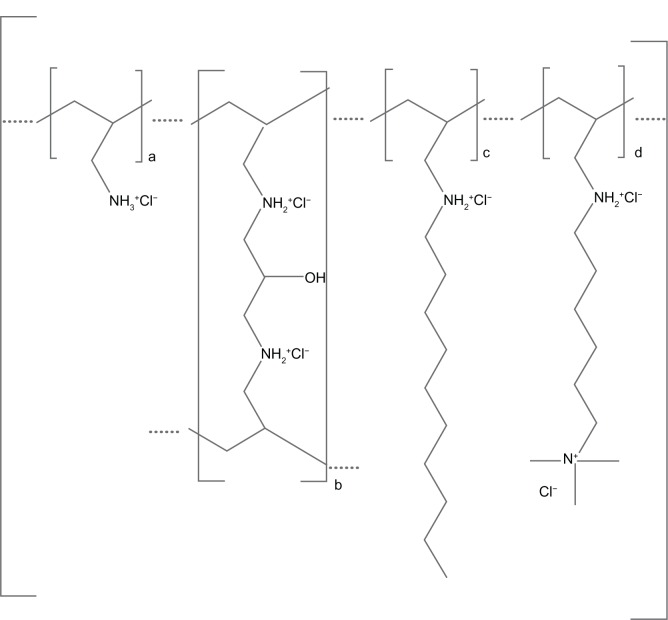
Colesevelam hydrochloride is a synthetic, nonsystemically absorbed polymer that functions as a bile acid sequestrant for the treatment of hypercholesterolemia. Recently, colesevelam was investigated for the treatment of heterozygous familial hypercholesterolemia (HeFH) in the pediatric/adolescent population aged 10-17 years.
The purpose of this article is to review the disease state of HeFH in children and adolescents, review the pharmacologic mechanism of action, kinetics, and safety profile of colesevelam, analyze the results of a recent clinical trial of colesevelam in the pediatric/adolescent HeFH population, and discuss the role of colesevelam as a viable treatment option for HeFH.
A literature search using Medline (1966-03 May 2010), PubMed (1950-03 May 2010), Science Direct (1994-03 May 2010), and International Pharmaceutical Abstracts (2004-2010) was performed using the search term colesevelam. English language, original research, and review articles were examined, and citations from these articles were also assessed. The manufacturer's prescribing information and the Food and Drug Administration review of the new drug application for the powder formulation were also examined.
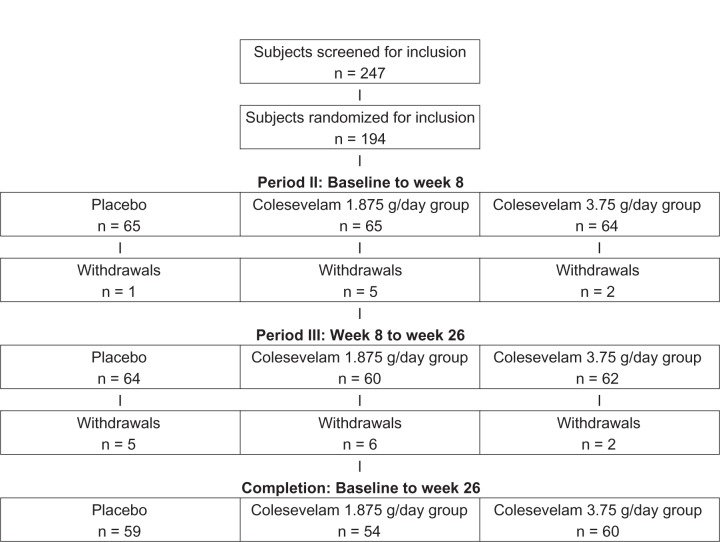
A 32-week trial was performed investigating the efficacy of colesevelam as monotherapy or combination therapy with a stable statin regimen. Upon completion of the trial, significant benefits were found in regard to the treatment of HeFH and the lowering of low-density lipoprotein cholesterol, total cholesterol, and other secondary measures. Safety and tolerability were also examined throughout the duration of the clinical trial, with adverse drug reactions considered mild in severity.
Colesevelam has been shown to reduce low-density lipoprotein cholesterol levels significantly in pediatric/adolescent patients with HeFH, while maintaining a mild side effect profile. Although further research would be beneficial for long-term effects in this population, colesevelam should be considered when developing a treatment regimen for HeFH in the pediatric/adolescent population.
盐酸考来维仑是一种合成的、不被全身吸收的聚合物,作为一种胆汁酸螯合剂用于治疗高胆固醇血症。最近,考来维仑被研究用于治疗10至17岁儿童/青少年的杂合子家族性高胆固醇血症(HeFH)。
本文旨在综述儿童和青少年HeFH的疾病状态,回顾考来维仑的药理作用机制、动力学和安全性概况,分析考来维仑在儿童/青少年HeFH人群中近期临床试验的结果,并讨论考来维仑作为HeFH可行治疗选择的作用。
使用检索词“考来维仑”,通过Medline(1966年至2010年5月3日)、PubMed(1950年至2010年5月3日)、Science Direct(1994年至2010年5月3日)和国际药学文摘(2004年至2010年)进行文献检索。检查了英文的原始研究和综述文章,并评估了这些文章的参考文献。还检查了制造商的处方信息以及美国食品药品监督管理局对该粉末制剂新药申请的审评情况。
进行了一项为期32周的试验,研究考来维仑作为单一疗法或与稳定的他汀类药物治疗方案联合使用的疗效。试验完成后,在HeFH治疗以及降低低密度脂蛋白胆固醇、总胆固醇和其他次要指标方面发现了显著益处。在整个临床试验期间也检查了安全性和耐受性,药物不良反应的严重程度被认为是轻度的。
已证明考来维仑可显著降低HeFH儿童/青少年患者的低密度脂蛋白胆固醇水平,同时保持轻微的副作用。尽管进一步研究对该人群的长期影响有益,但在为儿童/青少年人群制定HeFH治疗方案时应考虑考来维仑。