Department of Neuroscience, Erasmus MC Rotterdam Rotterdam, Netherlands.
Front Syst Neurosci. 2014 Feb 21;8:23. doi: 10.3389/fnsys.2014.00023. eCollection 2014.
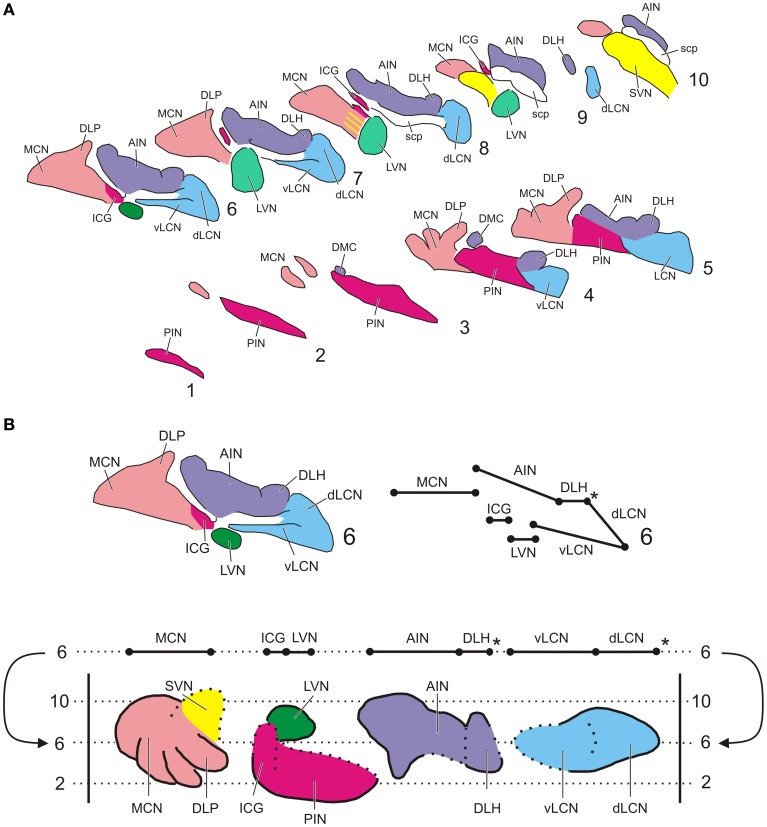
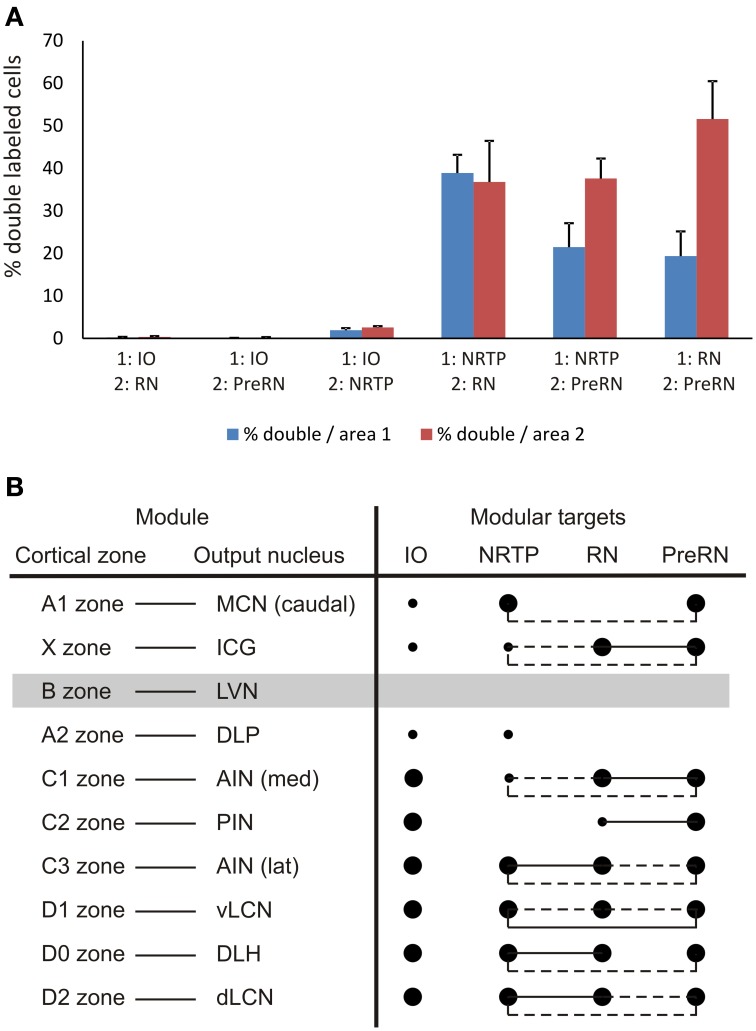
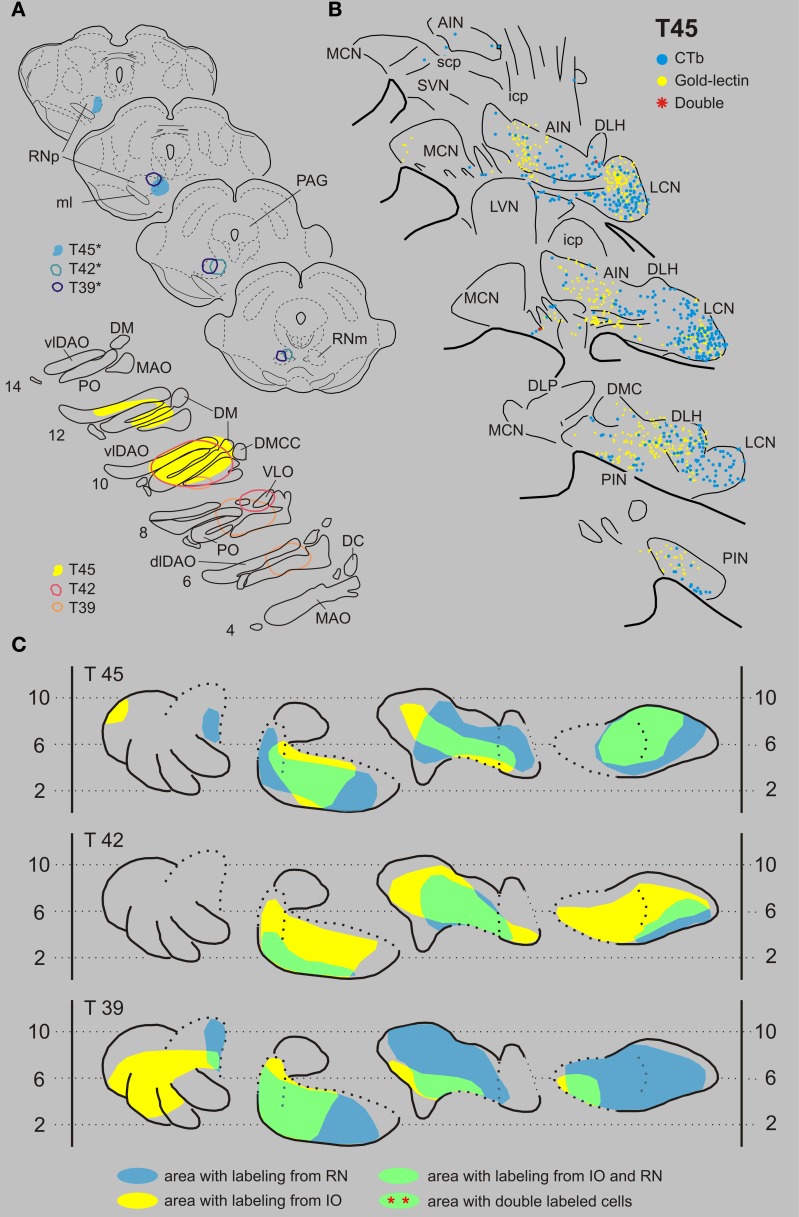
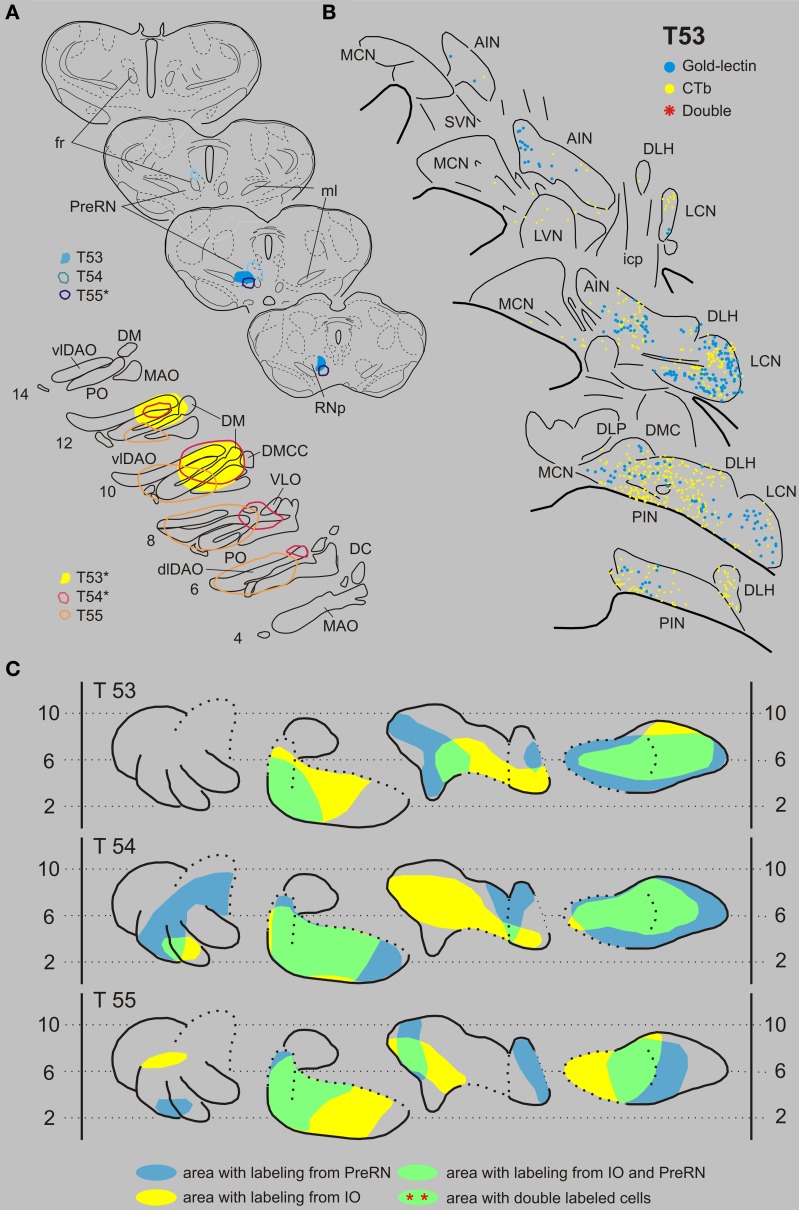
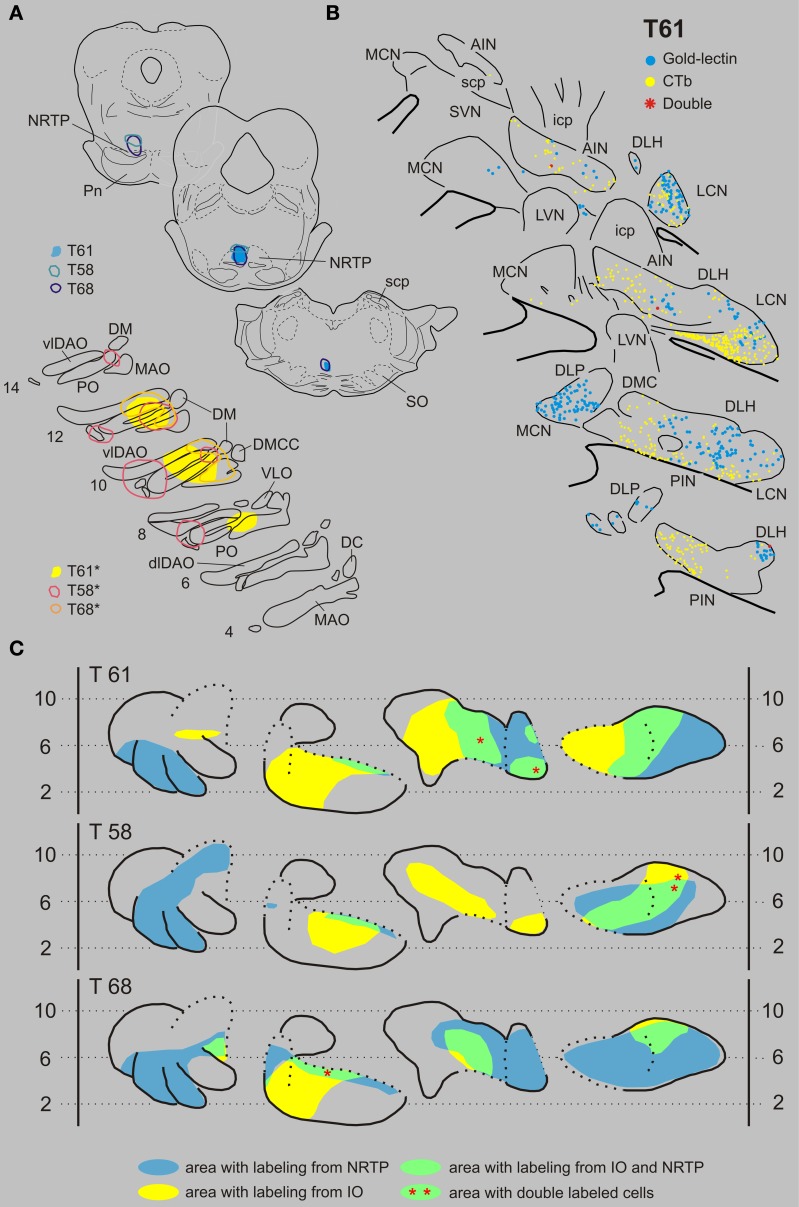
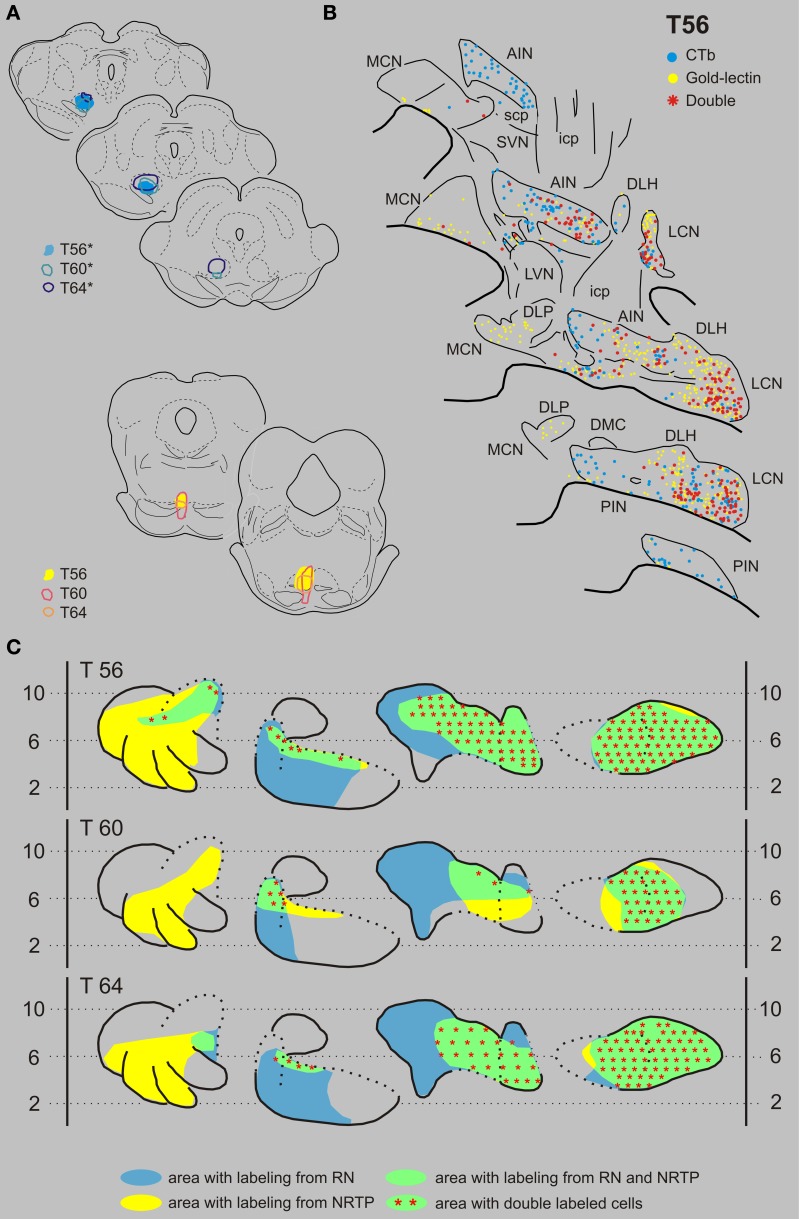
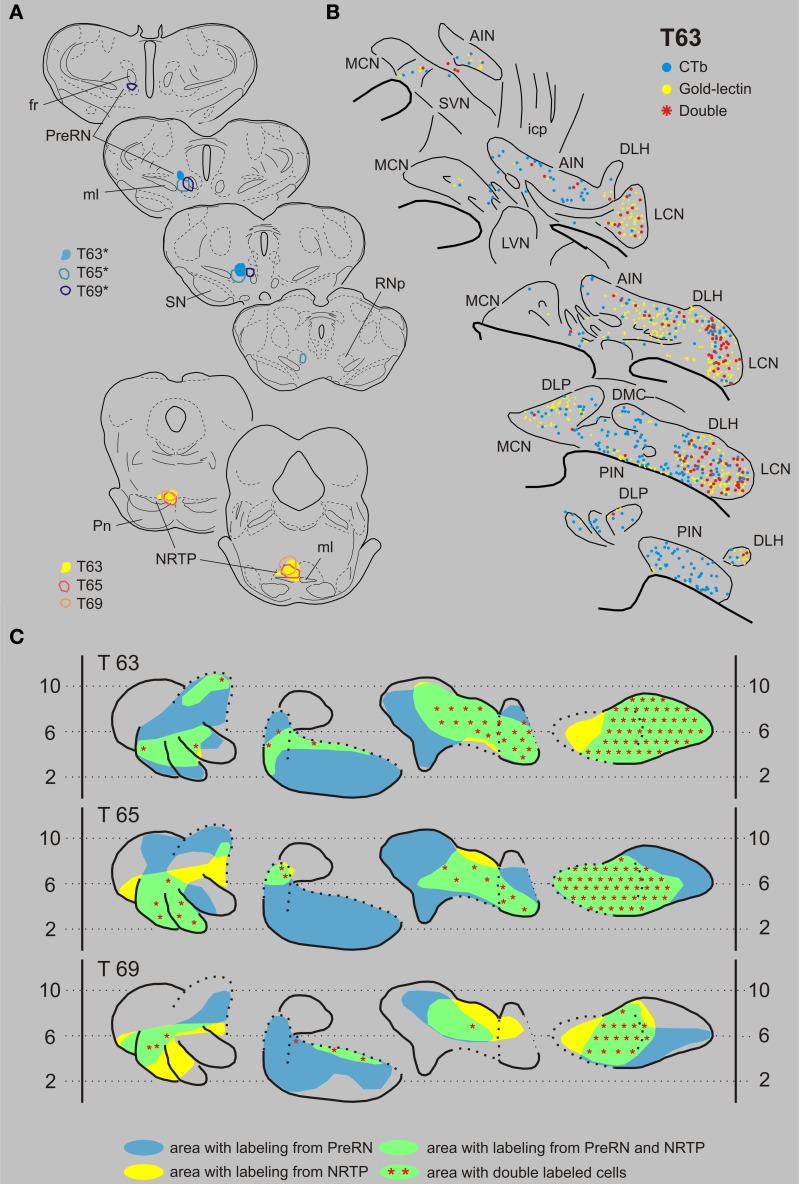
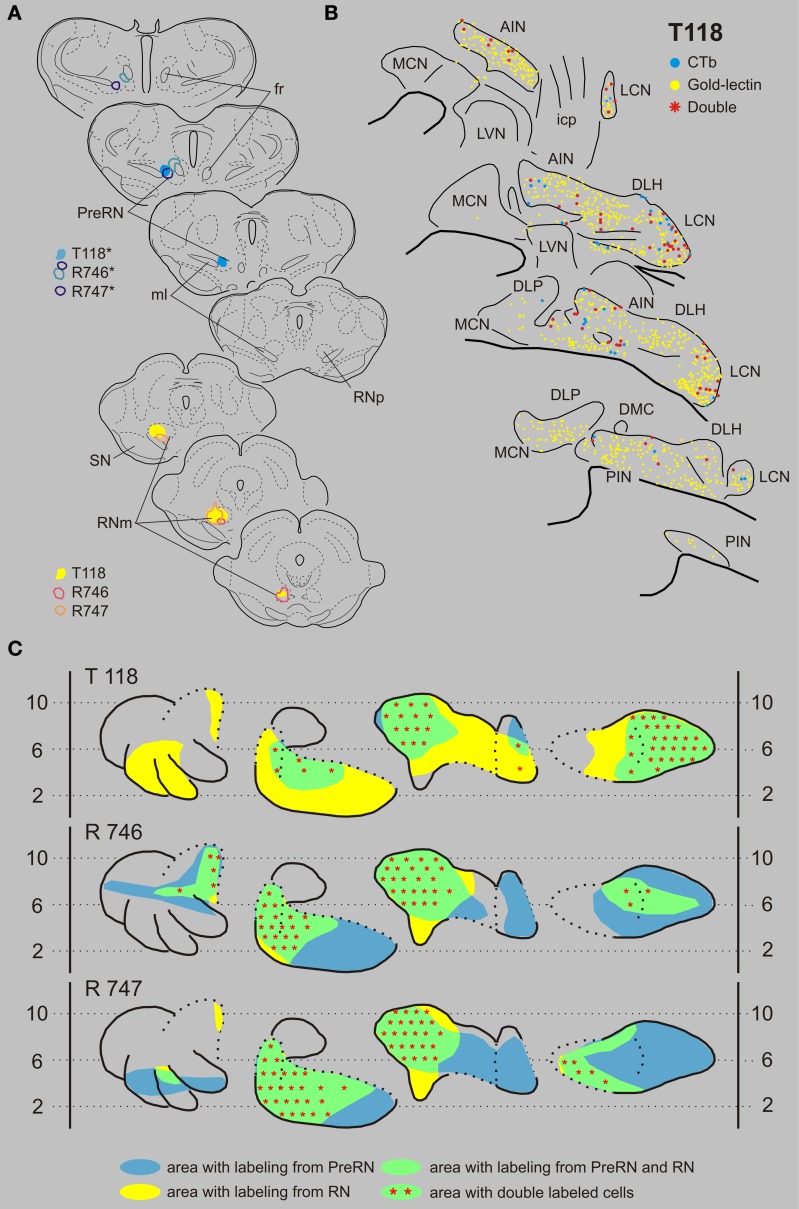
The organization of the cerebellum is characterized by a number of longitudinally organized connection patterns that consist of matching olivo-cortico-nuclear zones. These entities, referred to as modules, have been suggested to act as functional units. The various parts of the cerebellar nuclei (CN) constitute the output of these modules. We have studied to what extent divergent and convergent patterns in the output of the modules to four, functionally distinct brain areas can be recognized. Two retrograde tracers were injected in various combinations of the following nuclei: the red nucleus (RN), as a main premotor nucleus; the prerubral area, as a main supplier of afferents to the inferior olive (IO); the nucleus reticularis tegmenti pontis (NRTP), as a main source of cerebellar mossy fibers; and the IO, as the source of climbing fibers. For all six potential combinations three cases were examined. All nine cases with combinations that involved the IO did not, or hardly, resulted in double labeled neurons. In contrast, all other combinations resulted in at least 10% and up to 67% of double labeled neurons in cerebellar nuclear areas where both tracers were found. These results show that the cerebellar nuclear neurons that terminate within the studied areas represent basically two intermingled populations of projection cells. One population corresponds to the small nucleo-olivary neurons whereas the other consists of medium- to large-sized neurons which are likely to distribute their axons to several other areas. Despite some consistent differences between the output patterns of individual modules we propose that modular cerebellar output to premotor areas such as the RN provides simultaneous feedback to both the mossy fiber and the climbing fiber system and acts in concert with a designated GABAergic nucleo-olivary circuit. These features seem to form a basic characteristic of cerebellar operation.
小脑的组织特征是存在许多纵向组织的连接模式,这些模式由匹配的橄榄皮质核区组成。这些被称为模块的实体被认为是功能单元。小脑核(CN)的各个部分构成了这些模块的输出。我们研究了模块输出到四个功能不同的脑区的发散和汇聚模式在多大程度上可以被识别。两种逆行示踪剂被注射到以下核团的不同组合中:红核(RN),作为主要的运动前核团;前rubral 区,作为橄榄下核(IO)的主要传入供应区;桥脑被盖网状核(NRTP),作为小脑苔藓纤维的主要来源;以及 IO,作为 climbing fibers 的来源。对于所有六个潜在的组合,检查了三种情况。所有涉及 IO 的九种情况都没有或几乎没有导致双标记神经元。相比之下,所有其他组合都导致了小脑核区中至少 10%和高达 67%的双标记神经元,而这两个示踪剂都存在于这些核区中。这些结果表明,终止于研究区域内的小脑核神经元基本上代表了两种混杂的投射细胞群体。一个群体对应于小核橄榄神经元,而另一个群体由中到大的神经元组成,这些神经元可能将其轴突分布到其他几个区域。尽管个别模块的输出模式存在一些一致的差异,但我们提出,类似于 RN 的运动前区域的模块化小脑输出为苔藓纤维和 climbing fiber 系统提供了同时的反馈,并与指定的 GABA 能核橄榄电路协同作用。这些特征似乎构成了小脑操作的基本特征。