Department of Neuroscience, Erasmus MC Rotterdam, P.O. Box 2040, 3000 CA, Rotterdam, The Netherlands.
Cerebellum. 2011 Sep;10(3):464-74. doi: 10.1007/s12311-010-0164-y.
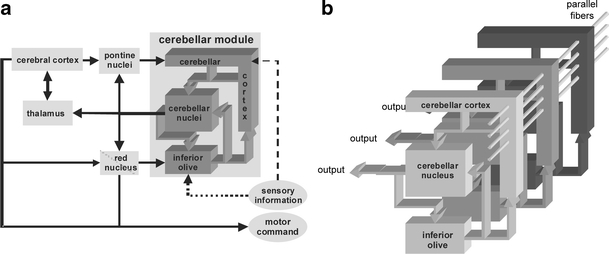
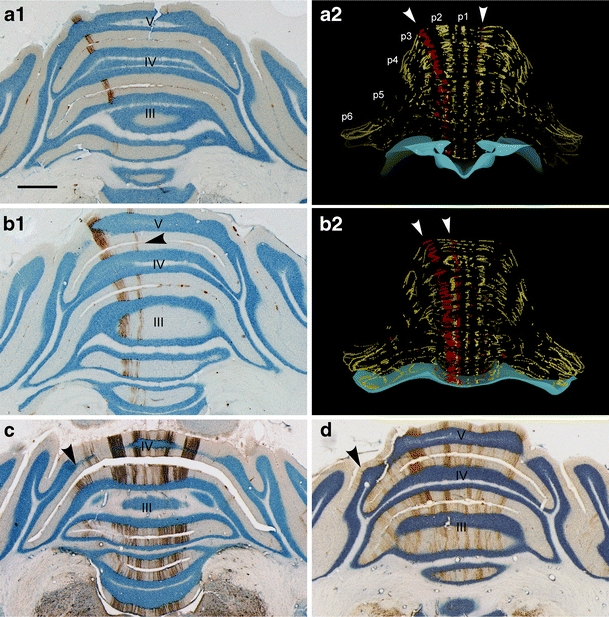
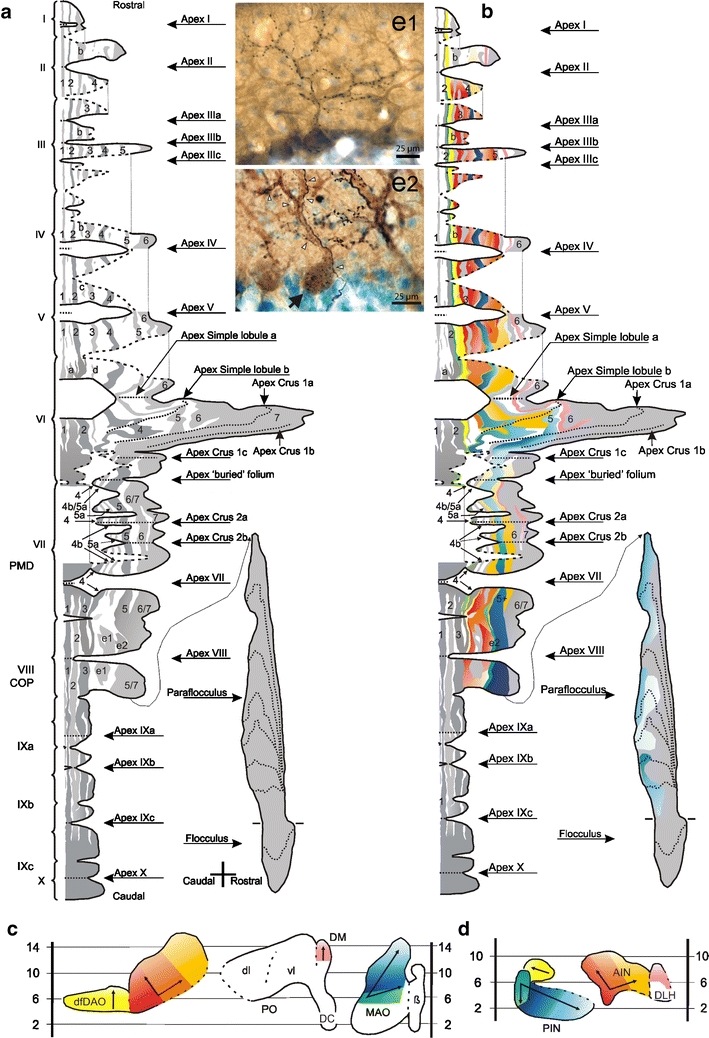
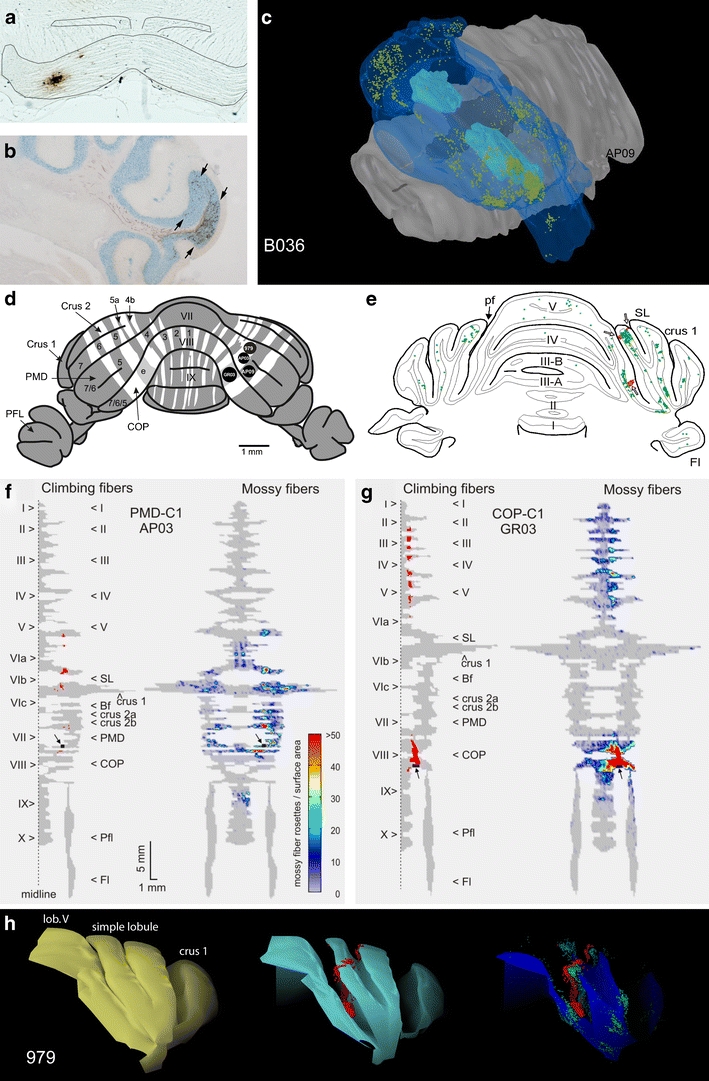
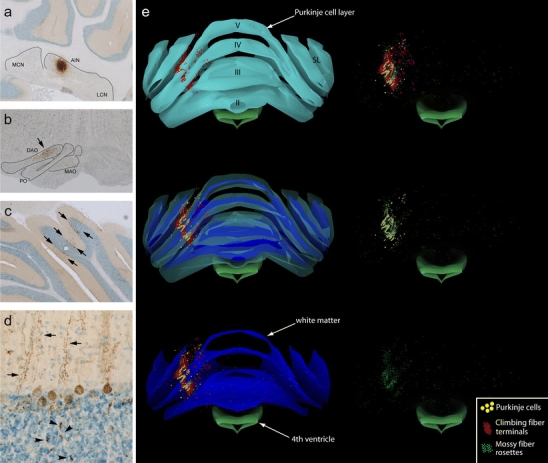
The modular concept of cerebellar connections has been advocated in the lifetime work of Jan Voogd. In this concept, a cerebellar module is defined as the conglomerate of one or multiple and non-adjacent, parasagittally arranged zones of Purkinje cells, their specific projection to a well-defined region of the cerebellar nuclei, and the climbing fiber input to these zones by a well-defined region of the inferior olivary complex. The modular organization of these olivo-cortico-nuclear connections is further exemplified by matching reciprocal connections between inferior olive and cerebellar nuclei. Because the different regions of the cerebellar nuclei show highly specific output patterns, cerebellar modules have been suggested to constitute functional entities. This idea is strengthened by the observation that anatomically defined modules adhere to the distribution of chemical markers in the cerebellar cortex suggesting that modules not only differ in their input and output relations but also may differ in operational capabilities. Here, I will briefly review some recent data on the establishment of cerebellar modules in rats. Furthermore, some evidence will be shown suggesting that the other main afferent system (i.e., mossy fibers), at least to some extent, also adheres to the modular organization. Finally, using retrograde transneuronal tracing with rabies virus, some evidence will be provided that several cerebellar modules may be involved in the control of individual muscles.
小脑连接的模块化概念是扬·沃格特(Jan Voogd)毕生工作的主张。在这个概念中,小脑模块被定义为一个或多个非相邻的、矢状排列的浦肯野细胞区的集合,它们特定地投射到小脑核的一个明确区域,以及这些区域的 climbing fibers 输入到由下橄榄核复合体的一个明确区域。这些橄榄-皮质-核连接的模块化组织进一步由下橄榄核和小脑核之间的匹配的相互连接证明。由于小脑核的不同区域显示出高度特异性的输出模式,因此小脑模块被认为是构成功能实体。这个想法得到了以下观察结果的支持:在解剖学上定义的模块与小脑皮质中的化学标记物的分布一致,这表明模块不仅在输入和输出关系上有所不同,而且在操作能力上也可能有所不同。在这里,我将简要回顾一些关于在大鼠中建立小脑模块的最新数据。此外,还将展示一些证据表明,另一个主要的传入系统(即苔藓纤维)至少在某种程度上也遵循模块化组织。最后,使用狂犬病病毒逆行转导神经元追踪技术,提供了一些证据表明,几个小脑模块可能参与单个肌肉的控制。