Division of Molecular Internal Medicine, Department of Internal Medicine II, University Hospital Würzburg , Würzburg , Germany.
Department of Oral and Maxillofacial Plastic Surgery, University Hospital Würzburg , Würzburg , Germany.
Front Immunol. 2014 Feb 18;5:63. doi: 10.3389/fimmu.2014.00063. eCollection 2014.
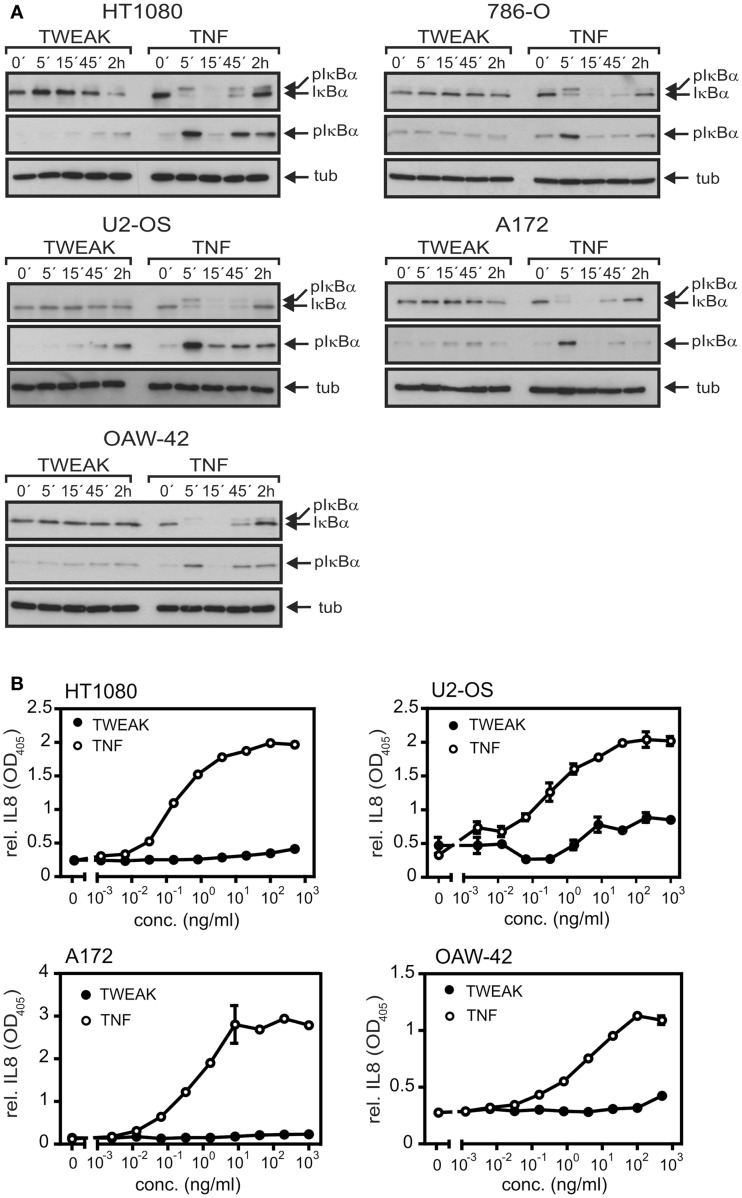
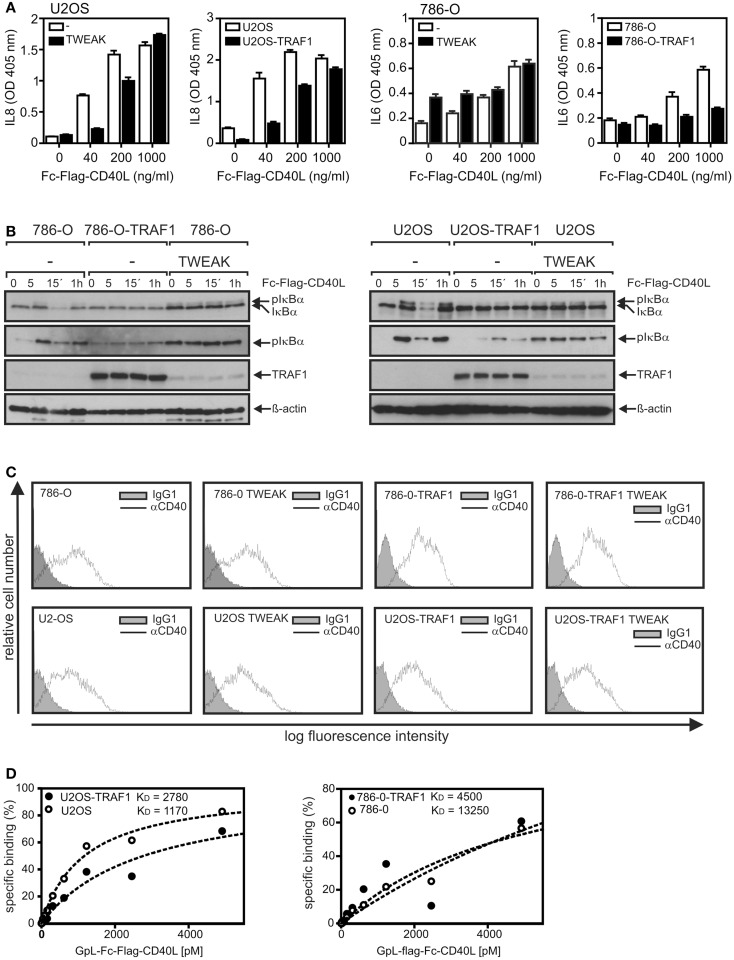
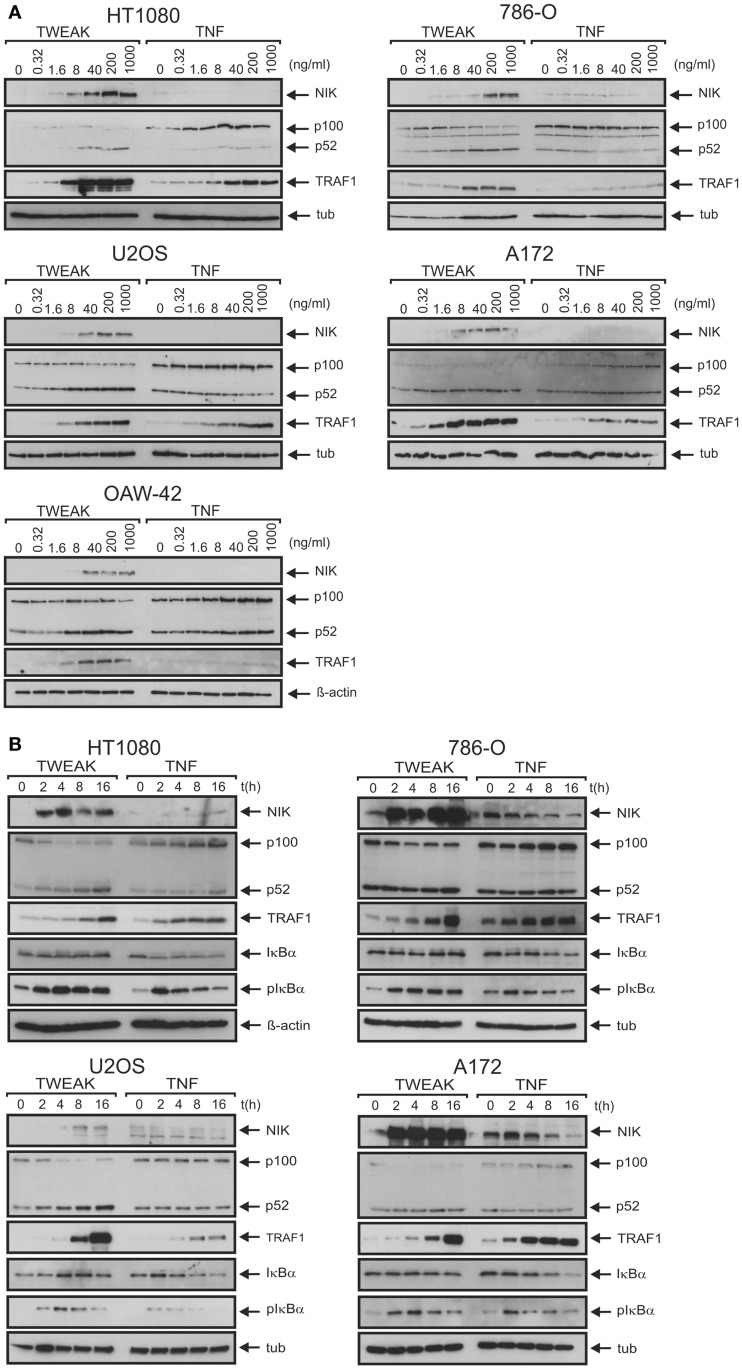
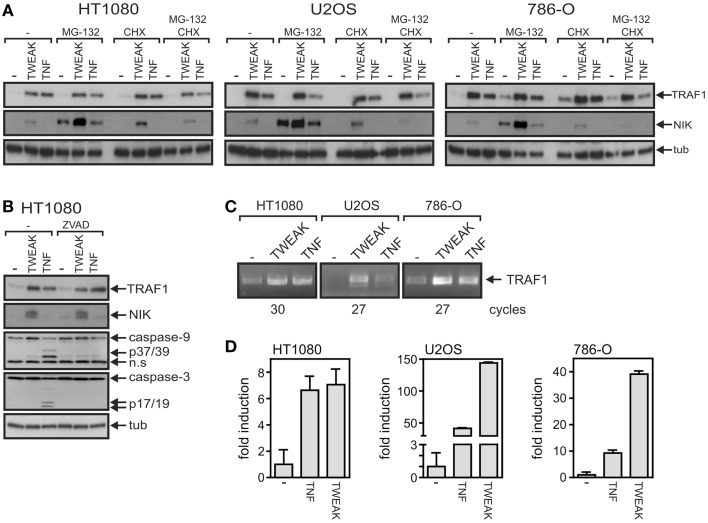
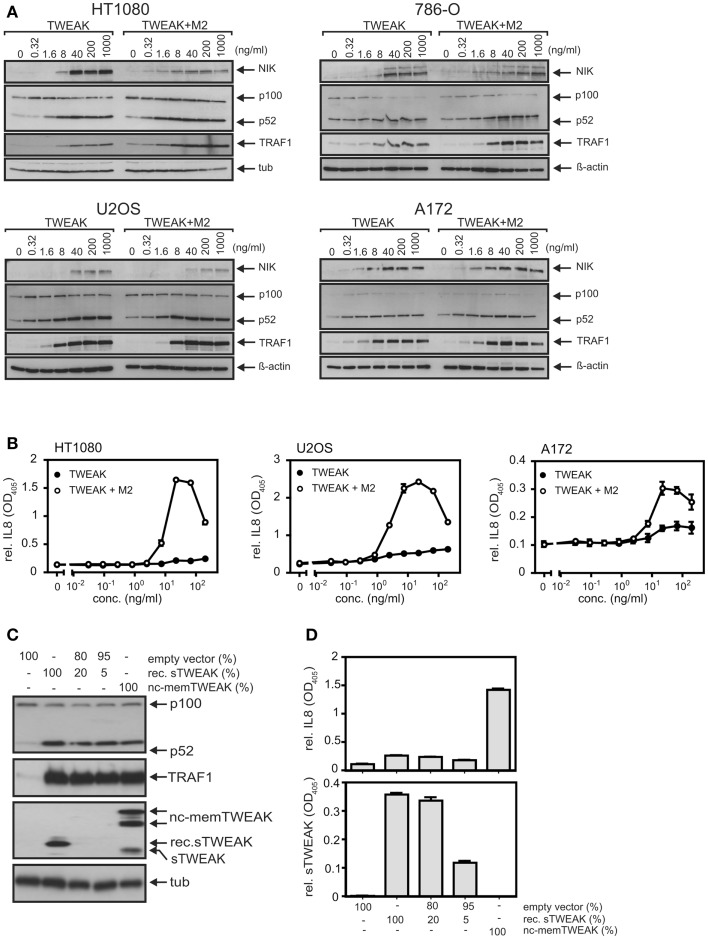
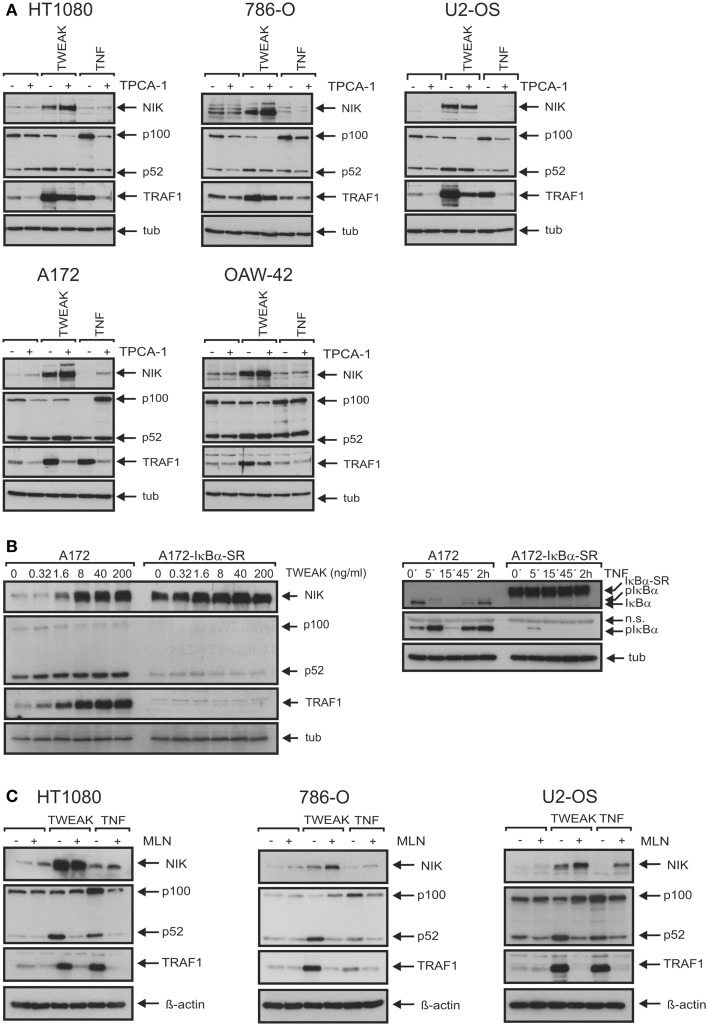
Soluble tumor necrosis factor (TNF)-like weak inducer of apoptosis (TWEAK), in contrast to membrane TWEAK and TNF, is only a weak activator of the classical NFκB pathway. We observed that soluble TWEAK was regularly more potent than TNF with respect to the induction of TNF receptor-associated factor 1 (TRAF1), a NFκB-controlled signaling protein involved in the regulation of inflammatory signaling pathways. TNF-induced TRAF1 expression was efficiently blocked by inhibition of the classical NFκB pathway using the IKK2 inhibitor, TPCA1. In contrast, in some cell lines, TWEAK-induced TRAF1 production was only partly inhibited by TPCA1. The NEDD8-activating enzyme inhibitor MLN4924, however, which inhibits classical and alternative NFκB signaling, blocked TNF- and TWEAK-induced TRAF1 expression. This suggests that TRAF1 induction by soluble TWEAK is based on the cooperative activity of the two NFκB signaling pathways. We have previously shown that oligomerization of soluble TWEAK results in ligand complexes with membrane TWEAK-like activity. Oligomerization of soluble TWEAK showed no effect on the dose response of TRAF1 induction, but potentiated the ability of soluble TWEAK to trigger production of the classical NFκB-regulated cytokine IL8. Transfectants expressing soluble TWEAK and membrane TWEAK showed similar induction of TRAF1 while only the membrane TWEAK expressing cells robustly stimulated IL8 production. These data indicate that soluble TWEAK may efficiently induce a distinct subset of the membrane TWEAK-targeted genes and argue again for a crucial role of classical NFκB pathway-independent signaling in TWEAK-induced TRAF1 expression. Other TWEAK targets, which can be equally well induced by soluble and membrane TWEAK, remain to be identified and the relevance of the ability of soluble TWEAK to induce such a distinct subset of membrane TWEAK-targeted genes for TWEAK biology will have to be clarified in future studies.
可溶性肿瘤坏死因子(TNF)样凋亡弱诱导剂(TWEAK)与膜 TWEAK 和 TNF 不同,仅作为经典 NFκB 途径的弱激活剂。我们观察到,可溶性 TWEAK 在诱导 TNF 受体相关因子 1(TRAF1)方面通常比 TNF 更有效,TRAF1 是一种参与调节炎症信号通路的 NFκB 控制的信号蛋白。使用 IKK2 抑制剂 TPCA1 抑制经典 NFκB 途径,可有效阻断 TNF 诱导的 TRAF1 表达。相反,在某些细胞系中,TWEAK 诱导的 TRAF1 产生仅部分被 TPCA1 抑制。然而,NEDD8 激活酶抑制剂 MLN4924 抑制经典和替代 NFκB 信号通路,阻断 TNF 和 TWEAK 诱导的 TRAF1 表达。这表明可溶性 TWEAK 诱导 TRAF1 基于两种 NFκB 信号通路的协同活性。我们之前已经表明,可溶性 TWEAK 的寡聚化导致具有膜 TWEAK 样活性的配体复合物。可溶性 TWEAK 的寡聚化对 TRAF1 诱导的剂量反应没有影响,但增强了可溶性 TWEAK 触发经典 NFκB 调节细胞因子 IL8 产生的能力。表达可溶性 TWEAK 和膜 TWEAK 的转染细胞显示出相似的 TRAF1 诱导,而仅表达膜 TWEAK 的细胞强烈刺激 IL8 产生。这些数据表明,可溶性 TWEAK 可能有效地诱导膜 TWEAK 靶向基因的一个不同子集,并再次证明经典 NFκB 途径非依赖性信号在 TWEAK 诱导的 TRAF1 表达中的关键作用。其他 TWEAK 靶标,其可以同样被可溶性和膜 TWEAK 有效诱导,有待确定,并且可溶性 TWEAK 诱导膜 TWEAK 靶向基因的这样一个不同子集的能力对于 TWEAK 生物学的相关性将不得不在未来的研究中阐明。