Contesto-Richefeu Céline, Tarbouriech Nicolas, Brazzolotto Xavier, Betzi Stéphane, Morelli Xavier, Burmeister Wim P, Iseni Frédéric
Unité de Virologie, Institut de Recherche Biomédicale des Armées, Brétigny-sur-Orge, France.
Université Grenoble Alpes, UVHCI, Grenoble, France; CNRS, UVHCI, Grenoble, France; Unit for Virus Host-Cell Interactions, UMI 3265, Université Grenoble Alpes-EMBL-CNRS, Grenoble, France.
PLoS Pathog. 2014 Mar 6;10(3):e1003978. doi: 10.1371/journal.ppat.1003978. eCollection 2014 Mar.
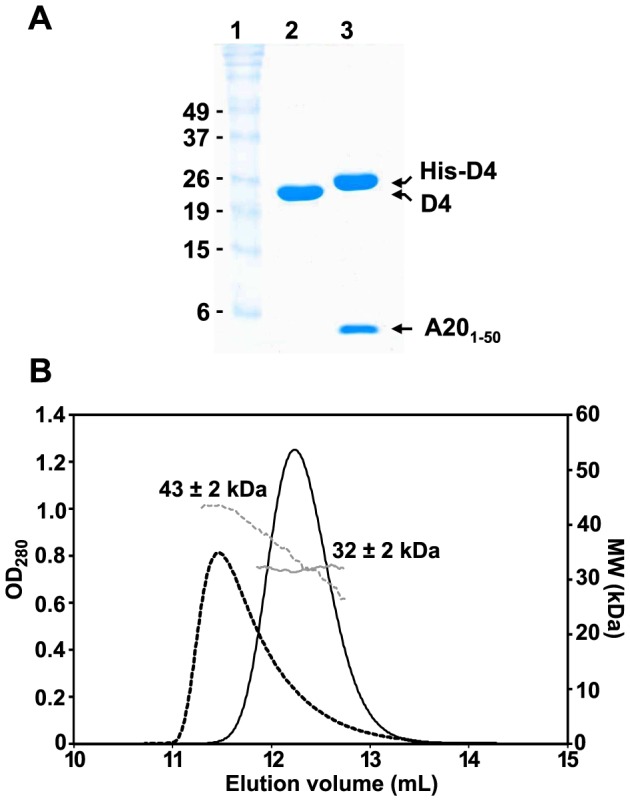
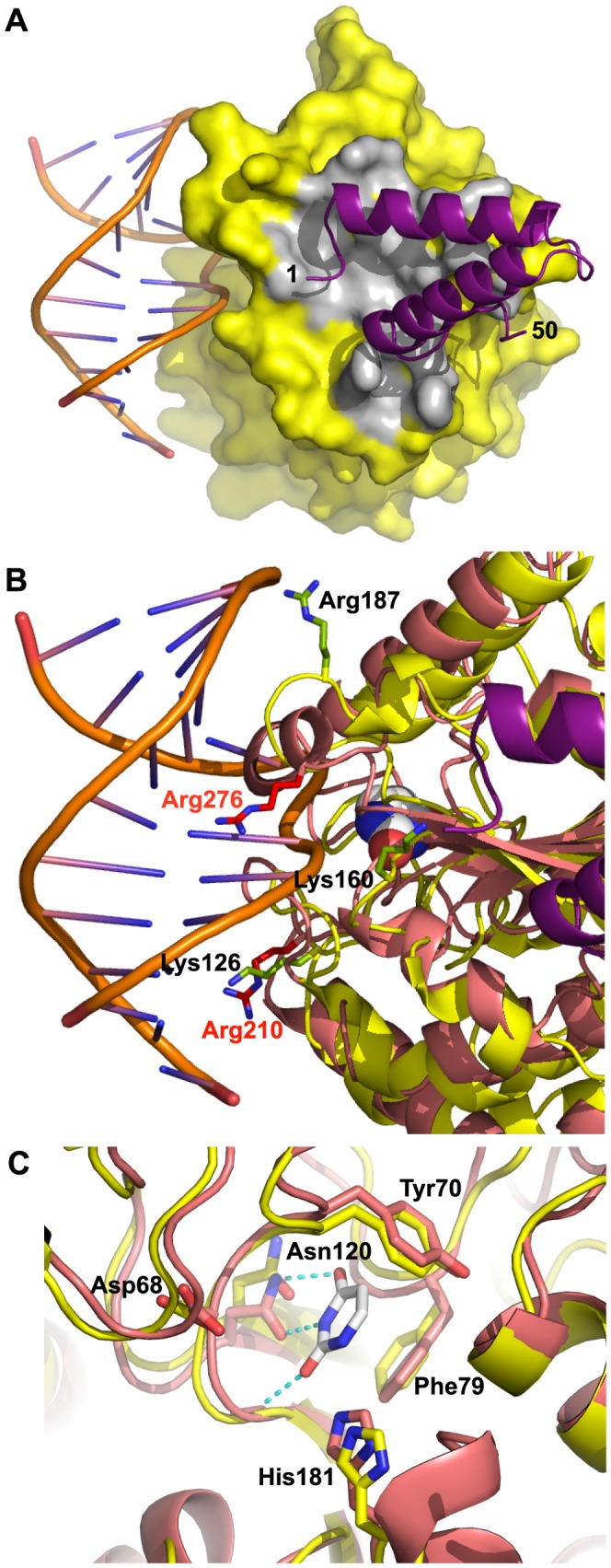
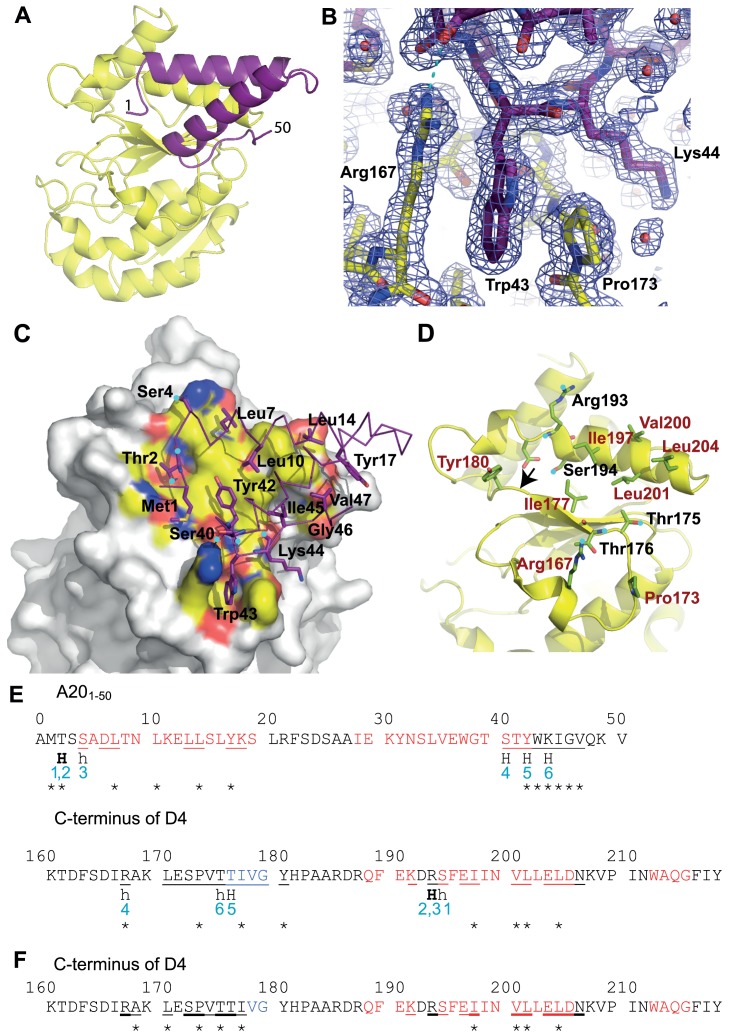
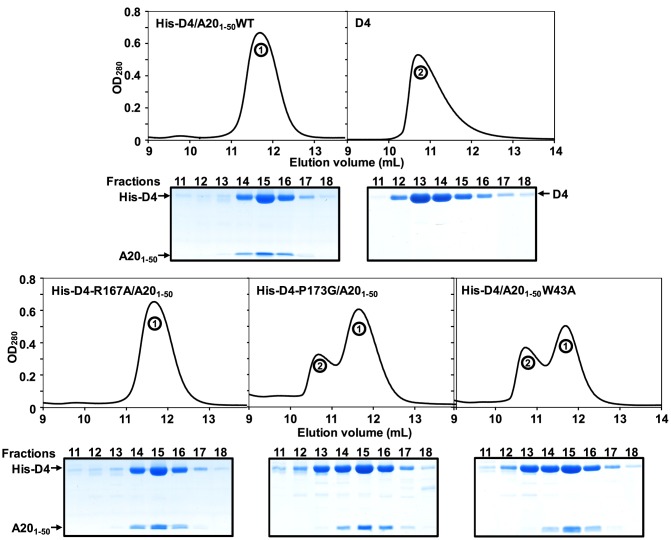
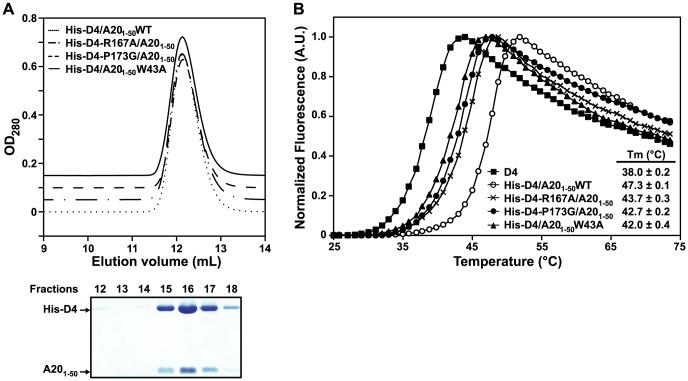
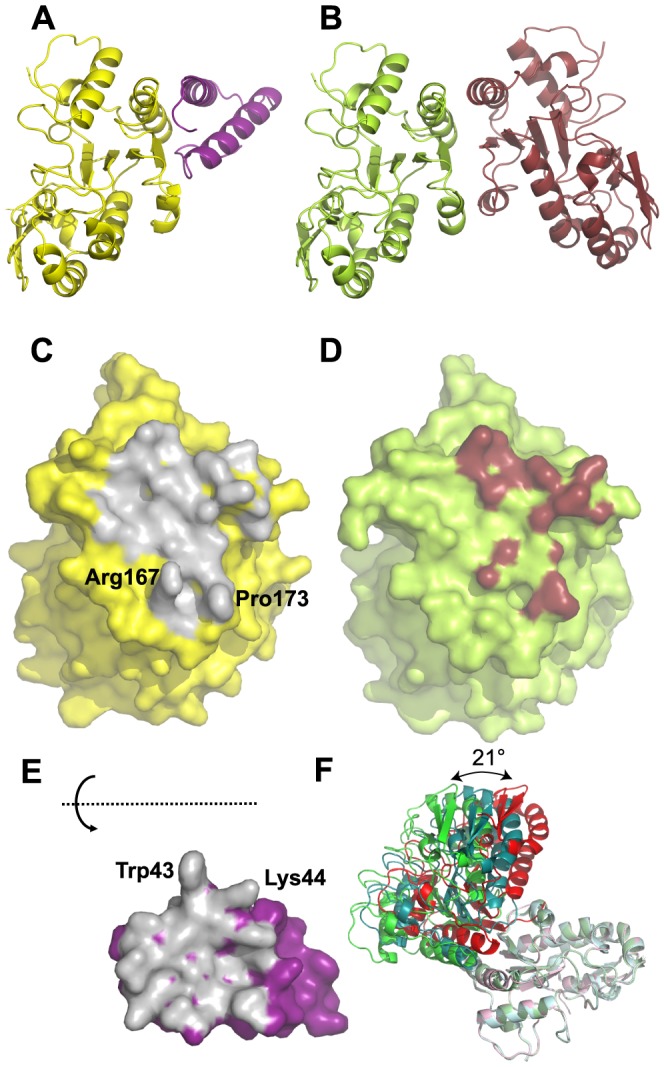
Vaccinia virus polymerase holoenzyme is composed of the DNA polymerase E9, the uracil-DNA glycosylase D4 and A20, a protein with no known enzymatic activity. The D4/A20 heterodimer is the DNA polymerase co-factor whose function is essential for processive DNA synthesis. Genetic and biochemical data have established that residues located in the N-terminus of A20 are critical for binding to D4. However, no information regarding the residues of D4 involved in A20 binding is yet available. We expressed and purified the complex formed by D4 and the first 50 amino acids of A20 (D4/A20₁₋₅₀). We showed that whereas D4 forms homodimers in solution when expressed alone, D4/A20₁₋₅₀ clearly behaves as a heterodimer. The crystal structure of D4/A20₁₋₅₀ solved at 1.85 Å resolution reveals that the D4/A20 interface (including residues 167 to 180 and 191 to 206 of D4) partially overlaps the previously described D4/D4 dimer interface. A20₁₋₅₀ binding to D4 is mediated by an α-helical domain with important leucine residues located at the very N-terminal end of A20 and a second stretch of residues containing Trp43 involved in stacking interactions with Arg167 and Pro173 of D4. Point mutations of the latter residues disturb D4/A20₁₋₅₀ formation and reduce significantly thermal stability of the complex. Interestingly, small molecule docking with anti-poxvirus inhibitors selected to interfere with D4/A20 binding could reproduce several key features of the D4/A20₁₋₅₀ interaction. Finally, we propose a model of D4/A20₁₋₅₀ in complex with DNA and discuss a number of mutants described in the literature, which affect DNA synthesis. Overall, our data give new insights into the assembly of the poxvirus DNA polymerase cofactor and may be useful for the design and rational improvement of antivirals targeting the D4/A20 interface.
痘苗病毒聚合酶全酶由DNA聚合酶E9、尿嘧啶-DNA糖基化酶D4和A20组成,A20是一种没有已知酶活性的蛋白质。D4/A20异二聚体是DNA聚合酶辅因子,其功能对于进行性DNA合成至关重要。遗传和生化数据表明,位于A20 N端的残基对于与D4结合至关重要。然而,关于D4中参与A20结合的残基的信息尚无可用。我们表达并纯化了由D4和A20的前50个氨基酸形成的复合物(D4/A20₁₋₅₀)。我们表明,单独表达时D4在溶液中形成同二聚体,而D4/A20₁₋₅₀显然表现为异二聚体。以1.85 Å分辨率解析的D4/A20₁₋₅₀晶体结构表明,D4/A20界面(包括D4的167至180位残基和191至206位残基)部分与先前描述的D4/D4二聚体界面重叠。A20₁₋₅₀与D4的结合由一个α-螺旋结构域介导,该结构域在A20的N端非常末端有重要的亮氨酸残基,以及第二个残基片段,其中包含与D4的Arg167和Pro173参与堆积相互作用的Trp43。后两个残基的点突变会干扰D4/A20₁₋₅₀的形成,并显著降低复合物的热稳定性。有趣的是,与选择用于干扰D4/A20结合的抗痘病毒抑制剂进行小分子对接可以重现D4/A20₁₋₅₀相互作用的几个关键特征。最后,我们提出了D4/A20₁₋₅₀与DNA复合物的模型,并讨论了文献中描述的一些影响DNA合成的突变体。总体而言,我们的数据为痘病毒DNA聚合酶辅因子的组装提供了新的见解,可能有助于设计和合理改进靶向D4/A20界面的抗病毒药物。