Xing Dong-Jun, Zhang Hong-Xing, Huang Na, Wu Kun-Chao, Huang Xiu-Feng, Huang Fang, Tong Yi, Pang Chi-Pui, Qu Jia, Jin Zi-Bing
Division of Ophthalmic Genetics, Laboratory for Stem Cell and Retinal Regeneration, The Eye Hospital of Wenzhou Medical University, Wenzhou, China; The State Key Laboratory Cultivation Base and Key Laboratory of Vision Science, Ministry of Health P. R. China, Wenzhou, China.
Jinan Eye Hospital, Second People's Hospital, Jinan, China.
PLoS One. 2014 Mar 7;9(3):e90599. doi: 10.1371/journal.pone.0090599. eCollection 2014.
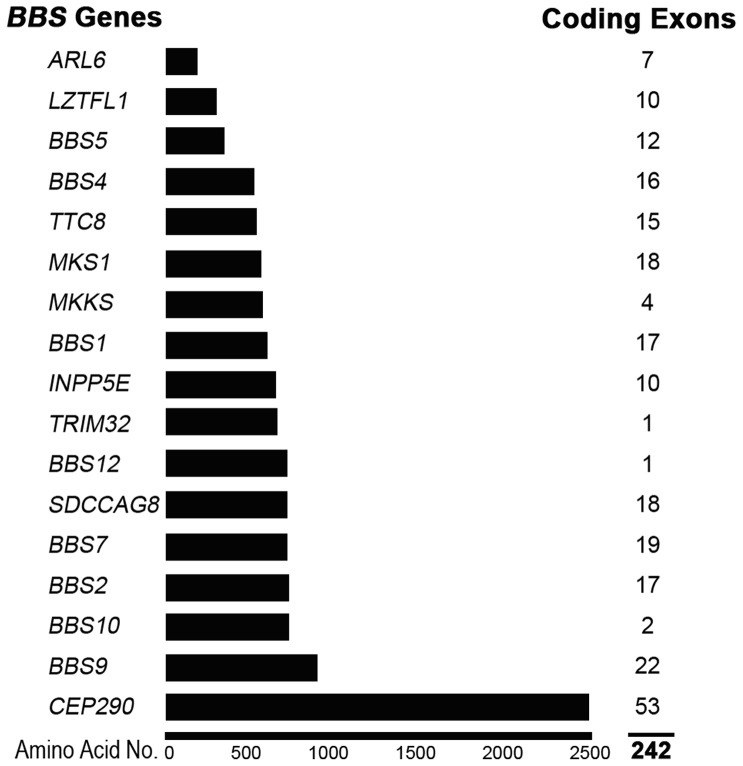
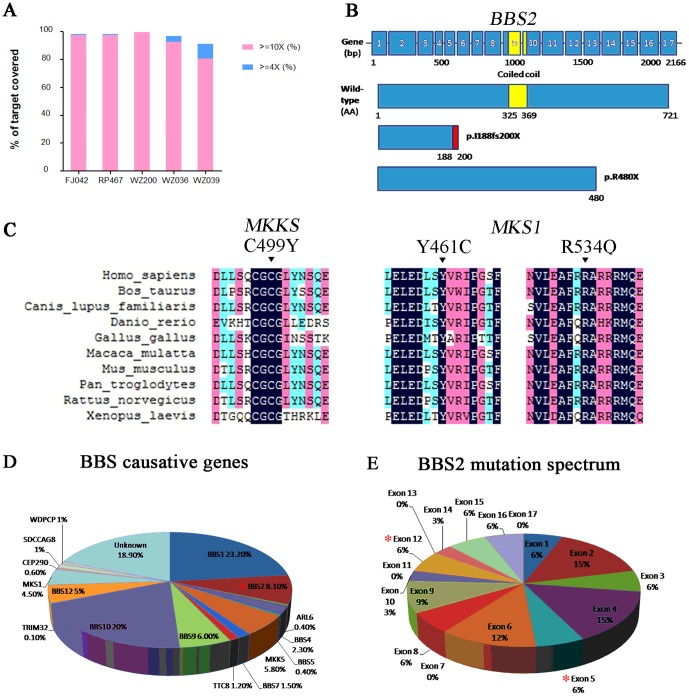
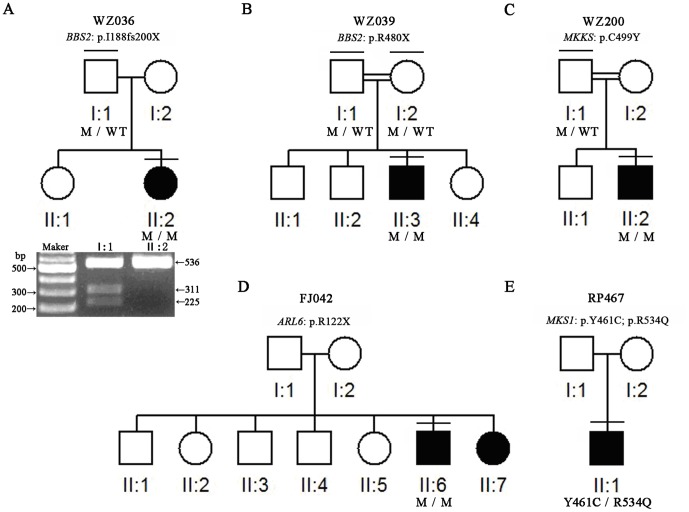
Bardet-Biedl syndrome (BBS) is an autosomal recessive disorder with significant genetic heterogeneity. BBS is linked to mutations in 17 genes, which contain more than 200 coding exons. Currently, BBS is diagnosed by direct DNA sequencing for mutations in these genes, which because of the large genomic screening region is both time-consuming and expensive. In order to develop a practical method for the clinic diagnosis of BBS, we have developed a high-throughput targeted exome sequencing (TES) for genetic diagnosis. Five typical BBS patients were recruited and screened for mutations in a total of 144 known genes responsible for inherited retinal diseases, a hallmark symptom of BBS. The genomic DNA of these patients and their families were subjected to high-throughput DNA re-sequencing. Deep bioinformatics analysis was carried out to filter the massive sequencing data, which were further confirmed through co-segregation analysis. TES successfully revealed mutations in BBS genes in each patient and family member. Six pathological mutations, including five novel mutations, were revealed in the genes BBS2, MKKS, ARL6, MKS1. This study represents the first report of targeted exome sequencing in BBS patients and demonstrates that high-throughput TES is an accurate and rapid method for the genetic diagnosis of BBS.
巴德-比埃尔综合征(BBS)是一种常染色体隐性疾病,具有显著的遗传异质性。BBS与17个基因的突变有关,这些基因包含200多个编码外显子。目前,BBS是通过对这些基因的突变进行直接DNA测序来诊断的,由于基因组筛查区域较大,这既耗时又昂贵。为了开发一种用于BBS临床诊断的实用方法,我们开发了一种用于基因诊断的高通量靶向外显子组测序(TES)。招募了5名典型的BBS患者,并对总共144个已知的遗传性视网膜疾病相关基因进行突变筛查,遗传性视网膜疾病是BBS的一个标志性症状。对这些患者及其家族的基因组DNA进行高通量DNA重测序。进行了深入的生物信息学分析以筛选大量测序数据,并通过共分离分析进一步证实。TES成功地在每位患者和家庭成员中揭示了BBS基因的突变。在BBS2、MKKS、ARL6、MKS1基因中发现了6个病理性突变,其中包括5个新突变。本研究是关于BBS患者靶向外显子组测序的首次报告,并证明高通量TES是一种准确、快速的BBS基因诊断方法。