Institute of Biochemistry and Molecular Biology, RWTH Aachen University, Pauwelsstraße 30, Aachen 52074, Germany.
Cell Commun Signal. 2014 Mar 10;12:14. doi: 10.1186/1478-811X-12-14.
Short in-frame deletions in the second extracellular domain of the cytokine receptor gp130 are the leading cause of inflammatory hepatocellular adenomas (IHCAs). The deletions render gp130 constitutively active. In this study we investigate the intracellular signaling potential of one of the most potent constitutively active gp130 mutants (CAgp130) found in IHCAs.
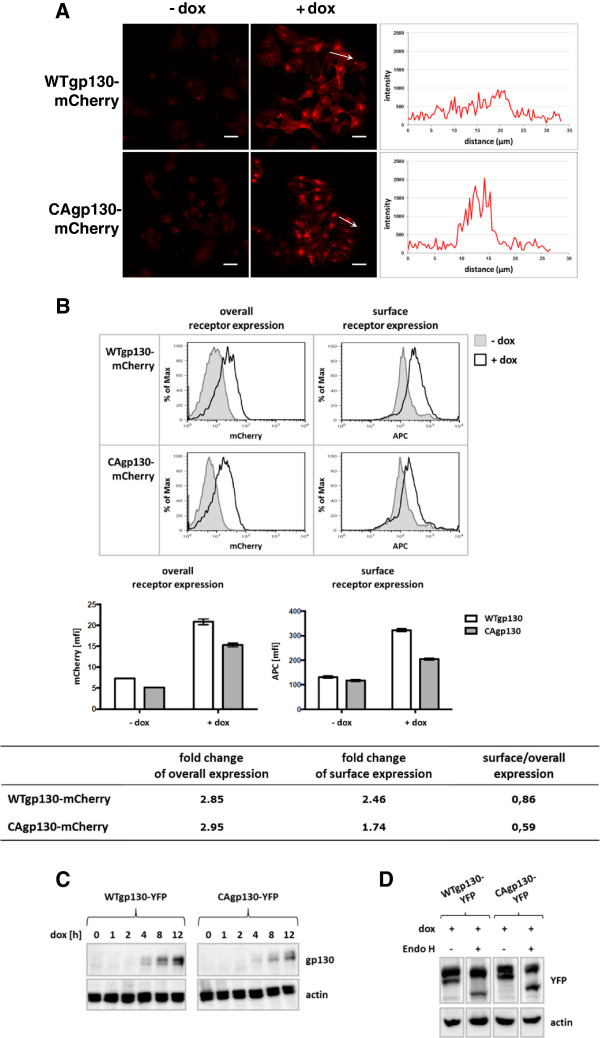
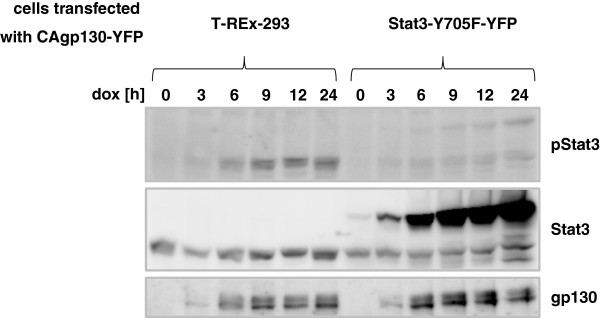
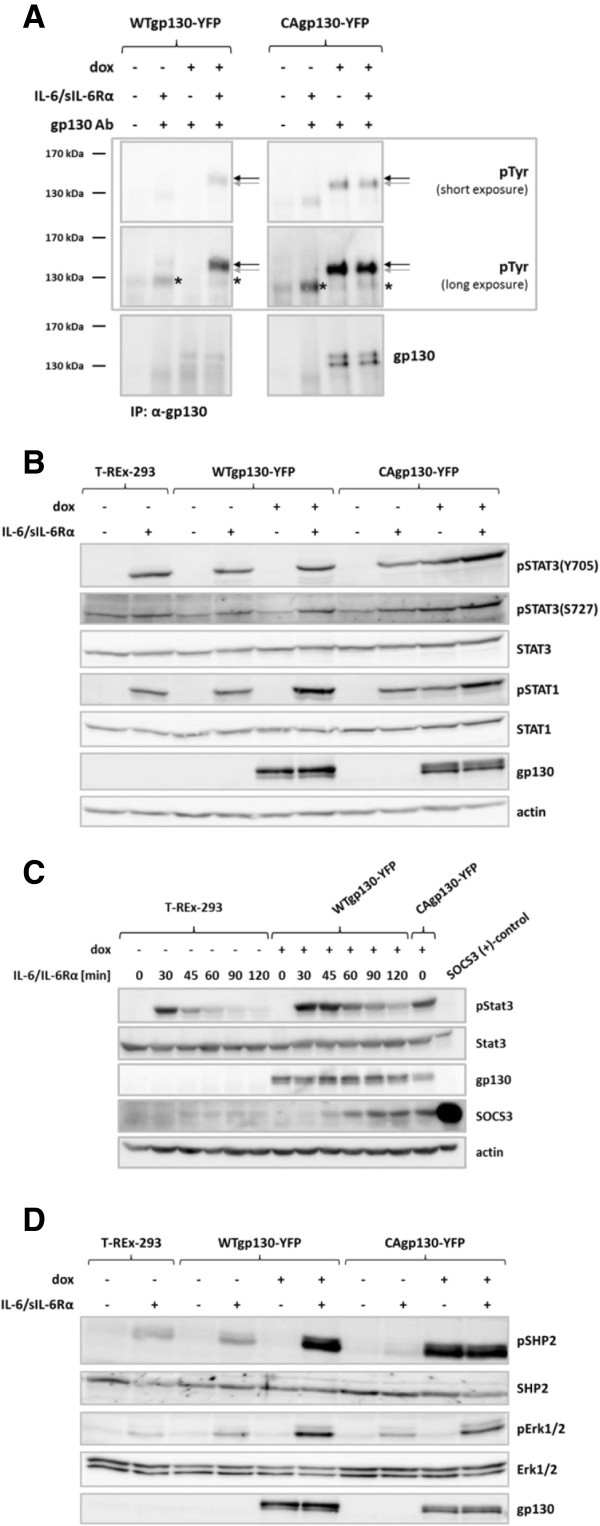
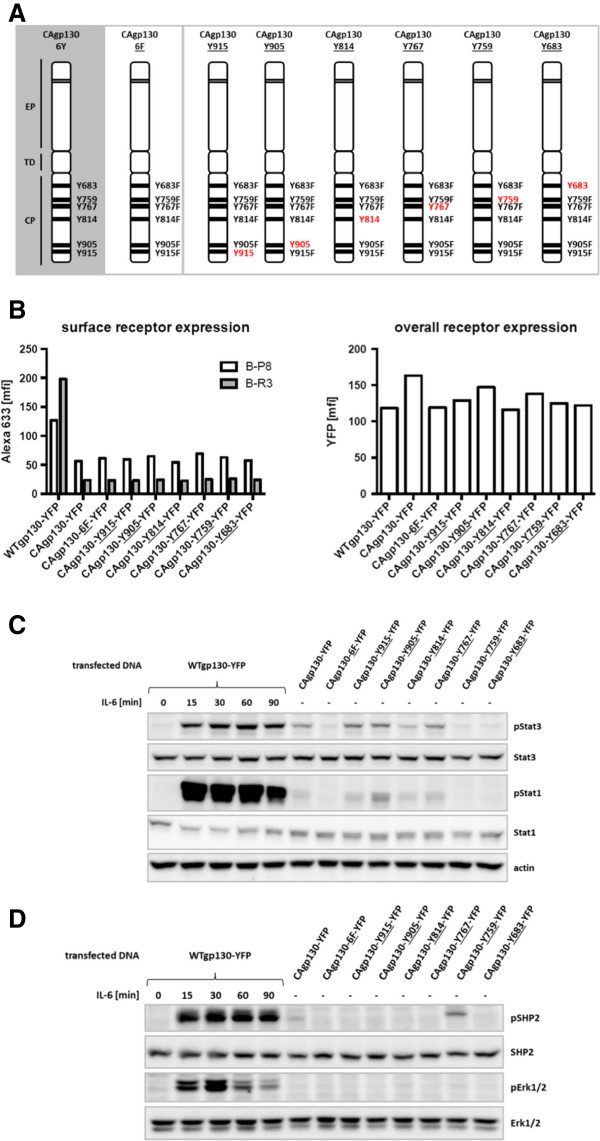
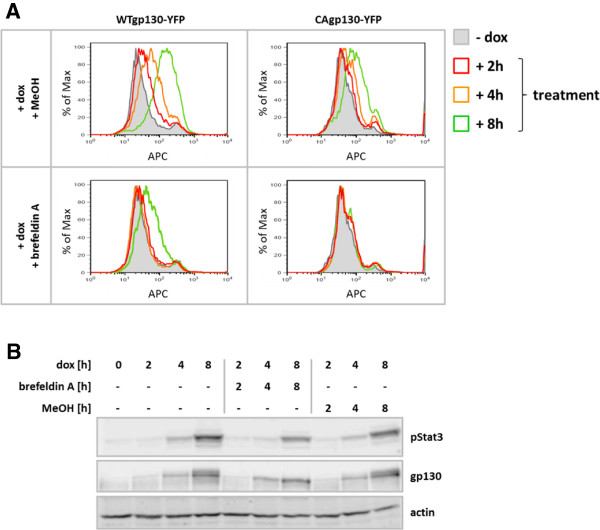
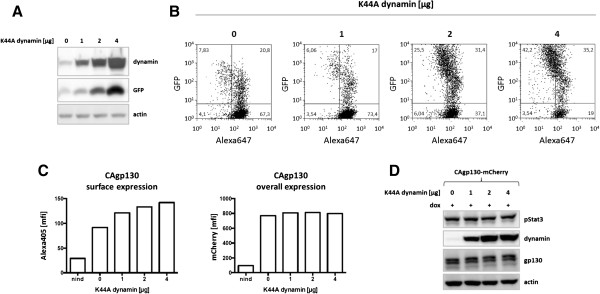
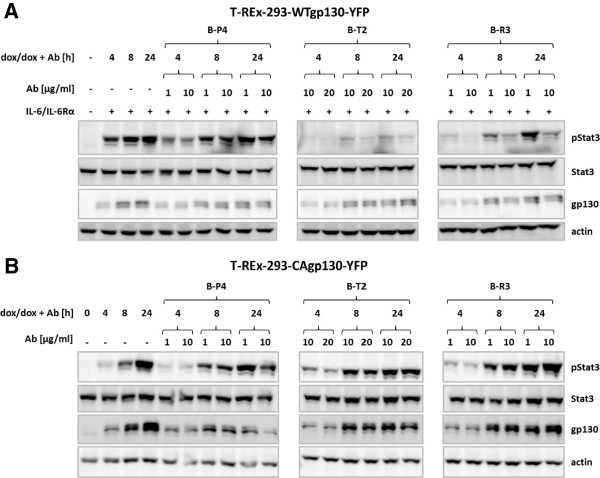
Trafficking and signaling of CAgp130 were studied in stably transfected cell lines that allowed the inducible expression of CAgp130 fused to fluorescent proteins such as YFP and mCherry. In contrast to the predominantly highly glycosylated gp130 wild type (WTgp130), CAgp130 is preferentially found in the less glycosylated high-mannose form. Accordingly, the mutated receptor is retained intracellularly and therefore less prominently expressed at the cell surface. CAgp130 persistently activates Stat3 despite the presence of the feedback inhibitor SOCS3 but fails to activate Erk1/2. De novo synthesized CAgp130 signals already from the ER-Golgi compartment before having reached the plasma membrane. Cell surface expressed and endocytosed CAgp130 do not significantly contribute to signaling. As a consequence, Stat3 activation through CAgp130 cannot be inhibited by neutralizing gp130 antibodies but through overexpression of a dominant-negative Stat3 mutant.
CAgp130 and WTgp130 differ significantly with respect to glycosylation, trafficking and signaling. As a consequence of intracellular signaling pharmacological inhibition of CAgp130 will not be achieved by targeting the receptor extracellularly but by compounds that act from within the cell.
细胞因子受体 gp130 的第二细胞外结构域中的短框内缺失是炎症性肝细胞腺瘤(IHCAs)的主要原因。这些缺失使 gp130 持续激活。在这项研究中,我们研究了在 IHCAs 中发现的最有效的持续激活 gp130 突变体(CAgp130)的细胞内信号转导潜能。
在稳定转染的细胞系中研究了 CAgp130 的转运和信号转导,这些细胞系允许诱导表达与荧光蛋白(如 YFP 和 mCherry)融合的 CAgp130。与主要高度糖基化的 gp130 野生型(WTgp130)相比,CAgp130 更倾向于以低聚糖形式存在。因此,突变受体被保留在细胞内,因此在细胞表面的表达不太明显。尽管存在反馈抑制剂 SOCS3,CAgp130 仍持续激活 Stat3,但不能激活 Erk1/2。新合成的 CAgp130 在到达质膜之前就已经从 ER-Golgi 区发出信号。细胞表面表达和内吞的 CAgp130 对信号转导没有显著贡献。因此,通过中和 gp130 抗体不能抑制 CAgp130 激活 Stat3,但通过过表达显性负 Stat3 突变体可以抑制。
CAgp130 和 WTgp130 在糖基化、转运和信号转导方面有显著差异。由于细胞内信号转导,通过靶向受体细胞外区域而不是通过从细胞内作用的化合物来抑制 CAgp130 的信号转导将无法实现。