Klorig David C, Godwin Dwayne W
Neuroscience Program, Wake Forest University School of Medicine, Winston-Salem, NC, United States.
Neuroscience Program, Wake Forest University School of Medicine, Winston-Salem, NC, United States; Department of Neurobiology and Anatomy, Wake Forest University School of Medicine, Winston-Salem, NC, United States.
J Neurosci Methods. 2014 Apr 30;227:132-9. doi: 10.1016/j.jneumeth.2014.02.013. Epub 2014 Mar 5.
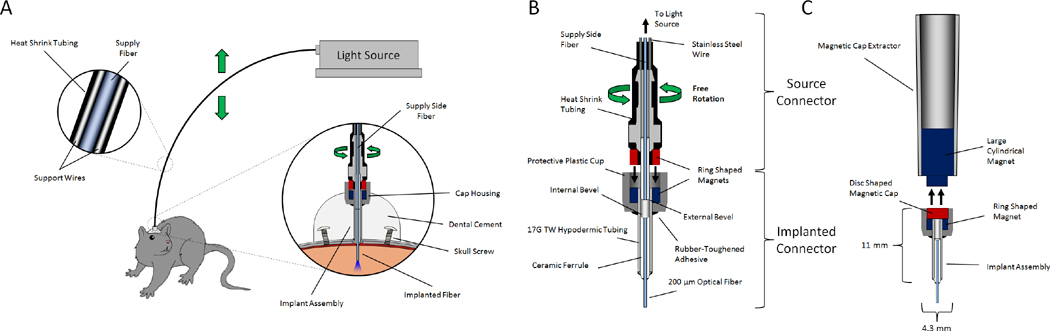
Performing optogenetic experiments in a behaving animal presents a unique technical challenge. In order to provide an optical path between a fixed light source and a chronically implanted fiber in a freely moving animal, a typical experimental setup includes a detachable connection between the light source and the head of the animal, as well as a rotary joint to relieve torsional stress during movement.
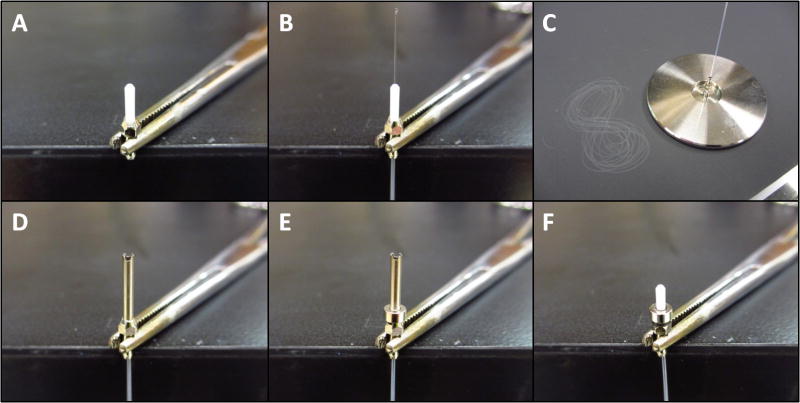
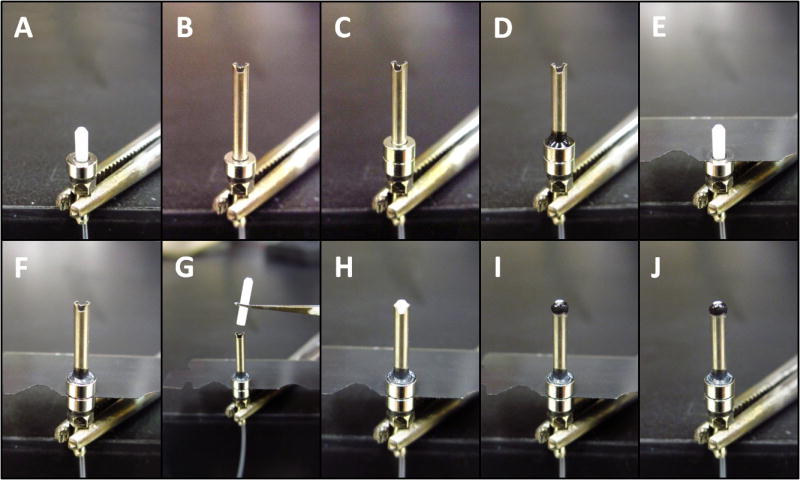
We have combined the functionality of the head mounted connector and the rotary joint into a single integrated device that is inexpensive, simple to build, and easy to use.
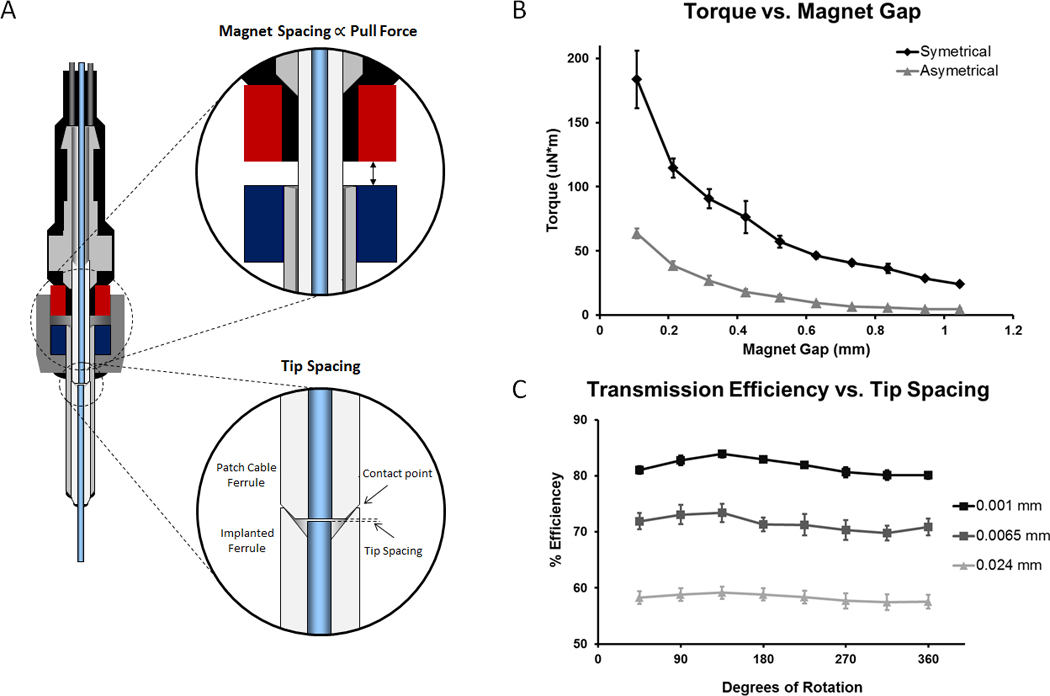
A typical rotary connector has a transmission efficiency of 80% with a rotational variability of 4%, but can be configured to have a rotational variability of 2% at the expense of a reduced transmission efficiency. Depending on configuration, rotational torque ranges from 14 to 180μNm, making the rotary connector suitable for use with small animals such as mice.
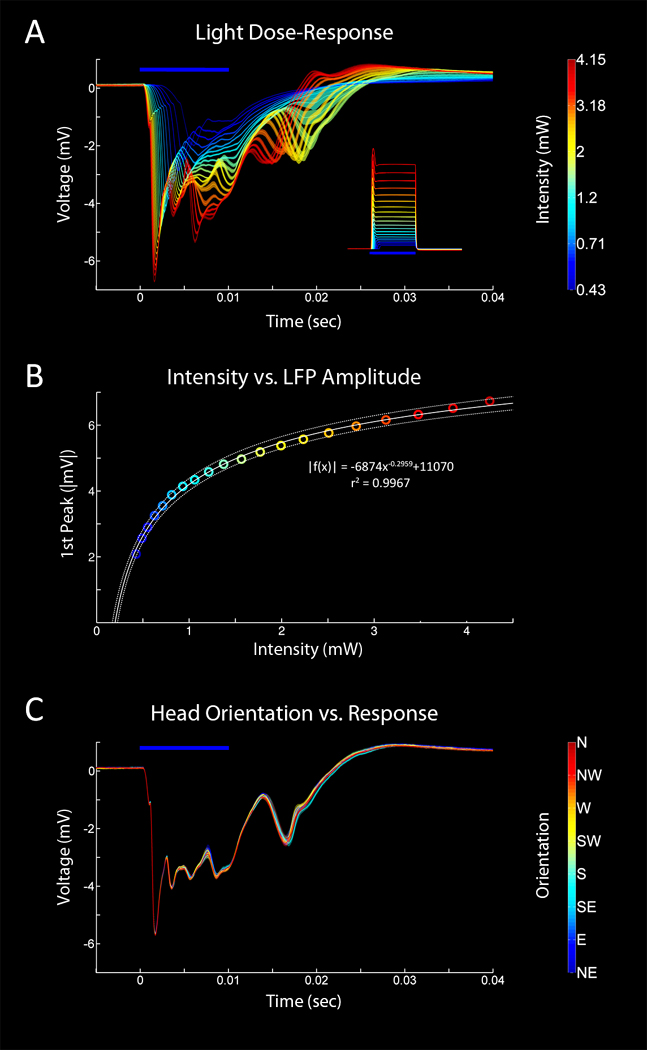
Benchmark tests demonstrate that our connectors perform similarly to commercially available solutions in terms of transmission efficiency, rotational variability, and torque but at a fraction of the cost. Unlike currently available solutions, our unique design requires a single optical junction which significantly reduces overall light loss. In addition, magnets allow the connectors and caps to "snap into place" for quick yet reliable connection and disconnection.
Our rotary connector system offers superior performance, reduced cost, and is easily incorporated into existing optogenetic setups.
在行为动物身上进行光遗传学实验带来了独特的技术挑战。为了在固定光源与自由移动动物体内长期植入的光纤之间提供光路,典型的实验装置包括光源与动物头部之间的可拆卸连接,以及一个旋转接头以减轻运动过程中的扭转应力。
我们已将头戴式连接器和旋转接头的功能整合到一个单一的集成装置中,该装置价格低廉、易于制造且使用方便。
典型的旋转连接器传输效率为80%,旋转变化率为4%,但可以配置为旋转变化率为2%,代价是传输效率降低。根据配置不同,旋转扭矩范围为14至180μNm,这使得旋转连接器适用于小鼠等小型动物。
基准测试表明,我们的连接器在传输效率、旋转变化率和扭矩方面与市售解决方案表现相似,但成本仅为其一小部分。与现有解决方案不同,我们独特的设计只需要一个光学连接点,这显著降低了整体光损失。此外,磁铁使连接器和帽盖能够“卡入到位”,实现快速且可靠的连接和断开。
我们的旋转连接器系统性能卓越、成本降低,并且易于整合到现有的光遗传学装置中。