Wang Ya-Wen, Shi Duan-Bo, Chen Xu, Gao Chao, Gao Peng
Department of Pathology, School of Medicine, Shandong University, Jinan, P.R. China.
PLoS One. 2014 Mar 10;9(3):e91307. doi: 10.1371/journal.pone.0091307. eCollection 2014.
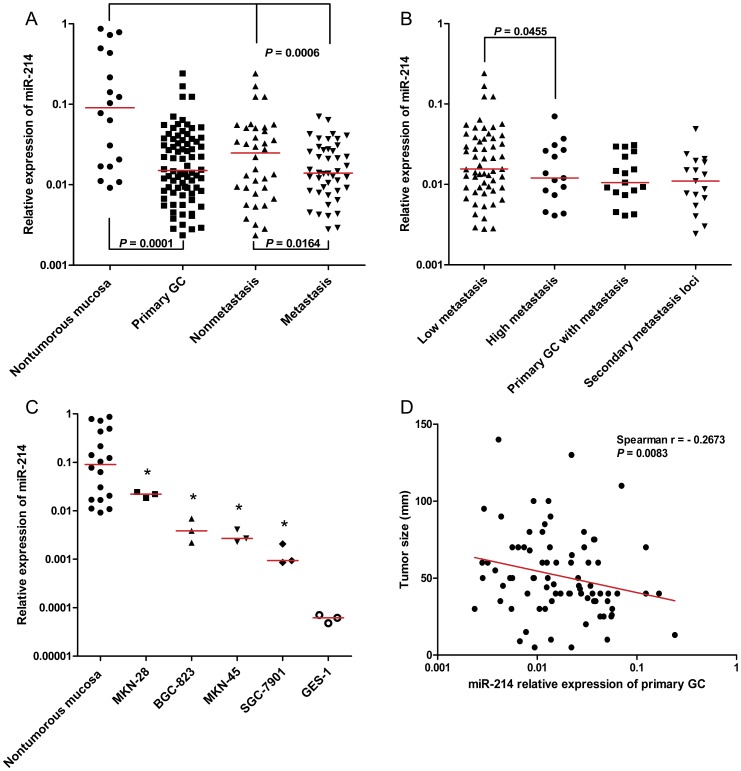
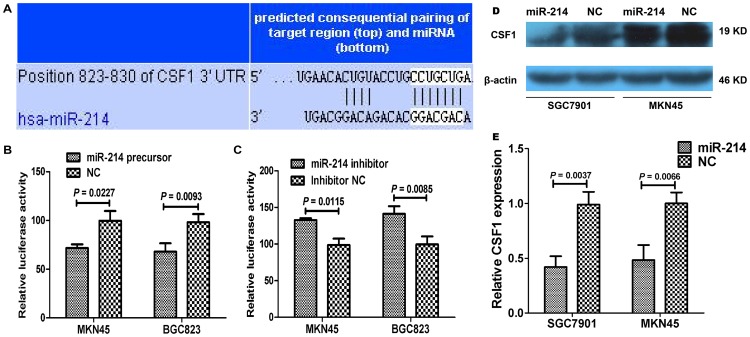
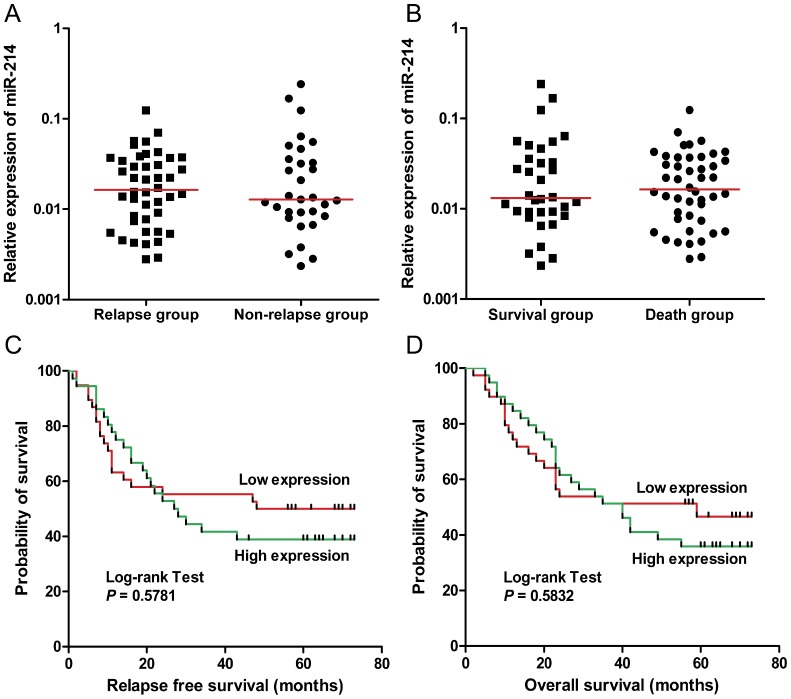
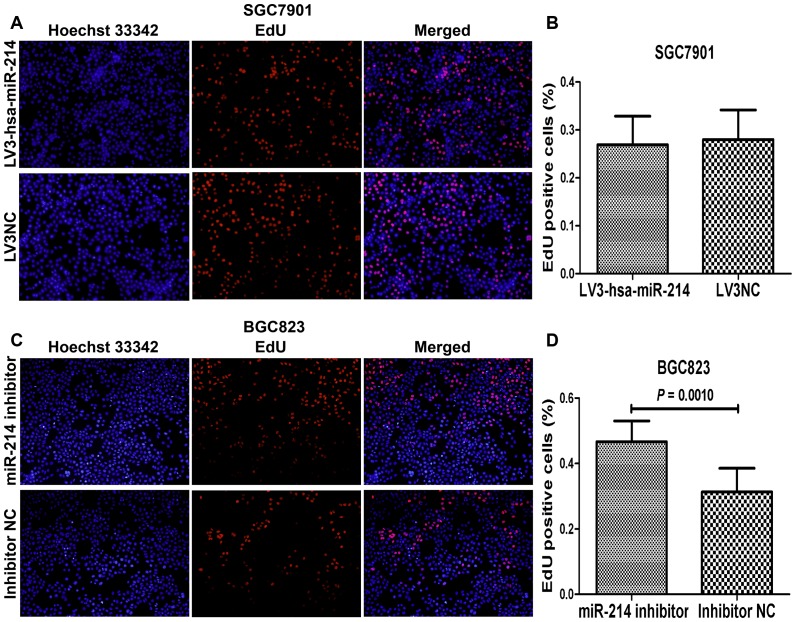
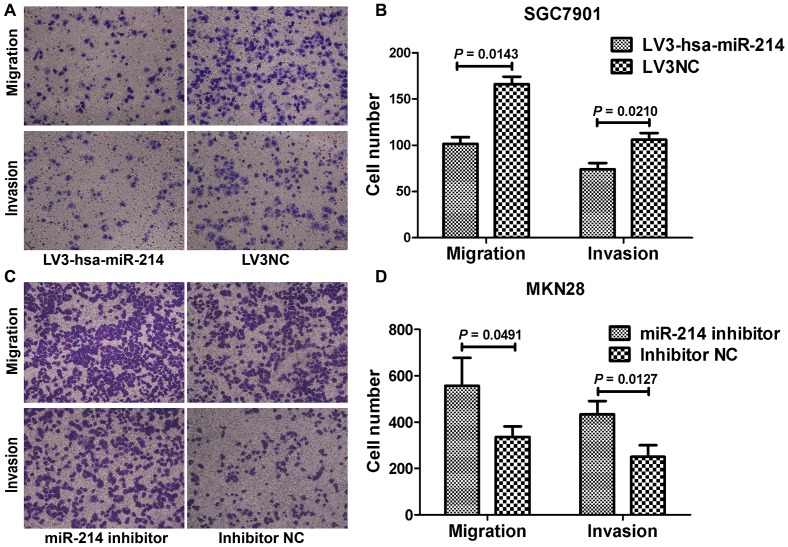
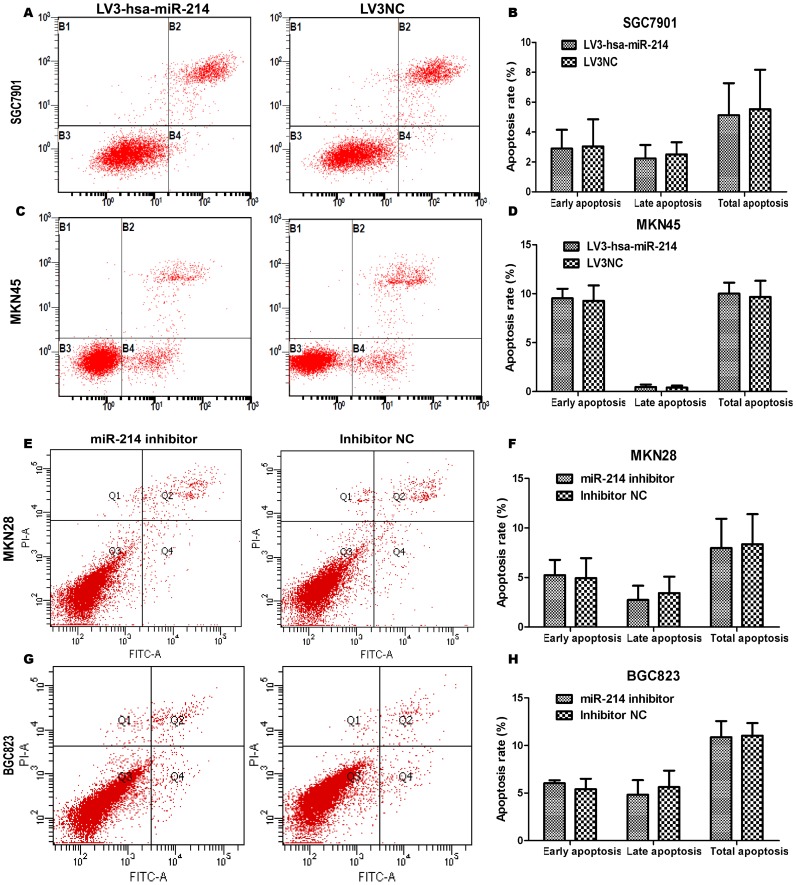
Accumulating evidence indicates that numerous microRNAs are involved in the tumorigenesis and progression of gastric cancer, while the clinical significance of microRNA-214 in gastric cancer is poorly understood and the exact role of microRNA-214 in gastric cancer remains obscure. In the present study, expression levels of microRNA-214 in 80 gastric carcinoma tissues, 18 nontumourous gastric tissues, and 4 types of gastric cancer cell lines were quantified by reverse transcription followed by real-time quantitative polymerase chain reaction (RT-qPCR), and the relationship between microRNA-214 expression and cliniopathological characteristics including prognosis was explored. To investigate the potential role of microRNA-214 in gastric cancer cell biological behaviour, we performed cell proliferation, apoptosis, migration and invasion assays in four gastric cancer cell lines and an immortalized gastric cell line in vitro. Our results showed that microRNA-214 was dramatically downregulated in gastric cancer tissues and gastric cancer cell lines, compared with nontumourous gastric tissues. Stepwise downregulation of microRNA-214 expression was observed among nontumourous gastric mucosa, nonmetastasis gastric cancer tissues, and metastasis gastric cancer tissues. The expression of microRNA-214 was significantly inversely correlated with lymph node metastasis and tumour size but had no correlation with the patient's prognosis. Ectopic expression of microRNA-214 could inhibit cell migration and invasion ability in SGC7901 and MKN45 gastric cancer cells. And knockdown of microRNA-214 significantly facilitated cell proliferation, migration and invasion in a cell-specific manner in MKN28, BGC823 and GES-1 cells. Colony stimulating factor 1 (CSF1) was identified as a target gene of microRNA-214. In summary, our data demonstrated that microRNA-214 is a promising novel biomarker for lymph node metastasis in patients with gastric cancer. And we identified that downregulation of microRNA-214 may regulate the proliferation, invasion and migration of gastric cancer cells by directly targeting CSF1.
越来越多的证据表明,众多微小RNA参与胃癌的发生和发展,然而,微小RNA-214在胃癌中的临床意义鲜为人知,其在胃癌中的确切作用仍不清楚。在本研究中,通过逆转录随后进行实时定量聚合酶链反应(RT-qPCR)对80例胃癌组织、18例非肿瘤性胃组织和4种胃癌细胞系中微小RNA-214的表达水平进行定量,并探讨微小RNA-214表达与包括预后在内的临床病理特征之间的关系。为了研究微小RNA-214在胃癌细胞生物学行为中的潜在作用,我们在四种胃癌细胞系和一种永生化胃细胞系中进行了体外细胞增殖、凋亡、迁移和侵袭实验。我们的结果显示,与非肿瘤性胃组织相比,微小RNA-214在胃癌组织和胃癌细胞系中显著下调。在非肿瘤性胃黏膜、非转移性胃癌组织和转移性胃癌组织中观察到微小RNA-214表达的逐步下调。微小RNA-214的表达与淋巴结转移和肿瘤大小显著负相关,但与患者预后无关。微小RNA-214的异位表达可抑制SGC7901和MKN45胃癌细胞的迁移和侵袭能力。而敲低微小RNA-214以细胞特异性方式显著促进了MKN28、BGC823和GES-1细胞的增殖、迁移和侵袭。集落刺激因子1(CSF1)被鉴定为微小RNA-214的靶基因。总之,我们的数据表明,微小RNA-214是胃癌患者淋巴结转移的一种有前景的新型生物标志物。并且我们发现微小RNA-214的下调可能通过直接靶向CSF1来调节胃癌细胞的增殖、侵袭和迁移。