Hunter Eric J, Siegmund Thomas, Chan Roger W
Communicative Sciences and Disorders, Michigan State University, East Lansing, Michigan, United States of America; National Center for Voice and Speech, The University of Utah, Salt Lake City, Utah, United States of America.
School of Mechanical Engineering, Purdue University, West Lafayette, Indiana, United States of America.
PLoS One. 2014 Mar 10;9(3):e90762. doi: 10.1371/journal.pone.0090762. eCollection 2014.
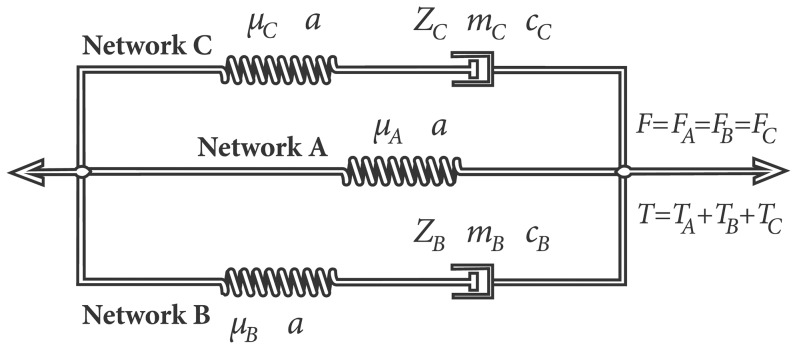
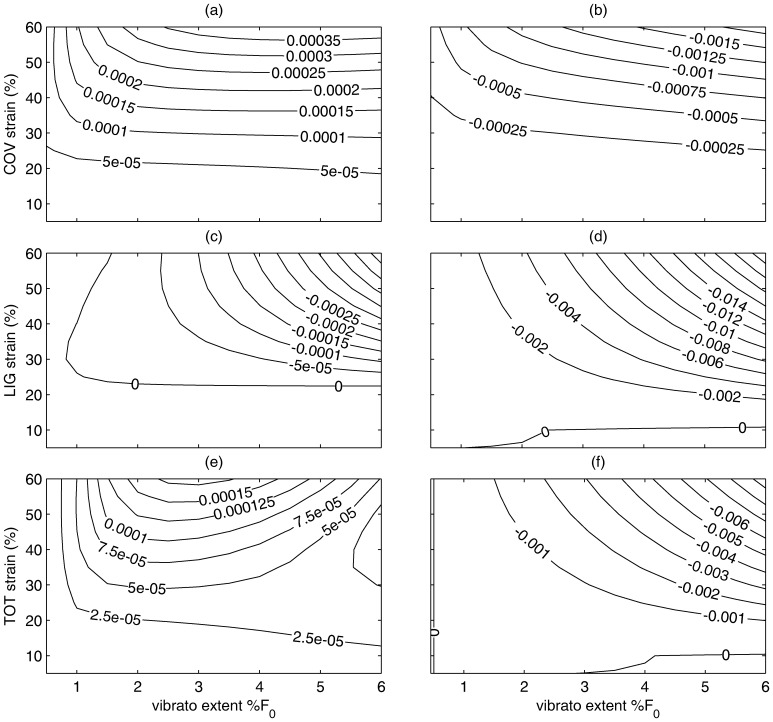
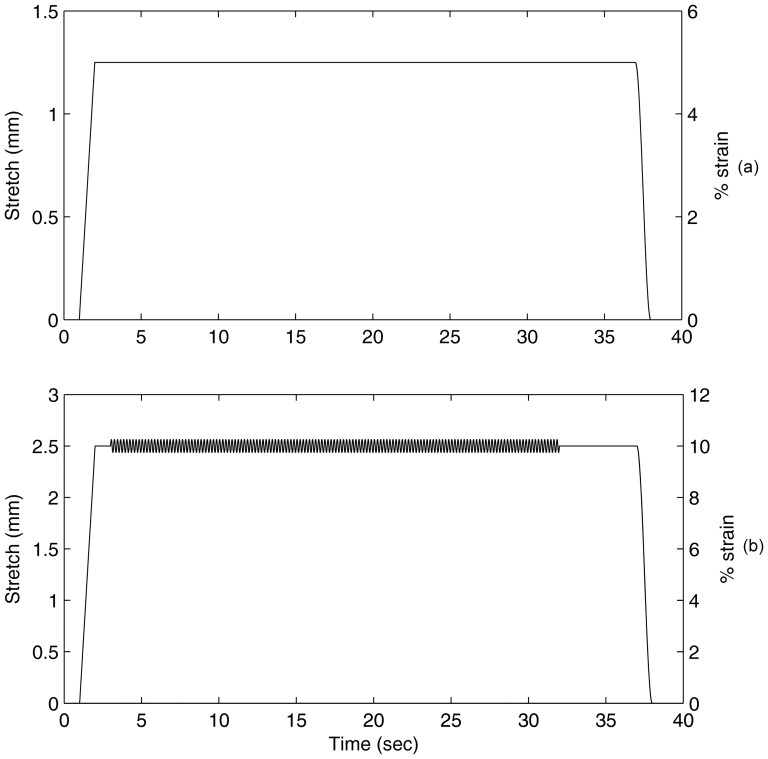
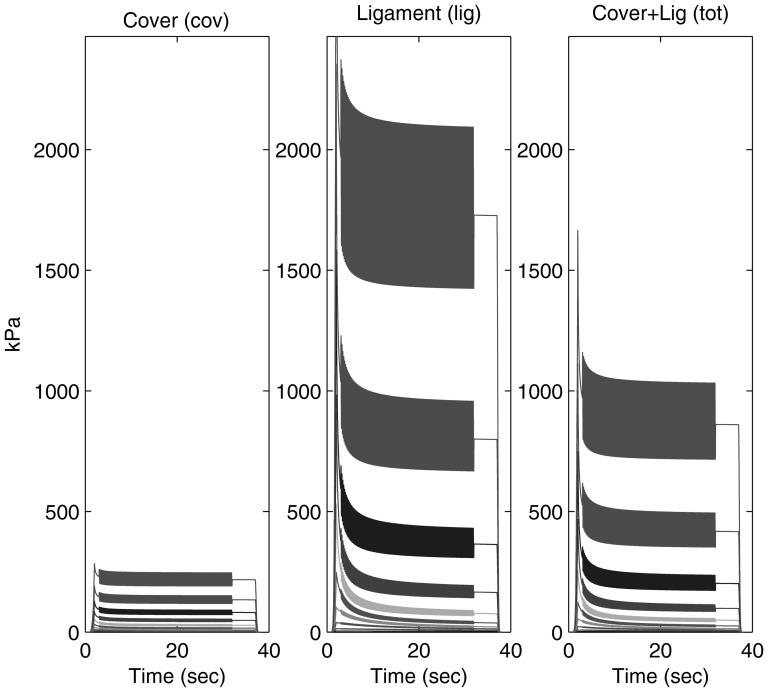
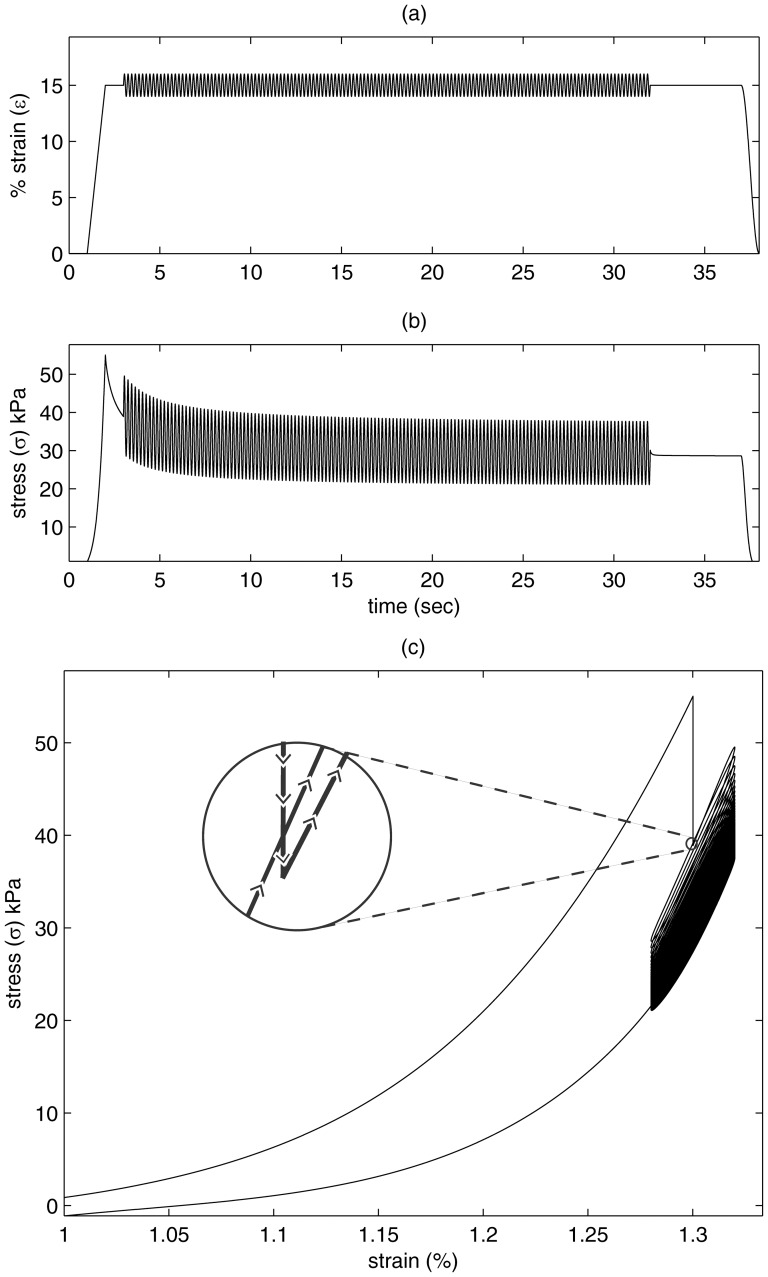
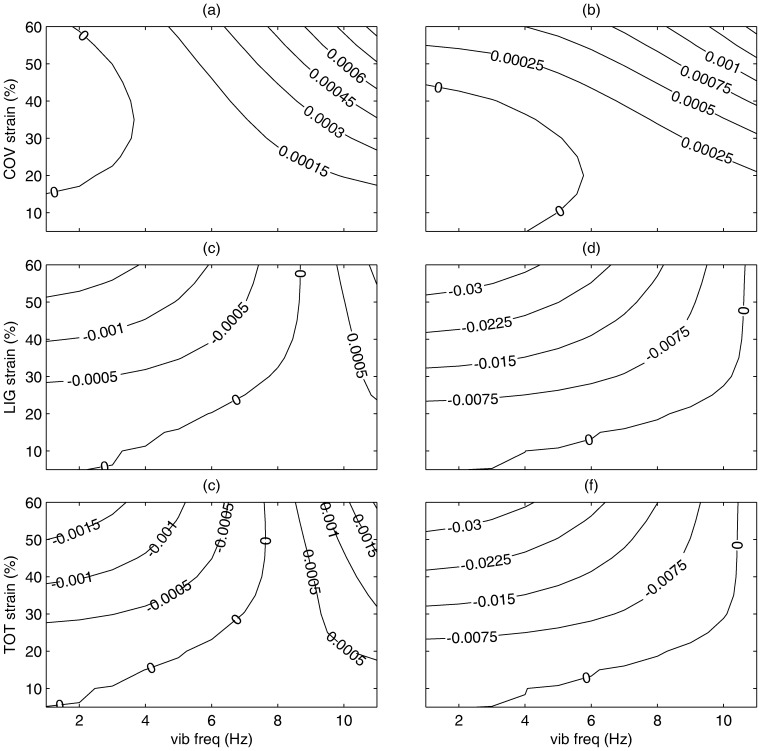
Vocal fold tissues in animal and human species undergo deformation processes at several types of loading rates: a slow strain involved in vocal fold posturing (on the order of 1 Hz or so), cyclic and faster posturing often found in speech tasks or vocal embellishment (1-10 Hz), and shear strain associated with vocal fold vibration during phonation (100 Hz and higher). Relevant to these deformation patterns are the viscous properties of laryngeal tissues, which exhibit non-linear stress relaxation and recovery. In the current study, a large strain time-dependent constitutive model of human vocal fold tissue is used to investigate effects of phonatory posturing cyclic strain in the range of 1 Hz to 10 Hz. Tissue data for two subjects are considered and used to contrast the potential effects of age. Results suggest that modulation frequency and extent (amplitude), as well as the amount of vocal fold overall strain, all affect the change in stress relaxation with modulation added. Generally, the vocal fold cover reduces the rate of relaxation while the opposite is true for the vocal ligament. Further, higher modulation frequencies appear to reduce the rate of relaxation, primarily affecting the ligament. The potential benefits of cyclic strain, often found in vibrato (around 5 Hz modulation) and intonational inflection, are discussed in terms of vocal effort and vocal pitch maintenance. Additionally, elderly tissue appears to not exhibit these benefits to modulation. The exacerbating effect such modulations may have on certain voice disorders, such as muscle tension dysphonia, are explored.
声带姿势调整中涉及的缓慢应变(约为1赫兹左右)、言语任务或发声修饰中常见的周期性且更快的姿势调整(1 - 10赫兹),以及发声时与声带振动相关的剪切应变(100赫兹及以上)。与这些变形模式相关的是喉部组织的粘性特性,其表现出非线性应力松弛和恢复。在当前研究中,使用了一种大应变时间相关的人类声带组织本构模型,来研究1赫兹至10赫兹范围内发声姿势周期性应变的影响。考虑了两名受试者的组织数据,并用于对比年龄的潜在影响。结果表明,调制频率和程度(幅度),以及声带整体应变的量,都会影响添加调制后应力松弛的变化。一般来说,声带覆盖层会降低松弛速率,而声带韧带则相反。此外,较高的调制频率似乎会降低松弛速率,主要影响韧带。从发声努力和音高维持方面讨论了颤音(约5赫兹调制)和语调变化中常见的周期性应变的潜在益处。此外,老年组织似乎并未表现出这些调制益处。还探讨了这种调制可能对某些语音障碍(如肌肉紧张性发声障碍)产生的加剧作用。