Laboratory for Microstructures, Shanghai University, Shangda Road 99, Shanghai 200444, P. R. China.
Institute of Applied Chemistry, Xinjiang University, Urumqi, Xinjiang 830046, P. R. China.
Sci Rep. 2014 Mar 10;4:4153. doi: 10.1038/srep04153.
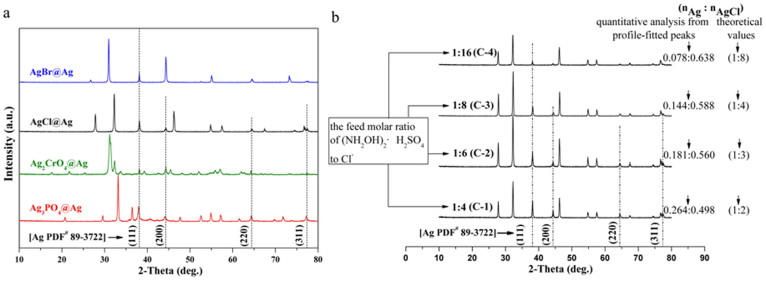
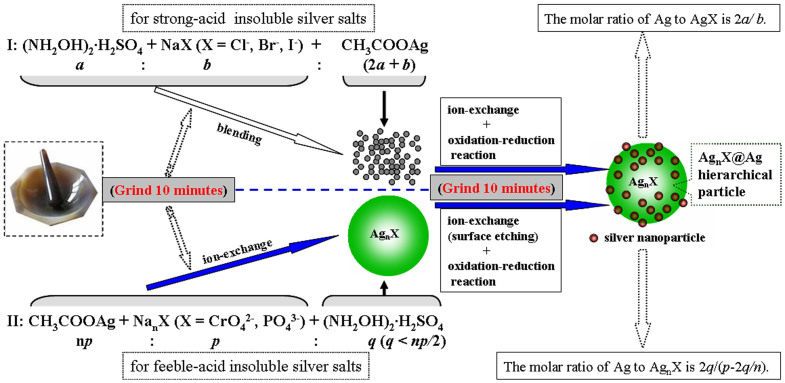
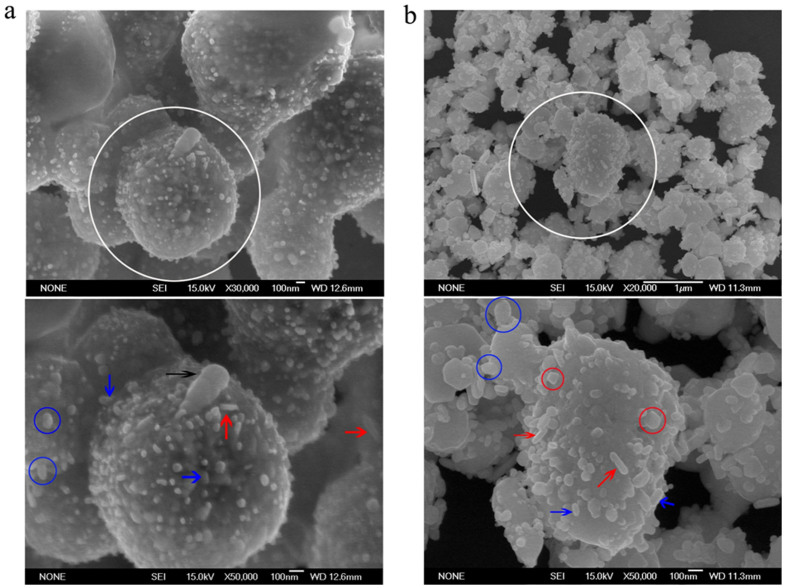
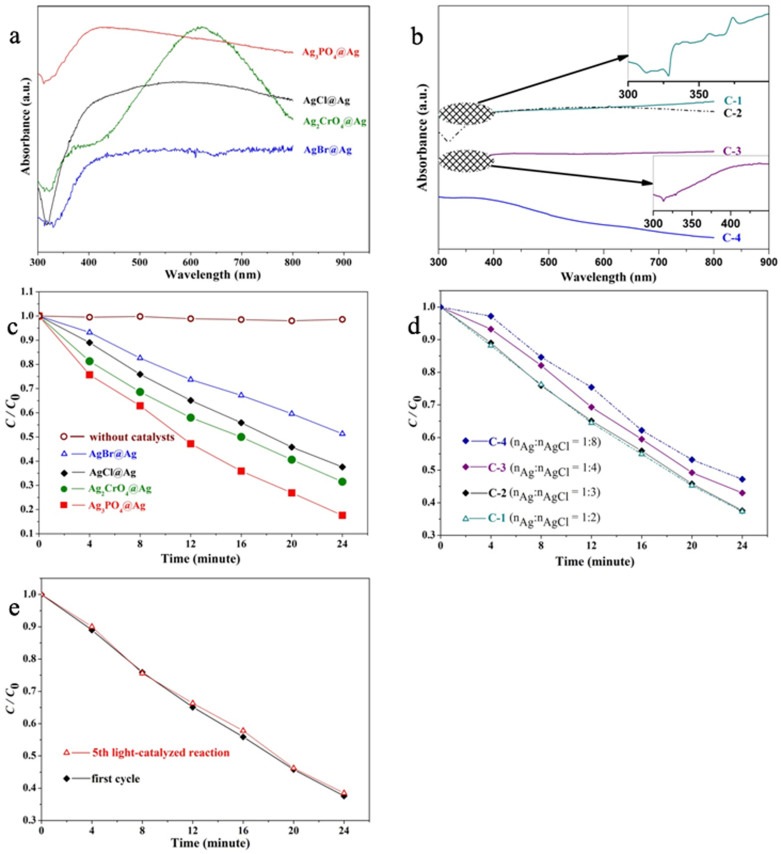
It is a long-standing goal to explore convenient synthesis methodology for functional materials. Recently, several multiple-step approaches have been designed for photocatalysts Ag(n)X@Ag (X = Cl(-), PO4(3-), etc.), mainly containing the ion-exchange (metathesis) reaction followed by photoreduction in solution. But they were obsessed by complicated process, the uncontrollability of composition and larger sizes of Ag particles. Here we show a general solid-state route for the synthesis of Ag(n)X@Ag catalysts with hierarchical structures. Due to strong surface plasmon resonance of silver nanoparticles with broad shape and size, the Ag(n)X@Ag showed high photocatalytic activity in visible region. Especially, the composition of Ag(n)X@Ag composites could be accurately controlled by regulating the feed ratio of (NH2OH)2 ·H2SO4 to anions, by which the performance were easily optimized. Results demonstrate that the metathesis and oxidation-reduction reactions can be performed in solid state at room temperature for nanosynthesis, greatly reducing the time/energy consumption and pollution.
探索功能材料的便捷合成方法是一个长期目标。最近,人们设计了几种多步方法来合成 Ag(n)X@Ag(X = Cl(-)、PO4(3-) 等)光催化剂,主要包含离子交换(交换反应),然后在溶液中进行光还原。但这些方法受到复杂过程、组成不可控和 Ag 颗粒较大的困扰。在这里,我们展示了一种用于合成具有分级结构的 Ag(n)X@Ag 催化剂的通用固态路线。由于银纳米粒子具有较宽的形状和尺寸的强表面等离子体共振,Ag(n)X@Ag 在可见光区表现出高的光催化活性。特别是,通过调节(NH2OH)2·H2SO4 与阴离子的进料比,可以精确控制 Ag(n)X@Ag 复合材料的组成,从而轻松优化性能。结果表明,在室温下,固相间的交换和氧化还原反应可以进行纳米合成,大大减少了时间/能源消耗和污染。