Lin Miao-chong J, Rojas Katherine S, Cerione Richard A, Wilson Kristin F
Authors' Affiliation: Department of Molecular Medicine, Cornell University, Ithaca, New York.
Authors' Affiliation: Department of Molecular Medicine, Cornell University, Ithaca, New York
Mol Cancer Res. 2014 Jun;12(6):940-52. doi: 10.1158/1541-7786.MCR-13-0555. Epub 2014 Mar 10.
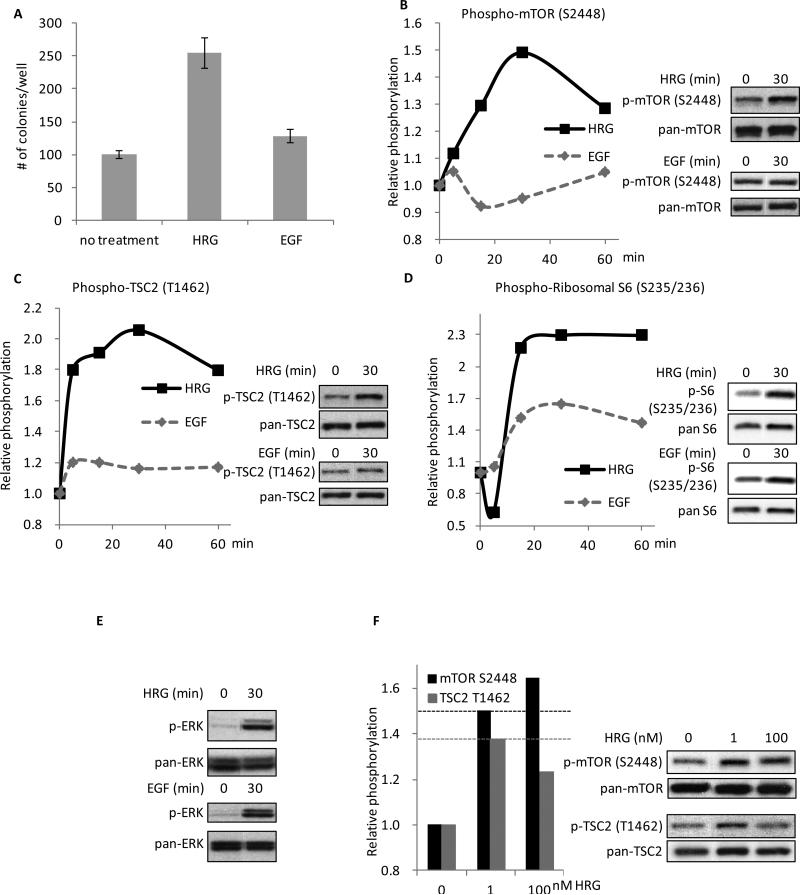
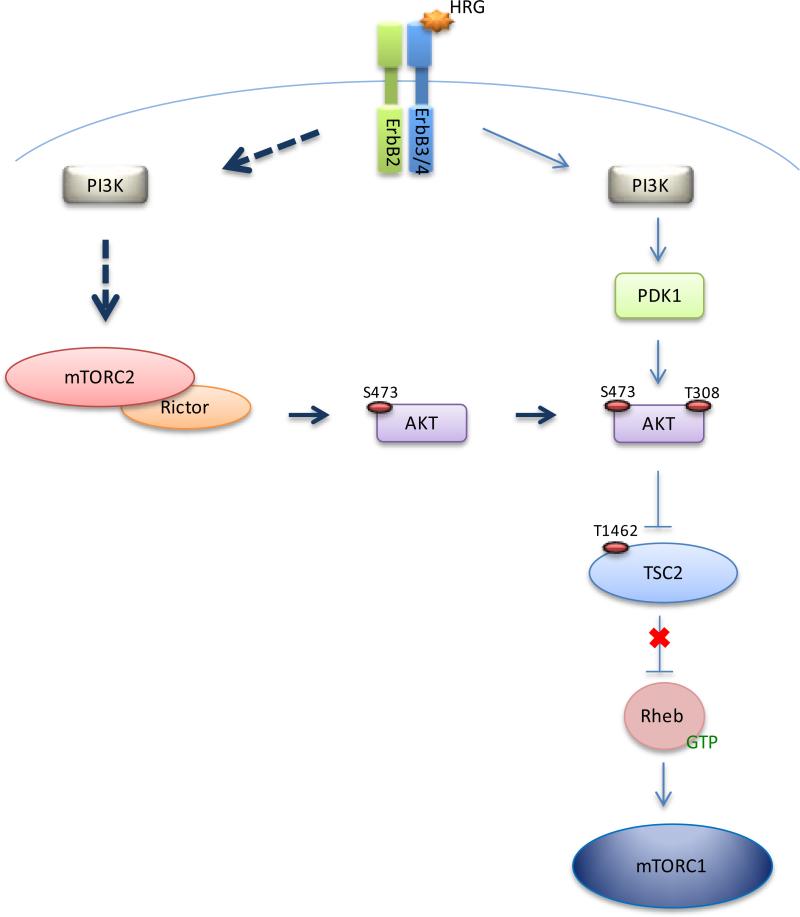
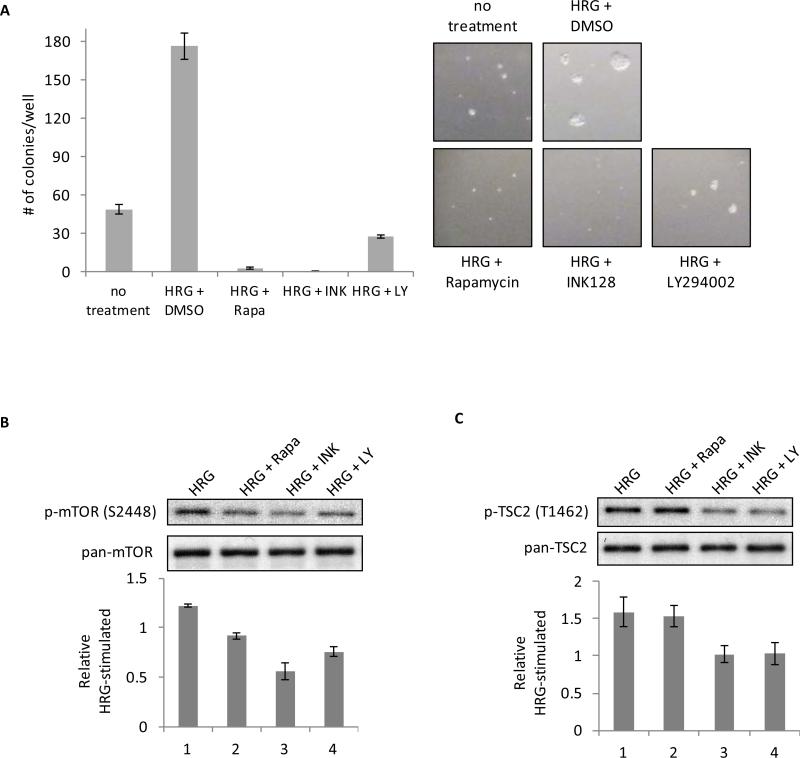
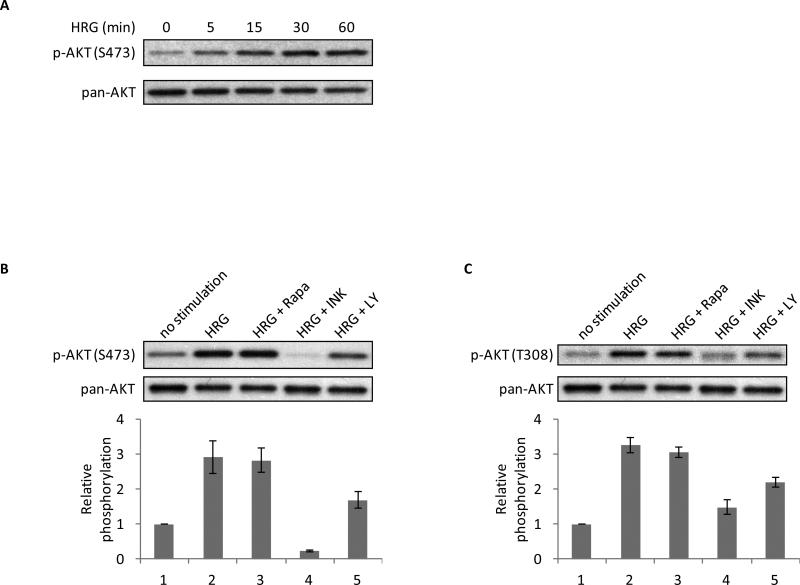
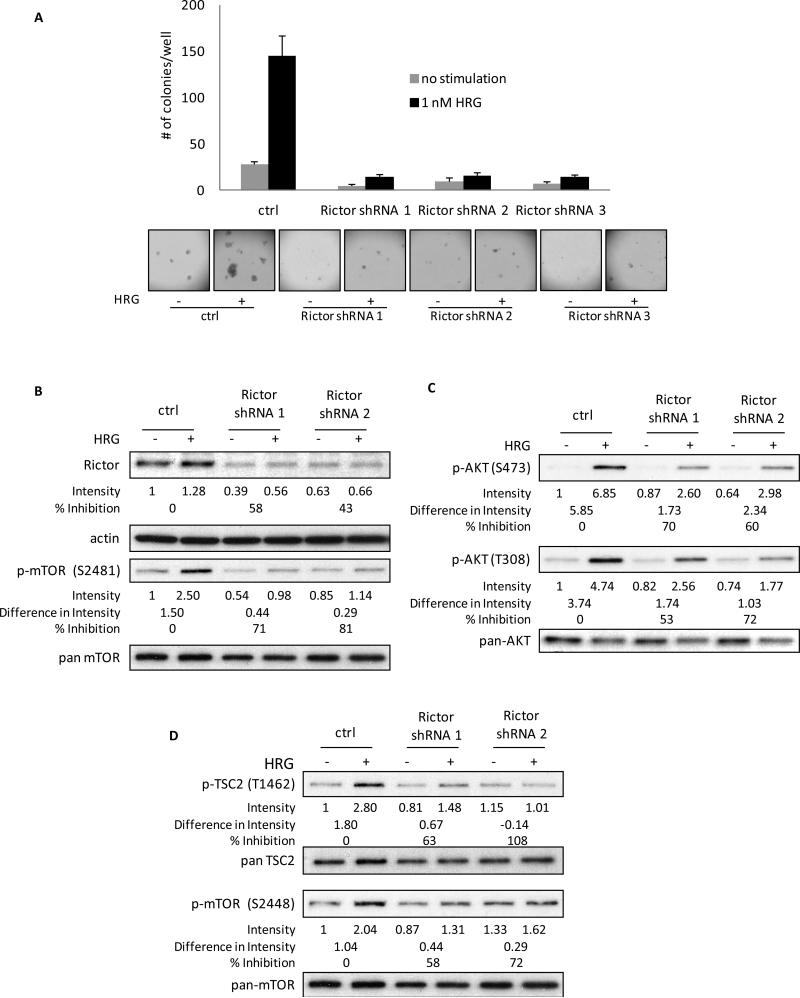
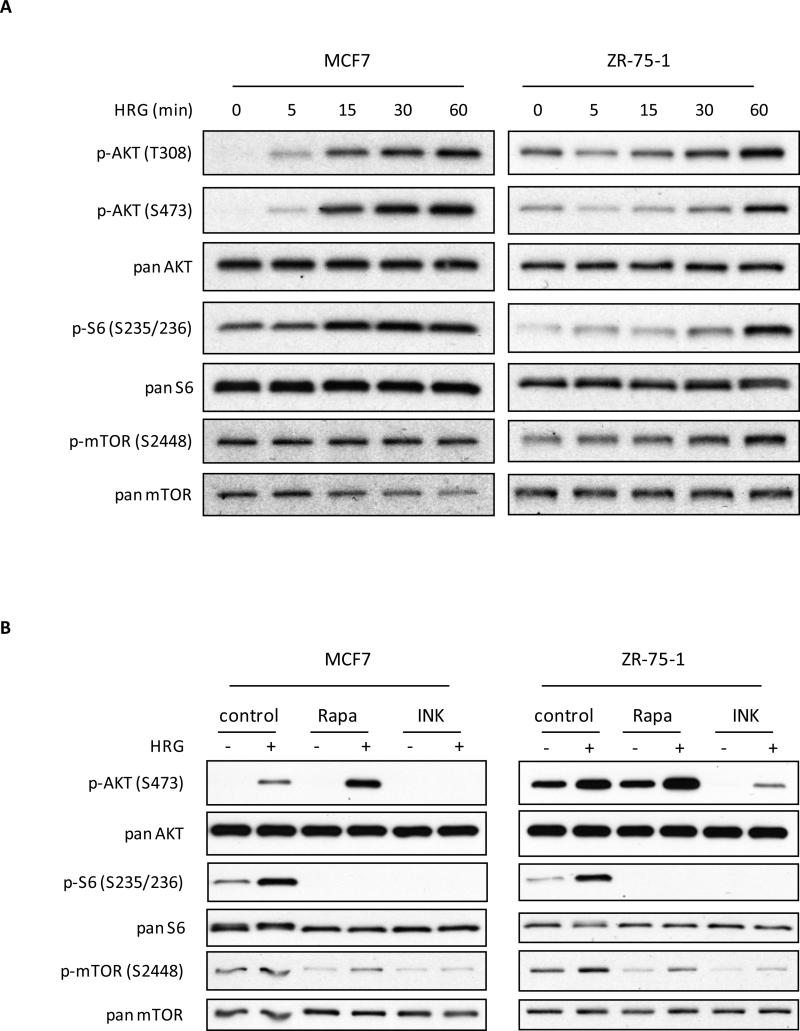
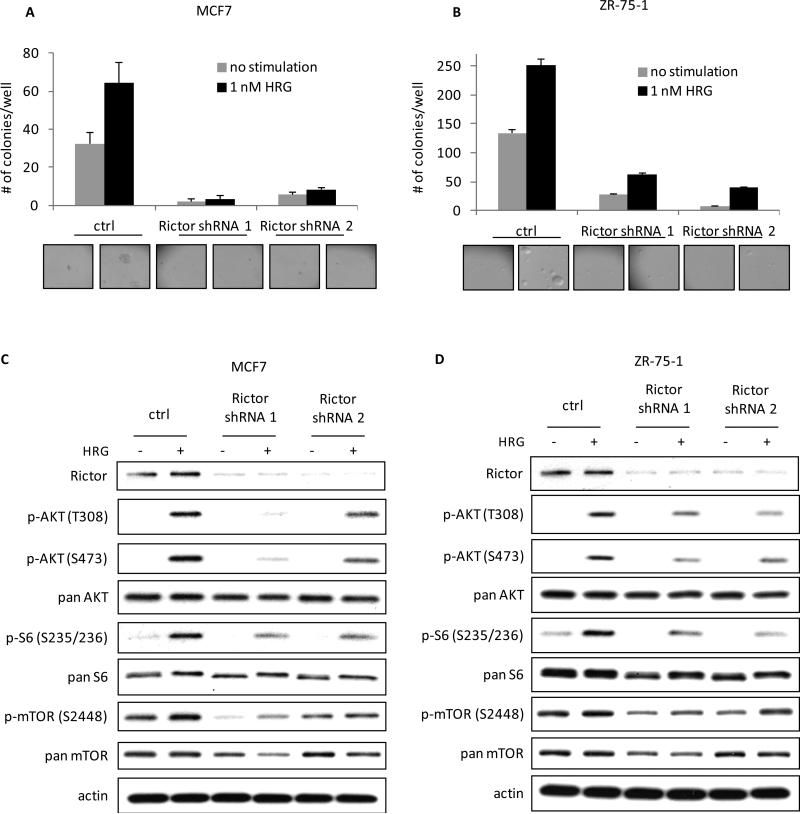
Overexpression of the receptor tyrosine kinase HER2/ErbB2 (ERBB2) has been linked to a poor prognosis for patients with breast cancer; thus, its activity is a central target for cancer therapy. Likewise, overexpression of heregulin (HRG/NRG1), a growth factor responsible for ErbB2 activation, has also been shown to be a driver of breast cancer progression. Although ErbB2 inhibitors offer a major advancement in the treatment of ErbB2-dependent breast cancers, patients are highly susceptible to developing clinical resistance to these drugs. Therefore, a detailed understanding of the molecular mechanism that underlies HRG/ErbB2-induced tumorigenesis is essential for the development of effective therapeutic strategies for this subset of patients with breast cancer. Here, it was demonstrated that HRG promoted anchorage-independent breast cancer cell growth more potently than EGF, and that the HRG-dependent activation of phosphoinositide 3-kinase and mTORC1 are necessary events for cell transformation. Functional evaluation of two distinct mTOR (MTOR) inhibitors, rapamycin and INK-128, on HRG-dependent signaling activities, uncovered a necessary role for mTORC2 in the regulation of the AKT/TSC2/mTORC1 axis by affecting the phosphorylation of AKT at the PDK1(PDPK1)-dependent site (T308) as well as at the mTORC2-dependent site (S473). The elimination of Rictor (RICTOR), a critical component of mTORC2, is detrimental to both the activation of mTORC1 and HRG-mediated cellular transformation. Similar results were obtained in multiple breast cancer model systems, highlighting an important role for mTORC2 in HRG/ErbB2-dependent breast cancer.
These findings suggest the potential benefits of targeting mTORC2 in HRG/ErbB2-induced breast cancer.
受体酪氨酸激酶HER2/ErbB2(ERBB2)的过表达与乳腺癌患者的不良预后相关;因此,其活性是癌症治疗的核心靶点。同样,神经调节蛋白(HRG/NRG1)的过表达,一种负责激活ErbB2的生长因子,也已被证明是乳腺癌进展的驱动因素。尽管ErbB2抑制剂在治疗依赖ErbB2的乳腺癌方面取得了重大进展,但患者对这些药物极易产生临床耐药性。因此,详细了解HRG/ErbB2诱导肿瘤发生的分子机制对于开发针对这部分乳腺癌患者的有效治疗策略至关重要。在此,研究表明HRG比EGF更有效地促进不依赖贴壁的乳腺癌细胞生长,并且HRG依赖的磷酸肌醇3激酶和mTORC1的激活是细胞转化的必要事件。对两种不同的mTOR(MTOR)抑制剂雷帕霉素和INK-128对HRG依赖信号活性的功能评估,揭示了mTORC2在通过影响AKT在PDK1(PDPK1)依赖位点(T308)以及mTORC2依赖位点(S473)的磷酸化来调节AKT/TSC2/mTORC1轴方面的必要作用。mTORC2的关键组分Rictor(RICTOR)的缺失对mTORC1的激活和HRG介导的细胞转化均有害。在多个乳腺癌模型系统中获得了类似结果,突出了mTORC2在HRG/ErbB2依赖的乳腺癌中的重要作用。
这些发现提示了在HRG/ErbB2诱导的乳腺癌中靶向mTORC2的潜在益处。