Grabiec K, Gajewska M, Milewska M, Błaszczyk M, Grzelkowska-Kowalczyk K
Department of Physiological Sciences, Faculty of Veterinary Medicine, Warsaw University of Life Sciences (SGGW), Nowoursynowska 159, 02-776, Warsaw, Poland.
J Endocrinol Invest. 2014 Mar;37(3):233-45. doi: 10.1007/s40618-013-0007-z. Epub 2014 Jan 9.
Myogenesis is susceptible to the availability of nutrients and humoral factors and suboptimal fetal environments affect the number of myofibers and muscle mass.
We examined the mechanisms regulating cell cycle progression and arrest in skeletal myoblasts.
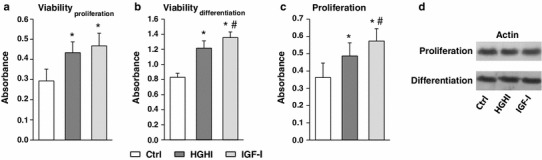
Mouse C2C12 myoblasts were subjected to proliferation or induction of differentiation in the presence of high glucose and high insulin (HGHI glucose 15 mmol/l, insulin 50 nmol/l), and these effects were compared with the influence of anabolic factor for skeletal muscle, insulin-like growth factor-I (IGF-I 30 nmol/l).
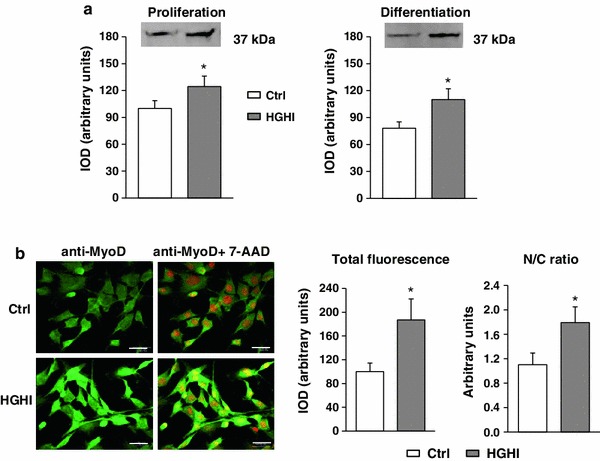
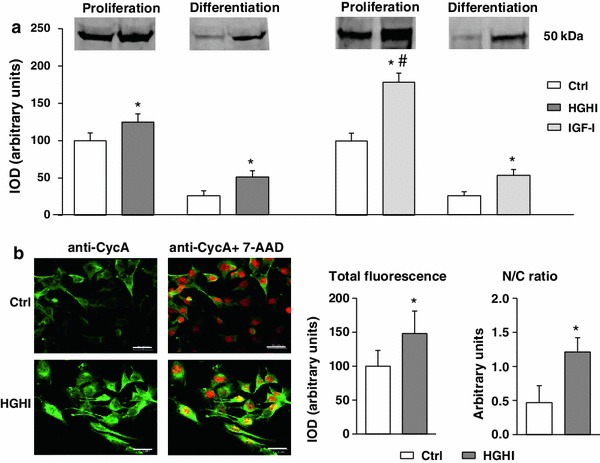
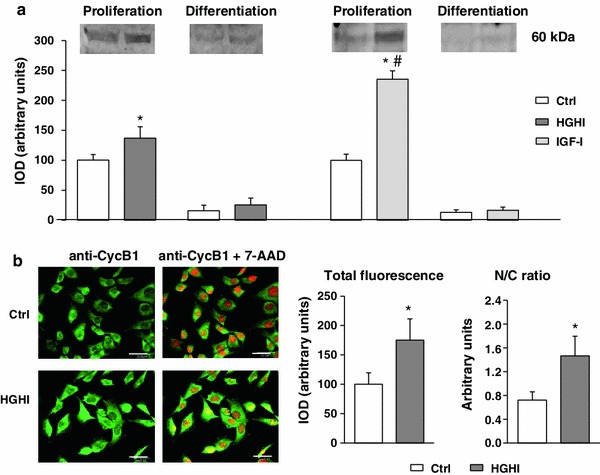
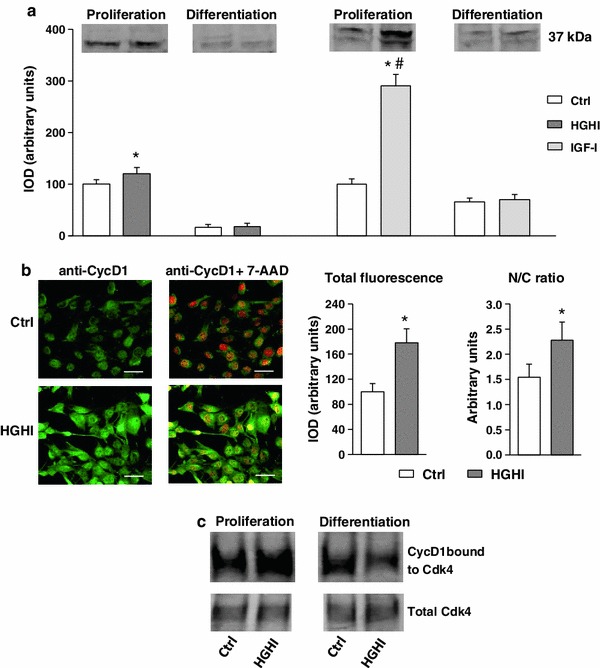
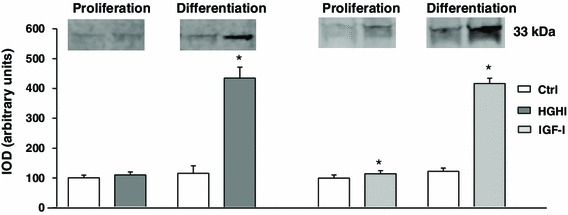
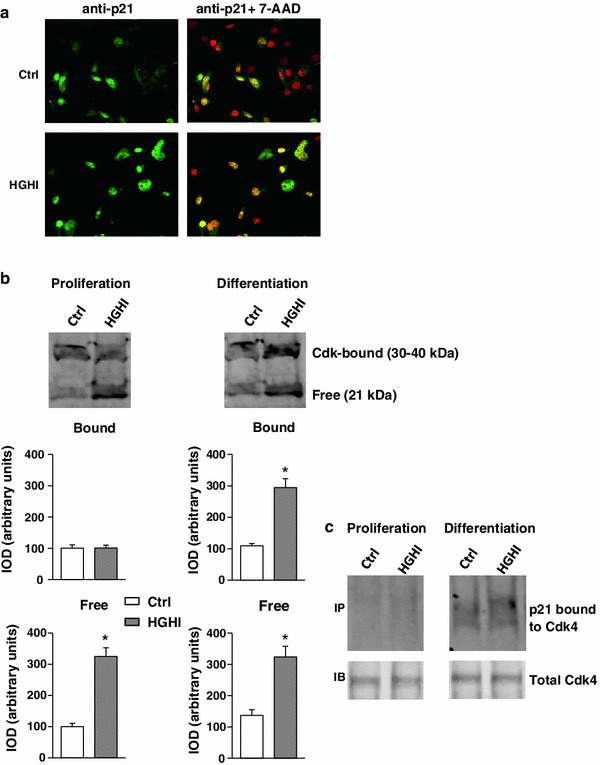
High glucose and high insulin, similarly to IGF-I, increased the intracellular level of cyclin A, cyclin B1 and cyclin D1 during myoblast proliferation. In HGHI-treated myoblasts, these cyclins were localized mostly in the nuclei, and the level of cdk4-bound cyclin D1 was augmented. HGHI significantly stimulated the expression of cyclin D3, total level of p21 and cdk-bound fraction of p21 in differentiating cells. The cellular level of MyoD was augmented by HGHI both in proliferating and differentiating myogenic cells.
High glucose and insulin modify the mechanisms controlling cell cycle progression and the onset of myogenesis by: (1) increase of cyclin A, cyclin B1 and cyclin D1 in myoblast nuclei, and stimulation of cyclin D1-cdk4 binding; (2) increase in cyclin D3 and MyoD levels, and the p21-cdk4 complexes after induction of differentiation. Hyperglycemia/hyperinsulinemia during fetal or postnatal life could exert effects similar to IGF-I and can be, therefore, favourable for skeletal muscle growth and regeneration.
肌生成易受营养物质和体液因子可用性的影响,而胎儿期环境欠佳会影响肌纤维数量和肌肉质量。
我们研究了调节骨骼肌成肌细胞细胞周期进程和停滞的机制。
将小鼠C2C12成肌细胞置于高糖和高胰岛素(HGHI,葡萄糖15 mmol/L,胰岛素50 nmol/L)环境中进行增殖或诱导分化,并将这些作用与骨骼肌合成代谢因子胰岛素样生长因子-I(IGF-I 30 nmol/L)的影响进行比较。
与IGF-I类似,高糖和高胰岛素在成肌细胞增殖过程中增加了细胞周期蛋白A、细胞周期蛋白B1和细胞周期蛋白D1的细胞内水平。在经HGHI处理的成肌细胞中,这些细胞周期蛋白大多定位于细胞核,且与细胞周期蛋白依赖性激酶4(cdk4)结合的细胞周期蛋白D1水平增加。HGHI显著刺激分化细胞中细胞周期蛋白D3的表达、p21的总水平以及与cdk结合的p21部分。在增殖和成肌分化细胞中,HGHI均增加了肌分化抗原(MyoD)的细胞水平。
高糖和胰岛素通过以下方式改变控制细胞周期进程和肌生成起始的机制:(1)增加成肌细胞核中细胞周期蛋白A、细胞周期蛋白B1和细胞周期蛋白D1的水平,并刺激细胞周期蛋白D1与cdk4的结合;(2)诱导分化后增加细胞周期蛋白D3和MyoD水平以及p21-cdk4复合物。胎儿期或出生后生活中的高血糖/高胰岛素血症可能产生与IGF-I类似的作用,因此可能有利于骨骼肌生长和再生。