Department of Pathology & Immunology, Washington University School of Medicine, St. Louis, Missouri, USA.
mBio. 2014 Mar 11;5(2):e01033-13. doi: 10.1128/mBio.01033-13.
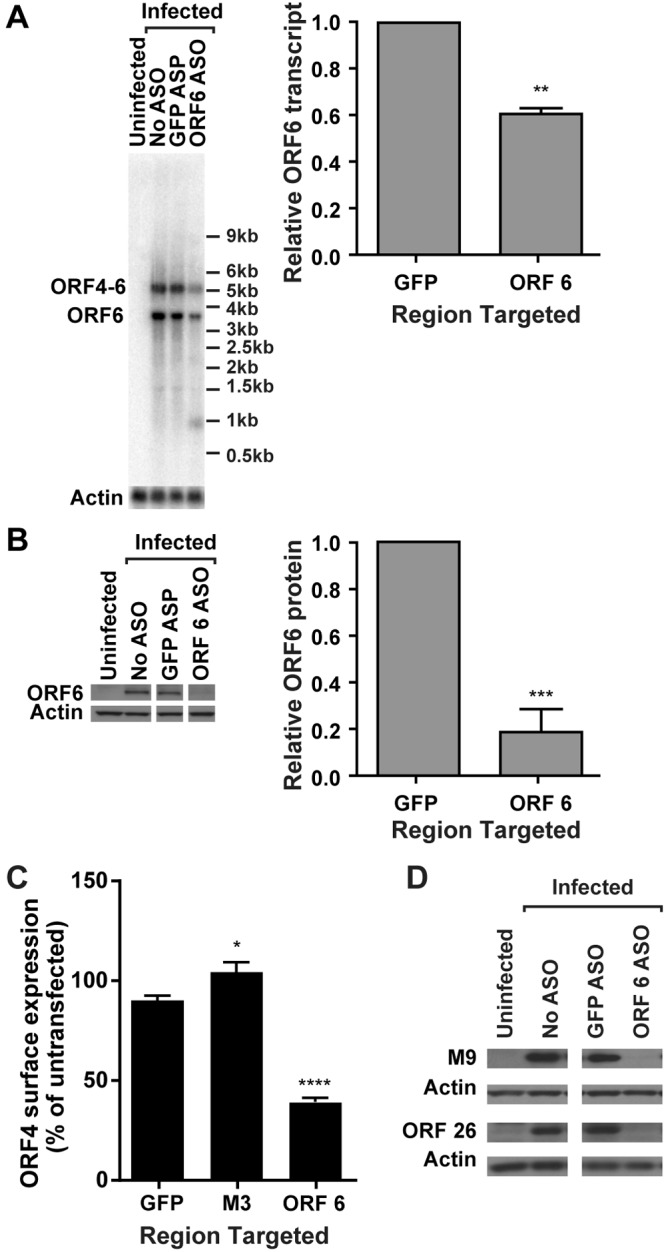
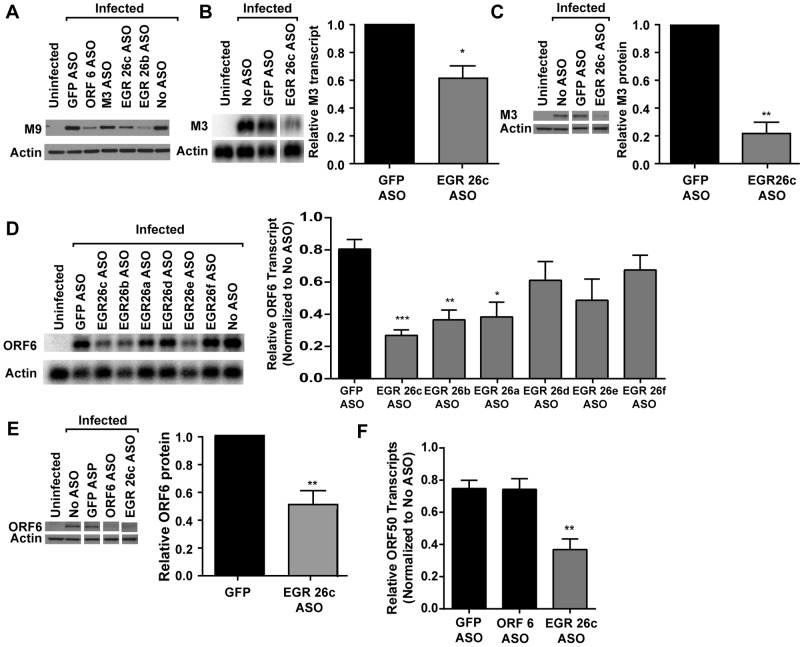
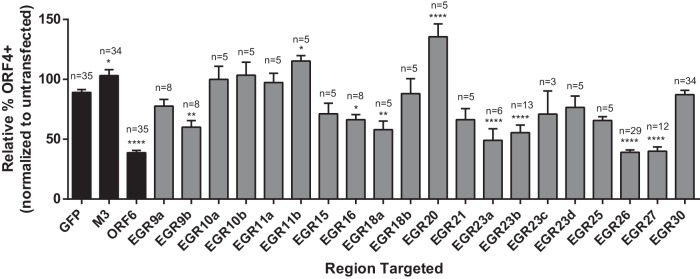
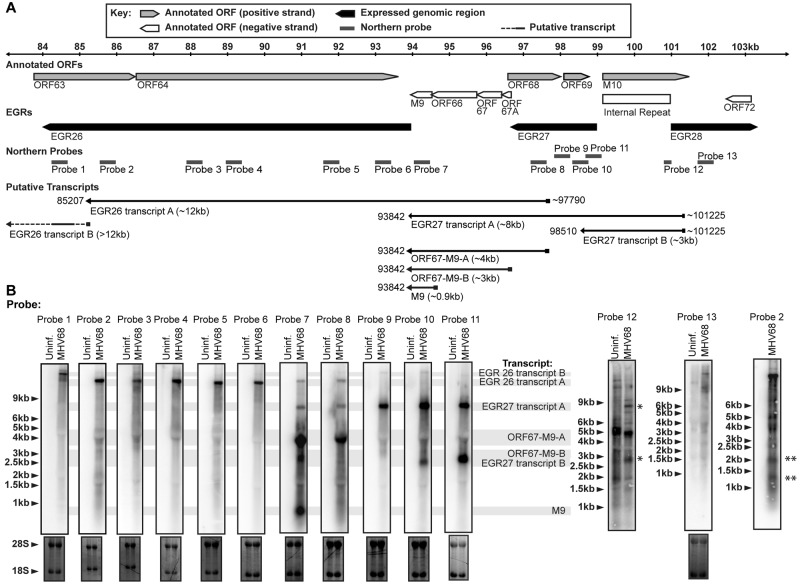
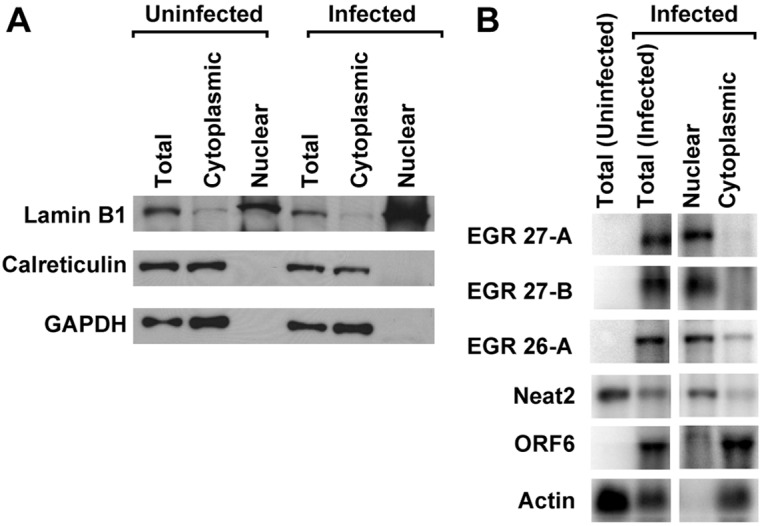
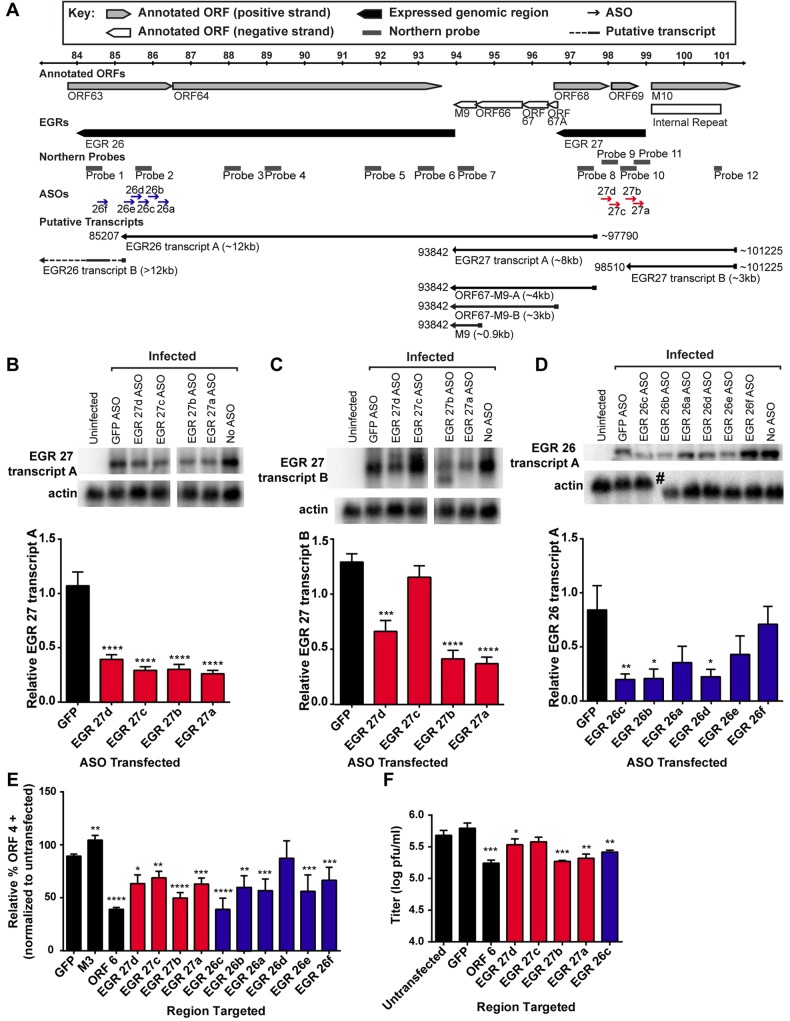
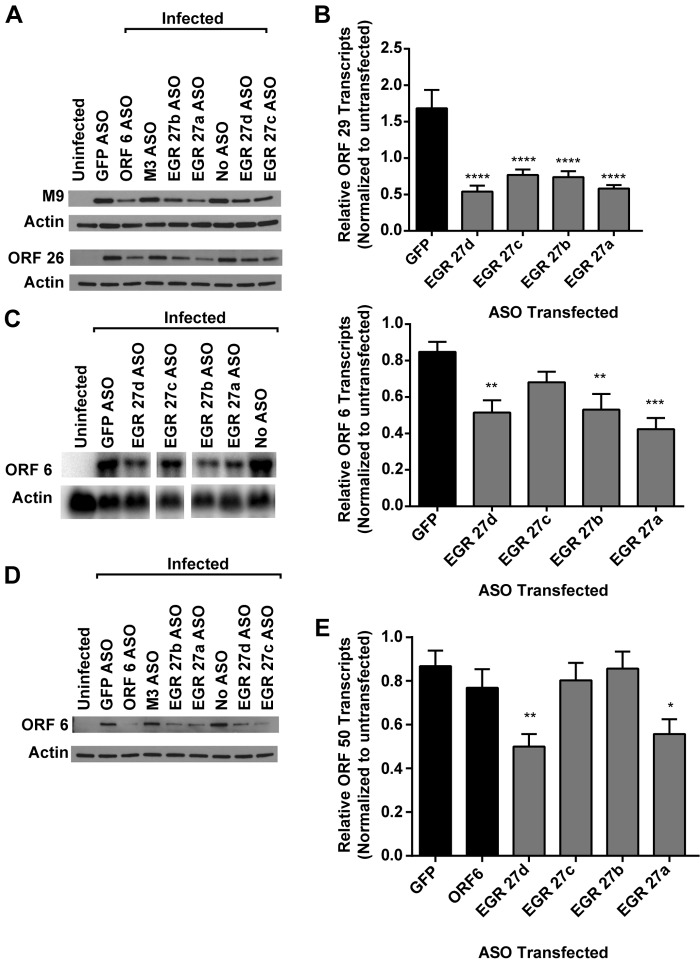
Pervasive transcription is observed in a wide range of organisms, including humans, mice, and viruses, but the functional significance of the resulting transcripts remains uncertain. Current genetic approaches are often limited by their emphasis on protein-coding open reading frames (ORFs). We previously identified extensive pervasive transcription from the murine gammaherpesvirus 68 (MHV68) genome outside known ORFs and antisense to known genes (termed expressed genomic regions [EGRs]). Similar antisense transcripts have been identified in many other herpesviruses, including Kaposi's sarcoma-associated herpesvirus and human and murine cytomegalovirus. Despite their prevalence, whether these RNAs have any functional importance in the viral life cycle is unknown, and one interpretation is that these are merely "noise" generated by functionally unimportant transcriptional events. To determine whether pervasive transcription of a herpesvirus genome generates RNA molecules that are functionally important, we used a strand-specific functional approach to target transcripts from thirteen EGRs in MHV68. We found that targeting transcripts from six EGRs reduced viral protein expression, proving that pervasive transcription can generate functionally important RNAs. We characterized transcripts emanating from EGRs 26 and 27 in detail using several methods, including RNA sequencing, and identified several novel polyadenylated transcripts that were enriched in the nuclei of infected cells. These data provide the first evidence of the functional importance of regions of pervasive transcription emanating from MHV68 EGRs. Therefore, studies utilizing mutation of a herpesvirus genome must account for possible effects on RNAs generated by pervasive transcription. IMPORTANCE The fact that pervasive transcription produces functionally important RNAs has profound implications for design and interpretation of genetic studies in herpesviruses, since such studies often involve mutating both strands of the genome. This is a common potential problem; for example, a conservative estimate is that there are an additional 73,000 nucleotides transcribed antisense to annotated ORFs from the 119,450-bp MHV68 genome. Recognizing the importance of considering the function of each strand of the viral genome independently, we used strand-specific approaches to identify six regions of the genome encoding transcripts that promoted viral protein expression. For two of these regions, we mapped novel transcripts and determined that targeting transcripts from these regions reduced viral replication and the expression of other viral genes. This is the first description of a function for these RNAs and suggests that novel transcripts emanating from regions of pervasive transcription are critical for the viral life cycle.
普遍转录在包括人类、小鼠和病毒在内的广泛生物体中都有观察到,但由此产生的转录本的功能意义尚不确定。目前的遗传方法往往受到其对蛋白质编码开放阅读框 (ORF) 的重视的限制。我们之前在已知 ORF 之外和已知基因的反义方向鉴定了来自鼠γ疱疹病毒 68 (MHV68) 基因组的广泛普遍转录(称为表达基因组区域 [EGR])。在许多其他疱疹病毒中,包括卡波西肉瘤相关疱疹病毒和人巨细胞病毒,也已经鉴定出类似的反义转录本。尽管它们很普遍,但这些 RNA 是否在病毒生命周期中具有任何功能重要性尚不清楚,一种解释是,这些只是由功能不重要的转录事件产生的“噪音”。为了确定疱疹病毒基因组的普遍转录是否产生具有功能重要性的 RNA 分子,我们使用一种针对 MHV68 中 13 个 EGR 转录本的有针对性的、链特异性的功能方法。我们发现靶向六个 EGR 转录本会降低病毒蛋白表达,证明普遍转录可以产生具有功能重要性的 RNA。我们使用几种方法详细描述了 EGR 26 和 27 产生的转录本,包括 RNA 测序,并鉴定了几个在感染细胞的核中富集的新的多聚腺苷酸化转录本。这些数据为源自 MHV68 EGR 的普遍转录产生的区域的功能重要性提供了第一个证据。因此,利用疱疹病毒基因组突变进行的研究必须考虑对普遍转录产生的 RNA 的可能影响。重要性普遍转录产生具有功能重要性的 RNA,这对疱疹病毒遗传研究的设计和解释具有深远的影响,因为此类研究通常涉及突变基因组的两条链。这是一个常见的潜在问题;例如,一个保守的估计是,从 119,450 个碱基对的 MHV68 基因组中,有额外的 73,000 个核苷酸反义转录到注释的 ORF 上。认识到独立考虑病毒基因组每条链的功能的重要性,我们使用链特异性方法来鉴定编码促进病毒蛋白表达的转录本的六个基因组区域。对于其中两个区域,我们绘制了新的转录本并确定靶向这些区域的转录本会降低病毒复制和其他病毒基因的表达。这是对这些 RNA 功能的首次描述,并表明源自普遍转录区域的新转录本对病毒生命周期至关重要。