Xie Ping, Guo Feng, Ma Yinyan, Zhu Hongling, Wang Freddy, Xue Bingzhong, Shi Hang, Yang Jian, Yu Liqing
Department Of Biochemistry, Wake Forest University Health Sciences, Winston-Salem, North Carolina, United States of America; Institute Of Medicinal Plant Development, Chinese Academy Of Medical Sciences & Peking Union Medical College, Beijing, China.
Department Of Biochemistry, Wake Forest University Health Sciences, Winston-Salem, North Carolina, United States of America.
PLoS One. 2014 Mar 11;9(3):e91652. doi: 10.1371/journal.pone.0091652. eCollection 2014.
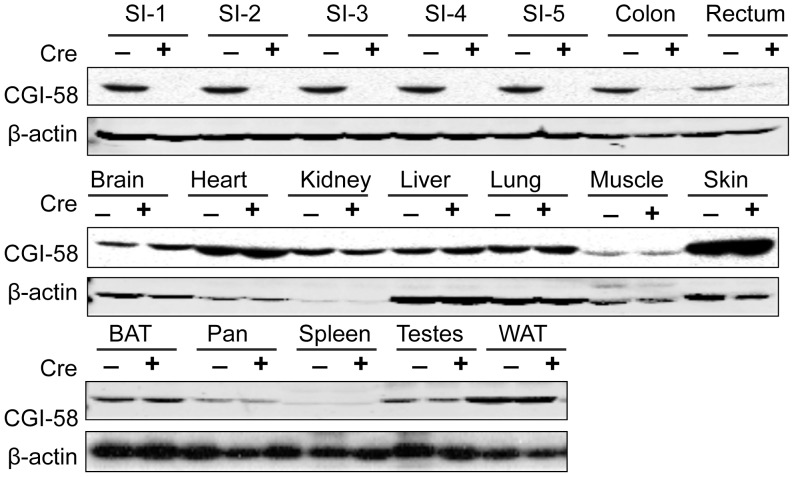
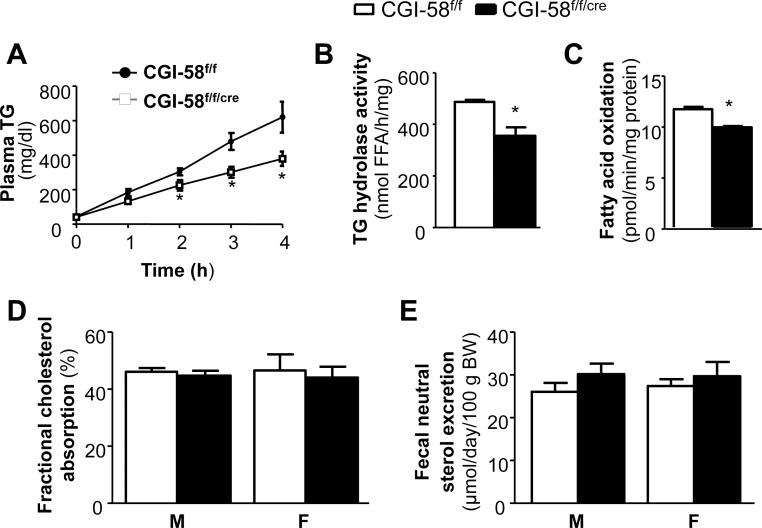
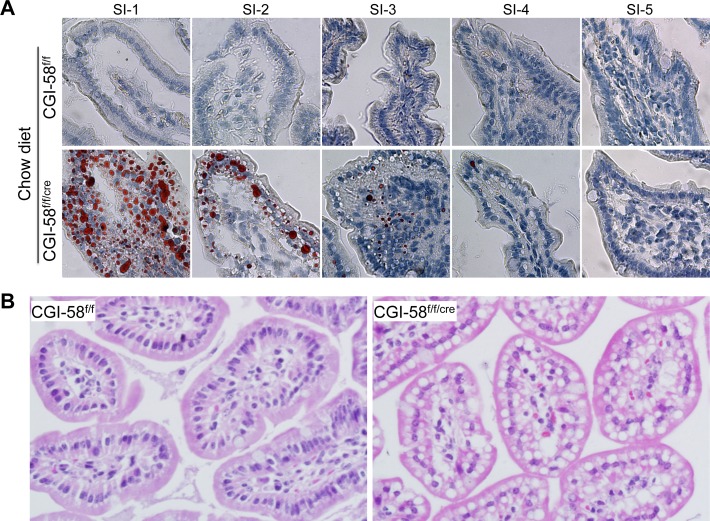
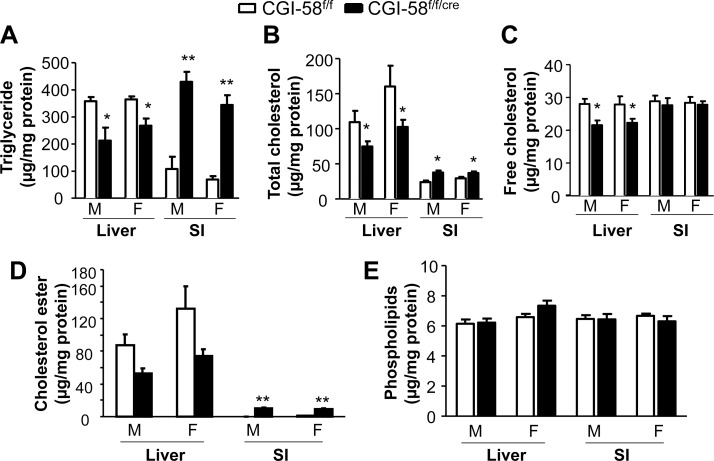
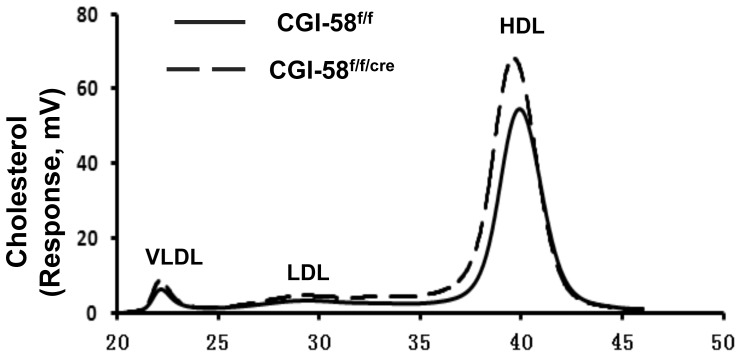
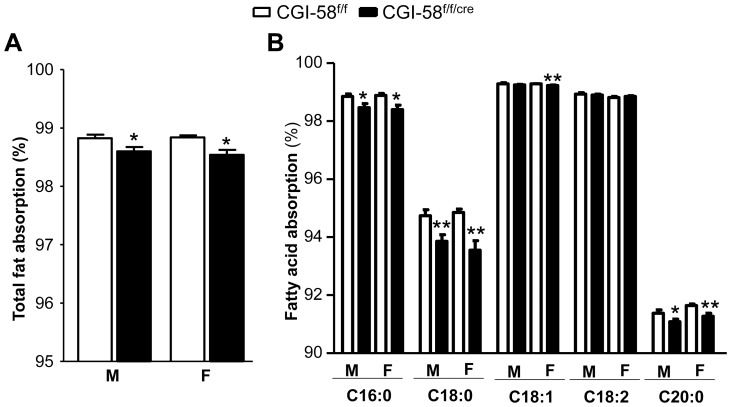
Comparative Gene Identification-58 (CGI-58), a lipid droplet (LD)-associated protein, promotes intracellular triglyceride (TG) hydrolysis in vitro. Mutations in human CGI-58 cause TG accumulation in numerous tissues including intestine. Enterocytes are thought not to store TG-rich LDs, but a fatty meal does induce temporary cytosolic accumulation of LDs. Accumulated LDs are eventually cleared out, implying existence of TG hydrolytic machinery in enterocytes. However, identities of proteins responsible for LD-TG hydrolysis remain unknown. Here we report that intestine-specific inactivation of CGI-58 in mice significantly reduces postprandial plasma TG concentrations and intestinal TG hydrolase activity, which is associated with a 4-fold increase in intestinal TG content and large cytosolic LD accumulation in absorptive enterocytes during the fasting state. Intestine-specific CGI-58 knockout mice also display mild yet significant decreases in intestinal fatty acid absorption and oxidation. Surprisingly, inactivation of CGI-58 in intestine significantly raises plasma and intestinal cholesterol, and reduces hepatic cholesterol, without altering intestinal cholesterol absorption and fecal neutral sterol excretion. In conclusion, intestinal CGI-58 is required for efficient postprandial lipoprotein-TG secretion and for maintaining hepatic and plasma lipid homeostasis. Our animal model will serve as a valuable tool to further define how intestinal fat metabolism influences the pathogenesis of metabolic disorders, such as obesity and type 2 diabetes.
比较基因识别-58(CGI-58)是一种与脂滴(LD)相关的蛋白质,在体外可促进细胞内甘油三酯(TG)水解。人类CGI-58基因的突变会导致包括肠道在内的许多组织中TG积累。肠上皮细胞被认为不会储存富含TG的脂滴,但一顿高脂餐后确实会诱导脂滴在细胞溶质中暂时积累。积累的脂滴最终会被清除,这意味着肠上皮细胞中存在TG水解机制。然而,负责脂滴-TG水解的蛋白质的身份仍然未知。在此,我们报告,小鼠肠道特异性CGI-58失活显著降低餐后血浆TG浓度和肠道TG水解酶活性,这与禁食状态下肠道TG含量增加4倍以及吸收性肠上皮细胞中大量细胞溶质脂滴积累有关。肠道特异性CGI-58基因敲除小鼠在肠道脂肪酸吸收和氧化方面也表现出轻微但显著的下降。令人惊讶的是,肠道中CGI-58失活会显著提高血浆和肠道胆固醇水平,并降低肝脏胆固醇水平,而不会改变肠道胆固醇吸收和粪便中性固醇排泄。总之,肠道CGI-58是餐后脂蛋白-TG有效分泌以及维持肝脏和血浆脂质稳态所必需的。我们的动物模型将成为进一步确定肠道脂肪代谢如何影响肥胖和2型糖尿病等代谢紊乱发病机制的宝贵工具。