1] Breast Cancer Pathology Research Group, Division of Cancer and Stem Cells, School of Medicine, University of Nottingham, Nottingham, UK [2] Cellular Pathology, The Breast Institute, Nottingham University Hospitals NHS Trust, Nottingham, UK.
1] School of Computer Science, University of Nottingham, Nottingham, UK [2] Advanced Data Analysis Centre, University of Nottingham, Nottingham, UK.
Br J Cancer. 2014 Apr 2;110(7):1688-97. doi: 10.1038/bjc.2014.120. Epub 2014 Mar 11.
Current management of breast cancer (BC) relies on risk stratification based on well-defined clinicopathologic factors. Global gene expression profiling studies have demonstrated that BC comprises distinct molecular classes with clinical relevance. In this study, we hypothesised that molecular features of BC are a key driver of tumour behaviour and when coupled with a novel and bespoke application of established clinicopathologic prognostic variables can predict both clinical outcome and relevant therapeutic options more accurately than existing methods.
In the current study, a comprehensive panel of biomarkers with relevance to BC was applied to a large and well-characterised series of BC, using immunohistochemistry and different multivariate clustering techniques, to identify the key molecular classes. Subsequently, each class was further stratified using a set of well-defined prognostic clinicopathologic variables. These variables were combined in formulae to prognostically stratify different molecular classes, collectively known as the Nottingham Prognostic Index Plus (NPI+). The NPI+ was then used to predict outcome in the different molecular classes.
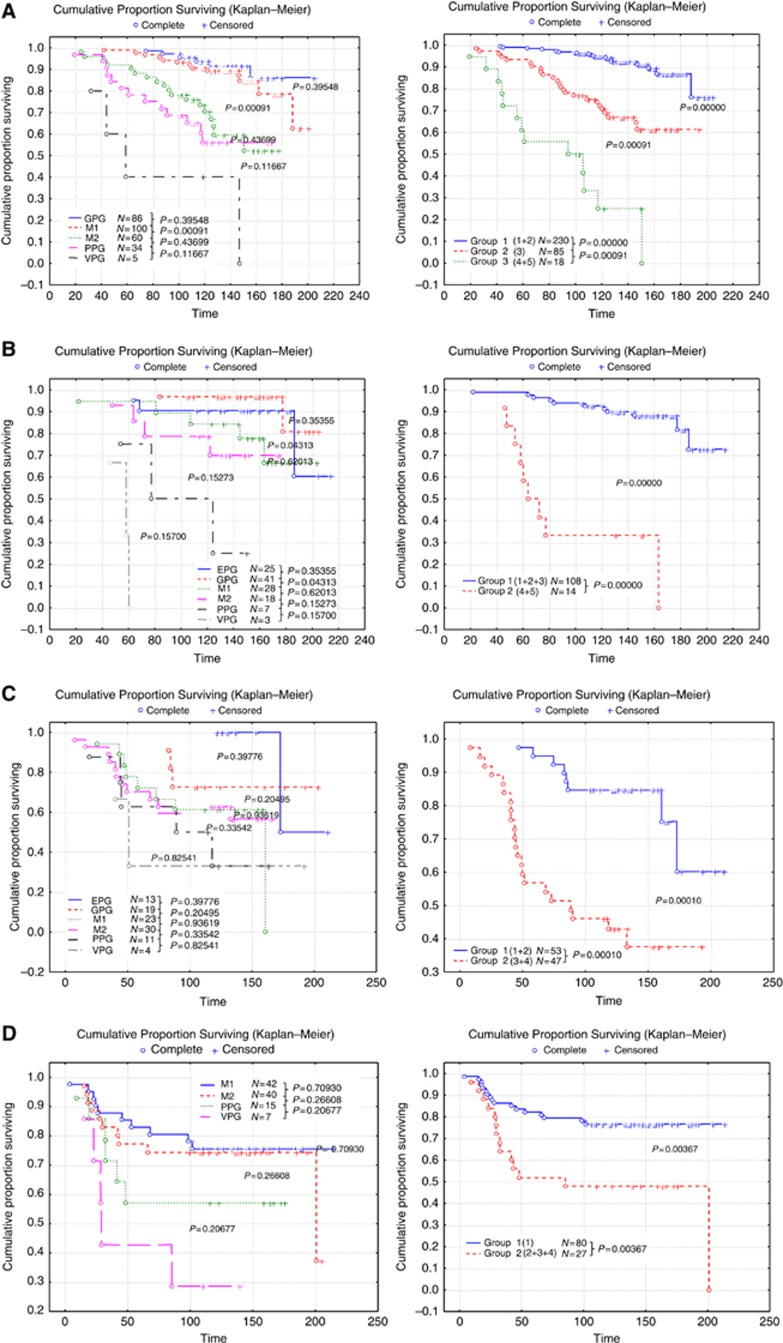
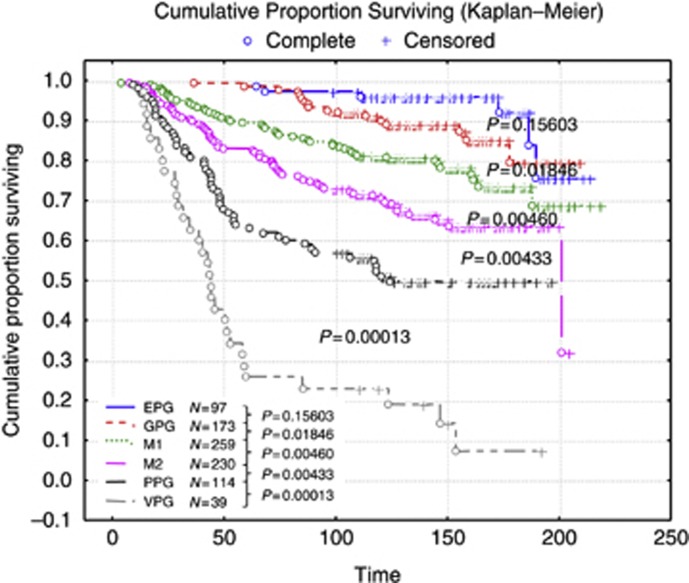
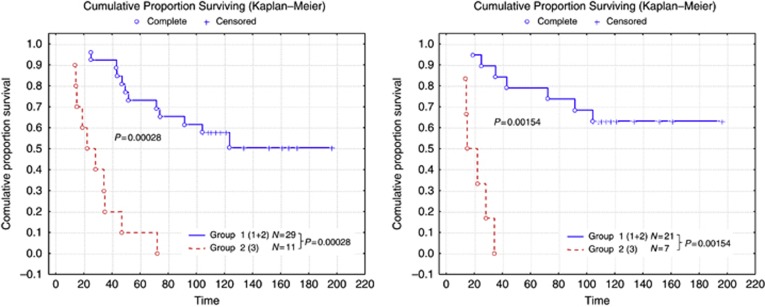
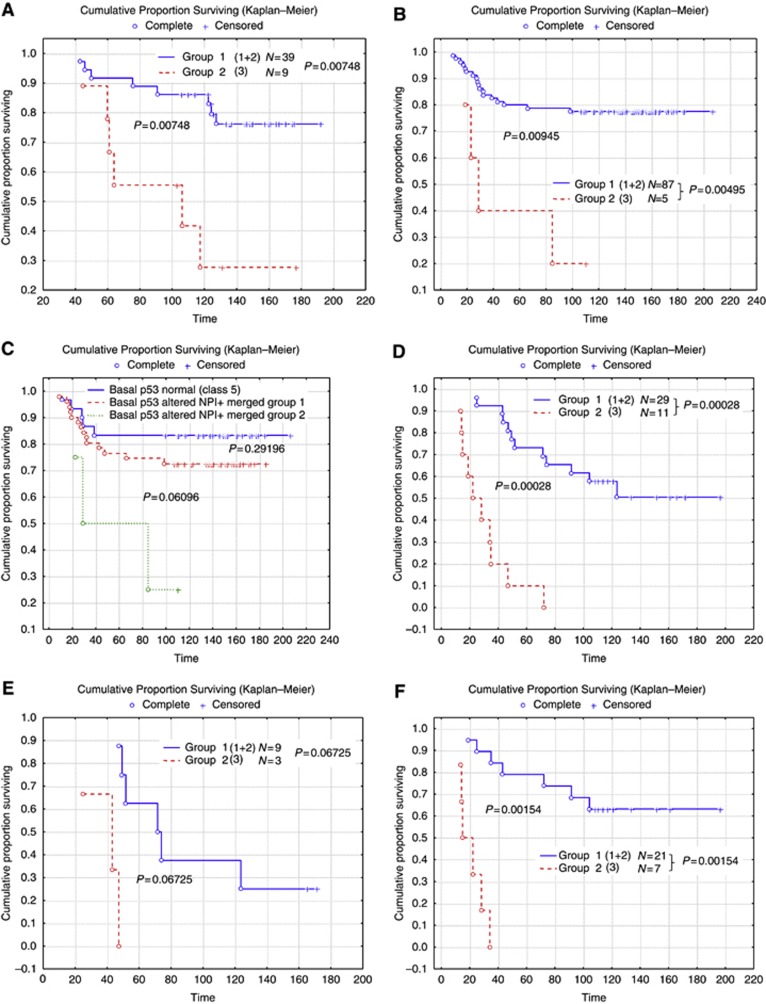
Seven core molecular classes were identified using a selective panel of 10 biomarkers. Incorporation of clinicopathologic variables in a second-stage analysis resulted in identification of distinct prognostic groups within each molecular class (NPI+). Outcome analysis showed that using the bespoke NPI formulae for each biological BC class provides improved patient outcome stratification superior to the traditional NPI.
This study provides proof-of-principle evidence for the use of NPI+ in supporting improved individualised clinical decision making.
目前乳腺癌(BC)的治疗依赖于基于明确的临床病理因素的风险分层。全球基因表达谱研究表明,BC 由具有临床相关性的不同分子类型组成。在这项研究中,我们假设 BC 的分子特征是肿瘤行为的关键驱动因素,并且当与新的和定制的现有临床病理预后变量的应用相结合时,可以比现有方法更准确地预测临床结果和相关治疗选择。
在目前的研究中,使用免疫组织化学和不同的多变量聚类技术,对大量特征明确的 BC 系列应用了一套与 BC 相关的综合生物标志物,以确定关键的分子类型。随后,使用一组明确的临床病理预后变量对每个类别进行进一步分层。这些变量被组合在公式中,以对不同的分子类别进行预后分层,统称为诺丁汉预后指数加(NPI+)。然后使用 NPI+预测不同分子类别的结果。
使用 10 种生物标志物的选择性面板鉴定出 7 个核心分子类型。在第二阶段分析中纳入临床病理变量可在每个分子类别中识别出不同的预后组(NPI+)。结果分析表明,为每个生物学 BC 类别使用定制的 NPI 公式可提供更好的患者预后分层,优于传统 NPI。
本研究为使用 NPI+支持改进的个体化临床决策提供了原理证明。