Wildlife Reproductive CentreTaronga Conservation Society Australia, Dubbo, New South Wales, Australia School of Life and Environmental SciencesDeakin University, 75 Pigdons Road, Waurn Ponds, Victoria 3217, Australia School of Agriculture and Food SciencesUniversity of Queensland, Gatton, Queensland, Australia.
Endocr Connect. 2014 Apr 15;3(2):57-66. doi: 10.1530/EC-14-0025. Print 2014.
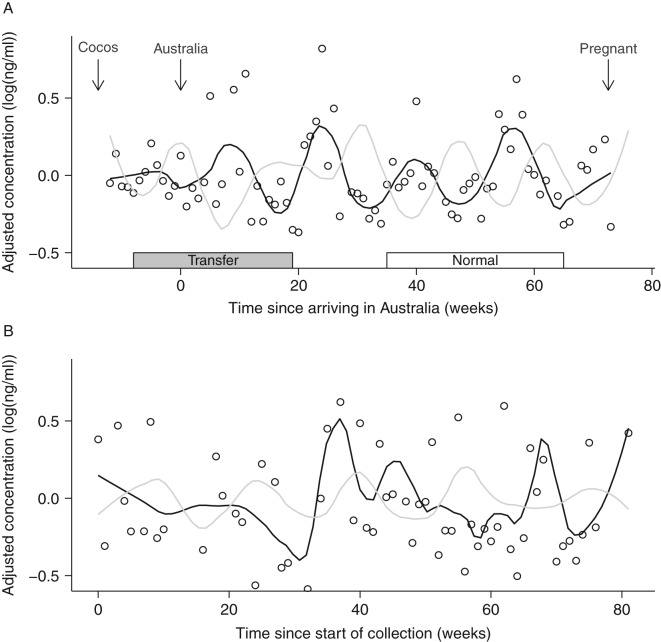
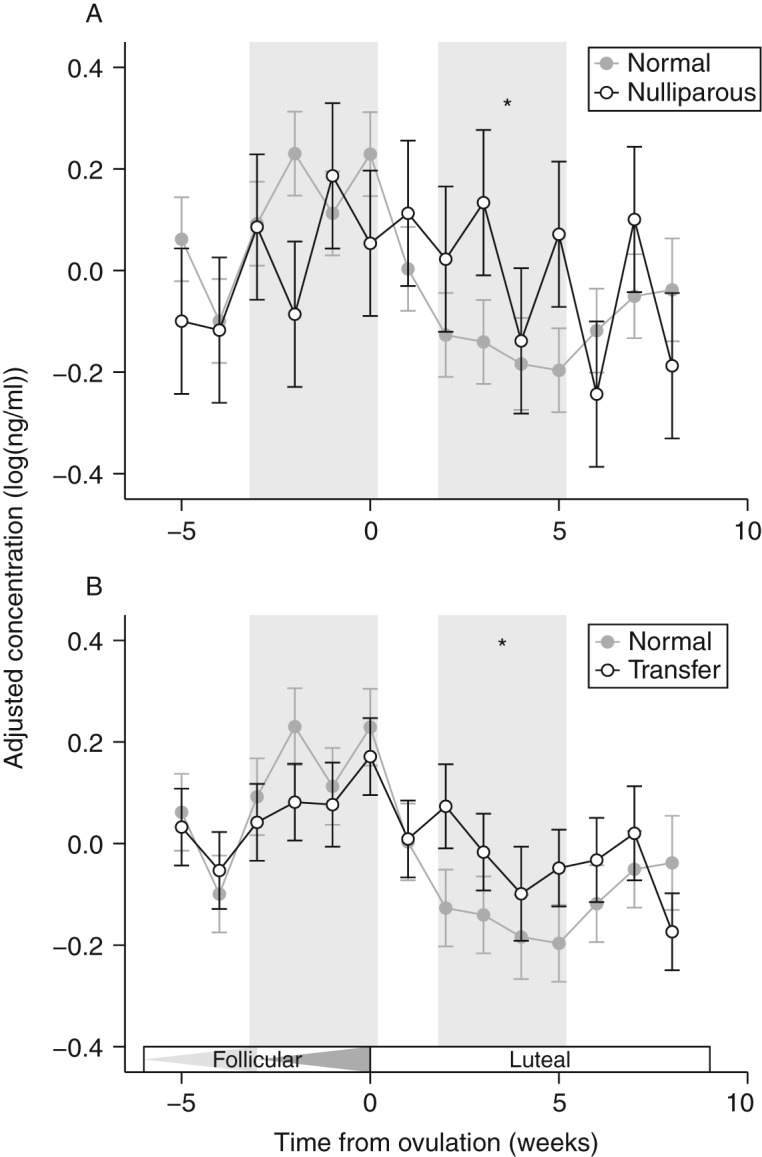
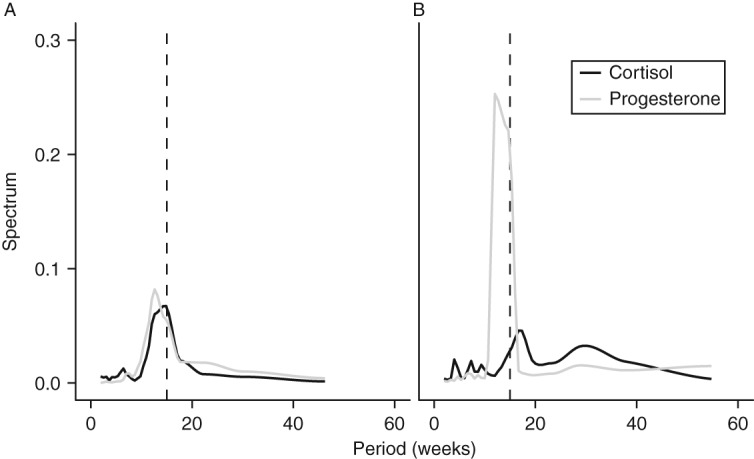
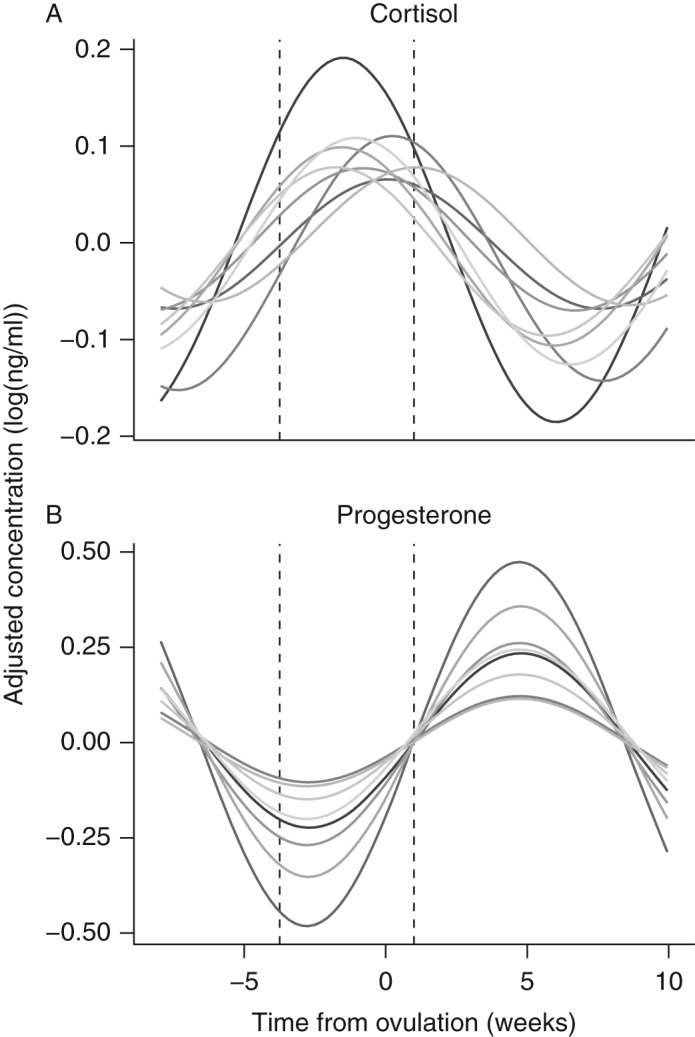
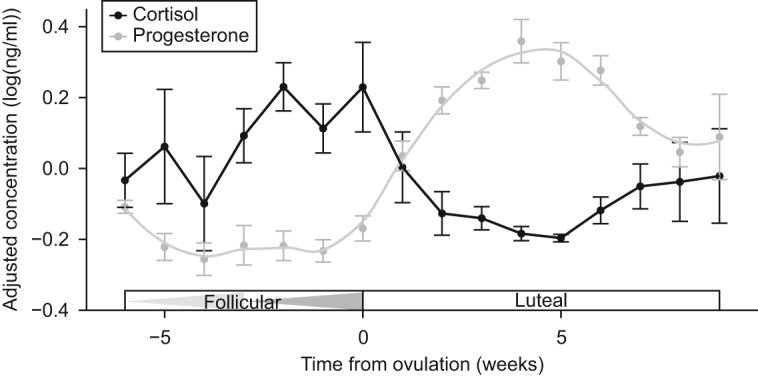
In the context of reproduction, glucocorticoids (GCs) are generally considered to have negative effects. However, in well-studied model species, GCs fluctuate predictability across the estrous cycles, and short-term increases promote healthy ovarian function. Reproductive challenges have plagued captive elephant populations, which are not currently self-sustaining. Efforts to understand reproductive dysfunction in elephants have focused on the suppressive effects of cortisol, but the potential permissive or stimulatory effects of cortisol are unknown. In this study, we provide a detailed examination of cortisol patterns across the estrous cycle in Asian elephants (Elephas maximus). Time series analysis was used to analyze cortisol and progesterone data for a total of 73 cycles from eight females. We also compared cortisol profiles between females that successfully conceived and females that failed to conceive despite repeated mating attempts. Our results revealed that cortisol fluctuates predictably across the estrous cycle, with a peak during the second half of the follicular phase followed by low levels throughout the luteal phase. Furthermore, this pattern was significantly altered in nulliparous females; cortisol concentrations did not decline during the luteal phase to the same extent as in parous females. This study highlights the complexity of cortisol signaling and suggests future directions for understanding the role of cortisol in reproductive dysfunction.
在生殖领域,糖皮质激素(GCs)通常被认为具有负面影响。然而,在经过充分研究的模式物种中,GCs 在发情周期中呈现出可预测的波动,短期增加有助于维持健康的卵巢功能。生殖挑战一直困扰着圈养的大象种群,目前它们无法实现自我维持。人们致力于研究大象的生殖功能障碍,重点关注皮质醇的抑制作用,但皮质醇的潜在许可或刺激作用尚不清楚。在这项研究中,我们详细研究了亚洲象(Elephas maximus)发情周期中皮质醇的变化模式。我们使用时间序列分析对来自 8 只雌性的总共 73 个周期的皮质醇和孕酮数据进行了分析。我们还比较了成功受孕和多次交配后未能受孕的雌性之间的皮质醇曲线。研究结果表明,皮质醇在发情周期中呈现出可预测的波动,在卵泡期的后半段达到峰值,随后在黄体期保持低水平。此外,这种模式在初产雌性中发生了显著改变;与经产雌性相比,皮质醇浓度在黄体期没有下降到相同程度。这项研究强调了皮质醇信号传递的复杂性,并为理解皮质醇在生殖功能障碍中的作用提供了未来的研究方向。