Division of Cardiology, Department of Medicine, Cardiovascular Research Laboratory, David Geffen School of Medicine at University of California, Los Angeles, USA; Eli and Edythe Broad Center of Regenerative Medicine and Stem Cell Research, David Geffen School of Medicine at University of California, Los Angeles, USA; Jonsson Comprehensive Cancer Center, David Geffen School of Medicine at University of California, Los Angeles, USA; Molecular Biology Institute, David Geffen School of Medicine at University of California, Los Angeles, USA; Program in Molecular Cellular & Integrative Physiology, David Geffen School of Medicine at University of California, Los Angeles, USA.
Department of Cell Biology and Physiology, University of North Carolina at Chapel Hill.
J Mol Cell Cardiol. 2014 May;70:47-55. doi: 10.1016/j.yjmcc.2014.02.017. Epub 2014 Mar 10.
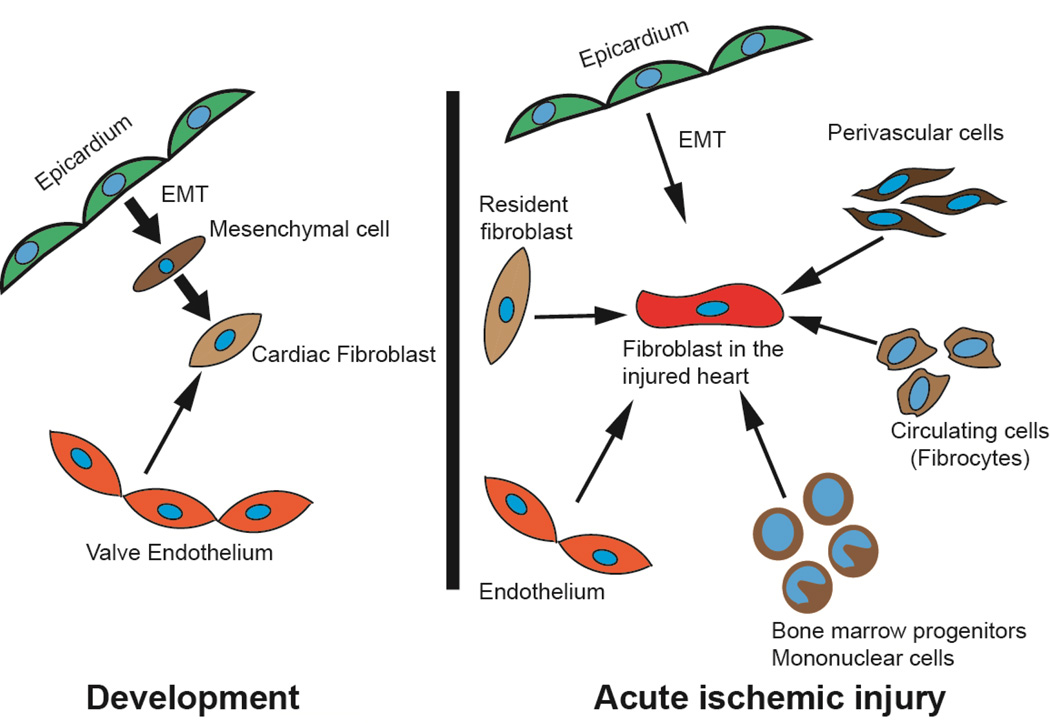
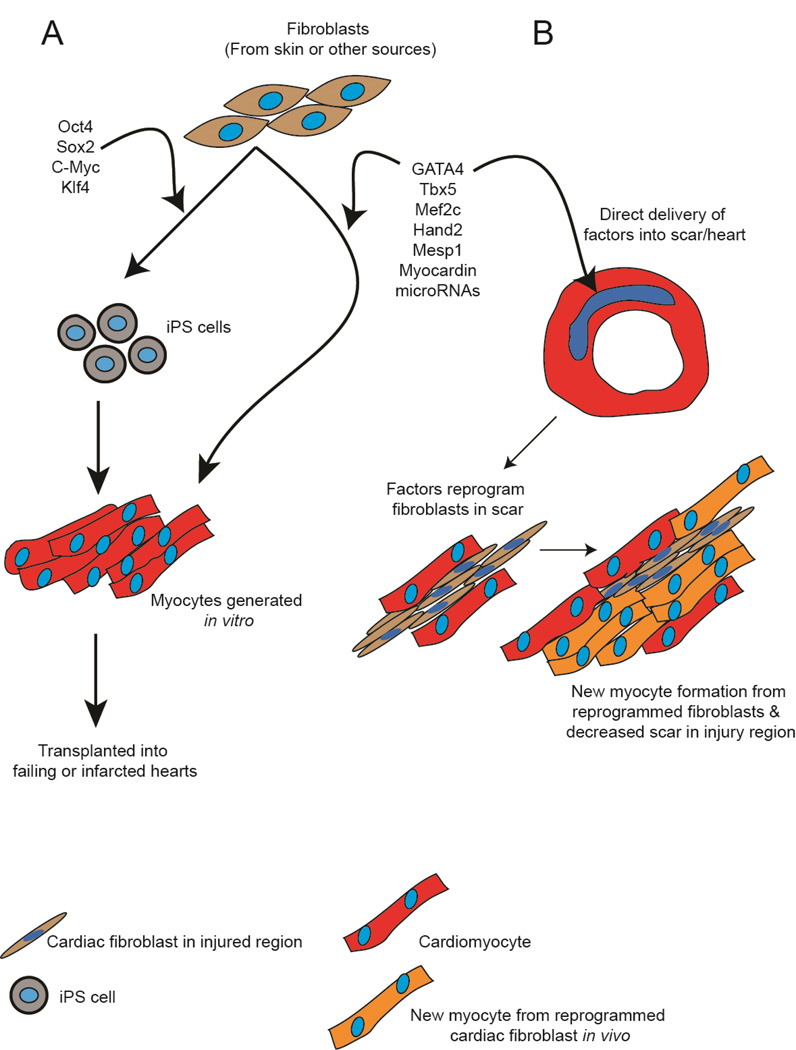
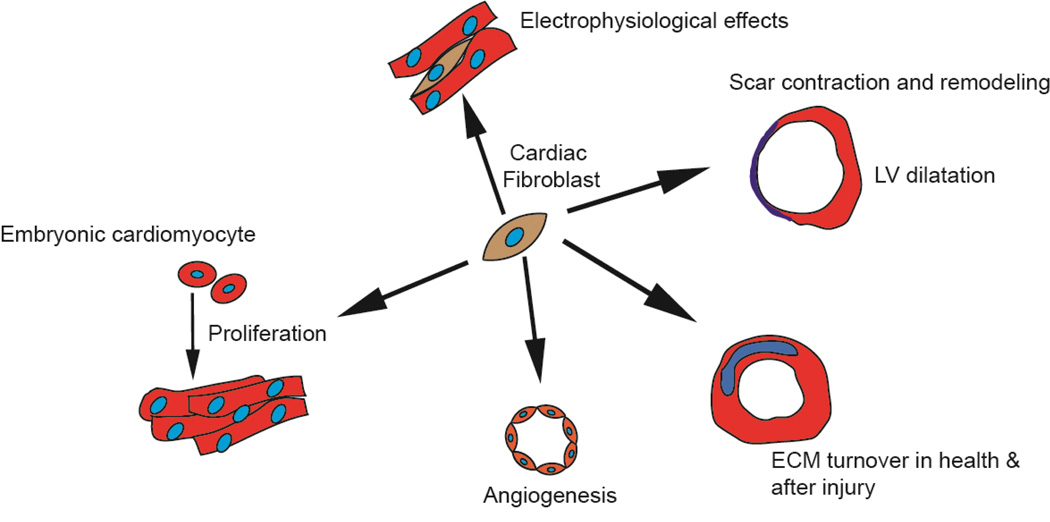
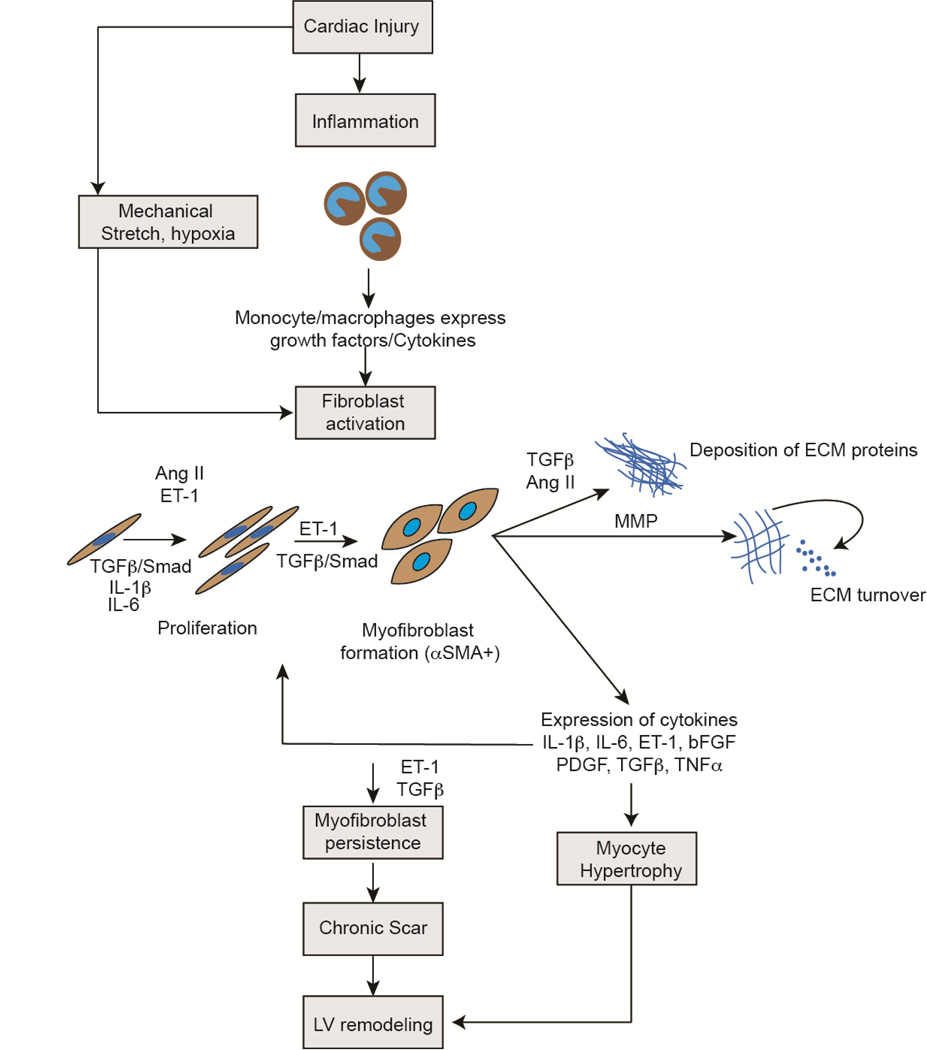
Cardiac fibroblasts are the most abundant cell type in the mammalian heart and comprise approximately two-thirds of the total number of cardiac cell types. During development, epicardial cells undergo epithelial-mesenchymal-transition to generate cardiac fibroblasts that subsequently migrate into the developing myocardium to become resident cardiac fibroblasts. Fibroblasts form a structural scaffold for the attachment of cardiac cell types during development, express growth factors and cytokines and regulate proliferation of embryonic cardiomyocytes. In post natal life, cardiac fibroblasts play a critical role in orchestrating an injury response. Fibroblast activation and proliferation early after cardiac injury are critical for maintaining cardiac integrity and function, while the persistence of fibroblasts long after injury leads to chronic scarring and adverse ventricular remodeling. In this review, we discuss the physiologic function of the fibroblast during cardiac development and wound healing, molecular mediators of activation that could be possible targets for drug development for fibrosis and finally the use of reprogramming technologies for reversing scar. This article is part of a Special Issue entitled "Myocyte-Fibroblast Signalling in Myocardium."
心肌成纤维细胞是哺乳动物心脏中最丰富的细胞类型,约占心脏细胞总数的三分之二。在发育过程中,心外膜细胞经历上皮-间充质转化,产生心肌成纤维细胞,随后迁移到发育中的心肌中,成为驻留的心肌成纤维细胞。成纤维细胞在发育过程中为心脏细胞类型的附着形成结构支架,表达生长因子和细胞因子,并调节胚胎心肌细胞的增殖。在出生后,心肌成纤维细胞在协调损伤反应中起着关键作用。心脏损伤后早期的成纤维细胞激活和增殖对于维持心脏完整性和功能至关重要,而损伤后长时间的成纤维细胞存在则导致慢性瘢痕形成和不良的心室重构。在这篇综述中,我们讨论了成纤维细胞在心脏发育和伤口愈合过程中的生理功能、激活的分子介质,这些可能成为纤维化药物开发的潜在靶点,以及最后利用重编程技术逆转瘢痕。本文是一个题为“心肌中肌细胞-成纤维细胞信号转导”的特刊的一部分。