Gamini Ramya, Han Wei, Stone John E, Schulten Klaus
Beckman Institute, University of Illinois at Urbana-Champaign, Champaign, Illinois, United States of America; Center for Biophysics and Computational Biology, University of Illinois at Urbana-Champaign, Champaign, Illinois, United States of America.
Beckman Institute, University of Illinois at Urbana-Champaign, Champaign, Illinois, United States of America.
PLoS Comput Biol. 2014 Mar 13;10(3):e1003488. doi: 10.1371/journal.pcbi.1003488. eCollection 2014 Mar.
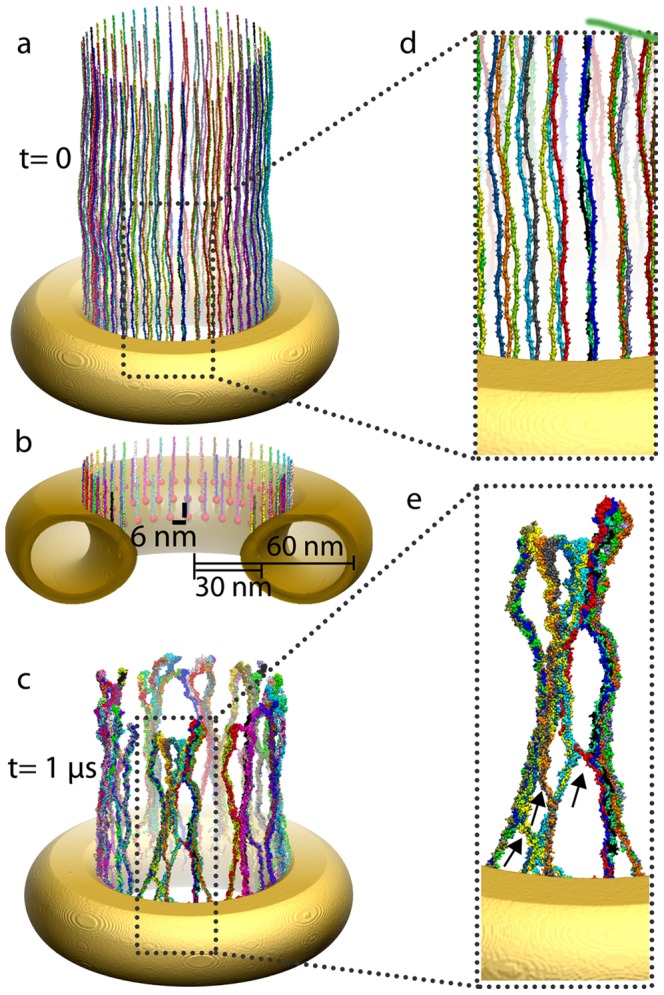
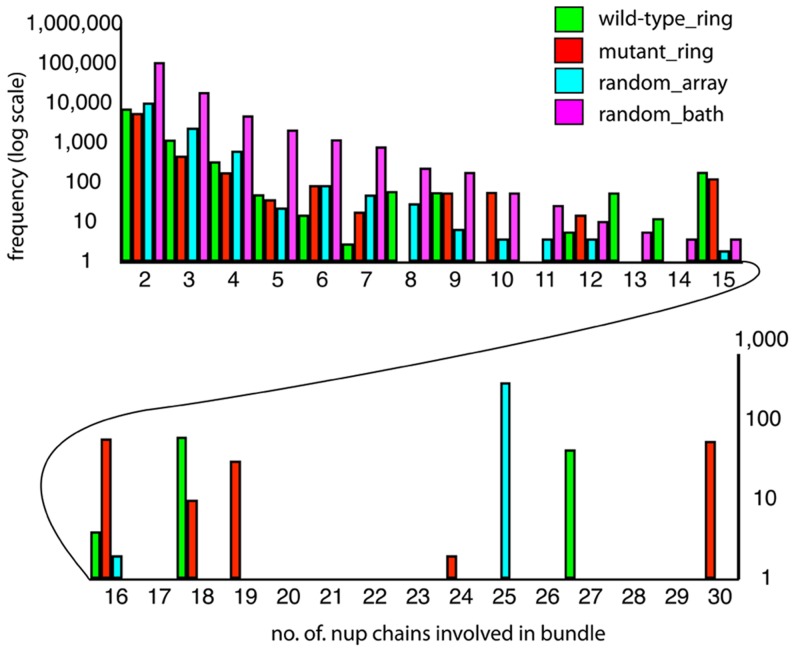
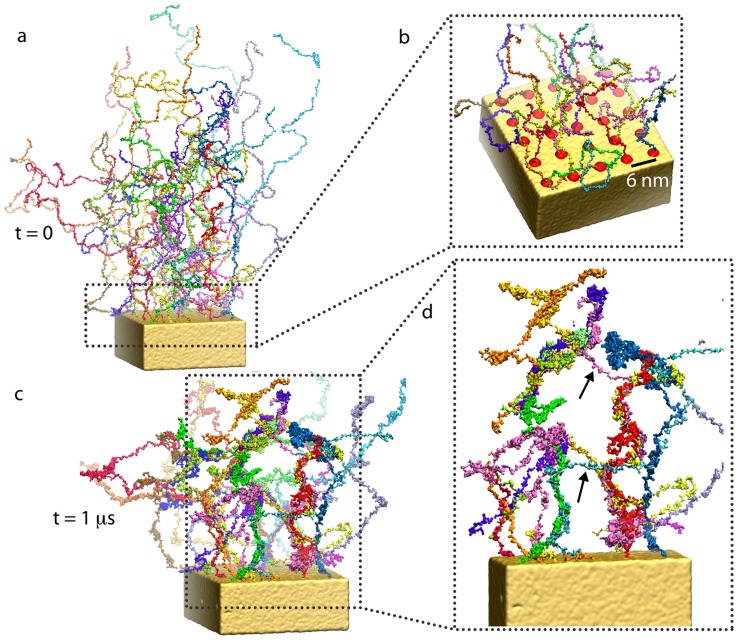
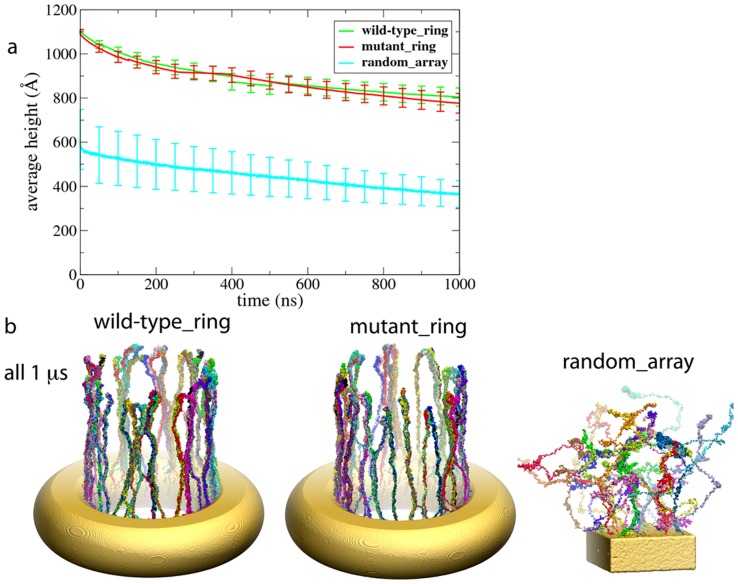
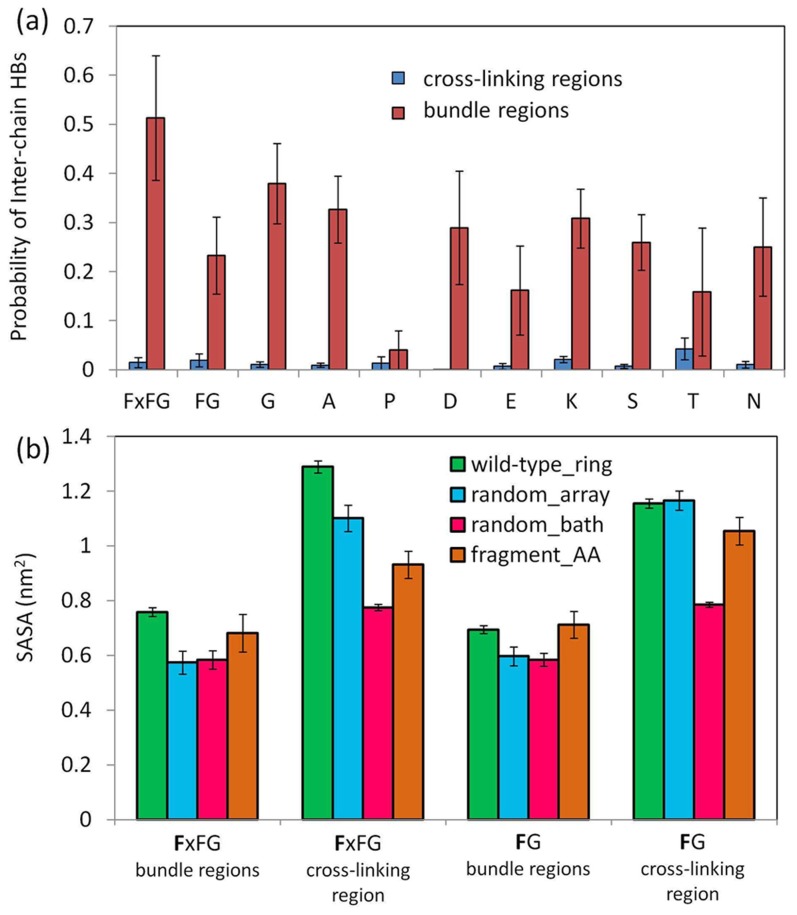
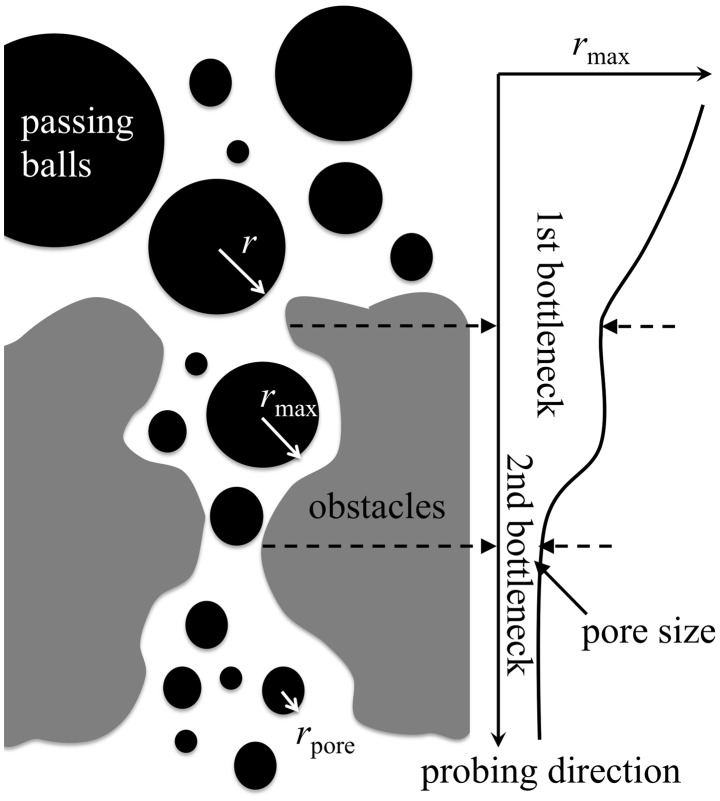
Nuclear pore complexes (NPCs) form gateways for material transfer across the nuclear envelope of eukaryotic cells. Disordered proteins, rich in phenylalanine-glycine repeat motifs (FG-nups), form the central transport channel. Understanding how nups are arranged in the interior of the NPC may explain how NPC functions as a selectivity filter for transport of large molecules and a sieve-like filter for diffusion of small molecules (<9 nm or 40 kDa). We employed molecular dynamics to model the structures formed by various assemblies of one kind of nup, namely the 609-aa-long FG domain of Nsp1 (Nsp1-FG). The simulations started from different initial conformations and geometrical arrangements of Nsp1-FGs. In all cases Nsp1-FGs collectively formed brush-like structures with bristles made of bundles of 2-27 nups, however, the bundles being cross-linked through single nups leaving one bundle and joining a nearby one. The degree of cross-linking varies with different initial nup conformations and arrangements. Structural analysis reveals that FG-repeats of the nups not only involve formation of bundle structures, but are abundantly present in cross-linking regions where the epitopes of FG-repeats are highly accessible. Large molecules that are assisted by transport factors (TFs) are selectively transported through NPC apparently by binding to FG-nups through populated FG-binding pockets on the TF surface. Therefore, our finding suggests that TFs bind concertedly to multiple FGs in cross-linking regions and break-up the bundles to create wide pores for themselves and their cargoes to pass. In addition, the cross-linking between Nsp1-FG bundles, arising from simulations, is found to set a molecular size limit of <9 nm (40 kDa) for passive diffusion of molecules. Our simulations suggest that the NPC central channel, near the periphery where tethering of nups is dominant, features brush-like moderately cross-linked bundles, but in the central region, where tethering loses its effect, features a sieve-like structure of bundles and frequent cross-links.
核孔复合体(NPCs)构成了真核细胞中物质穿过核膜的通道。富含苯丙氨酸 - 甘氨酸重复基序(FG核孔蛋白)的无序蛋白形成了中央运输通道。了解核孔蛋白在NPC内部的排列方式,或许能够解释NPC如何作为大分子运输的选择性过滤器以及小分子(<9纳米或40千道尔顿)扩散的筛状过滤器发挥作用。我们采用分子动力学方法对一种核孔蛋白(即Nsp1的609个氨基酸长的FG结构域,Nsp1-FG)的各种组装体所形成的结构进行建模。模拟从Nsp1-FG的不同初始构象和几何排列开始。在所有情况下,Nsp1-FG共同形成了刷状结构,其刷毛由2 - 27个核孔蛋白束组成,然而,这些束通过单个核孔蛋白交联,离开一束并连接到附近的一束。交联程度因不同的初始核孔蛋白构象和排列而异。结构分析表明,核孔蛋白的FG重复序列不仅参与束状结构的形成,而且大量存在于交联区域,在这些区域FG重复序列的表位极易接近。由运输因子(TFs)协助的大分子显然通过TF表面上聚集的FG结合口袋与FG核孔蛋白结合,从而选择性地通过NPC进行运输。因此,我们的研究结果表明,TFs协同结合到交联区域中的多个FG上,并打破束状结构,为自身及其货物创造宽阔的通道以通过。此外,模拟产生的Nsp1-FG束之间的交联被发现为分子的被动扩散设定了<9纳米(40千道尔顿)的分子大小限制。我们的模拟表明,在核孔蛋白系留占主导的周边附近,NPC中央通道具有刷状的适度交联束,但在系留失去作用的中央区域,具有束状的筛状结构和频繁的交联。