Department of Experimental Therapeutics, University of Texas MD Anderson Cancer Center, Unit 1950, P,O, Box 301429, Houston, TX 77230-1429, USA.
J Hematol Oncol. 2014 Mar 14;7:23. doi: 10.1186/1756-8722-7-23.
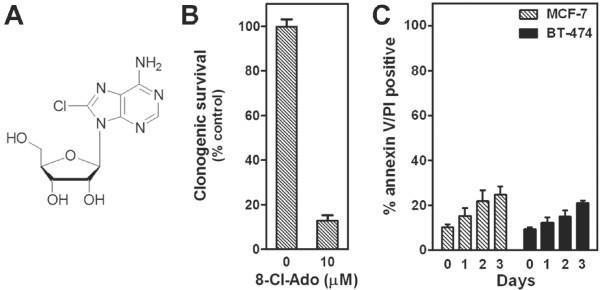
8-chloro-adenosine (8-Cl-Ado) is a unique ribonucleoside analog which is currently in a phase I clinical trial for hematological malignancies. Previously, we demonstrated in breast cancer cells that a 3-day treatment with 10 μM 8-Cl-Ado causes a 90% loss of clonogenic survival. In contrast, there was only a modest induction of apoptosis under these conditions, suggesting an alternative mechanism for the tumoricidal activity of 8-Cl-Ado.
Cellular metabolism, AMP-activated protein kinase (AMPK) and mammalian target of rapamycin (mTOR) pathway signaling, as well as autophagy induction was evaluated in breast cancer cell lines treated with 8-Cl-Ado. The effects of knocking down essential autophagy factors with small interfering RNA on 8-Cl-Ado-inhibited cell survival was assessed in breast cancer cells by examining apoptosis induction and clonogenic survival. In vivo efficacy of 8-Cl-Ado was measured in two breast cancer orthotopic model systems.
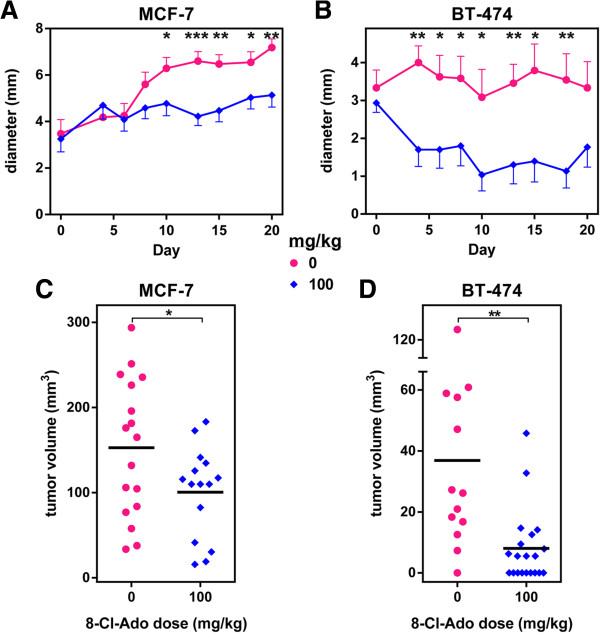
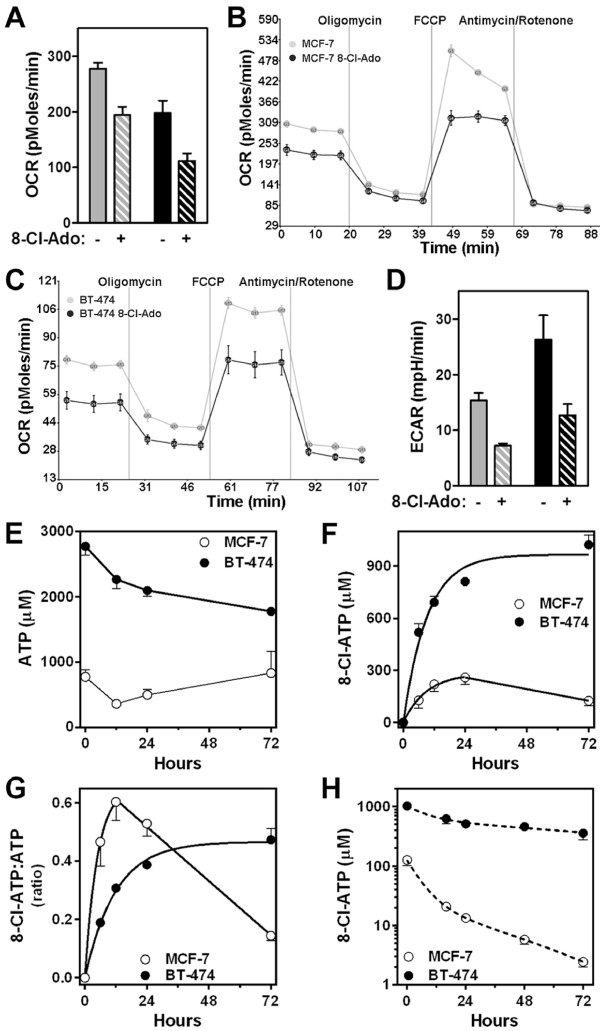
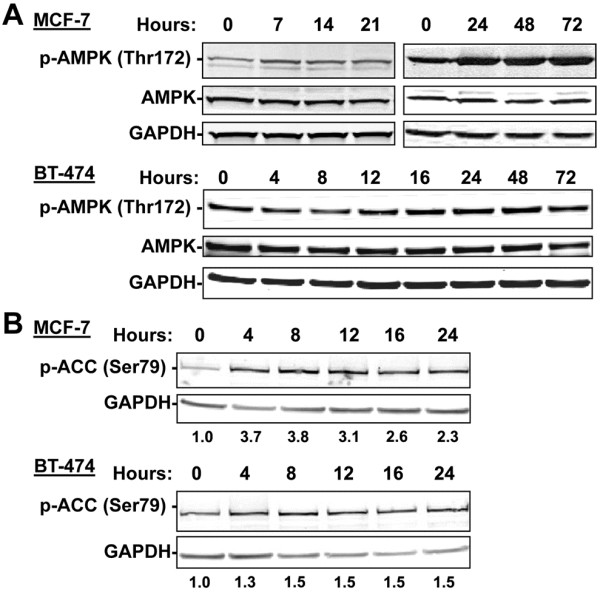
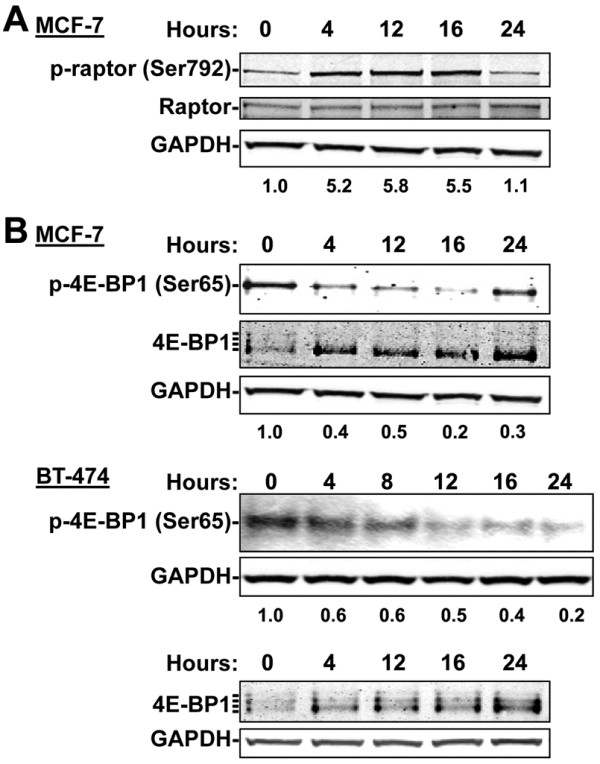
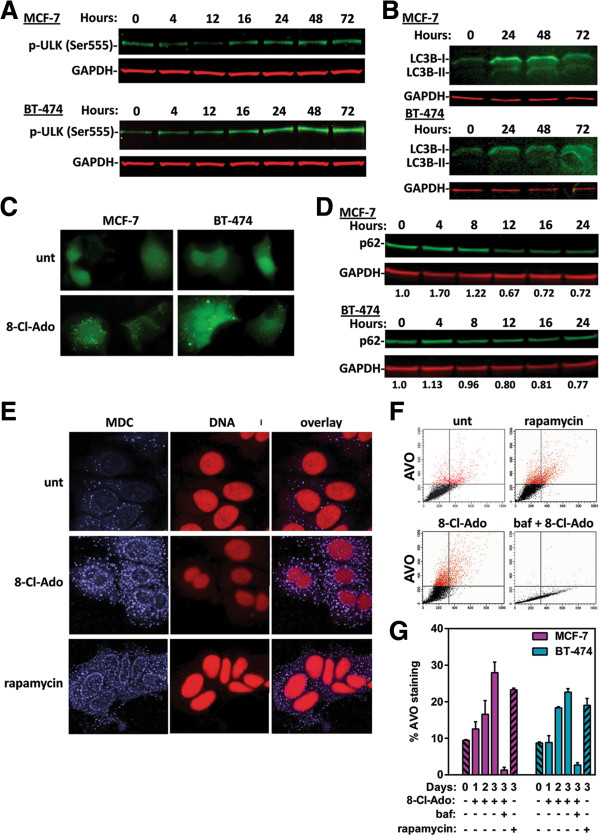
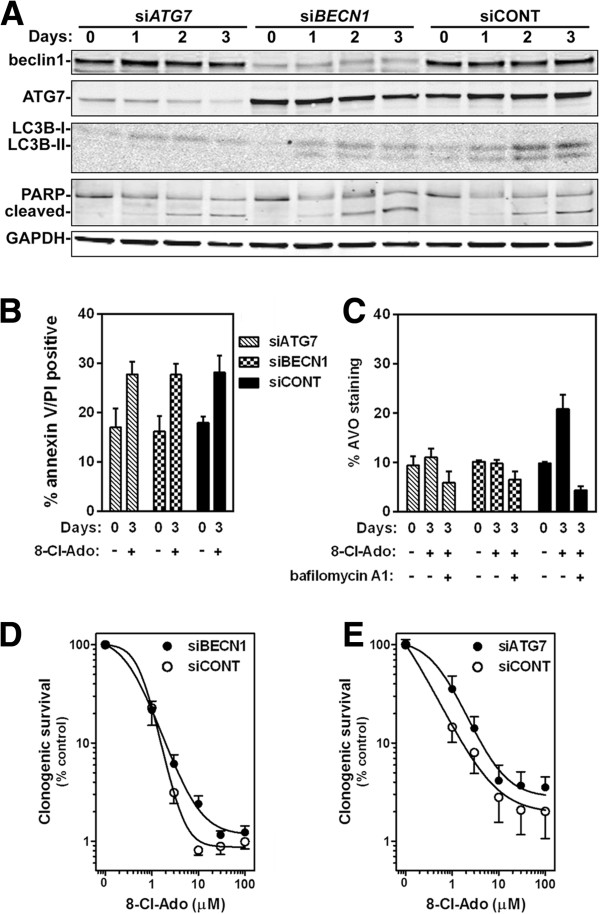
We demonstrate that in breast cancer cell lines, the metabolism of 8-Cl-Ado results in depletion of endogenous ATP that subsequently induces the phosphorylation and activation of the energy sensor, AMPK. This was associated with an attenuation of mTOR signaling and an induction of the phosphorylation of the autophagy factor, Unc51-like kinase 1 on Ser555. 8-Cl-Ado-mediated induction of autophagy was evident by increased aggregates of microtubule-associated protein 1 light chain 3B (LC3B) which was associated with its conversion to its lipidated form, LC3B-II, p62 degradative flux, and increased formation of acidic vesicular organelles. Additionally, transfection of MCF-7 cells with siRNA to ATG7 or beclin 1 provided partial protection of the cells to 8-Cl-Ado cytotoxicity as measured by clonogenicity. In vivo, 8-Cl-Ado inhibited growth of both MCF-7 and BT-474 xenograft tumors. Moreover, in 9 of 22 BT-474 tumors treated with 100 mg/kg/day 3 times a week, there was an absence of macroscopically detectable tumor after 3 weeks of treatment.
Our data demonstrates that 8-Cl-Ado treatment activates the AMPK pathway leading to autophagy induction of in breast cancer cells, eliciting, in part, its tumoricidal effects. Additionally, 8-Cl-Ado effectively inhibited in vivo tumor growth in mice. Based on this biological activity, we are planning to test 8-Cl-Ado in the clinic for patients with breast cancer.
8-氯腺苷(8-Cl-Ado)是一种独特的核苷类似物,目前正在进行血液系统恶性肿瘤的 I 期临床试验。此前,我们在乳腺癌细胞中证明,用 10μM 的 8-Cl-Ado 处理 3 天会导致 90%的集落形成能力丧失。相比之下,在这些条件下只有适度诱导细胞凋亡,这表明 8-Cl-Ado 的肿瘤杀伤活性存在替代机制。
用 8-Cl-Ado 处理乳腺癌细胞系,评估细胞代谢、AMP 激活蛋白激酶(AMPK)和哺乳动物雷帕霉素靶蛋白(mTOR)通路信号以及自噬诱导。通过检测凋亡诱导和集落形成存活情况,评估用小干扰 RNA 敲低必需自噬因子对 8-Cl-Ado 抑制细胞存活的影响。在两种乳腺癌原位模型系统中测量 8-Cl-Ado 的体内疗效。
我们证明,在乳腺癌细胞系中,8-Cl-Ado 的代谢导致内源性 ATP 的耗竭,随后导致能量传感器 AMPK 的磷酸化和激活。这与 mTOR 信号的衰减和自噬因子 Unc51 样激酶 1 丝氨酸 555 磷酸化的诱导有关。8-Cl-Ado 介导的自噬诱导通过微管相关蛋白 1 轻链 3B(LC3B)的聚集体增加而明显,其与 LC3B-II 的脂质化形式、p62 降解通量和酸性囊泡细胞器的形成增加有关。此外,用 siRNA 转染 MCF-7 细胞到 ATG7 或 beclin 1 可部分保护细胞免受 8-Cl-Ado 细胞毒性的影响,这可通过集落形成来测量。在体内,8-Cl-Ado 抑制 MCF-7 和 BT-474 异种移植瘤的生长。此外,在每周 3 次、每天 100mg/kg 剂量治疗的 22 个 BT-474 肿瘤中,有 9 个在治疗 3 周后没有检测到宏观上可检测到的肿瘤。
我们的数据表明,8-Cl-Ado 处理激活 AMPK 途径,导致乳腺癌细胞中自噬的诱导,部分引发其肿瘤杀伤作用。此外,8-Cl-Ado 有效地抑制了小鼠体内肿瘤的生长。基于这种生物学活性,我们计划在临床上对乳腺癌患者进行 8-Cl-Ado 的测试。