Bartholomew Alex J, Cirulli Elizabeth T
Center for Human Genome Variation, Duke University School of Medicine, Durham, North Carolina, United States of America.
PLoS One. 2014 Mar 14;9(3):e91773. doi: 10.1371/journal.pone.0091773. eCollection 2014.
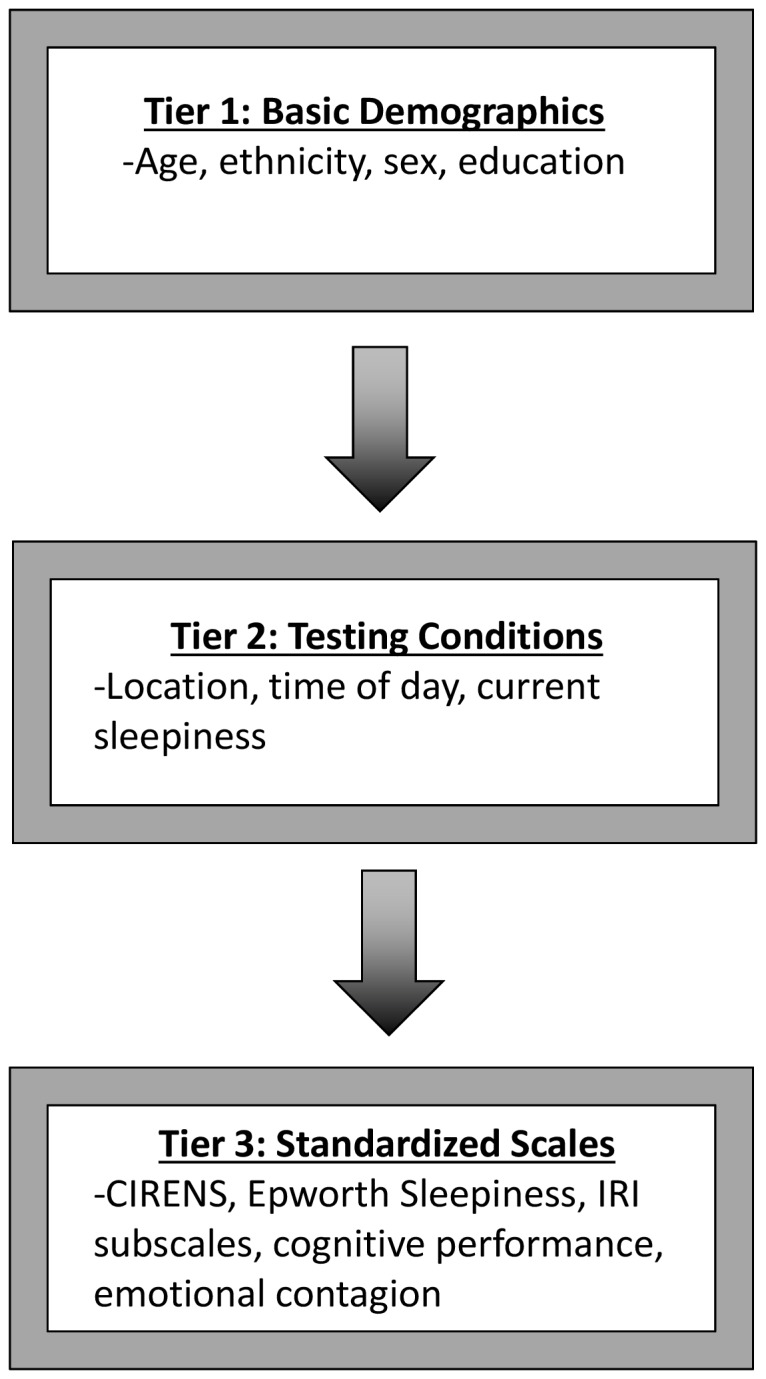
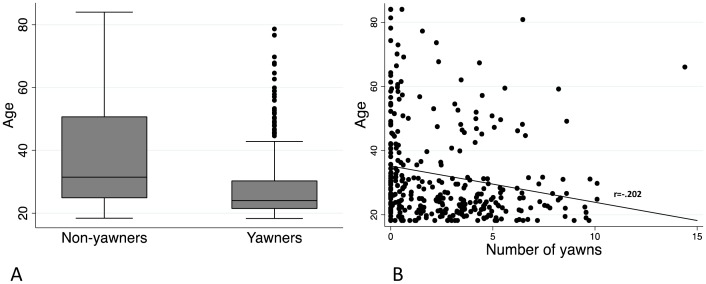
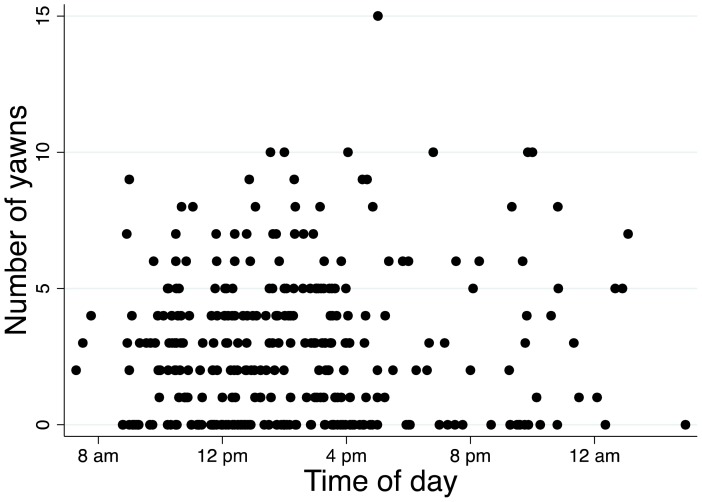
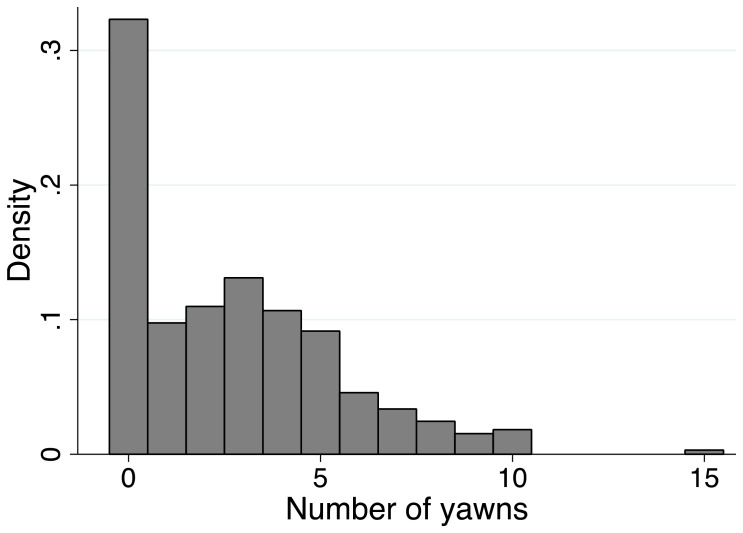
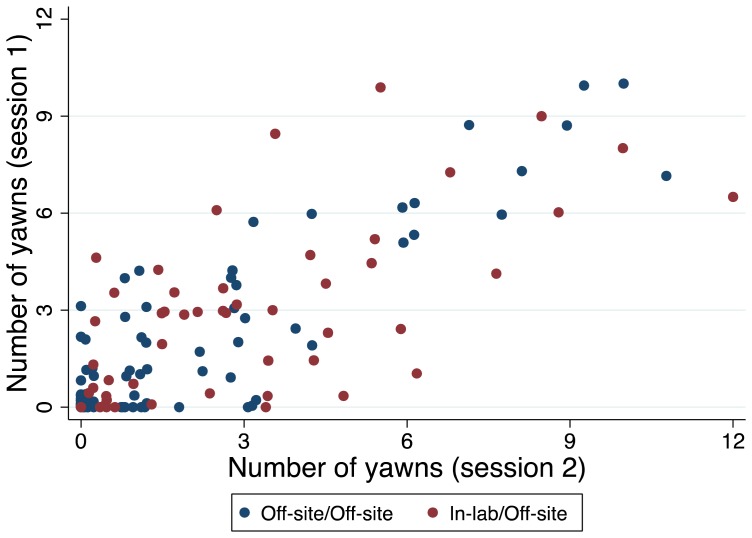
The contagious aspect of yawning is a well-known phenomenon that exhibits variation in the human population. Despite the observed variation, few studies have addressed its intra-individual reliability or the factors modulating differences in the susceptibility of healthy volunteers. Due to its obvious biological basis and impairment in diseases like autism and schizophrenia, a better understanding of this trait could lead to novel insights into these conditions and the general biological functioning of humans. We administered 328 participants a 3-minute yawning video stimulus, a cognitive battery, and a comprehensive questionnaire that included measures of empathy, emotional contagion, circadian energy rhythms, and sleepiness. Individual contagious yawning measurements were found to be highly stable across testing sessions, both in a lab setting and if administered remotely online, confirming that certain healthy individuals are less susceptible to contagious yawns than are others. Additionally, most individuals who failed to contagiously yawn in our study were not simply suppressing their reaction, as they reported not even feeling like yawning in response to the stimulus. In contrast to previous studies indicating that empathy, time of day, or intelligence may influence contagious yawning susceptibility, we found no influence of these variables once accounting for the age of the participant. Participants were less likely to show contagious yawning as their age increased, even when restricting to ages of less than 40 years. However, age was only able to explain 8% of the variability in the contagious yawn response. The vast majority of the variability in this extremely stable trait remained unexplained, suggesting that studies of its inheritance are warranted.
打哈欠的传染性是一种众所周知的现象,在人群中存在差异。尽管观察到了这种差异,但很少有研究探讨其个体内部的可靠性或调节健康志愿者易感性差异的因素。由于其明显的生物学基础以及在自闭症和精神分裂症等疾病中的损害,更好地理解这一特征可能会为这些疾病以及人类的一般生物学功能带来新的见解。我们让328名参与者观看了一段3分钟的打哈欠视频刺激、进行了一组认知测试,并填写了一份综合问卷,其中包括共情、情绪感染、昼夜能量节律和嗜睡程度的测量。结果发现,无论是在实验室环境中还是通过远程在线方式进行测试,个体的传染性打哈欠测量结果在不同测试环节中都高度稳定,这证实了某些健康个体比其他个体更不易受到传染性哈欠的影响。此外,在我们的研究中,大多数没有被传染性打哈欠的个体并非只是抑制了他们的反应,因为他们报告说甚至在面对刺激时都没有打哈欠的感觉。与之前表明共情、一天中的时间或智力可能影响传染性打哈欠易感性的研究不同,我们发现一旦考虑参与者的年龄,这些变量就没有影响。随着年龄的增长,参与者出现传染性打哈欠的可能性较小,即使将年龄限制在40岁以下也是如此。然而,年龄只能解释传染性打哈欠反应中8%的变异性。这个极其稳定的特征中绝大多数的变异性仍然无法解释,这表明有必要对其遗传进行研究。