Liao Kang-Ling, Bai Xue-Feng, Friedman Avner
Mathematical Biosciences Institute, The Ohio State University, Columbus, Ohio, United States of America.
Department of Pathology and Comprehensive Cancer Center, The Ohio State University, Columbus, Ohio, United States of America.
PLoS One. 2014 Mar 14;9(3):e91844. doi: 10.1371/journal.pone.0091844. eCollection 2014.
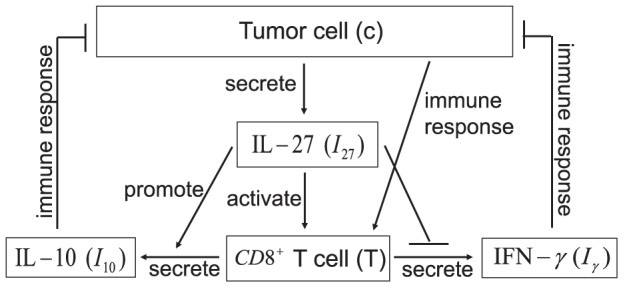
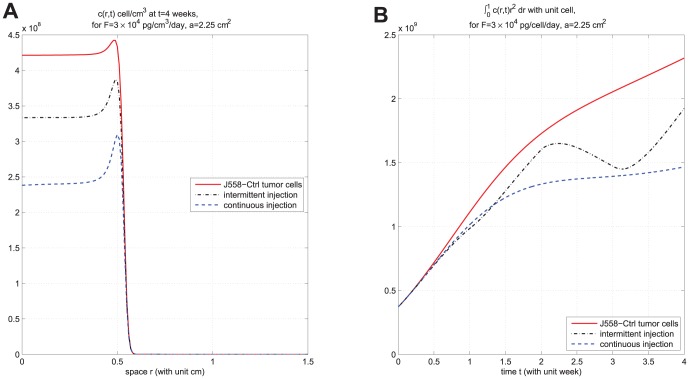
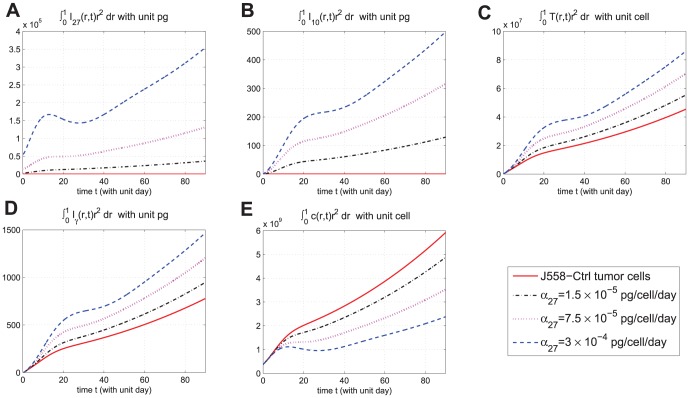
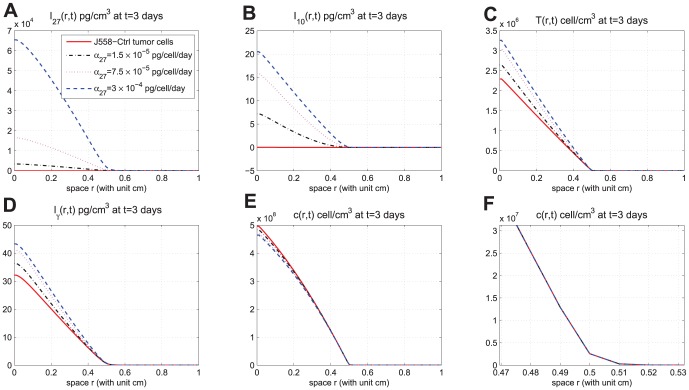
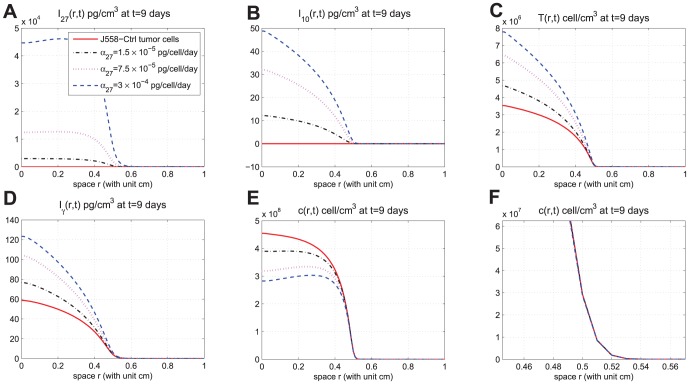
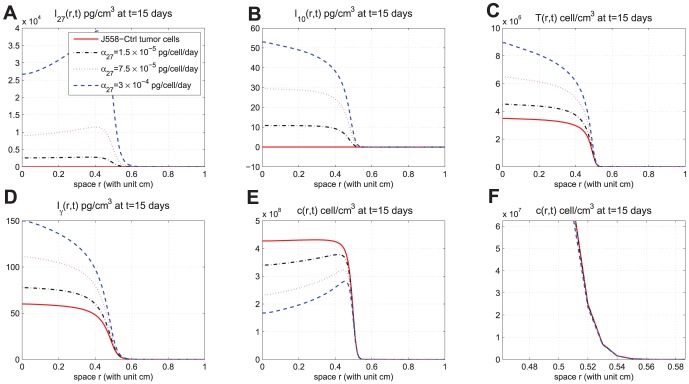
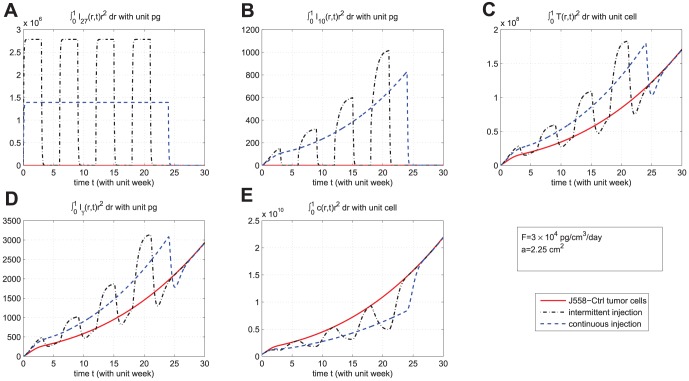
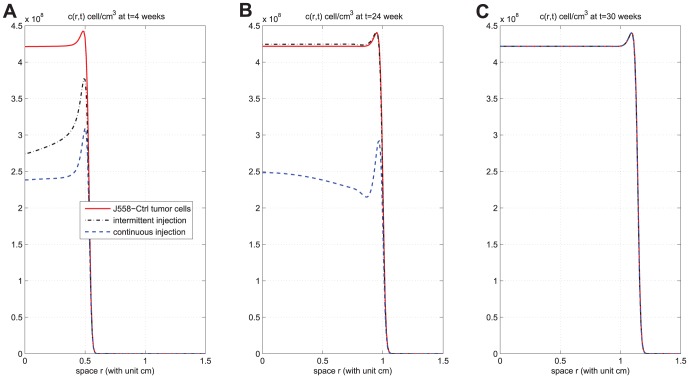
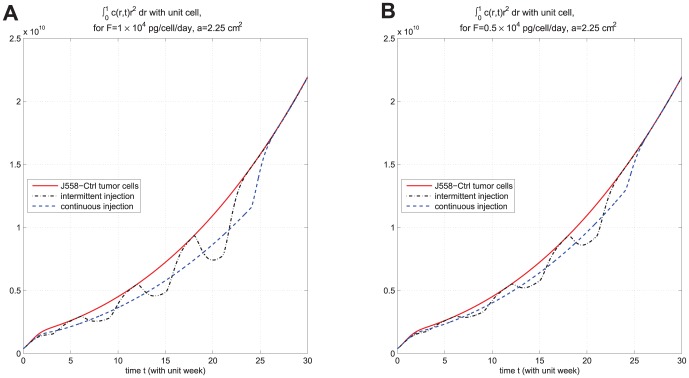
Interleukin-12 is a pro-inflammatory cytokine which promotes Th1 and cytotoxic T lymphocyte activities, such as Interferon-[Formula: see text] secretion. For this reason Interleukin-12 could be a powerful therapeutic agent for cancer treatment. However, Interleukin-12 is also excessively toxic. Interleukin-27 is an immunoregulatory cytokine from the Interleukin-12 family, but it is not as toxic as Interleukin-12. In recent years, Interleukin-27 has been considered as a potential anti-tumor agent. Recent experiments in vitro and in vivo have shown that cancer cells transfected with IL-27 activate CD8+ T cells to promote the secretion of anti-tumor cytokines Interleukin-10, although, at the same time, IL-27 inhibits the secretion of Interferon-[Formula: see text] by CD8+ T cells. In the present paper we develop a mathematical model based on these experimental results. The model involves a dynamic network which includes tumor cells, CD8+ T cells and cytokines Interleukin-27, Interleukin-10 and Interferon-[Formula: see text]. Simulations of the model show how Interleukin-27 promotes CD8+ T cells to secrete Interleukin-10 to inhibit tumor growth. On the other hand Interleukin-27 inhibits the secretion of Interferon-[Formula: see text] by CD8+ T cells which somewhat diminishes the inhibition of tumor growth. Our numerical results are in qualitative agreement with experimental data. We use the model to design protocols of IL-27 injections for the treatment of cancer and find that, for some special types of cancer, with a fixed total amount of drug, within a certain range, continuous injection has better efficacy than intermittent injections in reducing the tumor load while the treatment is ongoing, although the decrease in tumor load is only temporary.
白细胞介素 -12 是一种促炎细胞因子,可促进 Th1 细胞和细胞毒性 T 淋巴细胞的活性,如干扰素 -γ 的分泌。因此,白细胞介素 -12 可能是一种强大的癌症治疗药物。然而,白细胞介素 -12 也具有过高的毒性。白细胞介素 -27 是白细胞介素 -12 家族的一种免疫调节细胞因子,但它不像白细胞介素 -12 那样具有毒性。近年来,白细胞介素 -27 被认为是一种潜在的抗肿瘤药物。最近的体外和体内实验表明,用 IL -27 转染的癌细胞可激活 CD8 + T 细胞,促进抗肿瘤细胞因子白细胞介素 -10 的分泌,不过,与此同时,IL -27 会抑制 CD8 + T 细胞分泌干扰素 -γ。在本文中,我们基于这些实验结果建立了一个数学模型。该模型涉及一个动态网络,其中包括肿瘤细胞、CD8 + T 细胞以及细胞因子白细胞介素 -27、白细胞介素 -10 和干扰素 -γ。模型模拟结果显示了白细胞介素 -27 如何促进 CD8 + T 细胞分泌白细胞介素 -10 以抑制肿瘤生长。另一方面,白细胞介素 -27 抑制 CD8 + T 细胞分泌干扰素 -γ,这在一定程度上削弱了对肿瘤生长的抑制作用。我们的数值结果与实验数据在定性上一致。我们使用该模型设计用于癌症治疗的 IL -27 注射方案,发现对于某些特殊类型的癌症,在药物总量固定的情况下,在一定范围内,持续注射在治疗进行期间降低肿瘤负荷方面比间歇注射具有更好的疗效,尽管肿瘤负荷的降低只是暂时的。