Rongvaux Anthony, Willinger Tim, Martinek Jan, Strowig Till, Gearty Sofia V, Teichmann Lino L, Saito Yasuyuki, Marches Florentina, Halene Stephanie, Palucka A Karolina, Manz Markus G, Flavell Richard A
1] Department of Immunobiology, Yale University, New Haven, Connecticut, USA. [2].
1] Baylor Institute for Immunology Research, Dallas, Texas, USA. [2] Biomedical studies program, Baylor University, Waco, Texas, USA.
Nat Biotechnol. 2014 Apr;32(4):364-72. doi: 10.1038/nbt.2858. Epub 2014 Mar 16.
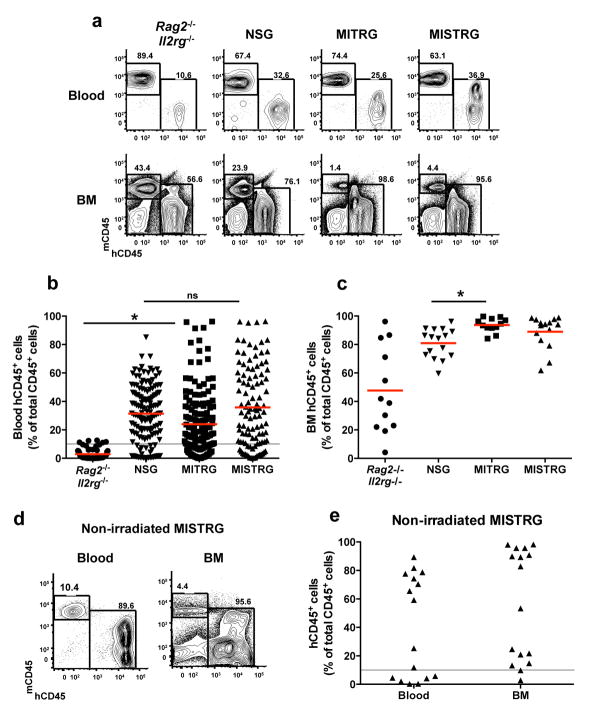
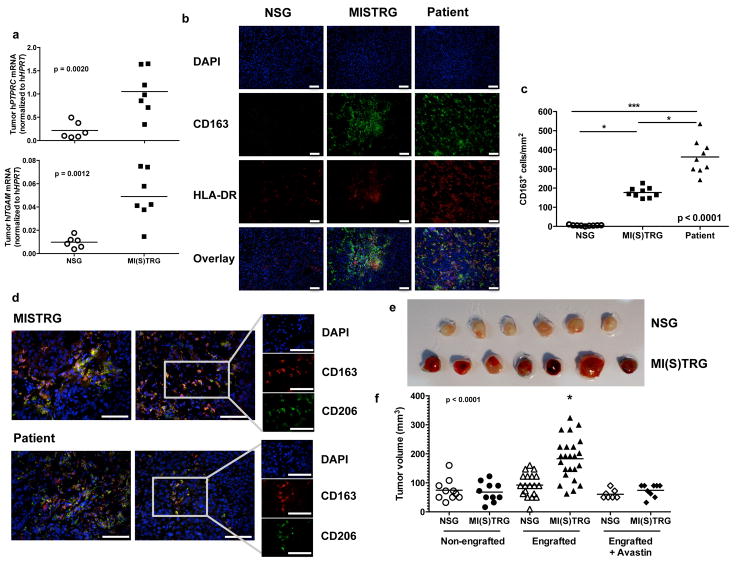
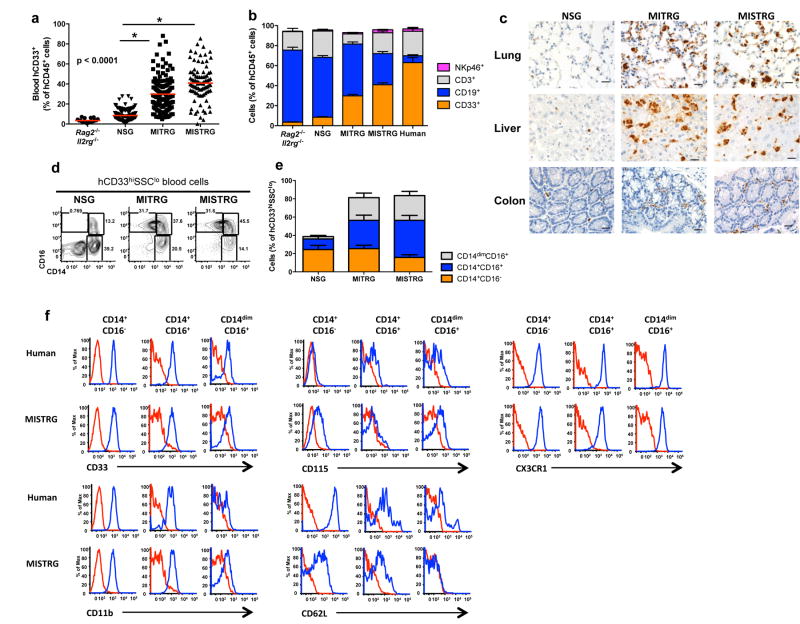
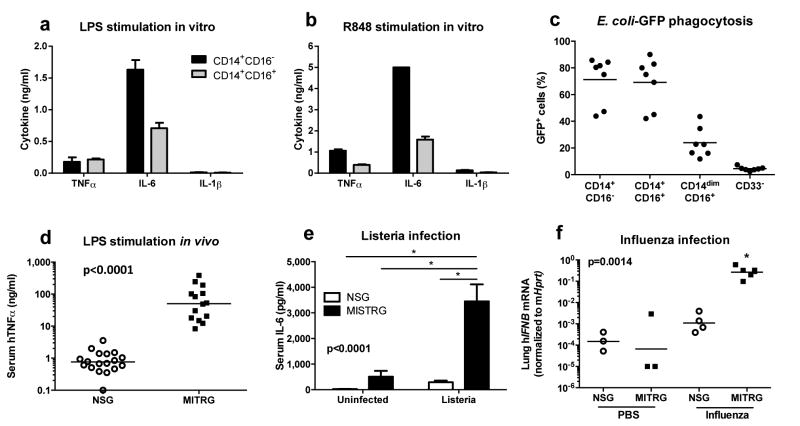
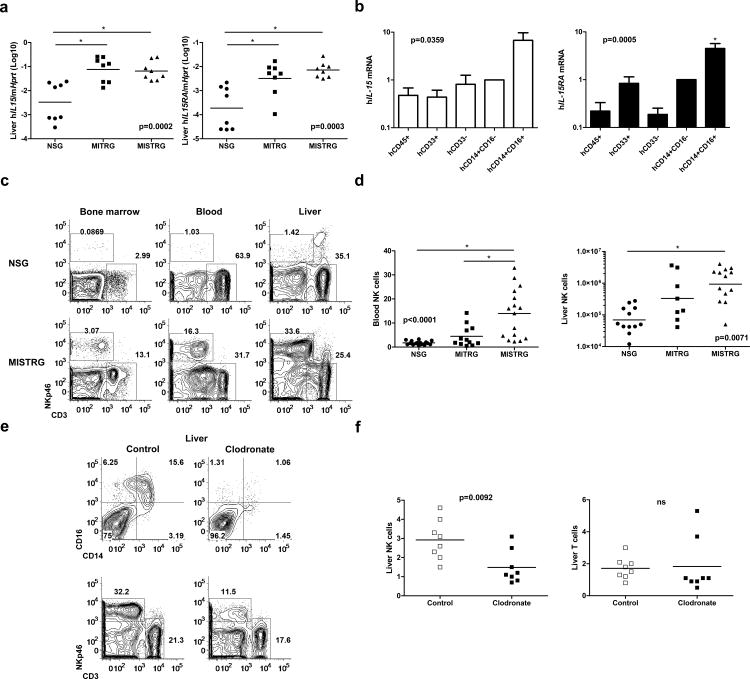
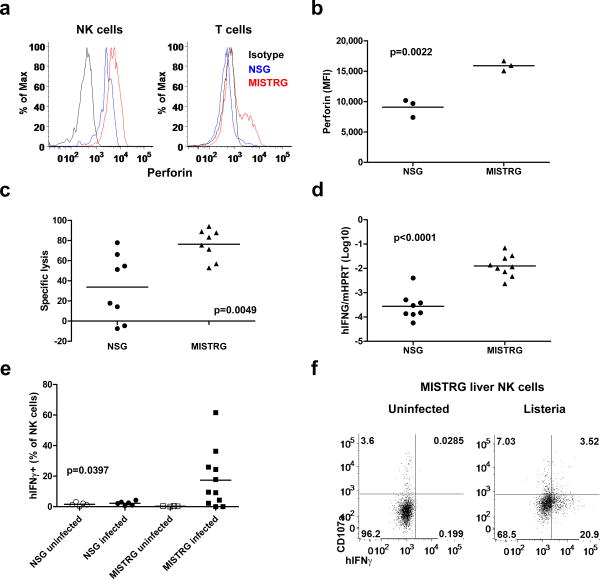
Mice repopulated with human hematopoietic cells are a powerful tool for the study of human hematopoiesis and immune function in vivo. However, existing humanized mouse models cannot support development of human innate immune cells, including myeloid cells and natural killer (NK) cells. Here we describe two mouse strains called MITRG and MISTRG, in which human versions of four genes encoding cytokines important for innate immune cell development are knocked into their respective mouse loci. The human cytokines support the development and function of monocytes, macrophages and NK cells derived from human fetal liver or adult CD34(+) progenitor cells injected into the mice. Human macrophages infiltrated a human tumor xenograft in MITRG and MISTRG mice in a manner resembling that observed in tumors obtained from human patients. This humanized mouse model may be used to model the human immune system in scenarios of health and pathology, and may enable evaluation of therapeutic candidates in an in vivo setting relevant to human physiology.
用人造血细胞重新构建的小鼠是体内研究人类造血和免疫功能的有力工具。然而,现有的人类化小鼠模型无法支持人类固有免疫细胞的发育,包括髓样细胞和自然杀伤(NK)细胞。在此,我们描述了两种小鼠品系,即MITRG和MISTRG,其中编码对固有免疫细胞发育重要的细胞因子的四个基因的人类版本被敲入各自的小鼠基因座。这些人类细胞因子支持源自注入小鼠体内的人类胎儿肝脏或成人CD34(+)祖细胞的单核细胞、巨噬细胞和NK细胞的发育和功能。在MITRG和MISTRG小鼠中,人类巨噬细胞以类似于在人类患者肿瘤中观察到的方式浸润人类肿瘤异种移植物。这种人类化小鼠模型可用于在健康和病理情况下模拟人类免疫系统,并可在与人类生理学相关的体内环境中评估候选治疗药物。