Marinho H Susana, Real Carla, Cyrne Luísa, Soares Helena, Antunes Fernando
Departamento de Química e Bioquímica, Centro de Química e Bioquímica, Faculdade de Ciências, Universidade de Lisboa, Lisboa, Portugal.
Departamento de Química e Bioquímica, Centro de Química e Bioquímica, Faculdade de Ciências, Universidade de Lisboa, Lisboa, Portugal ; Instituto Gulbenkian de Ciência, Oeiras, Portugal ; Escola Superior de Tecnologia da Saúde de Lisboa, IPL, Lisboa, Portugal.
Redox Biol. 2014 Feb 23;2:535-62. doi: 10.1016/j.redox.2014.02.006. eCollection 2014.
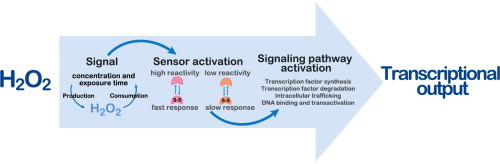
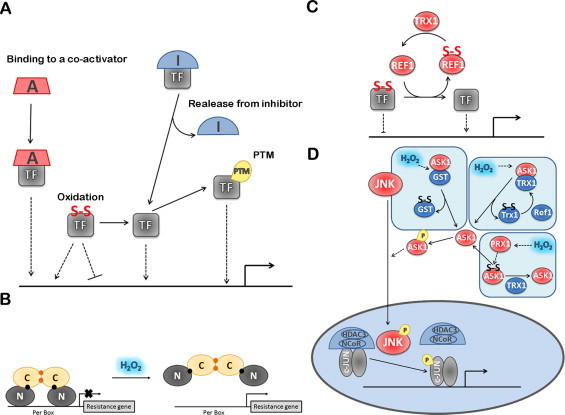
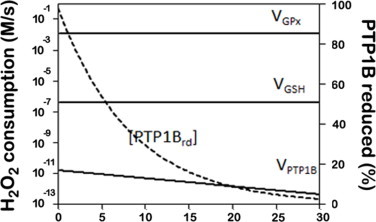
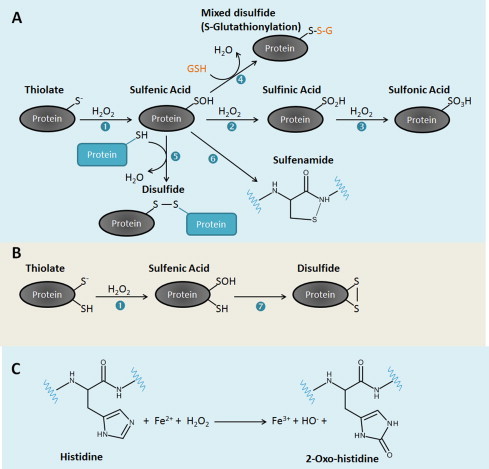
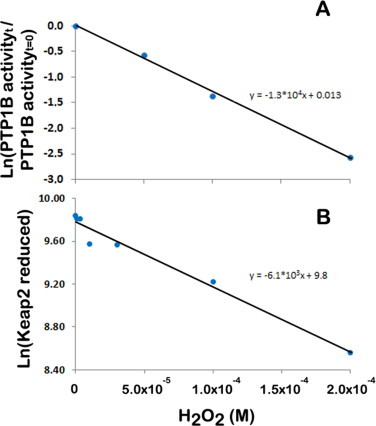
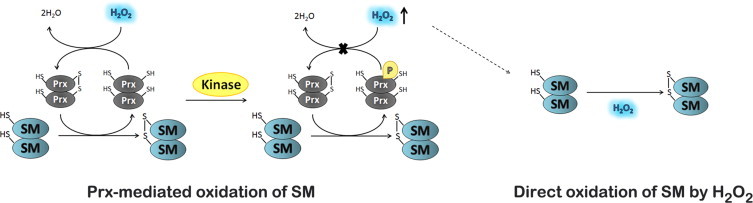
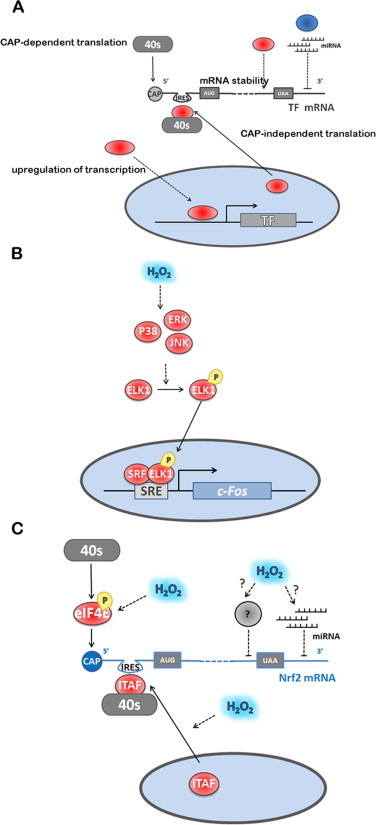
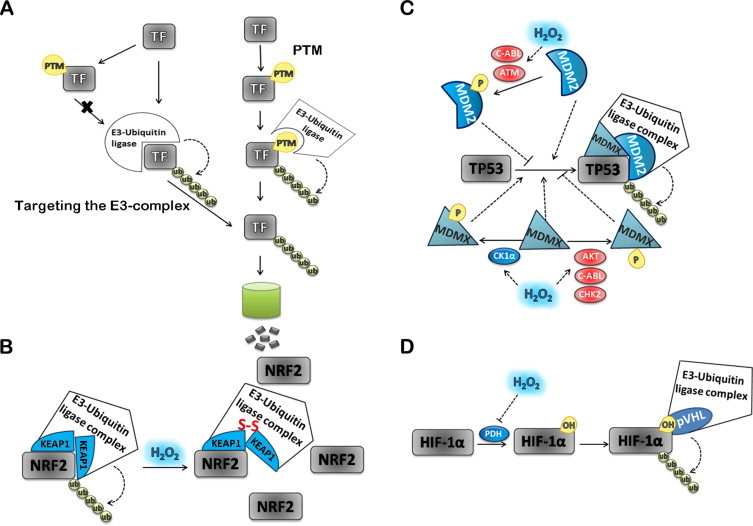
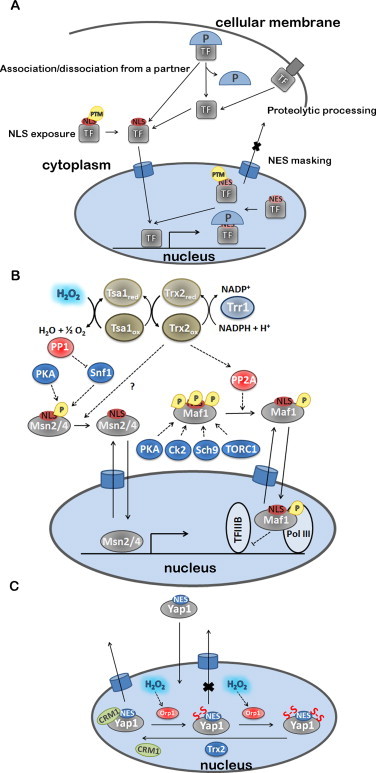
The regulatory mechanisms by which hydrogen peroxide (H2O2) modulates the activity of transcription factors in bacteria (OxyR and PerR), lower eukaryotes (Yap1, Maf1, Hsf1 and Msn2/4) and mammalian cells (AP-1, NRF2, CREB, HSF1, HIF-1, TP53, NF-κB, NOTCH, SP1 and SCREB-1) are reviewed. The complexity of regulatory networks increases throughout the phylogenetic tree, reaching a high level of complexity in mammalians. Multiple H2O2 sensors and pathways are triggered converging in the regulation of transcription factors at several levels: (1) synthesis of the transcription factor by upregulating transcription or increasing both mRNA stability and translation; (ii) stability of the transcription factor by decreasing its association with the ubiquitin E3 ligase complex or by inhibiting this complex; (iii) cytoplasm-nuclear traffic by exposing/masking nuclear localization signals, or by releasing the transcription factor from partners or from membrane anchors; and (iv) DNA binding and nuclear transactivation by modulating transcription factor affinity towards DNA, co-activators or repressors, and by targeting specific regions of chromatin to activate individual genes. We also discuss how H2O2 biological specificity results from diverse thiol protein sensors, with different reactivity of their sulfhydryl groups towards H2O2, being activated by different concentrations and times of exposure to H2O2. The specific regulation of local H2O2 concentrations is also crucial and results from H2O2 localized production and removal controlled by signals. Finally, we formulate equations to extract from typical experiments quantitative data concerning H2O2 reactivity with sensor molecules. Rate constants of 140 M(-1) s(-1) and ≥1.3 × 10(3) M(-1) s(-1) were estimated, respectively, for the reaction of H2O2 with KEAP1 and with an unknown target that mediates NRF2 protein synthesis. In conclusion, the multitude of H2O2 targets and mechanisms provides an opportunity for highly specific effects on gene regulation that depend on the cell type and on signals received from the cellular microenvironment.
本文综述了过氧化氢(H2O2)调节细菌(OxyR和PerR)、低等真核生物(Yap1、Maf1、Hsf1和Msn2/4)以及哺乳动物细胞(AP-1、NRF2、CREB、HSF1、HIF-1、TP53、NF-κB、NOTCH、SP1和SCREB-1)中转录因子活性的调控机制。调控网络的复杂性在整个系统发育树中不断增加,在哺乳动物中达到了高度复杂的程度。多种H2O2传感器和信号通路在多个层面上汇聚,共同调节转录因子:(1)通过上调转录或增加mRNA稳定性及翻译来促进转录因子的合成;(ii)通过减少转录因子与泛素E3连接酶复合物的结合或抑制该复合物来维持转录因子的稳定性;(iii)通过暴露/掩盖核定位信号、从伴侣或膜锚定物中释放转录因子来调控细胞质-细胞核转运;(iv)通过调节转录因子对DNA、共激活因子或抑制因子的亲和力,以及靶向染色质的特定区域来激活单个基因,从而实现DNA结合和核转录激活。我们还讨论了H2O2的生物学特异性如何源于不同的硫醇蛋白传感器,这些传感器的巯基对H2O2具有不同的反应性,在不同的H2O2浓度和暴露时间下被激活。局部H2O2浓度的特异性调节也至关重要,这是由信号控制的H2O2局部产生和清除所导致的。最后,我们推导了一些方程,用于从典型实验中提取有关H2O2与传感器分子反应性的定量数据。分别估计了H2O2与KEAP1以及与介导NRF2蛋白合成的未知靶点反应的速率常数,分别为140 M(-1) s(-1)和≥1.3×10(3) M(-1) s(-1)。总之,众多的H2O2靶点和机制为基因调控提供了高度特异性效应的机会,这些效应取决于细胞类型以及从细胞微环境接收到的信号。