Upreti Meenakshi, Jyoti Amar, Sethi Pallavi
Department of Pharmaceutical Sciences and Cancer Nanotechnology Training Center, College of Pharmacy, University of Kentucky, Lexington, KY, USA.
Transl Cancer Res. 2013 Aug 1;2(4):309-319. doi: 10.3978/j.issn.2218-676X.2013.08.11.
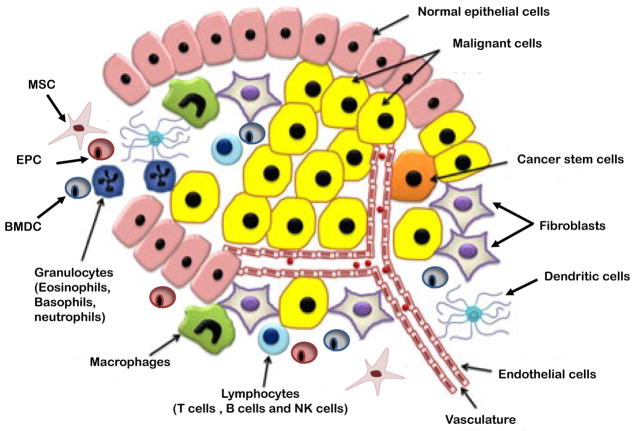
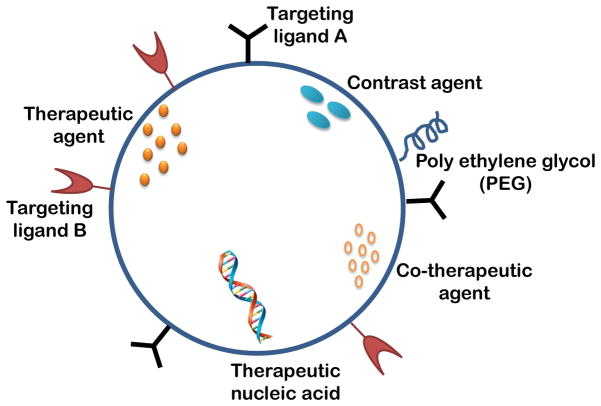
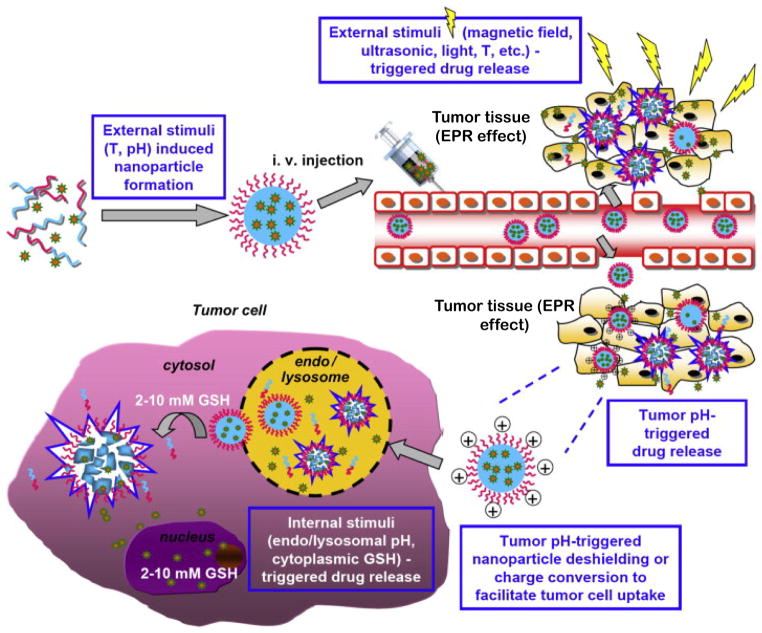
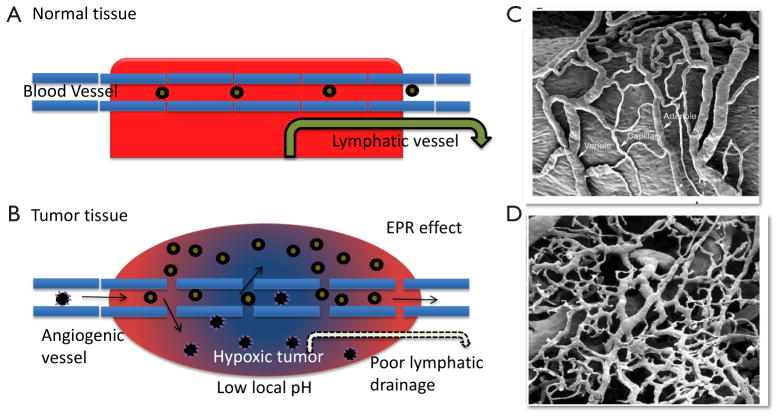
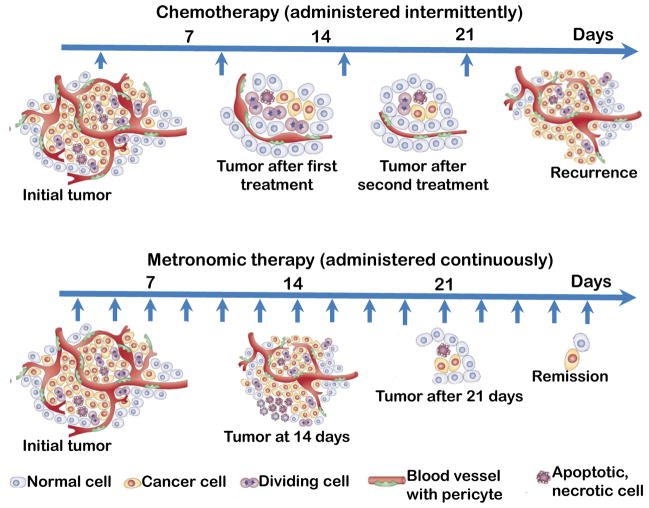
Recent studies delineate a predominant role for the tumor microenvironment in tumor growth and progression. Improved knowledge of cancer biology and investigation of the complex functional interrelation between the cellular and noncellular compartments of the tumor microenvironment have provided an ideal platform for the evolution of novel cancer nanotherapies. In addition, multifunctional "smart" nanoparticles carrying imaging agents and delivering multiple drugs targeted preferentially to the tumor/tumor microenvironment will lead to early diagnosis and better treatment for patients with cancer. The emerging knowledge of the tumor microenvironment has enabled rational designing of nanoparticles for combinatorial treatment strategies that include radiotherapy, antiangiogenesis and chemotherapy. This multimodality approach is thus expected to achieve therapeutic efficacy and enhance the quality of life of cancer patients. This review highlights the unique characteristics of the tumor microenvironment that are exploited by nanotechnology to develop novel drug delivery systems aimed to target the tumor/tumor microenvironment.
最近的研究表明肿瘤微环境在肿瘤生长和进展中起主要作用。对癌症生物学的深入了解以及对肿瘤微环境中细胞和非细胞成分之间复杂功能相互关系的研究,为新型癌症纳米疗法的发展提供了理想平台。此外,携带成像剂并优先将多种药物递送至肿瘤/肿瘤微环境的多功能“智能”纳米颗粒,将为癌症患者带来早期诊断和更好的治疗效果。肿瘤微环境方面不断涌现的知识,使得能够合理设计用于联合治疗策略(包括放疗、抗血管生成和化疗)的纳米颗粒。因此,这种多模态方法有望实现治疗效果并提高癌症患者的生活质量。本综述重点介绍了肿瘤微环境的独特特征,纳米技术利用这些特征开发旨在靶向肿瘤/肿瘤微环境的新型药物递送系统。