Wang Zhiren, Chen Jiawei, Little Nicholas, Lu Jianqin
Skaggs Pharmaceutical Sciences Center, Department of Pharmacology & Toxicology, College of Pharmacy, The University of Arizona, Tucson, AZ, 85721, United States.
Skaggs Pharmaceutical Sciences Center, Department of Pharmacology & Toxicology, College of Pharmacy, The University of Arizona, Tucson, AZ, 85721, United States; NCI-designated University of Arizona Comprehensive Cancer Center, Tucson, Arizona, 85721, United States; Southwest Environmental Health Sciences Center, The University of Arizona, Tucson, 85721, United States; BIO5 Institute, The University of Arizona, Tucson, Arizona, 85721, United States.
Acta Biomater. 2020 Jul 15;111:20-28. doi: 10.1016/j.actbio.2020.05.026. Epub 2020 May 23.
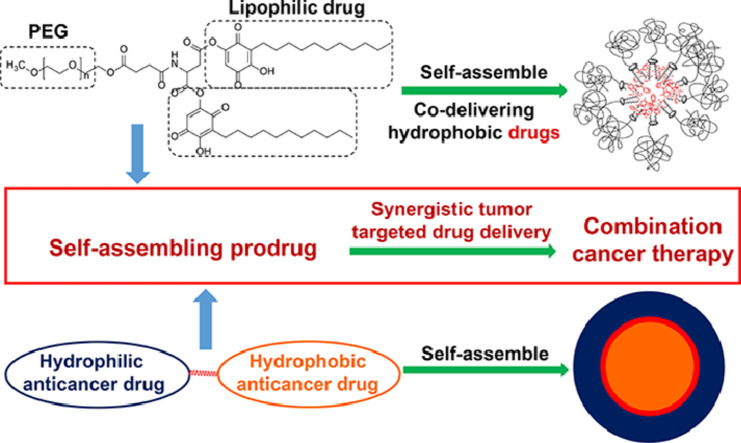
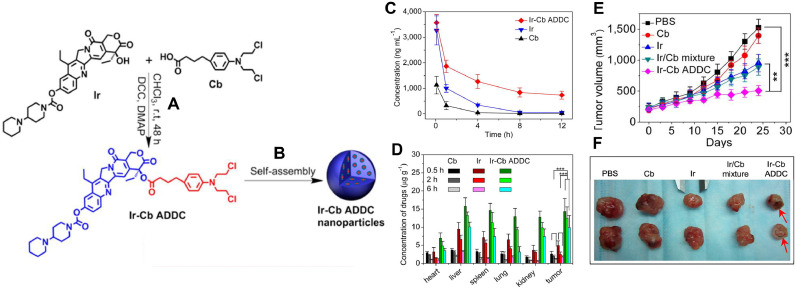
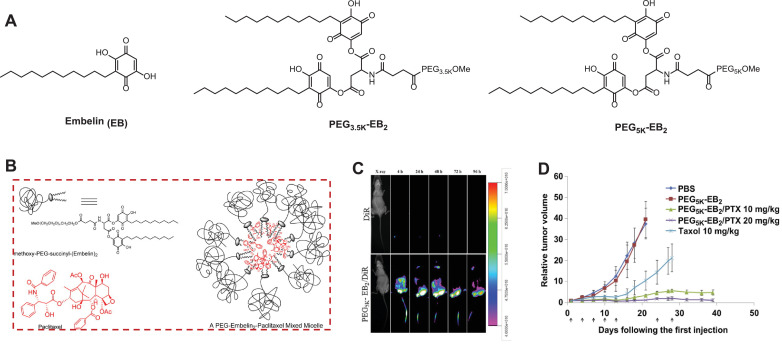
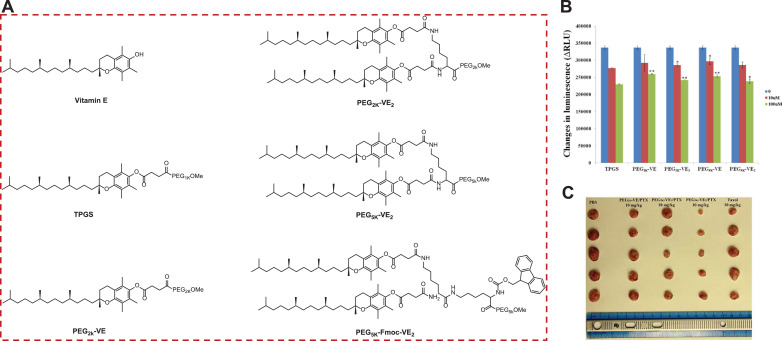
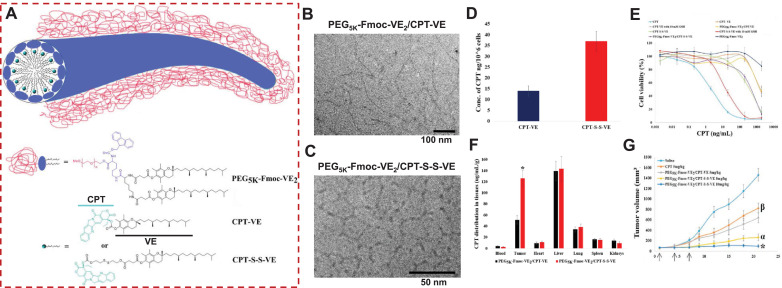
Self-assembling prodrugs represents a robust and effective nanotherapeutic approach for delivering poorly soluble anticancer drugs. With numerous intrinsic advantages, self-assembling prodrugs possess the maximum drug loading capacity, controlled drug release kinetics, prolonged blood circulation, and preferential tumor accumulation based on the enhanced permeability and retention (EPR) effect. These prodrug conjugates allow for efficient self-assembly into nanodrugs with the potential of encapsulating other therapeutic agents that have different molecular targets, enabling simultaneous temporal-spatial release of drugs for synergistic antitumor efficacy with reduced systemic side effects. The aim of this review is to summarize the recent progress of self-assembling prodrug cancer nanotherapeutics that are made through conjugating therapeutically active agents to Polyethylene glycol, Vitamin E, or drugs with different physicochemical properties via rational design, for synergistic tumor targeted drug delivery. STATEMENT OF SIGNIFICANCE: All current FDA-approved nanomedicines use inert biomaterials as drug delivery carriers. These biomaterials lack any therapeutic potential, contributing not only to the cost, but may also elicit severe unfavorable adverse effects. Despite the reduction in toxicity associated with the payload, these nanotherapeutics have been met with limited clinical success, likely due to the monotherapy regimen. The self-assembling prodrug (SAP) has been emerging as a powerful platform for enhancing efficacy through co-delivering other therapeutic modalities with distinct molecular targets. Herein, we opportunely present a comprehensive review article summarizing three unique approaches of making SAP for synergistic drug delivery: pegylation, vitamin E-derivatization, and drug-drug conjugation. These SAPs may inevitably pave the way for developing more efficacious, clinically translatable, combination cancer nanotherapies.
自组装前药是一种用于递送难溶性抗癌药物的强大而有效的纳米治疗方法。自组装前药具有众多内在优势,具备最大载药量、可控的药物释放动力学、延长的血液循环时间以及基于增强的通透性和滞留(EPR)效应的肿瘤优先蓄积特性。这些前药缀合物能够高效自组装成纳米药物,有潜力包封具有不同分子靶点的其他治疗剂,实现药物的同时时空释放,以产生协同抗肿瘤效果并降低全身副作用。本综述的目的是总结自组装前药癌症纳米治疗的最新进展,这些自组装前药是通过合理设计将治疗活性剂与聚乙二醇、维生素E或具有不同物理化学性质的药物缀合而成,用于协同肿瘤靶向给药。重要性声明:目前所有获得美国食品药品监督管理局(FDA)批准的纳米药物都使用惰性生物材料作为药物递送载体。这些生物材料缺乏任何治疗潜力,不仅增加成本,还可能引发严重的不良副作用。尽管与有效载荷相关的毒性有所降低,但这些纳米治疗在临床上取得的成功有限,这可能是由于单一疗法方案所致。自组装前药(SAP)已成为一个强大的平台,可通过共同递送具有不同分子靶点的其他治疗方式来提高疗效。在此,我们适时地发表一篇全面的综述文章,总结制备用于协同给药的SAP的三种独特方法:聚乙二醇化、维生素E衍生化和药物 - 药物缀合。这些SAP可能不可避免地为开发更有效、可临床转化的联合癌症纳米治疗铺平道路。