Samuelson Elizabeth M, Laird Renee M, Papillion Amber M, Tatum Arthur H, Princiotta Michael F, Hayes Sandra M
Department of Microbiology and Immunology, State University of New York Upstate Medical University, Syracuse, New York, United States of America.
Department of Pathology, State University of New York Upstate Medical University, Syracuse, New York, United States of America.
PLoS One. 2014 Mar 17;9(3):e92054. doi: 10.1371/journal.pone.0092054. eCollection 2014.
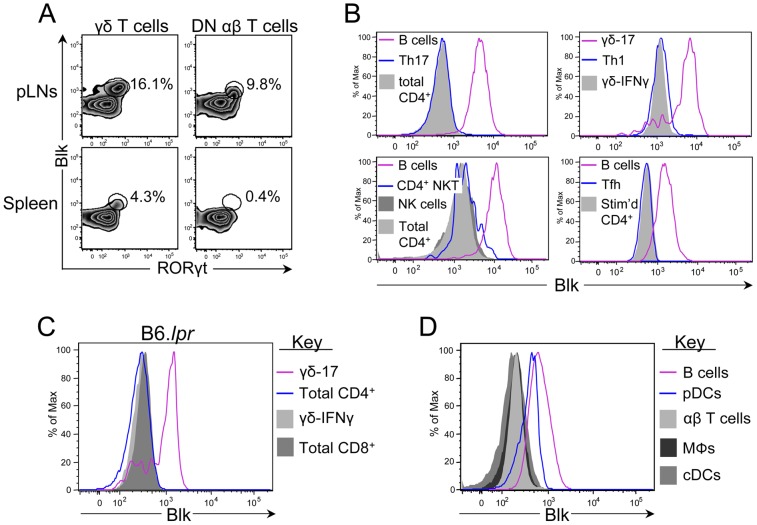
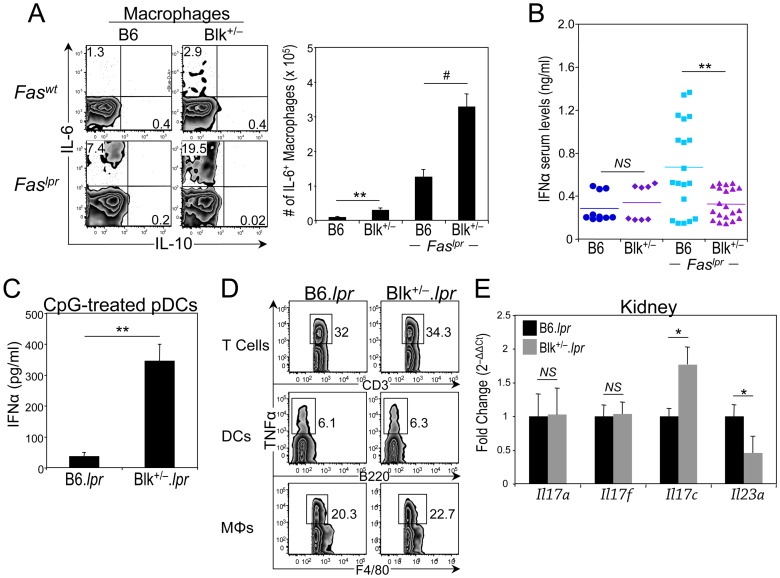
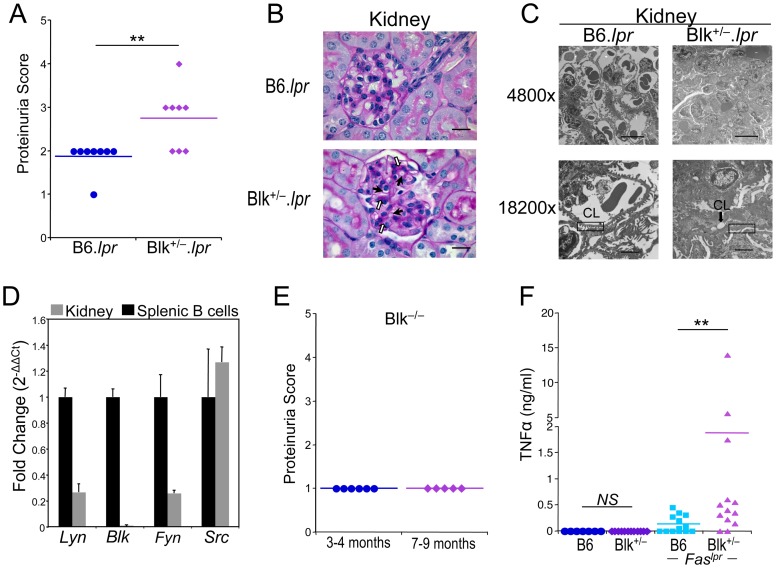
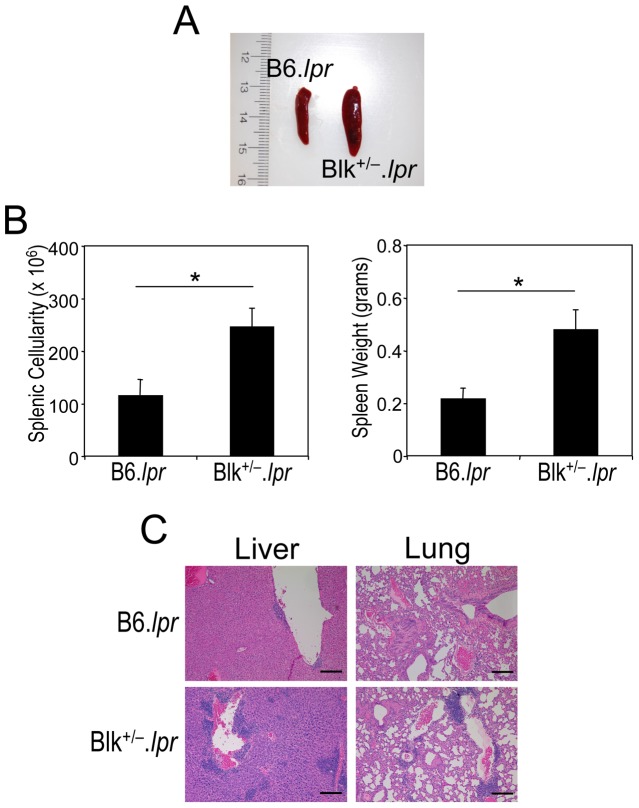
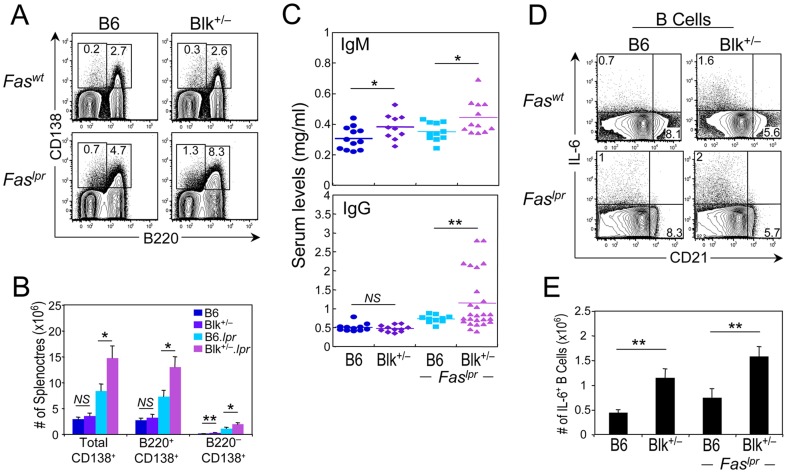
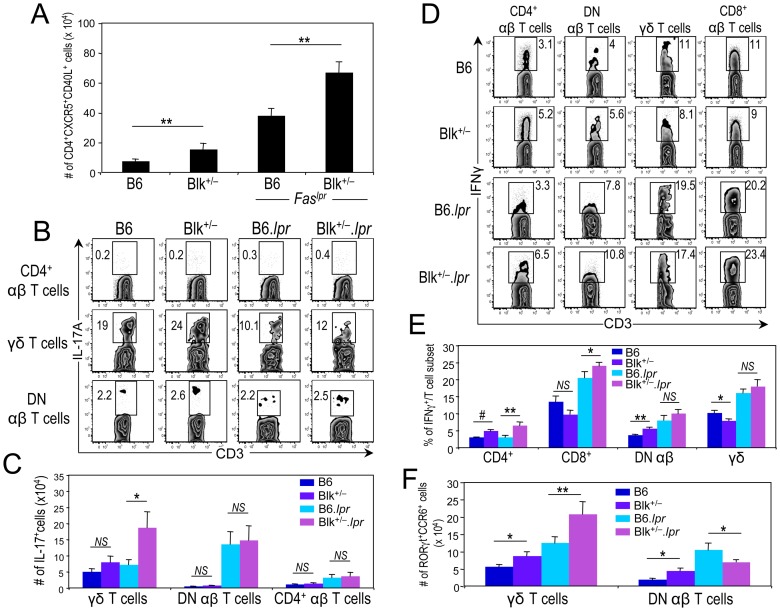
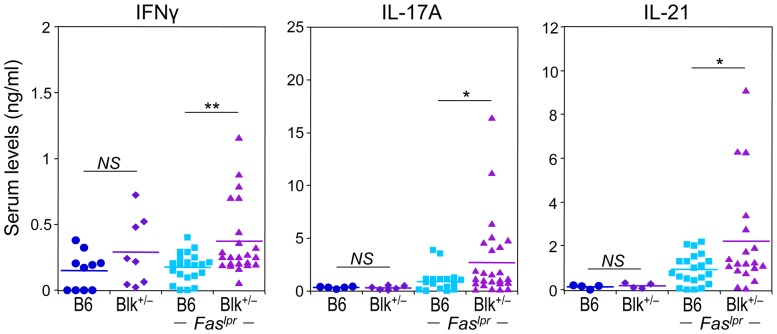
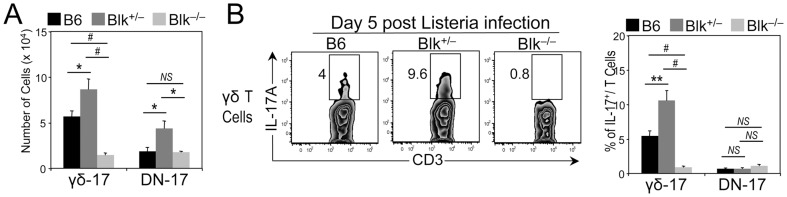
BLK, which encodes B lymphoid kinase, was recently identified in genome wide association studies as a susceptibility gene for systemic lupus erythematosus (SLE), and risk alleles mapping to the BLK locus result in reduced gene expression. To determine whether BLK is indeed a bona fide susceptibility gene, we developed an experimental mouse model, namely the Blk+/-.lpr/lpr (Blk+/-.lpr) mouse, in which Blk expression levels are reduced to levels comparable to those in individuals carrying a risk allele. Here, we report that Blk is expressed not only in B cells, but also in IL-17-producing γδ and DN αβ T cells and in plasmacytoid dendritic cells (pDCs). Moreover, we found that solely reducing Blk expression in C57BL/6-lpr/lpr mice enhanced proinflammatory cytokine production and accelerated the onset of lymphoproliferation, proteinuria, and kidney disease. Together, these findings suggest that BLK risk alleles confer susceptibility to SLE through the dysregulation of a proinflammatory cytokine network.
编码B淋巴细胞激酶的BLK最近在全基因组关联研究中被确定为系统性红斑狼疮(SLE)的易感基因,定位到BLK基因座的风险等位基因会导致基因表达降低。为了确定BLK是否确实是一个真正的易感基因,我们构建了一种实验性小鼠模型,即Blk+/-。lpr/lpr(Blk+/-。lpr)小鼠,其中Blk表达水平降低到与携带风险等位基因个体的水平相当。在此,我们报告BLK不仅在B细胞中表达,而且在产生IL-17的γδ和双阴性αβ T细胞以及浆细胞样树突状细胞(pDC)中表达。此外,我们发现仅降低C57BL/6-lpr/lpr小鼠中的Blk表达会增强促炎细胞因子的产生,并加速淋巴细胞增殖、蛋白尿和肾病的发作。这些发现共同表明,BLK风险等位基因通过促炎细胞因子网络的失调赋予SLE易感性。