Department of Molecular Biology, Princeton University, 110 Lewis Thomas Laboratory, Washington Road, Princeton, NJ 08544, United States.
Department of Molecular Biology, Princeton University, 110 Lewis Thomas Laboratory, Washington Road, Princeton, NJ 08544, United States.
J Immunol Methods. 2014 Aug;410:50-9. doi: 10.1016/j.jim.2014.03.006. Epub 2014 Mar 15.
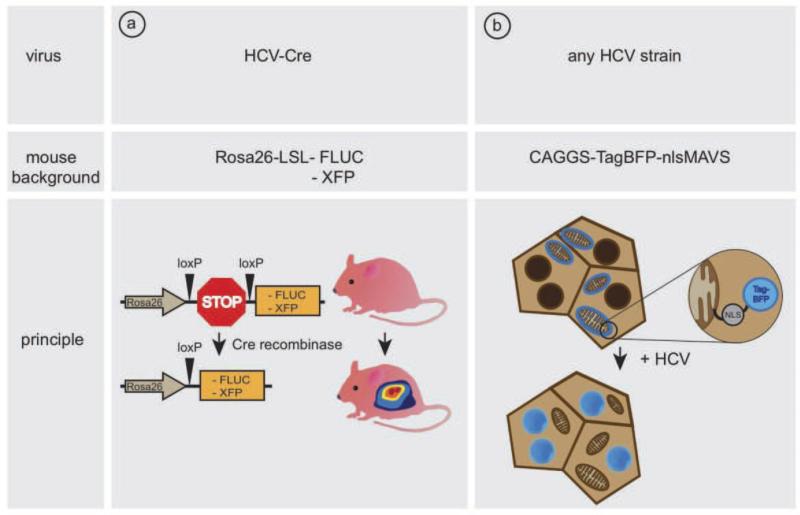
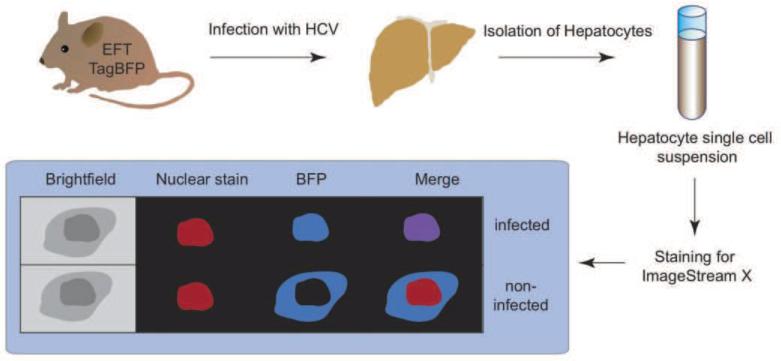
Hepatitis C virus (HCV) establishes frequently persistent infections. Chronic carriers can develop severe liver disease. HCV has been intensely studied in a variety of cell culture systems. However, commonly used cell lines and primary hepatocyte cultures do not or only in part recapitulate the intricate host environment HCV faces in the liver. HCV infects readily only humans and chimpanzees, which poses challenges in studying HCV infection in vivo. Consequently, tractable small animal models are needed that are not only suitable for analyzing HCV infection but also for testing novel therapeutics. Here, we will focus our discussion on humanized mice, i.e. mice engrafted with human tissues or expressing human genes, which support HCV infection. We will further highlight novel methods that can be used to unambiguously detect HCV infected cells in situ, thereby facilitating a spatio-temporal dissection of HCV infection in the three dimensional context of the liver.
丙型肝炎病毒 (HCV) 常导致持续性感染。慢性携带者可能会发展为严重的肝脏疾病。HCV 在多种细胞培养系统中都得到了深入研究。然而,常用的细胞系和原代肝细胞培养物不能或仅部分重现 HCV 在肝脏中所面临的复杂宿主环境。HCV 仅容易感染人类和黑猩猩,这给 HCV 的体内感染研究带来了挑战。因此,需要可处理的小动物模型,这些模型不仅适合分析 HCV 感染,还适合测试新型治疗方法。在这里,我们将重点讨论人源化小鼠,即移植了人类组织或表达人类基因的小鼠,这些小鼠支持 HCV 感染。我们还将进一步强调可用于明确原位检测 HCV 感染细胞的新方法,从而有助于在肝脏的三维空间背景下对 HCV 感染进行时空解析。