Maltezos S, Horder J, Coghlan S, Skirrow C, O'Gorman R, Lavender T J, Mendez M A, Mehta M, Daly E, Xenitidis K, Paliokosta E, Spain D, Pitts M, Asherson P, Lythgoe D J, Barker G J, Murphy D G
1] Adult ADHD Service, The Maudsley Hospital, London, UK [2] King's College London, Department of Forensic and Neurodevelopmental Sciences, Institute of Psychiatry, London, UK.
King's College London, Department of Forensic and Neurodevelopmental Sciences, Institute of Psychiatry, London, UK.
Transl Psychiatry. 2014 Mar 18;4(3):e373. doi: 10.1038/tp.2014.11.
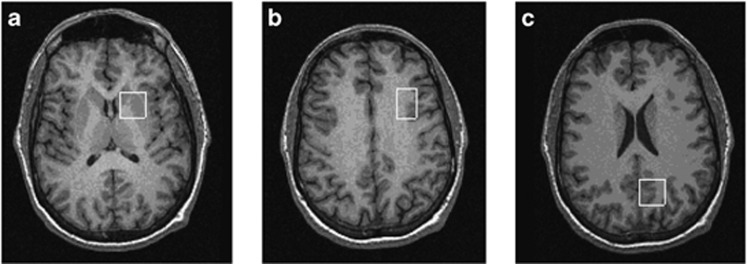
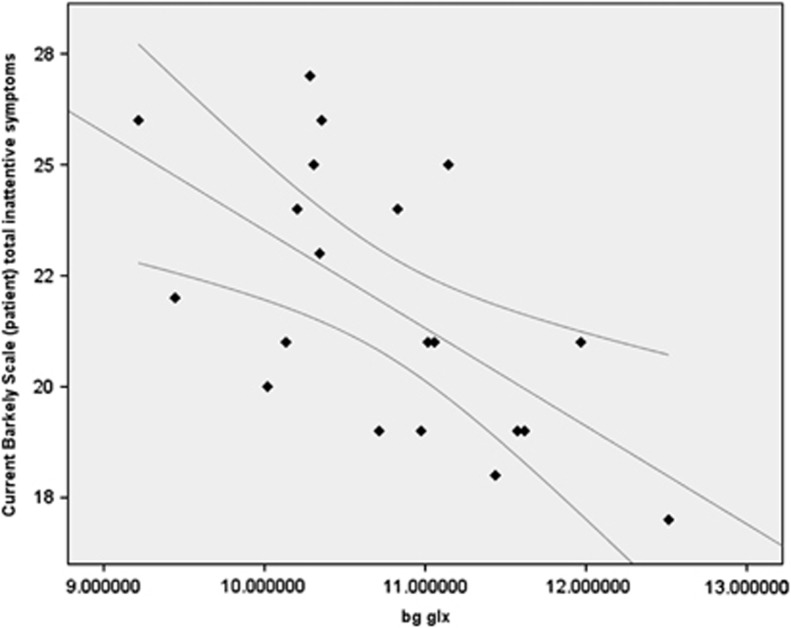
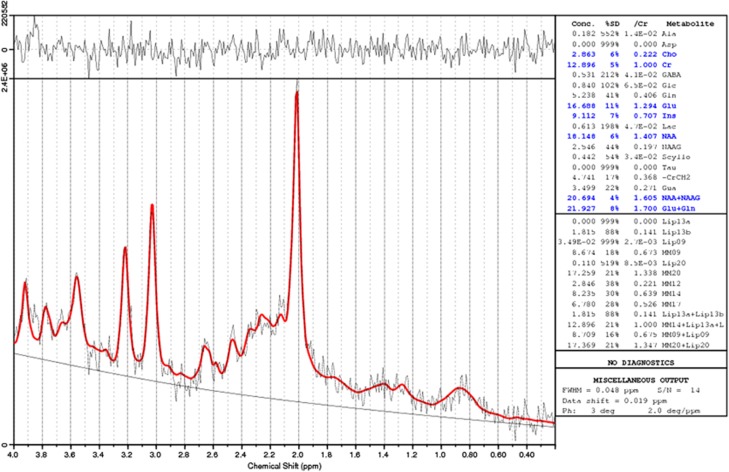
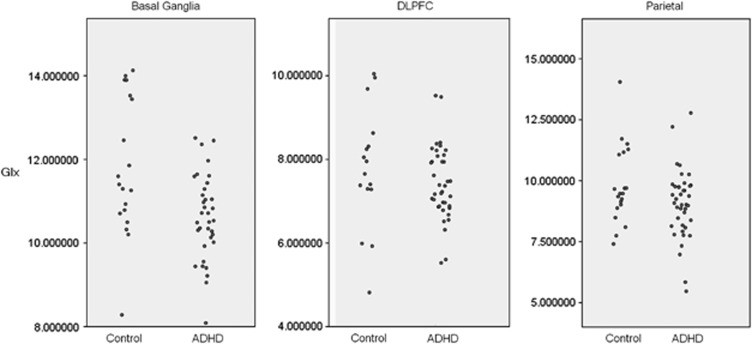
There is increasing evidence that abnormalities in glutamate signalling may contribute to the pathophysiology of attention-deficit hyperactivity disorder (ADHD). Proton magnetic resonance spectroscopy ([1H]MRS) can be used to measure glutamate, and also its metabolite glutamine, in vivo. However, few studies have investigated glutamate in the brain of adults with ADHD naive to stimulant medication. Therefore, we used [1H]MRS to measure the combined signal of glutamate and glutamine (Glu+Gln; abbreviated as Glx) along with other neurometabolites such as creatine (Cr), N-acetylaspartate (NAA) and choline. Data were acquired from three brain regions, including two implicated in ADHD-the basal ganglia (caudate/striatum) and the dorsolateral prefrontal cortex (DLPFC)-and one 'control' region-the medial parietal cortex. We compared 40 adults with ADHD, of whom 24 were naive for ADHD medication, whereas 16 were currently on stimulants, against 20 age, sex and IQ-matched healthy controls. We found that compared with controls, adult ADHD participants had a significantly lower concentration of Glx, Cr and NAA in the basal ganglia and Cr in the DLPFC, after correction for multiple comparisons. There were no differences between stimulant-treated and treatment-naive ADHD participants. In people with untreated ADHD, lower basal ganglia Glx was significantly associated with more severe symptoms of inattention. There were no significant differences in the parietal 'control' region. We suggest that subcortical glutamate and glutamine have a modulatory role in ADHD adults; and that differences in glutamate-glutamine levels are not explained by use of stimulant medication.
越来越多的证据表明,谷氨酸信号异常可能导致注意力缺陷多动障碍(ADHD)的病理生理过程。质子磁共振波谱([1H]MRS)可用于在体内测量谷氨酸及其代谢产物谷氨酰胺。然而,很少有研究调查未服用过兴奋剂药物的成年ADHD患者大脑中的谷氨酸情况。因此,我们使用[1H]MRS来测量谷氨酸和谷氨酰胺的联合信号(Glu+Gln;简称为Glx)以及其他神经代谢物,如肌酸(Cr)、N-乙酰天门冬氨酸(NAA)和胆碱。数据采集自三个脑区,包括两个与ADHD有关的脑区——基底神经节(尾状核/纹状体)和背外侧前额叶皮层(DLPFC),以及一个“对照”脑区——顶叶内侧皮层。我们将40名成年ADHD患者与20名年龄、性别和智商匹配的健康对照者进行比较,其中40名成年ADHD患者中,24名未服用过ADHD药物,16名正在服用兴奋剂。我们发现,在进行多重比较校正后,与对照组相比,成年ADHD参与者基底神经节中的Glx、Cr和NAA浓度以及DLPFC中的Cr浓度显著较低。服用兴奋剂的ADHD参与者和未接受治疗的ADHD参与者之间没有差异。在未接受治疗的ADHD患者中,基底神经节较低的Glx与更严重的注意力不集中症状显著相关。顶叶“对照”脑区没有显著差异。我们认为,皮层下谷氨酸和谷氨酰胺在成年ADHD患者中具有调节作用;并且谷氨酸-谷氨酰胺水平的差异不能用是否使用兴奋剂药物来解释。