Lian Zhenzhen, Yin Xiaojing, Li Hua, Jia Lili, He Xiuzhen, Yan Yongbo, Liu Naihua, Wan Kayiu, Li Xiaokun, Lin Shaoqiang
School of Pharmacy, Wenzhou Medical College, Campus of Chashan High Education, Wenzhou, China.
Department of Endocrinology, The Sixth Affiliated Hospital of Sun Yat-sen University, Guangzhou, China.
Ann Dermatol. 2014 Feb;26(1):1-10. doi: 10.5021/ad.2014.26.1.1. Epub 2014 Feb 17.
Diabetic wounds are a major clinical challenge, because minor skin wounds can lead to chronic, unhealed ulcers and ultimately result in infection, gangrene, or even amputation. Studies on bone marrow derived mesenchymal stem cells (BMSCs) and a series of growth factors have revealed their many benefits for wound healing and regeneration. Platelet-rich plasma (PRP) may improve the environment for BMSC development and differentiation. However, whether combined use of BMSCs and PRP may be more effective for accelerating diabetic ulcer healing remains unclear.
We investigated the efficacy of BMSCs and PRP for the repair of refractory wound healing in a diabetic rat model.
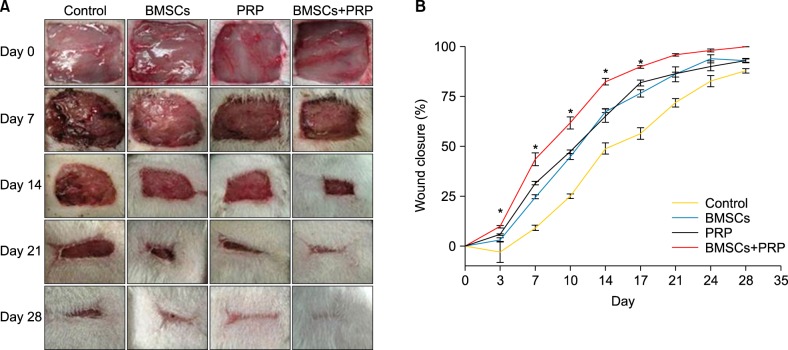
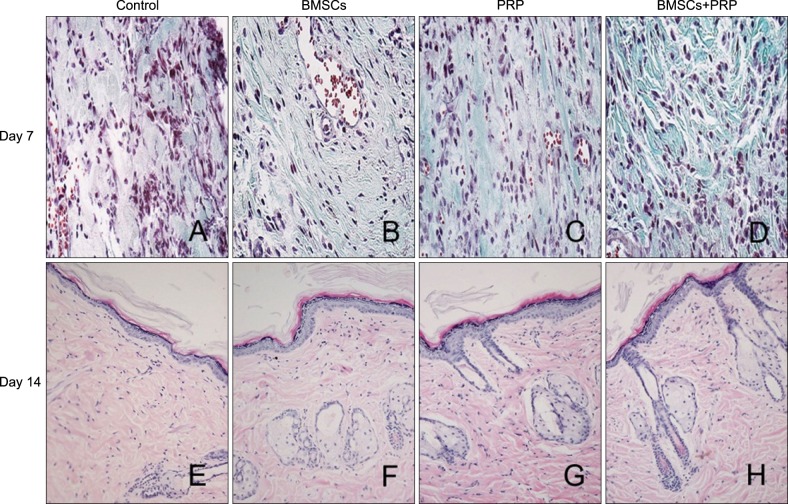
Forty-eight rats with diabetes mellitus induced by streptozotocin were divided into four groups: treatment with BMSCs plus PRP, BMSCs alone, PRP alone, phosphate buffered saline. The rate of wound closure was quantified. A histopathological study was conducted regarding wound depth and the skin edge at 7, 14, and 28 days after surgery.
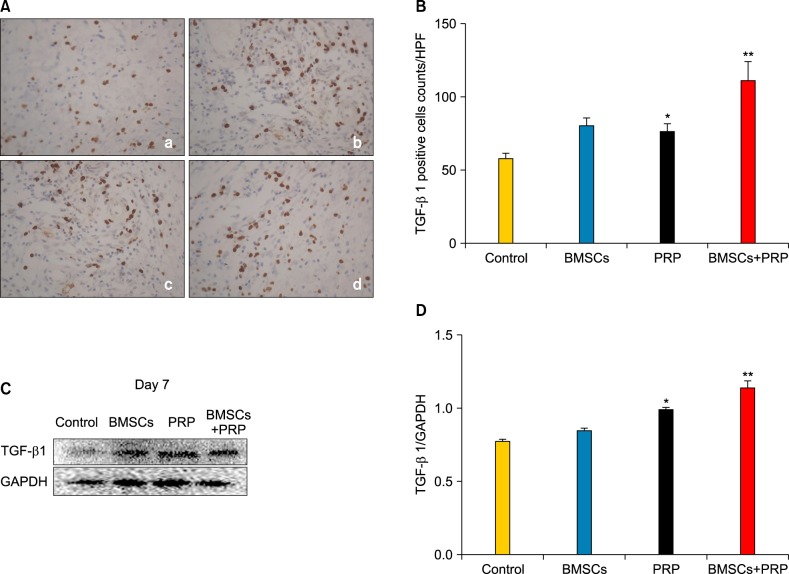
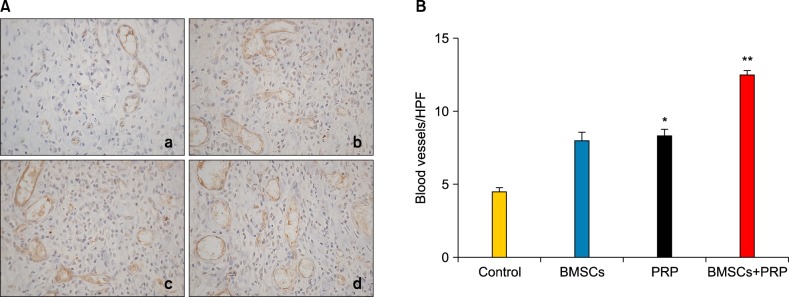
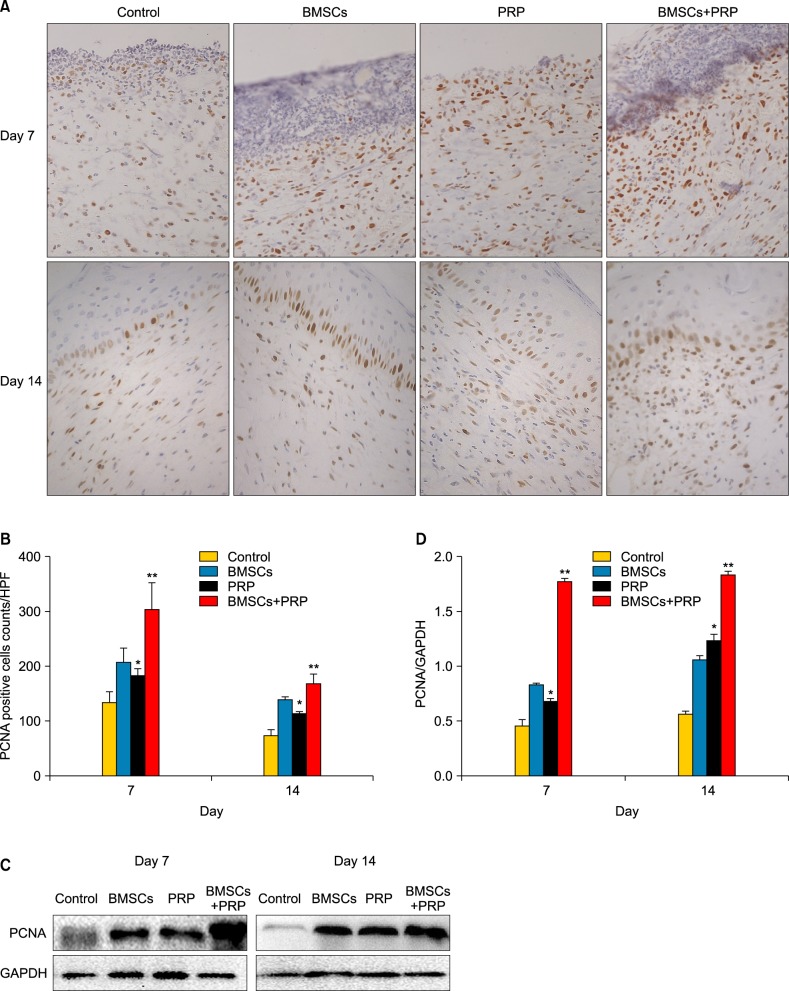
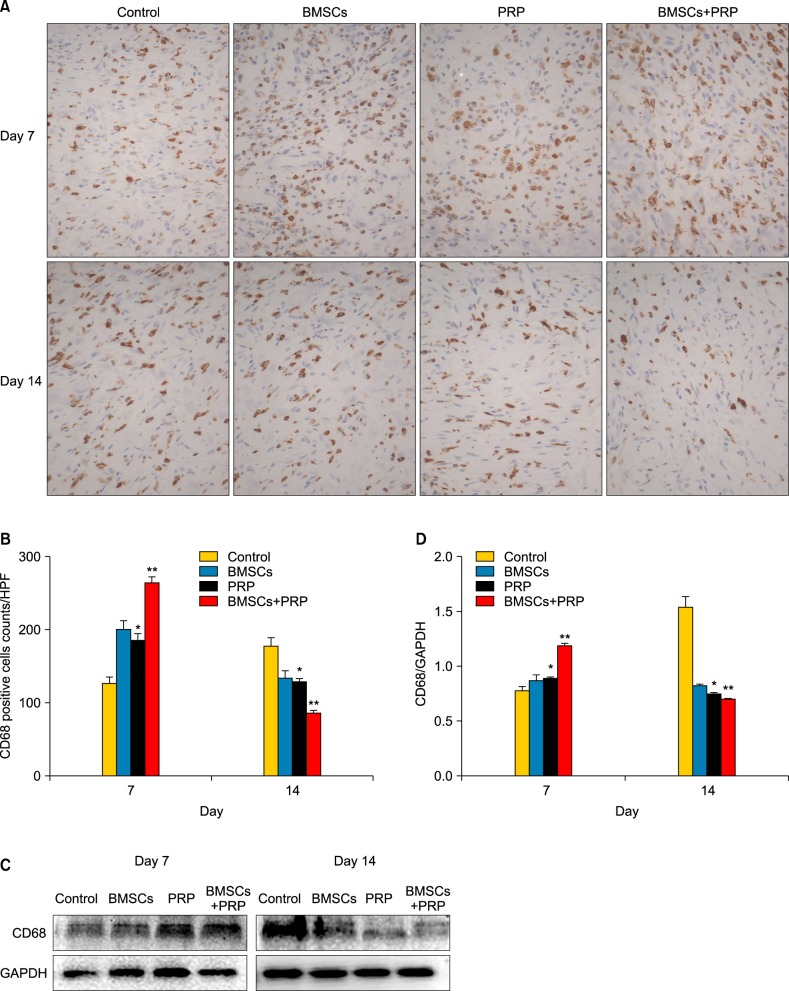
Wound healing rates were significantly higher in the BMSC plus PRP group than in the other groups. The immunohistochemistry results showed that the expression of platelet/endothelial cell adhesion molecule 1, proliferating cell nuclear antigen, and transforming growth factor-β1 increased significantly in the BMSC plus PRP group compared to the other treatment groups. On day 7, CD68 expression increased significantly in the wounds of the BMSC plus PRP group, but decreased markedly at day 14 compared to the controls.
The combination of BMSCs and PRP aids diabetic wound repair and regeneration.
糖尿病伤口是一项重大的临床挑战,因为轻微的皮肤伤口可能会导致慢性、无法愈合的溃疡,并最终导致感染、坏疽,甚至截肢。对骨髓间充质干细胞(BMSC)和一系列生长因子的研究揭示了它们在伤口愈合和再生方面的诸多益处。富血小板血浆(PRP)可能会改善BMSC发育和分化的环境。然而,BMSC与PRP联合使用是否对加速糖尿病溃疡愈合更有效仍不清楚。
我们在糖尿病大鼠模型中研究了BMSC和PRP对难治性伤口愈合的修复效果。
将48只经链脲佐菌素诱导的糖尿病大鼠分为四组:BMSC加PRP治疗组、单纯BMSC治疗组、单纯PRP治疗组、磷酸盐缓冲盐水组。对伤口闭合率进行量化。在术后7天、14天和28天对伤口深度和皮肤边缘进行组织病理学研究。
BMSC加PRP组的伤口愈合率显著高于其他组。免疫组织化学结果显示,与其他治疗组相比,BMSC加PRP组中血小板/内皮细胞黏附分子1、增殖细胞核抗原和转化生长因子-β1的表达显著增加。在第7天,BMSC加PRP组伤口中的CD68表达显著增加,但与对照组相比,在第14天显著下降。
BMSC与PRP联合使用有助于糖尿病伤口的修复和再生。