Brown L E, King J R, Loose M
MyCIB, School of Biosciences, University of Nottingham, Sutton Bonington LE12 5RD, UK.
School of Mathematical Sciences, University of Nottingham, University Park, Nottingham NG7 2RD, UK.
J Theor Biol. 2014 Jul 21;353(100):67-77. doi: 10.1016/j.jtbi.2014.03.015. Epub 2014 Mar 17.
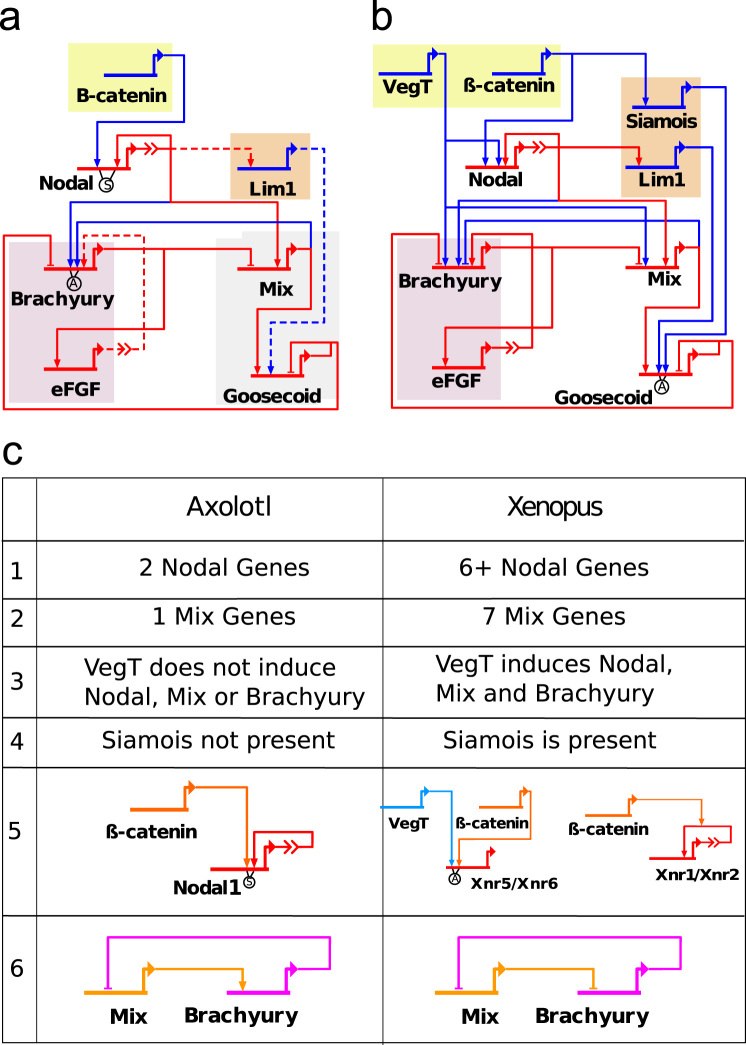
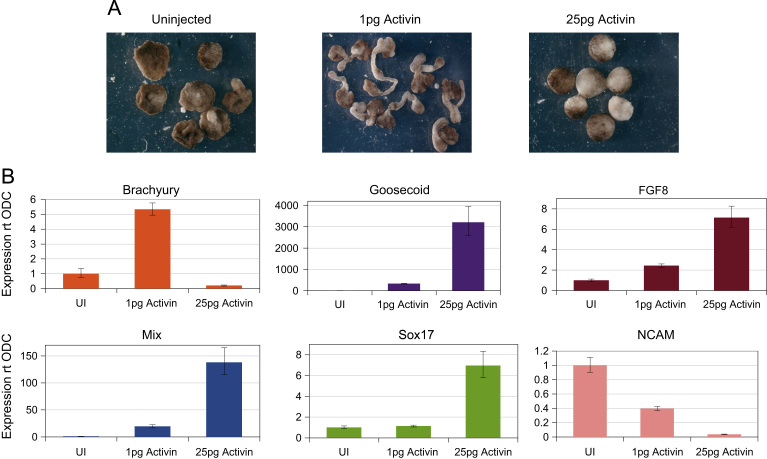
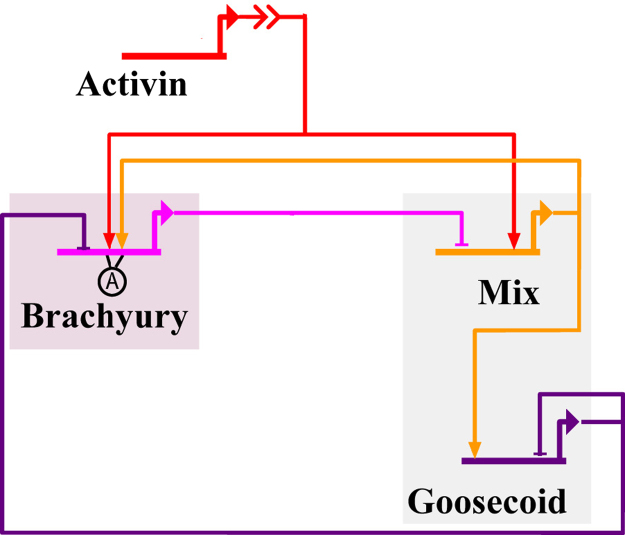
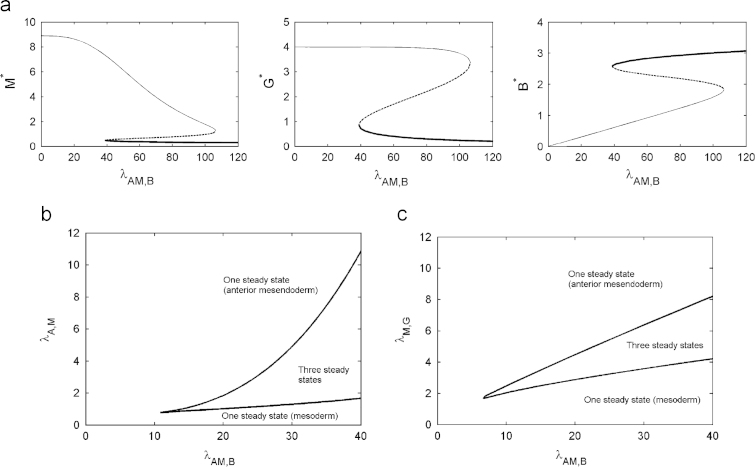
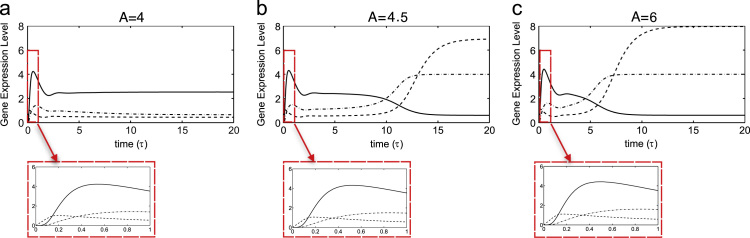
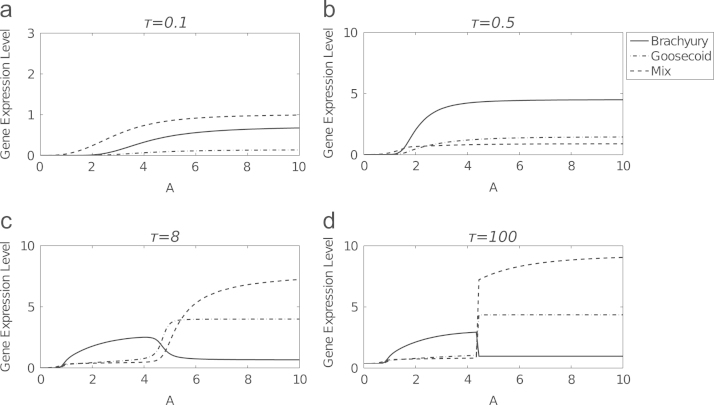
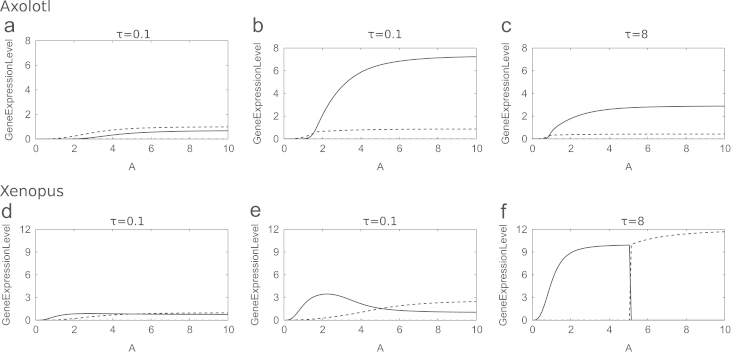
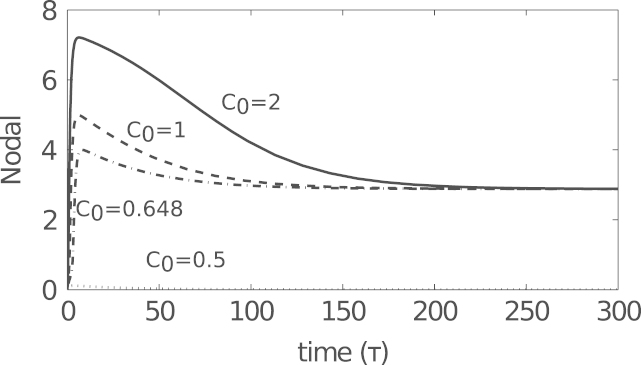
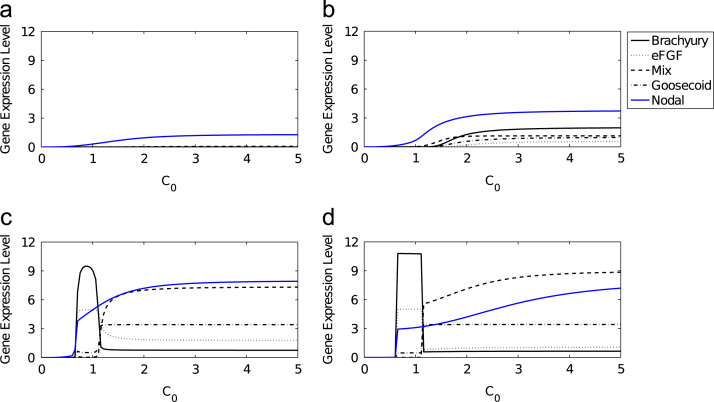
Understanding the Gene Regulatory Networks (GRNs) that underlie development is a major question for systems biology. The establishment of the germ layers is amongst the earliest events of development and has been characterised in numerous model systems. The establishment of the mesoderm is best characterised in the frog Xenopus laevis and has been well studied both experimentally and mathematically. However, the Xenopus network has significant differences from that in mouse and humans, including the presence of multiple copies of two key genes in the network, Mix and Nodal. The axolotl, a urodele amphibian, provides a model with all the benefits of amphibian embryology but crucially only a single Mix and Nodal gene required for the specification of the mesoderm. Remarkably, the number of genes within the network is not the only difference. The interaction between Mix and Brachyury, two transcription factors involved in the establishment of the endoderm and mesoderm respectively, is not conserved. While Mix represses Brachyury in Xenopus, it activates Brachyury in axolotl. Thus, whilst the topology of the networks in the two species differs, both are able to form mesoderm and endoderm in vivo. Based on current knowledge of the structure of the mesendoderm GRN we develop deterministic models that describe the time evolution of transcription factors in a single axolotl cell and compare numerical simulations with previous results from Xenopus. The models are shown to have stable steady states corresponding to mesoderm and anterior mesendoderm, with the in vitro model showing how the concentration of Activin can determine cell fate, while the in vivo model shows that β-catenin concentration can determine cell fate. Moreover, our analysis suggests that additional components must be important in the axolotl network in the specification of the full range of tissues.
理解发育过程背后的基因调控网络(GRNs)是系统生物学的一个主要问题。胚层的建立是发育过程中最早发生的事件之一,并且在众多模型系统中已有描述。中胚层的建立在非洲爪蟾(Xenopus laevis)中得到了最好的描述,并且在实验和数学方面都得到了充分研究。然而,非洲爪蟾的网络与小鼠和人类的网络存在显著差异,包括网络中两个关键基因Mix和Nodal存在多个拷贝。美西螈,一种有尾两栖动物,提供了一个具有两栖动物胚胎学所有优点的模型,但至关重要的是,中胚层特化只需要一个Mix和Nodal基因。值得注意的是,网络中的基因数量并不是唯一的差异。Mix和Brachyury这两个分别参与内胚层和中胚层建立的转录因子之间的相互作用并不保守。在非洲爪蟾中Mix抑制Brachyury,而在美西螈中它激活Brachyury。因此,虽然这两个物种网络的拓扑结构不同,但两者都能够在体内形成中胚层和内胚层。基于目前对中内胚层GRN结构的了解,我们开发了确定性模型,描述单个美西螈细胞中转录因子的时间演化,并将数值模拟与非洲爪蟾先前的结果进行比较。这些模型显示具有对应于中胚层和前中内胚层的稳定稳态,体外模型展示了激活素的浓度如何决定细胞命运,而体内模型表明β-连环蛋白浓度可以决定细胞命运。此外,我们的分析表明,在美西螈网络中,其他成分对于所有组织的特化必定很重要。