Institute of Plant and Microbial Biology, Academia Sinica Taipei, Republic of China.
Front Plant Sci. 2014 Mar 12;5:84. doi: 10.3389/fpls.2014.00084. eCollection 2014.
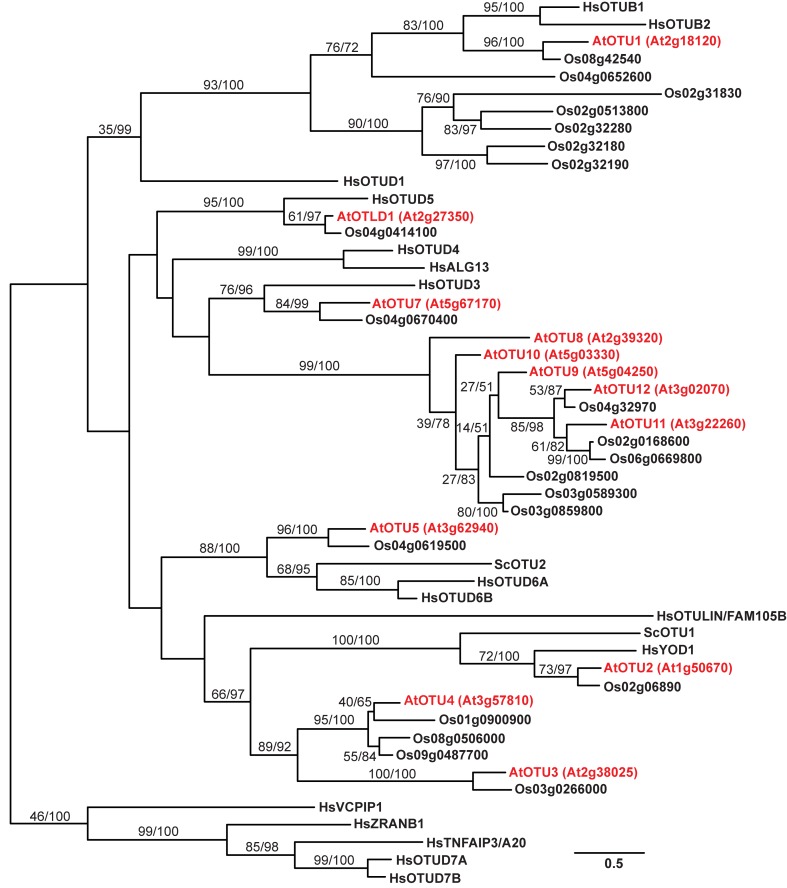
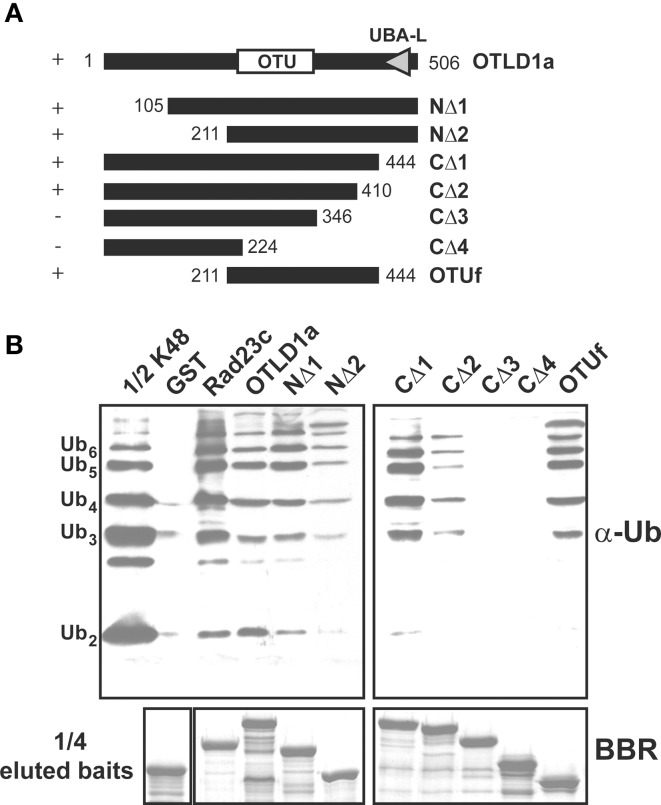
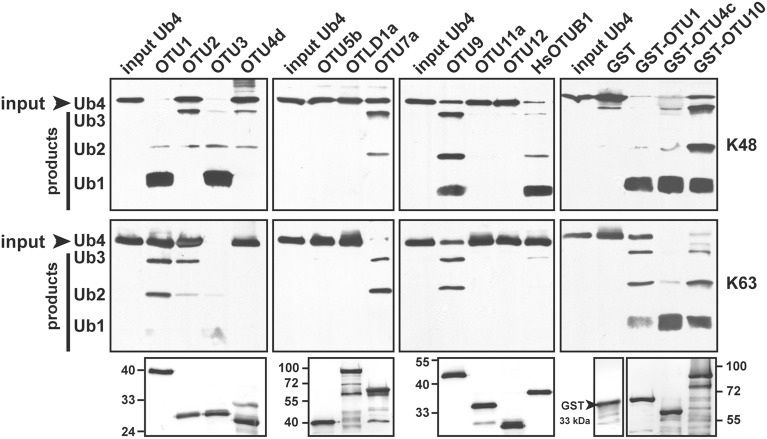
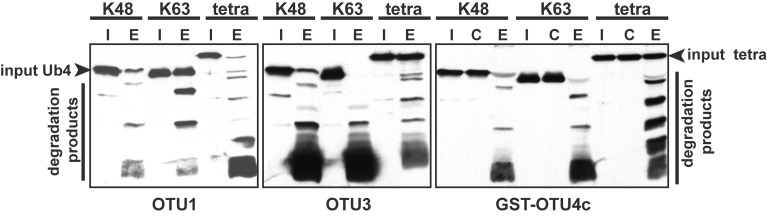
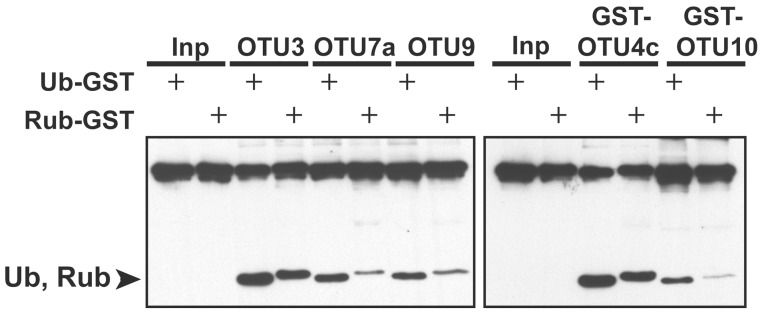
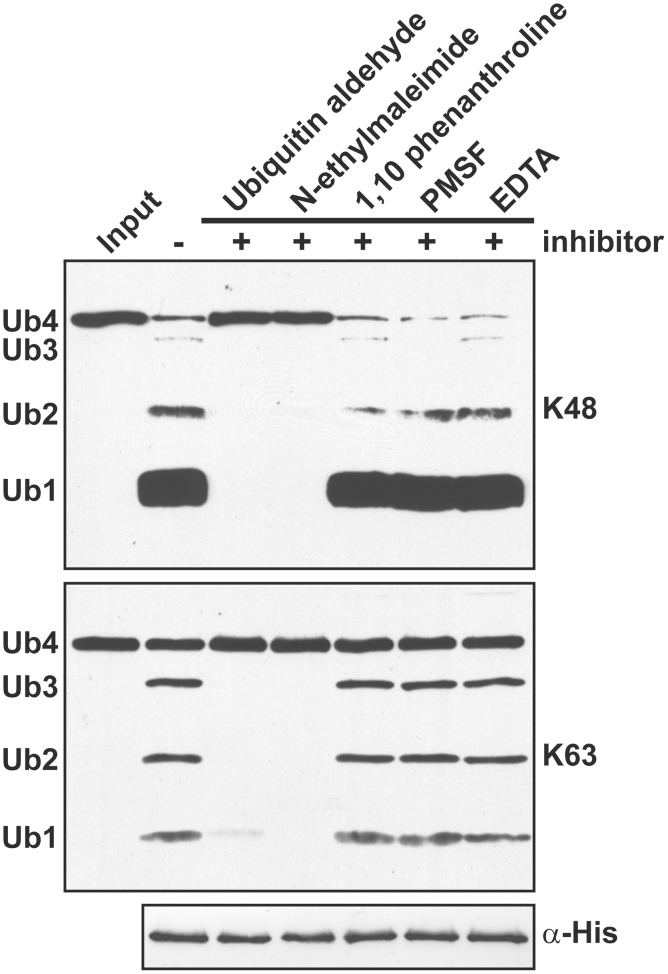
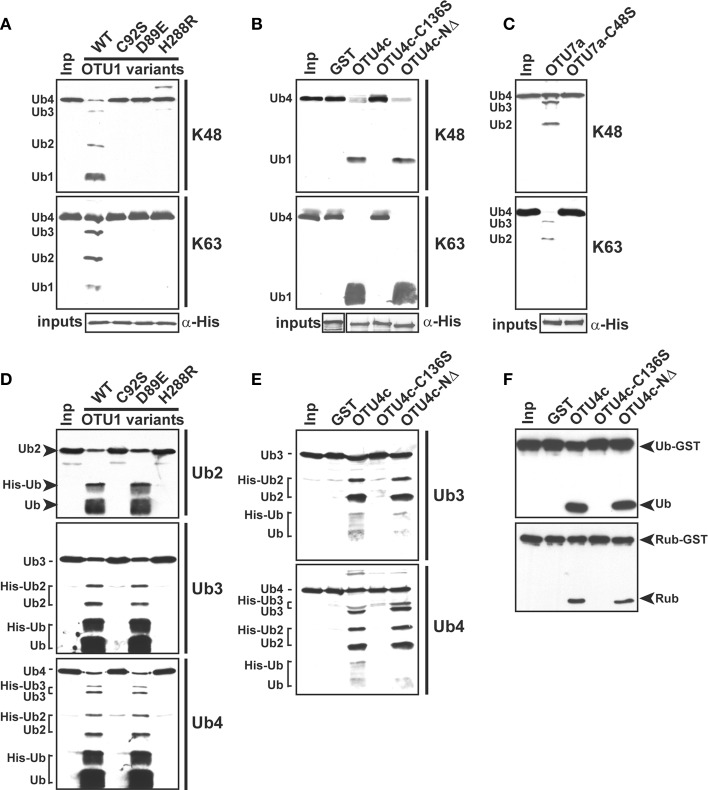
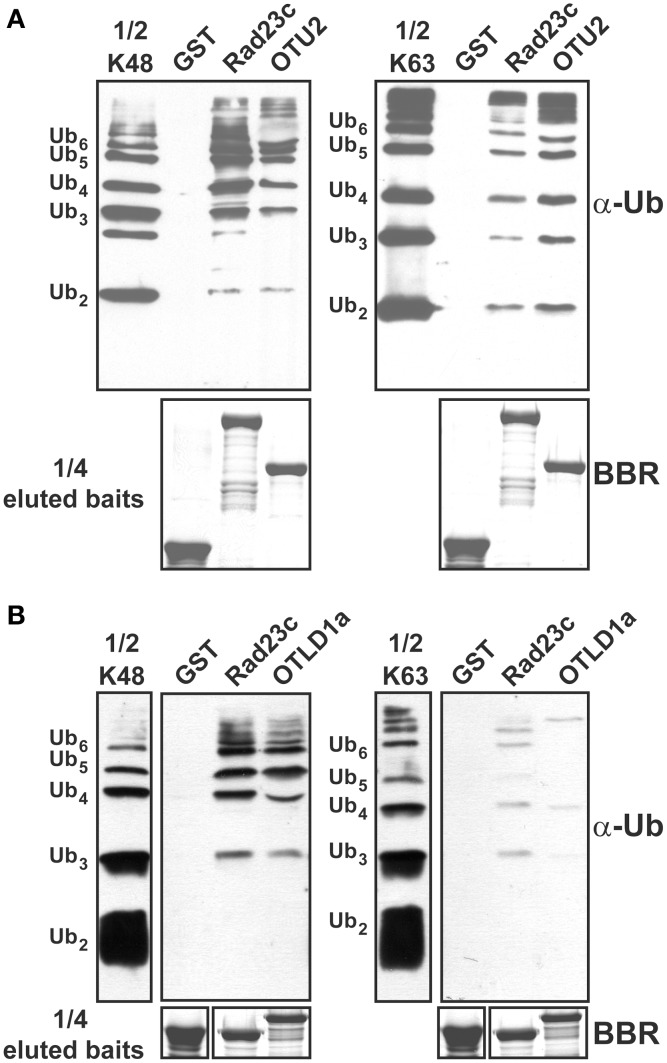
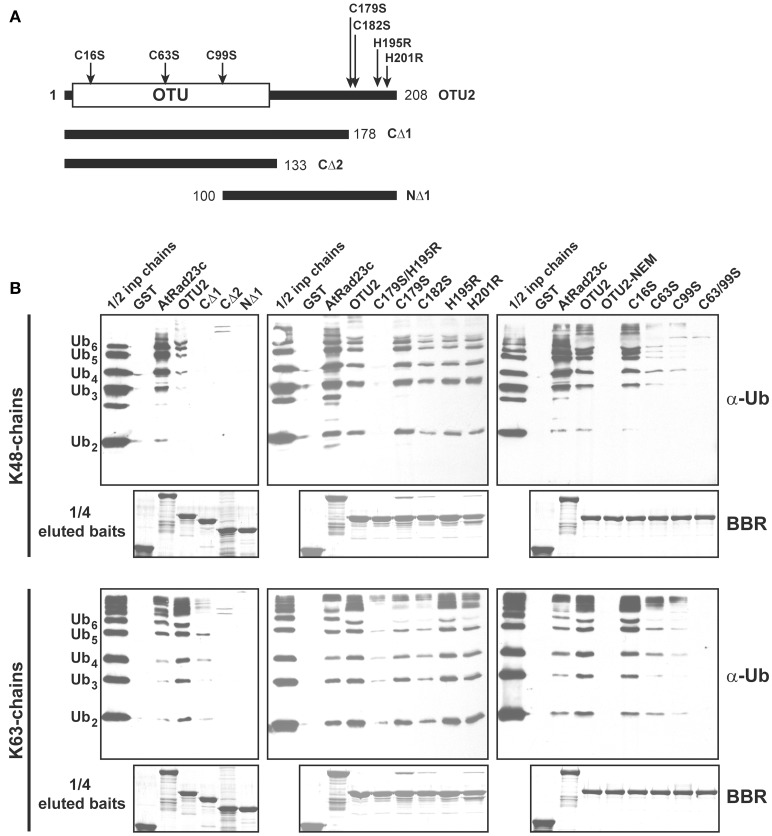
The reverse reaction of ubiquitylation is catalyzed by different classes of deubiquitylation enzymes (DUBs), including ovarian tumor domain (OTU)-containing DUBs; experiments using Homo sapiens proteins have demonstrated that OTU DUBs modulate various cellular processes. With the exception of OTLD1, plant OTU DUBs have not been characterized. We identified 12 Arabidopsis thaliana OTU loci and analyzed 11 of the encoded proteins in vitro to determine their preferences for the ubiquitin (UB) chains of M1, K48, and K63 linkages as well as the UB-/RUB-/SUMO-GST fusions. The A. thaliana OTU DUBs were shown to be cysteine proteases and classified into four groups with distinct linkage preferences: OTU1 (M1 = K48 > K63), OTU3/4/7/10 (K63 > K48 > M1), OTU2/9 (K48 = K63), and OTU5/11/12/OTLD1 (inactive). Five active OTU DUBs (OTU3/4/7/9/10) also cleaved RUB fusion. OTU1/3/4 cleaved M1 UB chains, suggesting a possible role for M1 chains in plant cellular signaling. The different substrate specificities of the various A. thaliana OTU DUBs indicate the involvement of distinct structural elements; for example, the OTU1 oxyanion residue D89 is essential for cleaving isopeptide bond-linked chains but dispensable for M1 chains. UB-binding activities were detected only for OTU2 and OTLD1, with distinct linkage preferences. These differences in biochemical properties support the involvement of A. thaliana OTU DUBs in different functions. Moreover, based on the established phylogenetic tree, plant- and H. sapiens-specific clades exist, which suggests that the proteins within these clades have taxa-specific functions. We also detected five OTU clades that are conserved across species, which suggests that the orthologs in different species within each clade are involved in conserved cellular processes, such as ERAD and DNA damage responses. However, different linkage preferences have been detected among potential cross-species OTU orthologs, indicating functional and mechanistic differentiation.
泛素化的逆向反应是由不同类别的去泛素化酶(DUB)催化的,包括含有卵巢肿瘤结构域(OTU)的 DUB;使用人类蛋白质进行的实验表明,OTU DUB 调节各种细胞过程。除了 OTLD1 外,植物 OTU DUB 尚未被表征。我们鉴定了 12 个拟南芥 OTU 基因座,并在体外分析了其中 11 个编码蛋白,以确定它们对 M1、K48 和 K63 连接的泛素(UB)链以及 UB-/RUB-/SUMO-GST 融合的偏好。拟南芥 OTU DUB 被证明是半胱氨酸蛋白酶,并分为具有不同连接偏好的四个组:OTU1(M1>K48>K63)、OTU3/4/7/10(K63>K48>M1)、OTU2/9(K48=K63)和 OTU5/11/12/OTLD1(无活性)。五个活性 OTU DUB(OTU3/4/7/9/10)也切割 RUB 融合物。OTU1/3/4 切割 M1 UB 链,这表明 M1 链可能参与植物细胞信号转导。不同拟南芥 OTU DUB 的不同底物特异性表明存在不同的结构元素;例如,OTU1 的氧阴离子残基 D89 对于切割异肽键连接的链是必不可少的,但对于 M1 链是可有可无的。仅检测到 OTU2 和 OTLD1 具有 UB 结合活性,并且具有不同的连接偏好。这些生化特性的差异支持拟南芥 OTU DUB 参与不同的功能。此外,基于已建立的系统发育树,存在植物和人类特异性的分支,这表明这些分支内的蛋白质具有特定于分类群的功能。我们还检测到五个在物种间保守的 OTU 分支,这表明每个分支中的不同物种的同源物参与保守的细胞过程,如 ERAD 和 DNA 损伤反应。然而,在潜在的跨物种 OTU 同源物之间检测到不同的连接偏好,表明功能和机制分化。