Naydenov Nayden G, Baranwal Somesh, Khan Shadab, Feygin Alex, Gupta Pooja, Ivanov Andrei I
Department of Human and Molecular Genetics, Virginia Commonwealth University School of Medicine, Richmond, VA USA;
Department of Medicine, University of Rochester School of Medicine, Rochester, NY USA.
Tissue Barriers. 2013 Oct 1;1(4):e25231. doi: 10.4161/tisb.25231. Epub 2013 Jun 3.
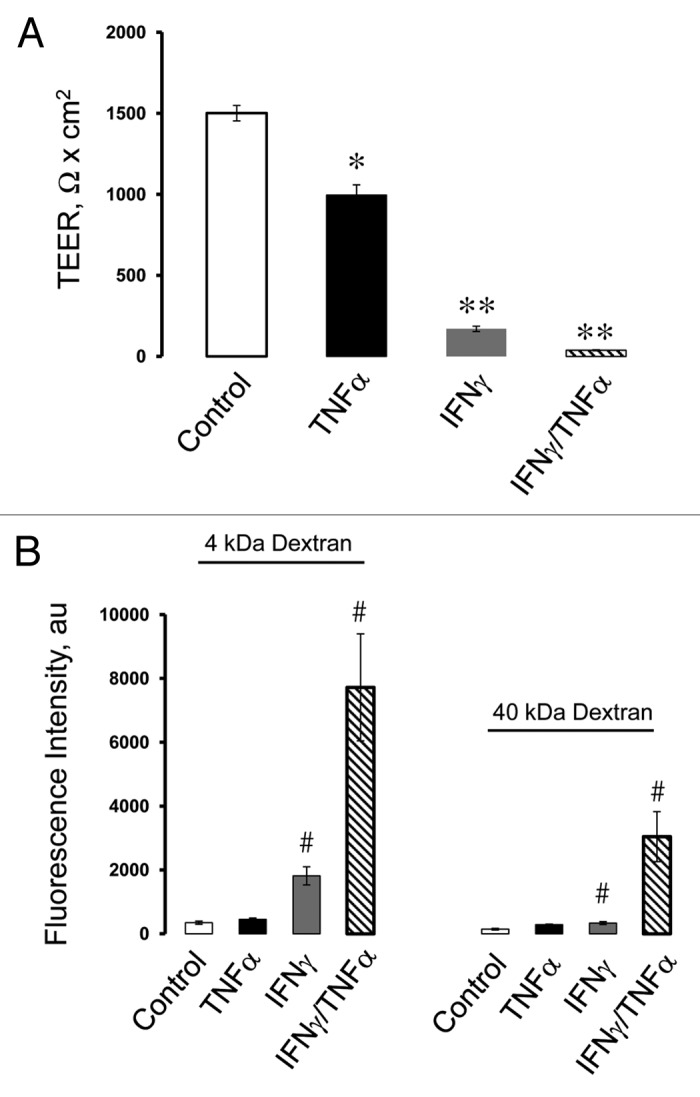
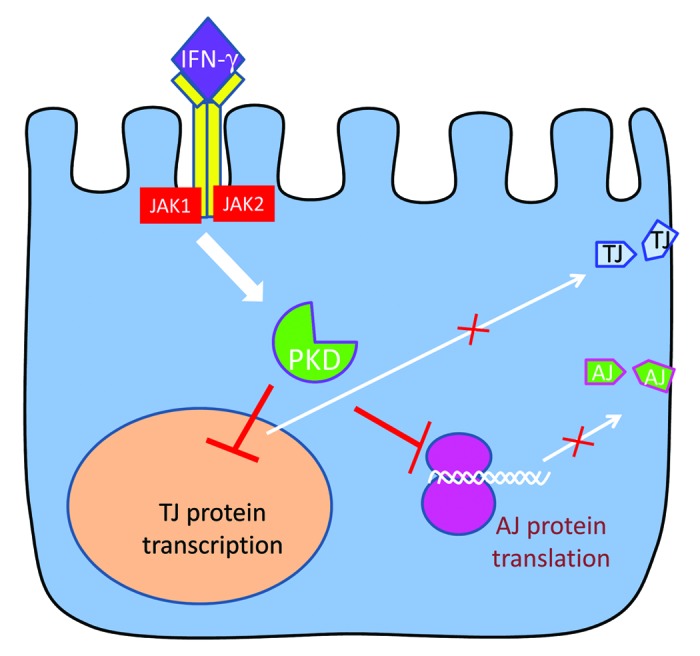
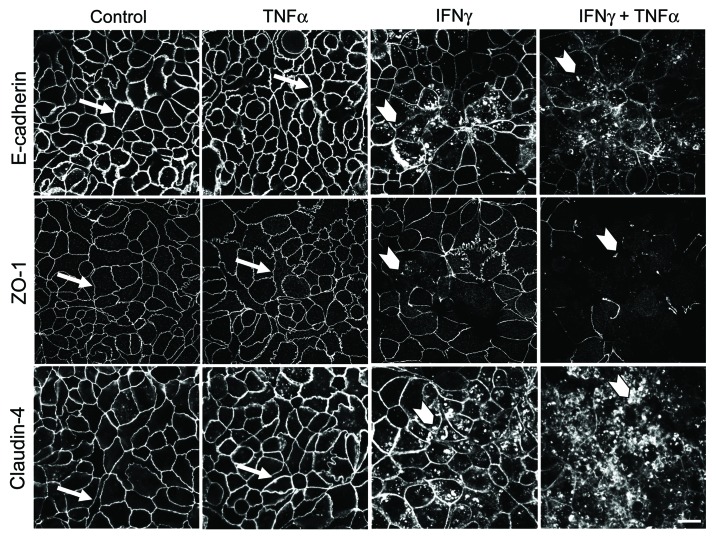
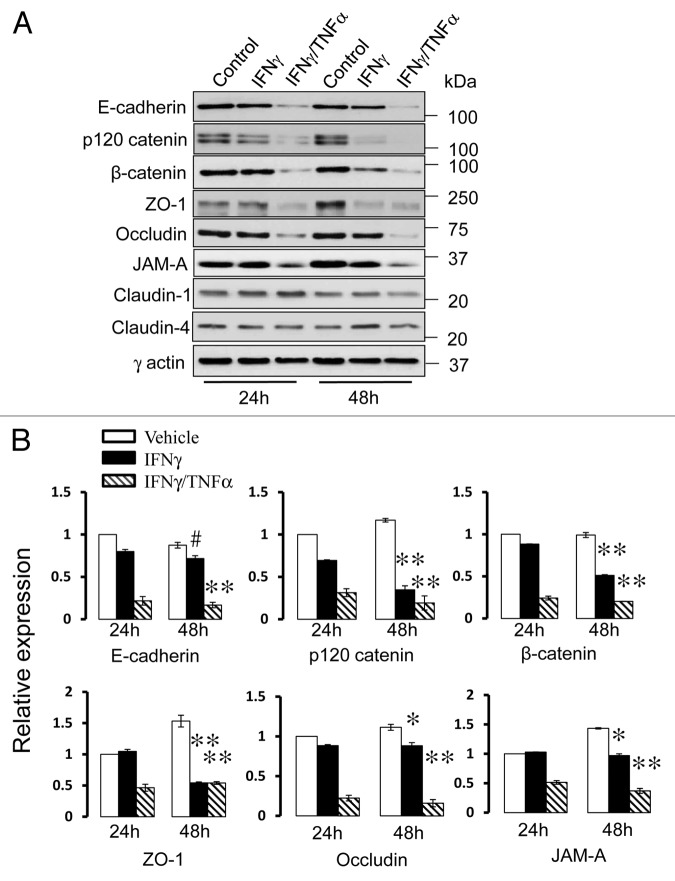
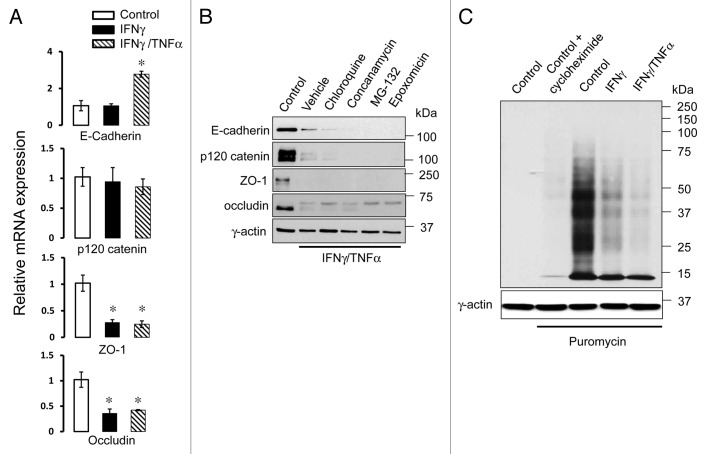
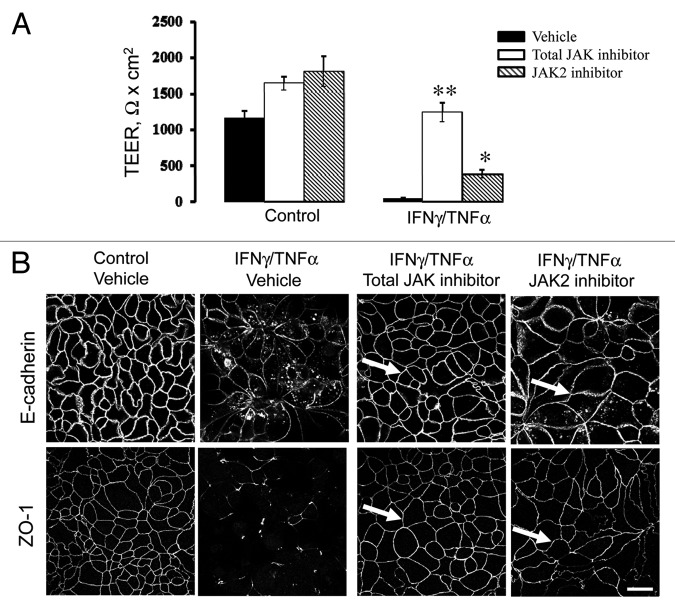
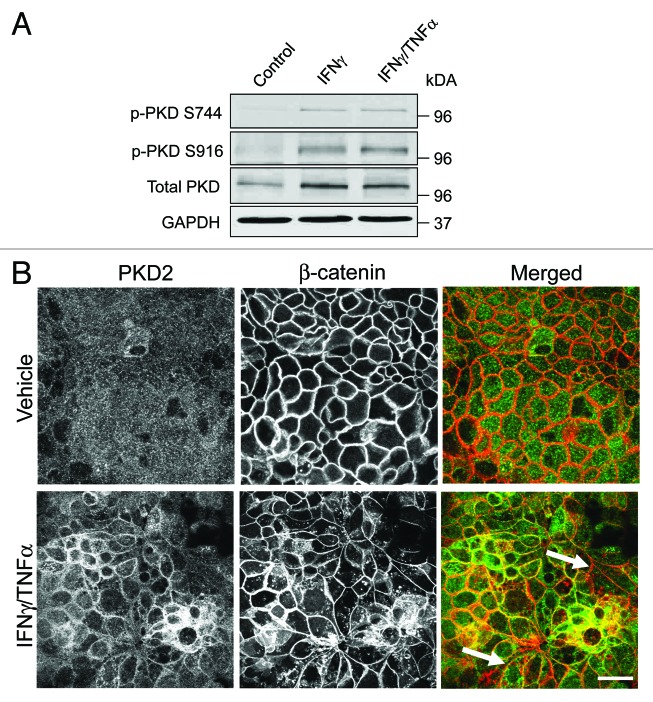
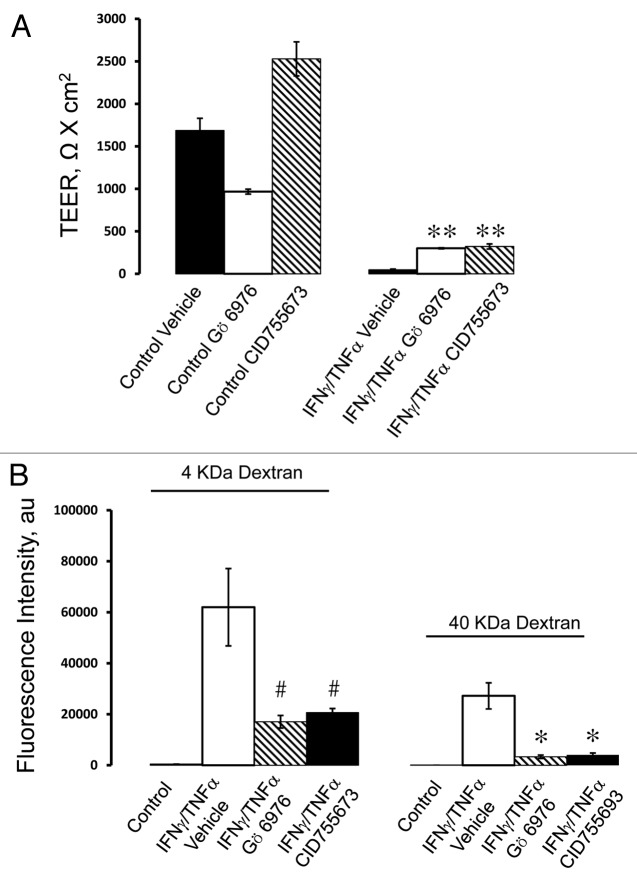
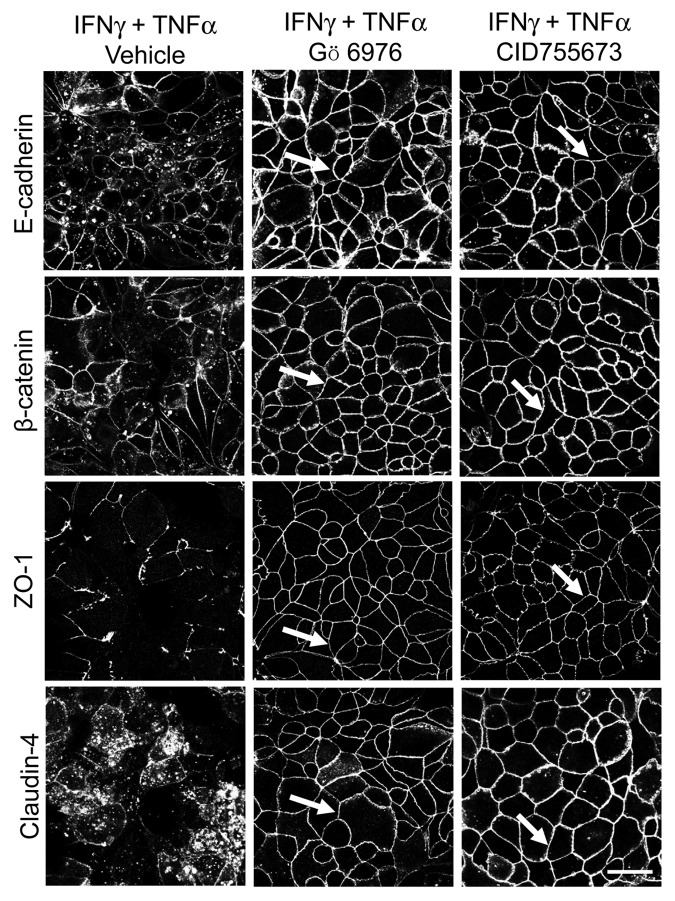
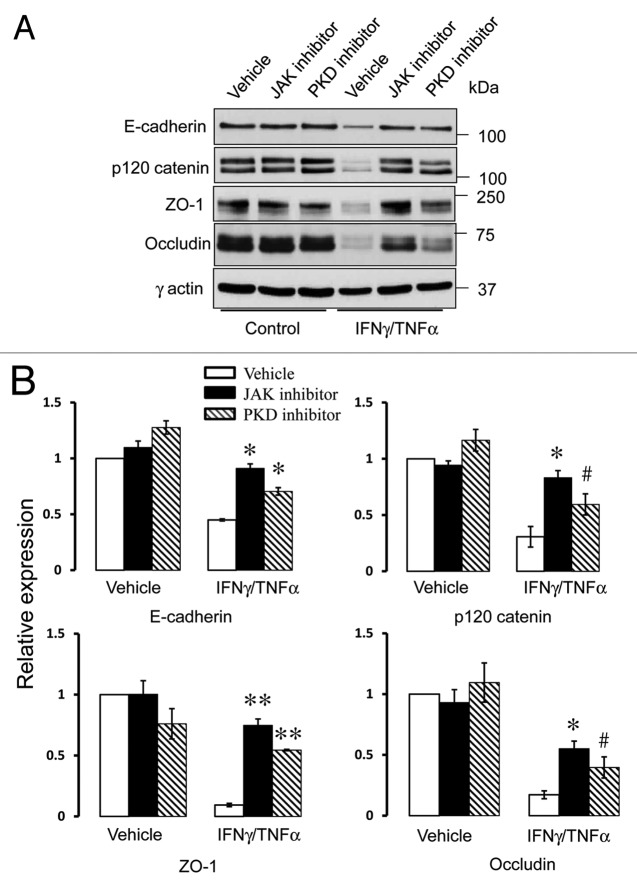
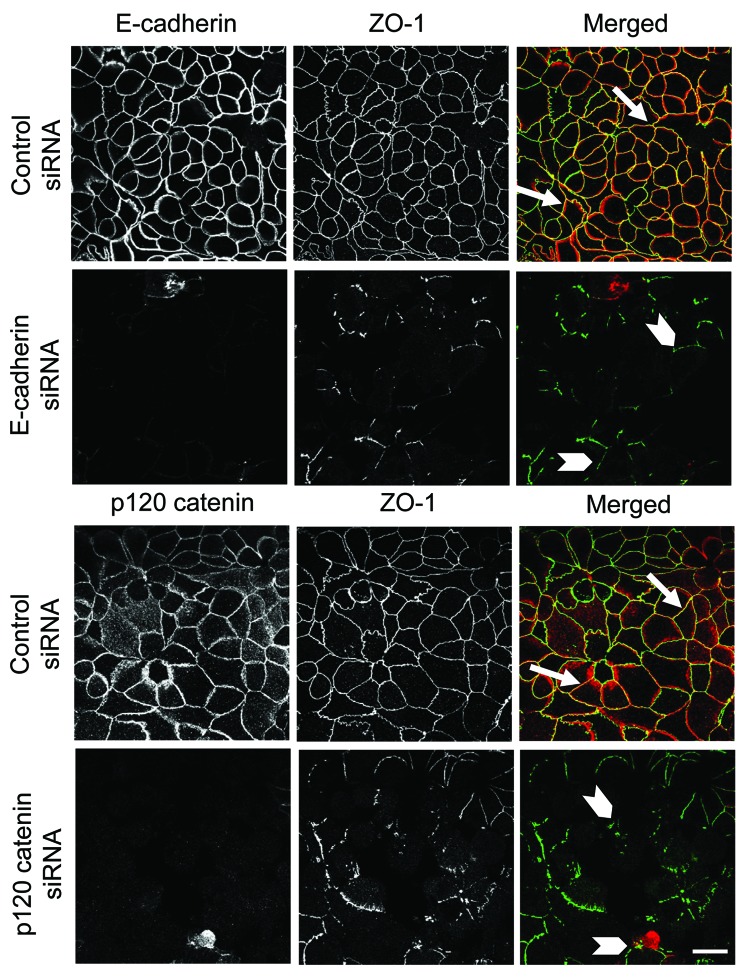
The ductal epithelium plays a key role in physiological secretion of pancreatic enzymes into the digestive system. Loss of barrier properties of the pancreatic duct may contribute to the development of pancreatitis and metastatic dissemination of pancreatic tumors. Proinflammatory cytokines are essential mediators of pancreatic inflammation and tumor progression; however, their effects on the integrity and barrier properties of the ductal epithelium have not been previously addressed. In the present study, we investigate mechanisms of cytokine-induced disassembly of tight junctions (TJs) and adherens junctions (AJs) in a model pancreatic epithelium. Exposure of HPAF-II human pancreatic epithelial cell monolayers to interferon (IFN)γ disrupted integrity and function of apical junctions as manifested by increased epithelial permeability and cytosolic translocation of AJ and TJ proteins. Tumor necrosis factor (TNF)α potentiated the effects of IFNγ on pancreatic epithelial junctions. The cytokine-induced increase in epithelial permeability and AJ/TJ disassembly was attenuated by pharmacological inhibition of Janus kinase (JAK) and protein kinase D (PKD). Loss of apical junctions in IFNγ/TNFα-treated HPAF-II cells was accompanied by JAK and PKD dependent decrease in expression of AJ (E-cadherin, p120 catenin) and TJ (occludin, ZO-1) proteins. Depletion of E-cadherin or p120 catenin recapitulated the effects of cytokines on HPAF-II cell permeability and junctions. Our data suggests that proinflammatory cytokines disrupt pancreatic epithelial barrier via expressional downregulation of key structural components of AJs and TJs. This mechanism is likely to be important for pancreatic inflammatory injury and tumorigenesis.
导管上皮在胰腺酶向消化系统的生理性分泌中起关键作用。胰腺导管屏障特性的丧失可能导致胰腺炎的发展以及胰腺肿瘤的转移扩散。促炎细胞因子是胰腺炎症和肿瘤进展的重要介质;然而,它们对导管上皮完整性和屏障特性的影响此前尚未得到探讨。在本研究中,我们在一个胰腺上皮模型中研究细胞因子诱导紧密连接(TJ)和黏附连接(AJ)解体的机制。将HPAF-II人胰腺上皮细胞单层暴露于干扰素(IFN)γ会破坏顶端连接的完整性和功能,表现为上皮通透性增加以及AJ和TJ蛋白的胞质转位。肿瘤坏死因子(TNF)α增强了IFNγ对胰腺上皮连接的作用。通过对Janus激酶(JAK)和蛋白激酶D(PKD)的药理抑制,可减弱细胞因子诱导的上皮通透性增加和AJ/TJ解体。在IFNγ/TNFα处理的HPAF-II细胞中,顶端连接的丧失伴随着AJ(E-钙黏蛋白、p120连环蛋白)和TJ(闭合蛋白、ZO-1)蛋白表达的JAK和PKD依赖性降低。E-钙黏蛋白或p120连环蛋白的缺失重现了细胞因子对HPAF-II细胞通透性和连接的影响。我们的数据表明,促炎细胞因子通过AJ和TJ关键结构成分的表达下调破坏胰腺上皮屏障。这一机制可能对胰腺炎性损伤和肿瘤发生很重要。